
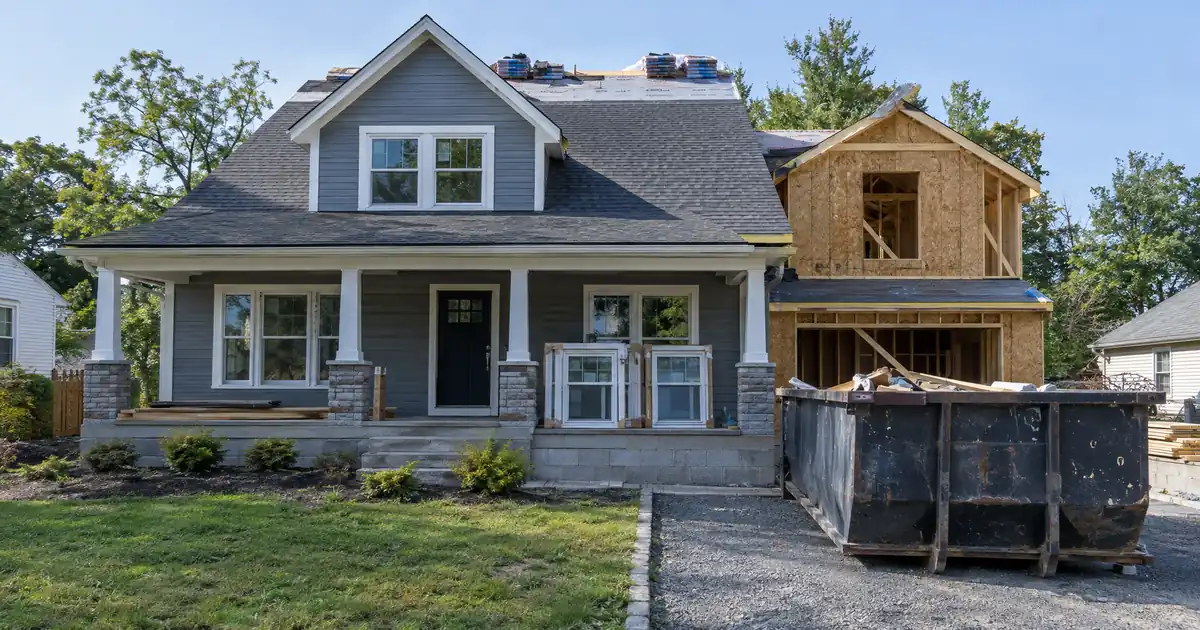
The Quick Read: A cost-basis exit means the new long-term lender sizes the DSCR loan on purchase price plus documented rehab spend, while a full-value cash-out means it sizes on a fresh appraisal, and the seasoning clock decides which one you get, a clock that typically runs about six months from the recorded deed on a DSCR cash-out refinance.
- Inside the seasoning window, created equity mostly stays trapped, and the exit is usually a payoff-only refinance.
- The value test and the rent-coverage test are separate gates, and clearing one does not clear the other.
- Plan the exit before the bridge closes, because bridge interest keeps accruing while you wait.
Key Terms Defined
Cost basis: purchase price plus documented rehab spend, proven by the settlement statement, invoices, and draw history.
Seasoning: the length of time you have held title, counted from the recorded deed, before a lender will size a cash-out on appraised value.
Appraised value: the value in the lender’s own appraisal, built from comparable sales and reviewed by the underwriter.
After-repair value (ARV): your estimate of worth after the rehab. It helps you plan, but it does not set the new loan.
Payoff-only refinance: a loan that retires the bridge and its closing costs and returns no cash.
Break-even appraisal: the lowest appraisal at which a cash-out loan covers the bridge payoff and exit costs.
What Does Exiting at Cost Basis Mean?
Exiting at cost basis means the long-term lender caps the new loan at what you put into the property, not at what the property is now worth. It happens when you refinance before the lender will recognize your rehab as value. You get out of the bridge, but the equity you built stays in the house.
Lenders do this because a fresh rehab has not been tested by time. A rental that has not been on title long enough is harder to value with confidence. Cost is a documented number, so it is the safer measuring stick.
Seasoning is lender policy, not a legal rule. FortuneBuilders describes it as the wait before a property becomes eligible to refinance on appraised value. Across the wholesale network, most DSCR cash-out programs expect about six months of ownership, counted from title recording. Some programs differ, so the investor should ask.
How Does Underwriting Treat the Value, Step by Step?
Underwriting runs two tests in sequence. First the lender picks a value basis, then it checks that the rent covers the new payment. A larger loan helps with the first test and hurts the second.
1. Start the clock at the recorded deed. The clock does not start at the hard money note date, the end of the rehab, or the lease date. Get the recording date confirmed in writing.
2. Classify the exit. A payoff-only loan covers the bridge balance and closing costs, and a DSCR rate-and-term refinance allows up to 85% LTV, subject to lender guidelines. Any cash back above that makes it a DSCR cash-out refinance, which carries seasoning, a 75% LTV cap, and reserve rules.
3. Pick the value basis. Inside the window, the lender typically measures against cost basis, or the lower of cost and appraisal. After the window, the appraisal governs.
4. Order the appraisal. The lender orders it, and a rental appraisal usually includes a rent schedule. A finished rehab may support a higher appraised value, depending on comps and underwriter review.
5. Run the coverage test. DSCR divides monthly rent by the full monthly obligation: principal, interest, taxes, insurance, and association dues. Many select DSCR programs start at 1.00, and a separate select-lender path takes coverage below 1.00 with leverage and terms adjusted.
6. Apply the lower of the two limits. The value-based limit and the rent-based limit both apply, and the smaller one sets the loan.
Clearing 1.00 is not the same as positive cash flow. Repairs, vacancy, management, utilities, and capital spending sit outside the calculation.
The Break-Even Appraisal Formula
Break-even appraisal equals bridge payoff plus exit closing costs, divided by 0.75 on a DSCR cash-out refinance of an investment property. The payoff grows each month, because interest accrues on the bridge. Run this formula before you buy the property, not after the rehab.
Your Real Exit Options
Every exit trades speed of recovery against how much equity you capture. The table compares the main paths for a hard money borrower.
| Exit | Value basis | Cash back | Main risk |
|---|---|---|---|
| Sell the property | Market price | Full proceeds | Gives up the hold |
| Wait, then DSCR cash-out | Appraisal | Yes, to 75% LTV | Bridge maturity squeeze |
| DSCR payoff-only, early | Cost basis | None | Equity stays trapped |
| Extend the bridge | Unchanged | None | Added cost, lender consent |
| Swap to another bridge | New bridge terms | Varies | Restarts the problem |
| Pay off with other funds | Not applicable | None | Ties up liquidity |
Hard money programs commonly run 6 to 18 months, interest-only, with no prepayment penalty, though terms vary by lender, property, and experience. Extensions depend on the lender.
One Deal, Several Outcomes
The same deal can return nothing or a meaningful check, depending on the appraisal. The numbers below are modeled assumptions in indexed units, not market data.
Assume a purchase of 100 and a rehab of 25, which gives a cost basis of 125. Assume the bridge payoff plus exit costs total 100. The break-even appraisal is 100 divided by 0.75, or about 133.
| Appraisal | 75% of value | Result against payoff of 100 |
|---|---|---|
| 125 (equals cost) | 93.75 | Short by about 6 |
| 133 | About 100 | Break-even |
| 140 | 105 | About 5 back |
| 150 | 112.5 | About 12.5 back |
An early payoff-only exit sized on a cost basis of 125 can cover the payoff of 100 and returns nothing. If the appraisal comes in at 150, waiting captures about 12.5 more. That difference is what seasoning buys.
Hard money lenders typically fund 85% to 93% of project cost, tiered by completed projects and capped at 75% of after-repair value. A bridge funded at the top tier has less room at exit, so the break-even appraisal matters most for high-leverage flips. The strongest files clear both tests: enough equity and enough rental coverage.
How Do You Fit the Exit Inside the Loan Term?
Build the timeline backward from the bridge maturity date. The schedule has to hold the rehab, the lease-up, the seasoning period, the appraisal, and underwriting. If the note matures before the six-month DSCR seasoning clock clears, you have three choices:
- Extend the bridge, if the lender allows it.
- Take a payoff-only DSCR loan, which retires the bridge but returns no cash.
- Move to another short-term lender, which adds cost.
The first choice costs money, and the second leaves equity behind. Neither is wrong, but the investor should choose on purpose rather than at the deadline.
A DSCR exit also needs paperwork, so start the file during the rehab:
- the purchase settlement statement
- the hard money note, payoff statement, and lien release
- the rehab scope, invoices, and draw history
- a signed lease and deposit proof
- entity documents, credit, and reserves
A payoff statement goes stale as interest accrues, so request a fresh one near closing.
Where Does the General Rule Break?
Delayed financing does not usually rescue a hard money purchase. It is an agency exception built for cash buyers. Fannie Mae’s Selling Guide requires an arm’s-length purchase and documented source of funds, and an earlier version of the same guide asked for a settlement statement showing no mortgage financing. A bridge-financed purchase carried a lien from day one, so it generally falls outside. Those rules govern agency loans, not DSCR files.
A few lenders in the network write their own language for a short-term payoff, which is why asking the specific program matters. Other edge cases:
- Short-term-rental collateral. Cash-out on short-term-rental collateral caps at 70%, below the 75% ceiling for standard rentals, so the break-even appraisal runs higher.
- Vesting changes. Moving title from an LLC to an individual may affect the clock under some programs.
- Heavy rehab. A cost-based exit recovers what you spent. Waiting for a seasoned cash-out is the route that can release value created beyond cost.
- Ineligible property types. Manufactured homes, log homes, and barndominiums are not reviewable through the network’s DSCR programs.
The two-step approach, a payoff-only loan now and a cash-out later, adds a second set of closing costs. It can also reset the seasoning clock, depending on the program.
What Does the Investor Decision Look Like?
The decision turns on how much equity you created and how much runway the bridge has left. If you can wait out seasoning inside the bridge term, the appraisal-based cash-out usually returns more. If maturity arrives first, a payoff-only exit protects the position. Where the DSCR coverage is thin, a larger cash-out loan can push the ratio under 1.00, so check coverage before choosing to pull cash.
| Situation | Usual next move |
|---|---|
| Appraisal below break-even | Payoff-only, or wait and re-appraise |
| Rehab overran the budget | Re-run the break-even with real costs |
| No lease signed yet | Lease first, because coverage needs rent |
| Bridge nearly matured | Extend, or take a payoff-only DSCR loan |
| Coverage under 1.00 | Lower the loan, or ask select lenders about sub-1.00 terms |
Many investors refinance out of hard money into long-term rental financing once the property stabilizes. Lendmire arranges that path through its hard money exit refinance program, and the complete DSCR loans guide explains how the underlying loan works. DSCR loans are designed for non-owner-occupied investment properties. Because they are business-purpose loans, they are reviewed differently from a standard owner-occupied mortgage. Tax treatment can depend on how the funds are used and how the property is held; investors should keep clear records and speak with a qualified tax professional before relying on any deduction.
On credit, a 620 floor exists in parts of the network, most programs want around 660, and 700 or higher opens the strongest leverage. DSCR loan reserves commonly run about six months, stepping up to about nine months above $1,500,000, and standard programs go up to $3,000,000. Every figure varies by borrower, property, and lender, and none is a commitment to lend.
Frequently Asked Questions
Can I refinance right after the rehab ends?
Yes, but usually as a payoff-only loan sized on cost basis, not as a cash-out on your new value. The seasoning clock starts at the recorded deed, not at rehab completion. A DSCR cash-out refinance typically waits about six months from that date.
Does my after-repair estimate set the new loan?
No. The lender’s own appraisal sets the value, and the 75% LTV cap on a DSCR cash-out refinance applies to that number. Your estimate is a planning tool for the break-even math. Terms depend on the lender’s guidelines, the property type, the leverage, and a full review of the credit profile.
What if my hard money loan matures before seasoning clears?
You can extend the bridge, switch to a payoff-only DSCR loan, or move to another short-term lender. Each option has a cost, so compare them against the equity you would leave trapped. This is why the exit plan belongs before the bridge closes.
What counts as cost basis?
Cost basis is the purchase price plus rehab spending you can document. Lenders look for the settlement statement, invoices, and draw history. Undocumented work usually does not count.
Is a payoff-only exit worth it?
It is worth it when the note is about to mature, or when it clears the bridge cost faster than waiting would save. It is a poor fit when you have months of runway and a strong expected appraisal. Run the break-even formula both ways before deciding.
Next Step
If you are buying or refinancing a rental property and want to see how the numbers work, Lendmire can help you compare DSCR loan options based on the property income, credit profile, leverage, and investor goals. Lendmire is a mortgage broker that arranges these loans through select lenders in its wholesale network across 41 markets, including Washington, D.C. Investors who plan the exit before the rehab starts tend to keep the most of what they built.
About Lendmire
Lendmire, NMLS# 2371349, is a non-QM mortgage broker serving real estate investors in 41 markets, including Washington, D.C., through DSCR investor loan programs. Qualification is generally reviewed around the subject property’s rental income, not the borrower’s W-2 history — a practical fit for LLC-titled portfolios and self-employed investors. All scenarios remain subject to lender review and program guidelines. Two consecutive Scotsman Guide Top Mortgage Workplace recognitions (2025, 2026).
Get Started
Ready to find the right loan for you?
In about 30 seconds you can review financing options available for your investment property. No commitment required.
Informational only. Not a Loan Estimate, approval, or commitment to lend. Program availability and eligibility are subject to lender guidelines, credit approval, property review, and underwriting.
References
2. Fannie Mae Selling Guide B2-1.3-03
3. Fannie Mae Selling Guide B2-1.3-03 (earlier version)
This article is part of Lendmire’s hard money loan program — full qualification details, guidelines, and scenarios live on the program page.
Related reading: Do Fintech Rental HELOCs Allow LLC-Owned Properties? · Cross-Collateral Line vs Super Jumbo DSCR Cash-Out: Equity and Risk · Can You Get a DSCR Cash-Out Refinance When the Ratio Falls Below 1.0?
Brandon Miller
Founder & CEO, Mortgage Loan Originator, Lendmire LLC
- Mortgage Loan Originator · NMLS# 1129696 · Verify on NMLS Consumer Access
- North Carolina Real Estate Broker · License# 343312 · Verify on NCREC
- North Carolina Insurance Producer · License# 19053198 · Property, Casualty, Life, Health · Verify on NAIC SBS
- Lendmire LLC · Firm NMLS# 2371349 · Verify firm licensure
Required disclosures. Lendmire (NMLS# 2371349) operates as a licensed mortgage broker, not a direct lender or depository. The discussion in this article is general in nature and should not be relied upon as financial, legal, or tax advice — every investment scenario is unique and should be reviewed by a qualified professional. Any loan inquiry is subject to lender underwriting, and this article is not a commitment to lend or a guarantee of approval. Mortgage rates, loan terms, and program guidelines vary by borrower, property, and state, and may change without notice. Equal Housing Opportunity. Verify licensure at NMLS Consumer Access.