
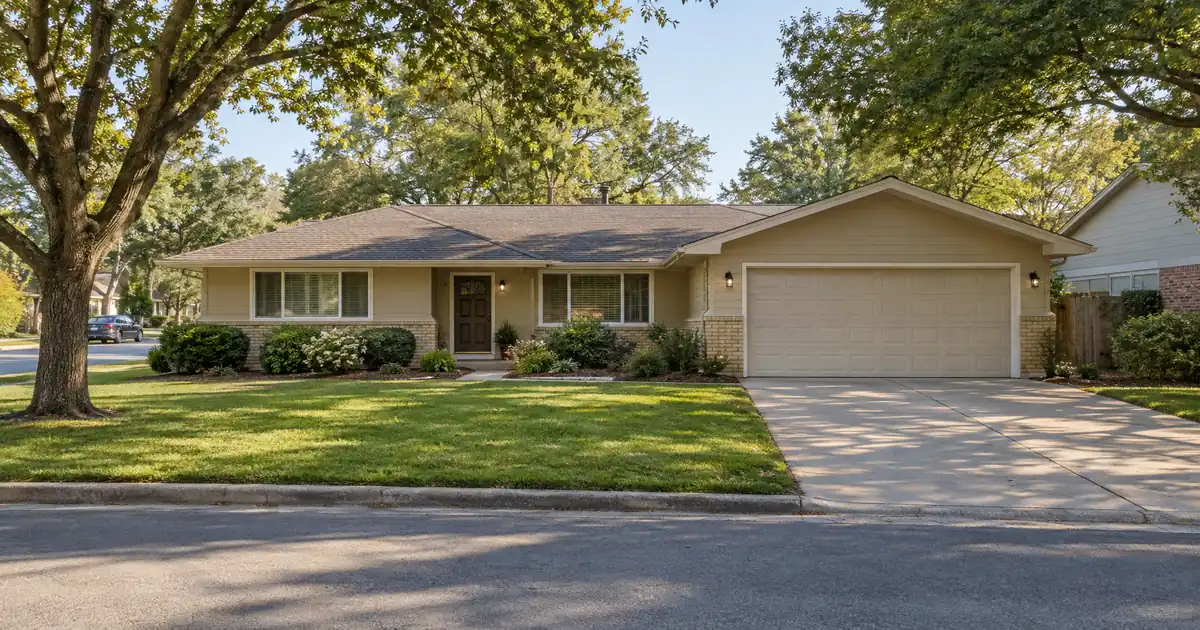
The Quick Read: Yes, a month-to-month tenant does not by itself block a DSCR cash-out refinance, because the file qualifies primarily on property-level rental income covering the payment, subject to lender guidelines, and not on lease length. The tenancy type mostly changes the paperwork and which rent figure the underwriter trusts. It can also affect the leverage tier.
- Cash-out on a standard rental tops out around 75% LTV across most of the network.
- About 6 months of ownership, measured from title recording, is the common expectation.
- Rent counted is generally the lower of the signed rent and the appraiser’s market rent.
- A written month-to-month agreement plus proof of payment keeps the file workable.
- Coverage of 1.00 is where select programs start. Stronger ratios open better pricing and leverage.
Month-to-month is a weaker file than a fixed-term lease. It is not a denial. Lenders have less to lean on, so the review gets closer and the appraiser’s market rent carries more weight. The real damage on these files usually comes from a below-market rent, not from the lease label.
DSCR Cash-Out Calculator
Run the cash-out numbers in your market
Rate source: Freddie Mac 30-yr average via FRED® — Federal Reserve Bank of St. Louis · effective Oct 8, 2026
Prefilled with starting assumptions — enter your property’s value, balance, taxes, and insurance for a more accurate picture.
Program parameters update from Lendmire’s centralized guideline source. Taxes and insurance are editable estimates.
As of Oct 8, 2026 · General Freddie Mac market benchmark, not a Lendmire loan offer. Property value, balance, taxes, and insurance are editable estimates. Maximum loan-to-value varies by lender, program, property type, and seasoning. Not a Loan Estimate, approval, or commitment to lend. Program availability and eligibility are subject to lender guidelines, credit approval, property review, and underwriting.
Why Does Month-to-Month Make Lenders Look Closer?
A month-to-month tenancy has no contract end date. Cornell’s Legal Information Institute describes it as continuing until one party gives notice, and notes it can arise from conduct, such as a landlord accepting monthly rent, even without a written agreement.
That is the whole concern. The lender is sizing a loan against rent it expects to keep receiving. A fixed term gives some comfort. A rolling tenancy gives less. So the underwriter leans harder on two things: proof the rent is really paid, and the appraiser’s independent opinion of market rent.
Across the wholesale network, the practical result is one of three outcomes. The file clears as submitted. It clears with closer review. Or it clears at a lower leverage tier. Nobody has to move out, and nobody needs to sign a new lease for the file to be considered. Signing one can still make the file cleaner. For related coverage, see Lendmire’s piece Can You Get a DSCR Cash-Out With a Tenant Mid-Lease or Month-to-Month?.
Key Terms Defined
Month-to-month tenancy: A rental with no fixed end date that renews each month until someone gives notice.
Holdover: A tenant who stays after a fixed-term lease expires, which often rolls into month-to-month.
Rent schedule: The appraiser’s report of market rent, filed on Form 1007 for one-unit properties and Form 1025 for two to four units.
Rent roll: A unit-by-unit list of tenants, rents, and lease status for a multi-unit property.
DSCR: Monthly rent divided by the full monthly obligation, meaning principal, interest, taxes, insurance, and any HOA dues.
PITIA: That full monthly obligation: principal, interest, taxes, insurance, and association dues.
Seasoning: The ownership period a lender wants before it will return cash on a recent purchase, measured from title recording.
How Do Lenders Count Rent on a Month-to-Month File?
Underwriters generally count the lower of the rent in the lease or agreement and the appraiser’s market rent. DSCR is that figure divided by the full PITIA on the new loan. Rent above market earns no extra credit. Rent below market drags the ratio down.
The appraiser documents market rent on the rent schedule. The form is a long-term-rental tool. Class Valuation explains that Form 1007 estimates market rent from comparables leased monthly, which is why it cannot support a short-term rental appraisal.
| Tenant situation | Rent figure likely used | What to provide |
|---|---|---|
| Written month-to-month at market | Lower of agreement and market | Agreement, payment proof |
| Month-to-month below market | Often the lower agreement rent | Agreement, payment proof, renewal option |
| Holdover after expired lease | Expired lease plus market rent | Prior lease, payment history |
| Verbal arrangement only | Weakest case; leans on market rent | Written confirmation, bank records |
| Fresh lease at market | Lease rent, if at or below market | Signed lease, deposit proof |
Treat that table as typical behavior across most programs. Individual lenders differ, and every file is underwritten on its own facts.
What Documents Does a Month-to-Month File Need?
Paper the tenancy. A clean month-to-month file usually carries:
- A written month-to-month agreement, or the expired lease plus a note that it continues monthly.
- Proof rent is actually paid: bank deposits or payment records matching the stated rent.
- The current mortgage statement and payoff figure.
- The appraisal with its rent schedule.
- Entity documents if an LLC holds title, subject to lender program eligibility.
- Matching names across the lease, title, insurance, and the existing mortgage statement.
Name mismatches cause more preventable kickbacks than the lease term does. A tenant paying a prior owner, an LLC on title with a personal name on the lease, an insurance policy under a different entity. Each one is a question the file has to answer.
Paper It, Renew It, or Go As-Is?
Renewing at market rent before applying is usually the cleanest move, when the tenant agrees and it fits the relationship. A signed renewal gives the underwriter a fixed term to read and can lift the rent used if the old rent sat below market. Going as-is works when the tenant already pays at or above market and the payment history is clean.
Here is the decision in plain terms:
1. Rent at or above market, clean payment history: go as-is with a written agreement and bank records.
2. Rent below market, tenant willing: sign a renewal at market rent before applying, in writing.
3. Rent below market, tenant unwilling or locked in: expect the lower figure to drive coverage, and size the request to that number.
4. No paperwork at all: write it down first. Conduct can create the tenancy, but the file needs a document.
Rent changes on a month-to-month tenancy follow notice rules set by state law. Nolo reports that most states require 30 days’ notice to end a month-to-month tenancy, with exceptions such as North Carolina at 7 days and Delaware at 60, and that notice to raise rent generally mirrors notice to terminate. Virginia’s statute on month-to-month notice is one example of how a state codifies it. Tenancy law varies by location, so check local rules or ask a local professional before changing a tenant’s terms.
Worked Example: Same Property, Two Tenancies
Run the numbers on a single-family rental valued well within the standard loan range, with the cash-out request set at 75% LTV. These are modeled assumptions, not market data. Final terms depend on the lender’s guidelines, the property type, and the borrower’s complete credit picture.
Scenario one: the tenant is month-to-month at a rent well below what the appraiser’s rent schedule shows. The lower-of rule uses the agreement rent. Coverage lands in borderline territory, near 1.00x. Leverage may need to step down to keep the ratio working, and the cash back shrinks.
Scenario two: the same tenant signs a renewal at the appraiser’s market rent before the application. The file now reads market rent with a fixed term behind it. Coverage clears 1.00x with room, and the 75% cap is the limit that binds, not the ratio.
Same house, same tenant, same equity. The difference is paper and rent level. Cash back is whatever remains after the new loan pays off the existing mortgage and costs, so any change in the maximum loan flows straight to the proceeds.
Two tests apply at once. LTV caps the loan against value. Coverage caps it against income. The tighter one sets the maximum. Passing 1.00 also does not mean the property cash flows. Repairs, vacancy, management, utilities, and capex sit outside the calculation.
Special Situations That Change the Read
| Situation | How it reads | What helps |
|---|---|---|
| Multi-unit, mixed leases | Each unit read separately | Rent roll flagging every lease status |
| Related-party tenant | Rent gets questioned | Market-rate payments with bank proof |
| Lease started mid-process | Little payment history | Deposit and first-month proof |
| Vacant between tenants | No rent to test | Sign a lease first, apply second |
| Lease in prior owner’s name | Names don’t match | Assignment or new agreement |
On vacancy: cash-out on a long-term rental generally needs a tenant in place. Some lenders discount rent or reduce leverage on a vacant unit, so lease first. On multi-unit properties, if one lease is expiring and another is month-to-month, show both on the rent roll instead of letting the underwriter find it.
Seasoning stacks with lease timing. The clock of about 6 months runs from title recording, not from tenant move-in or lease signing. A recent purchase with a freshly signed lease can hit both. Lendmire’s explainer on the six-month seasoning clock covers the details.
Short-term rentals are a different product. Nightly bookings are not month-to-month tenancy. Across the network, short-term-rental cash-out sits at 70% LTV, with a 640+ score expected, about 12 months of hosting history, and a 1.00 coverage floor on refinances. Each figure is subject to lender guidelines and a complete review of property type, leverage, and credit.
What Else Decides the Outcome?
Lease term ranks low. In order, the file turns on documented rent against market rent, equity and the leverage tier, ownership seasoning, then credit and reserves.
On credit, a 620 floor exists in parts of the network, most programs want around 660, and 700+ opens the strongest leverage tiers. Reserves vary by lender, leverage, loan size, and transaction type. They commonly run around 6 months of PITIA, with about 9 months above $1,500,000. Standard programs go up to $3,000,000. A larger equity cushion can lift coverage but never erases credit floors, reserve rules, or property eligibility. The strongest files clear both tests: enough equity and enough rental coverage.
Coverage of 1.00 is where select programs start, and stronger ratios earn better pricing and leverage. A separate select-lender path takes coverage below 1.00, with leverage and terms adjusted. Ineligible collateral stays ineligible whatever the tenancy: manufactured homes, log homes, and barndominiums are not offered in the network’s DSCR programs.
Appraisal Day With a Sitting Tenant
The tenant stays in place. The appraiser needs interior access, so give the tenant written notice of the visit and keep it routine. Tenants generally do not sign anything for the refinance. Whether to tell them about the loan is a relationship call, not a lender requirement. A tenant who is cooperative on access makes the rent schedule easier to support.
Cash-Out Versus Other Equity Options
| Option | Underwriting focus | Month-to-month effect |
|---|---|---|
| DSCR cash-out | Rent vs PITIA, LTV | Paperwork and rent figure |
| Investment-property HELOC | Equity line, total cap $500,000 | Depends on lender review |
| Rate-and-term | Payoff only, up to 85% LTV | No cash back |
A refinance that returns cash is a cash-out and sits under the 75% ceiling. A rate-and-term refinance returns no cash at closing. For the broader product picture, see the complete DSCR loans guide.
Common Mistakes
- Assuming month-to-month is disqualifying. It means closer review, not a decline.
- Assuming no written lease means no usable rent. Conduct creates the tenancy; the file just needs it documented.
- Expecting credit for above-market rent. The lower-of rule ignores the excess.
- Starting the seasoning clock at tenant move-in. It starts at title recording.
- Applying on a vacant unit and hoping the appraiser’s rent carries it.
- Leaving name mismatches across lease, title, and insurance.
Tax treatment can depend on how the funds are used and how the property is held; investors should keep clear records and speak with a qualified tax professional before relying on any deduction.
If you are buying or refinancing a rental property and want to see how the numbers work, Lendmire can help you compare DSCR loan options based on the property income, credit profile, leverage, and investor goals. Programs change and every file is underwritten individually; this is not a commitment to lend.
Frequently Asked Questions
Does a month-to-month tenant disqualify a DSCR cash-out?
No. The review centers on the rent the property earns, not the lease term. Month-to-month reads as a weaker file than a fixed term, so expect closer review and possibly a lower leverage tier, subject to lender guidelines.
Does the tenant have to move out or sign anything?
Neither. The tenant stays through the refinance. The appraiser needs access, so give notice of the visit. A renewal at market rent before applying can help the file, but it is a choice, not a requirement.
Does a verbal arrangement count?
It can create a real tenancy, but it is the weakest documentation. Put the terms in writing and back them with bank records showing rent paid. Underwriters lean on the appraiser’s market rent when the paper is thin.
What if the tenant pays below market?
The lower-of rule uses the lower figure, which pulls coverage down and can shrink the loan. A written renewal at market rent can lift the rent used. If the tenant will not renew, size the request to the lower number.
Can I cash out if the unit is vacant?
Generally not on a long-term rental. Vacant means no rent to test, and some lenders discount rent or cut leverage. Lease the unit first, then apply.
Investors weighing their equity options can start with Lendmire’s guide to cash-out refinance on an investment property.
About Lendmire
Lendmire is a non-QM mortgage brokerage (NMLS# 2371349) arranging DSCR investor loans in 41 markets, including Washington, D.C. DSCR eligibility is generally reviewed around property-level rental income rather than personal income, subject to lender and program guidelines, a fit for self-employed investors and LLC-owned portfolios. Lendmire was recognized as a Scotsman Guide Top Mortgage Workplace in 2025 and 2026.
Get Started
Ready to find the right loan for you?
In about 30 seconds you can review financing options available for your investment property. No commitment required.
Informational only. Not a Loan Estimate, approval, or commitment to lend. Program availability and eligibility are subject to lender guidelines, credit approval, property review, and underwriting.
References
1. Cornell LII Wex, month-to-month tenancy
2. Class Valuation, Form 1007 and short-term rentals
3. Nolo, state notice rules for month-to-month tenancies
This article is part of Lendmire’s investment property cash-out refinance program — full qualification details, guidelines, and scenarios live on the program page.
Related reading: Do Fintech Rental HELOCs Allow LLC-Owned Properties? · Cross-Collateral Line vs Super Jumbo DSCR Cash-Out: Equity and Risk · Can You Get a DSCR Cash-Out Refinance When the Ratio Falls Below 1.0?
Brandon Miller
Founder & CEO, Mortgage Loan Originator, Lendmire LLC
- Mortgage Loan Originator · NMLS# 1129696 · Verify on NMLS Consumer Access
- North Carolina Real Estate Broker · License# 343312 · Verify on NCREC
- North Carolina Insurance Producer · License# 19053198 · Property, Casualty, Life, Health · Verify on NAIC SBS
- Lendmire LLC · Firm NMLS# 2371349 · Verify firm licensure
Disclosure information. Lendmire is a state-licensed mortgage brokerage under NMLS# 2371349. Lendmire is not a depository institution, direct lender, or financial advisor — all loans referenced are placed through wholesale lender partners and are subject to each lender's underwriting standards. This article is provided for general informational purposes and is not a commitment to lend, nor does it constitute financial, legal, or tax advice. Loan programs, terms, rates, and qualification standards change without notice and depend on borrower profile, property type, and the state in which the subject property is located. Equal Housing Opportunity provider. NMLS Consumer Access: nmlsconsumeraccess.org.