
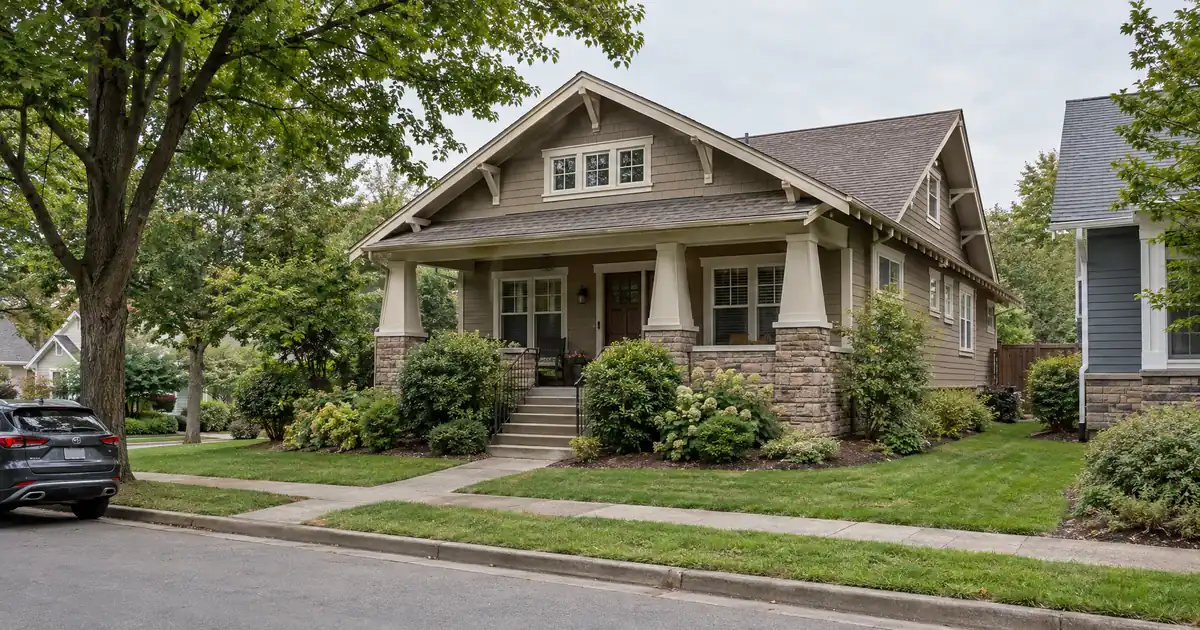
The Quick Read: The way to keep a low first mortgage is to request a revolving line that records behind it as a second lien. This adds new borrowing without touching the first loan’s balance, term, or payment. That only works if the first loan’s documents allow a junior lien, the title is held the right way, and combined leverage stays under the lender’s cap. Programs vary, so every file is underwritten individually.
- A second-lien line adds borrowing; a cash-out refinance replaces your first loan.
- Line size comes from your first loan’s balance, not its interest cost, so a cheap first does not buy you extra room.
- Title and vesting often decide the outcome before credit does; most investment-property lines want an individual or revocable trust, not an LLC.
- Investment-property lines through the network cap at $500,000 total.
- Refinancing the first loan later may force the line to be paid off or subordinated.
What Is a Rental Line of Credit Behind Your First Lien?
It is a home equity line of credit (HELOC) on a rental property, recorded in second position. The existing first mortgage keeps its balance, term, and payment. The revolving line sits behind it. If the property were ever sold or foreclosed, the first lien would be paid first.
This is the add-versus-replace choice. A cash-out refinance replaces the first loan, so the whole balance reprices. A second-lien line reprices only the slice you actually borrow.
NerdWallet’s investment-property HELOC explainer notes that rental lines exist, but the lender pool is smaller and borrowing limits are lower than on a primary home. Lenders see higher default risk on rentals, so pricing and fees tend to run higher too. The usual structure is a 10-year draw period, often interest-only at a variable rate, followed by repayment.
| Factor | Second-lien line | Cash-out refinance |
|---|---|---|
| Existing first loan | Stays in place | Paid off and replaced |
| What reprices | Only the drawn amount | The entire new balance |
| Underwriting basis | Personal credit and DTI | Property rent coverage (DSCR) |
| Title allowed | Individual or revocable trust | LLC possible, per program terms |
| Best fit | Smaller, flexible needs | Larger needs, or a restructure |
What Does Losing the First Lien Actually Mean?
Investors use the phrase for four different problems. Each has a different cause and a different fix.
| Risk | How it happens | How to prevent it |
|---|---|---|
| First loan replaced | You choose a cash-out instead of a line | Request a junior-lien line only |
| First loan terms change | Lender consent or modification is triggered | Read the first loan’s documents before applying |
| Lender objection | The first loan restricts added liens or has due-on-sale language | Confirm the note allows subordinate financing |
| Lost refinance flexibility | A later refinance of the first requires subordination | Plan the line’s payoff or subordination in advance |
The first loan’s documents deserve the most attention. Look for language on due-on-sale, additional liens, or subordinate financing. If the note restricts a second lien, a line can create a default on a loan you were trying to protect. Due-on-sale rules have exceptions that vary by situation, so have a real estate attorney read the note if the wording is unclear.
A prepayment penalty on the first is another common stall point. Check for one before you request anything.
Does a Low First Mortgage Rate Help You Qualify?
No. The first loan’s balance sets your room, and its interest cost does not change the sizing. A low first helps only in the sense that a smaller balance leaves more equity unclaimed.
Lenders generally run combined loan-to-value (CLTV) on the full credit limit, not on what you draw. The formula is straightforward: maximum line equals value times the CLTV cap, minus every existing lien. Then the dollar cap applies, and the smaller limit wins. An existing second lien counts, so add it to the first before you subtract.
Run it in percentages of value. Say a rental’s first mortgage equals 50% of its value and the line’s combined ceiling is 70%. That leaves about 20% of value for the line. If the first equals 60% of value, only about 10% remains. The same rental, with the same low-cost first, gets a much smaller line.
A borrower with 700 credit and one with 720 reach the same ceiling, so a higher score adds eligibility rather than leverage. These are guideline ranges that vary by lender and borrower.
How Does Underwriting Treat the Request, Step by Step?
The line is underwritten on the borrower, not on the rent. Most of the network’s investment-property HELOC programs look at personal credit and debt-to-income, and the rental’s income matters less than it does on a DSCR loan. Rent-qualified second liens exist but are rare.
1. Check the first loan for lien restrictions. Read for due-on-sale, additional-lien, and subordinate-financing language.
2. Confirm title and vesting. Lines on rentals typically need title in your name or a revocable living trust.
3. Calculate combined leverage. Use the formula above, and include every lien on the property.
4. Underwrite the borrower. Credit generally needs to be around 700. Maximum DTI is typically about 50%, measured on the interest-only payment at the maximum draw.
5. Handle valuation. Because investment lines cap at $500,000, they commonly close without a traditional appraisal. A borrower can request a full appraisal, and a higher CLTV may call for a secondary valuation.
6. Gather documents. Expect the first mortgage statement, proof of title and vesting, and a credit authorization. A bank-statement variant takes 12 or 24 months of complete statements. The credit report generally cannot be more than 90 days old at closing.
Eligible properties are typically one to four units. Five or more units are treated as commercial, and mixed-use is not offered.
The structure is worth understanding before you sign. In the network, a typical investment-property line runs a 5-year interest-only draw, then a 25-year repayment. Pricing floats and does not convert to fixed. At least 75% of the line is usually drawn at closing, so you start with a large balance rather than an open, unused line.
The CFPB’s HELOC brochure explains the general mechanics. Some plans allow interest-only payments during the draw. With a variable rate, your payment can change even when you borrow nothing more. When the draw ends, repayment begins, often over ten or 15 years under the general consumer baseline. The brochure is written for primary homes, so treat it as the mechanics baseline, not a rental-specific rule.
What Should You Ask Before Anyone Pulls Your Credit?
Ask these questions first. A hard credit inquiry costs you something, and a few answers up front can save it.
- Does the lender offer second-position lines on non-owner-occupied one-to-four-unit properties?
- Is title in my name or a revocable trust acceptable, and what happens if the property sits in an LLC?
- What is the maximum combined leverage, and is it measured on the full limit or the drawn amount?
- Is there a dollar cap on investment-property lines?
- How much of the line must be drawn at closing?
- Is valuation done with an appraisal, or is there an automated or alternative method?
- How is DTI calculated, and on what payment?
- What happens to the line if I refinance the first mortgage later?
Gather your first mortgage statement, proof of title, and a draft of your combined-leverage math before the first call. Then the conversation moves on real numbers.
Where Do You Find a Lender for a Second-Lien Rental Line?
Fewer lenders offer these lines than offer primary-home lines, which makes the order of your calls matter.
| Source | Strength | Watch for |
|---|---|---|
| Your first-mortgage servicer | Familiar with your loan | Often declines investment properties |
| Credit unions | Sometimes flexible on rentals | Membership rules, caps by property type |
| Regional banks | May offer second-position lines | Smaller dollar caps, relationship pricing |
| A broker with a wholesale network | Compares several lenders’ guidelines at once | The line itself may still be a niche product |
Lendmire is a mortgage broker, so it arranges financing through select lenders in its wholesale network rather than lending directly. Its programs cover 41 markets, including Washington, D.C. For a deeper comparison of what different offers actually contain, Lendmire’s piece How to Compare Rental HELOC Offers Without Losing a Low First Mortgage walks through the terms side by side.
Where Does the General Rule Break?
A few situations change the answer.
LLC-held rentals. Many banks decline lines on entity-owned property, because the product works like a revolving credit account and lenders want a real person on the obligation. No federal rule bars an LLC-owned property from securing a line, so this is lender and product policy. Network options for an LLC-held rental are to re-title (where the first lender allows it), draw on a personally owned property instead, or use a DSCR cash-out. A DSCR cash-out replaces the first loan and qualifies primarily on property-level rental income, subject to lender program eligibility.
A DSCR first behind the line. A line can sit behind a DSCR first mortgage when three gates clear: the first lender’s documents tolerate a second lien, title is in your name or revocable trust, and combined leverage stays under the cap. The two loans test different things. The DSCR first tests whether rent covers the payment, while the line tests your personal credit and DTI. For background on the first loan, see the complete DSCR loans guide.
Thin-coverage rentals. A second lien adds a payment to a property that may already run tight. DSCR compares rent to the housing payment only, so clearing 1.00 is not the same as positive cash flow. Repairs, vacancy, management, utilities, and capital costs all sit outside the ratio. Strong personal income with a thin-coverage rental fits the borrower-based line. Strong rent coverage with messy personal income fits a DSCR loan.
Ineligible property types. Manufactured homes, co-ops, condotels, log homes, commercial, mixed-use, and agricultural-zoned properties are not offered for these lines. In some states, a property listed for sale, or listed in the past 60 days, is also ineligible.
First-lien lines. A HELOC in first position either replaces your existing mortgage or sits alone on a free-and-clear property. That makes it the wrong tool for keeping a low first.
A line on your primary home instead. A primary-home line often provides more room. It also puts your home behind an investment bet, which is a real tradeoff. Lendmire’s piece Rental HELOC vs Home HELOC Equity Limits With a Low First Lien covers where each one tends to win.
What Happens If You Refinance the First Mortgage Later?
The line may have to be subordinated or paid off. Subordination means the junior lender agrees in writing to stay behind the new first loan. That agreement is never automatic, and some lenders decline.
Plan this before you open the line. If you expect to refinance the first, ask the line lender whether it subordinates and under what conditions. If the answer is no, you would need to pay the line off at the refinance, which means holding cash or equity for that moment.
This is also where the add-versus-replace decision comes back. A DSCR cash-out refinance on a standard rental tops out around 75% LTV across most of the network, and about 6 months of seasoning is the common expectation. Coverage of 1.00 is where select programs start, and a separate select-lender path takes coverage below 1.00 with leverage and terms adjusted. A cash-out wins when you need more than the $500,000 line cap, when the rental sits in an LLC, or when the first loan’s terms are no longer worth protecting. Terms vary by lender guidelines, property type, leverage, credit profile, and full file review.
How Does Keeping the First Change Your Cost and Risk?
Keeping a cheap first means only the drawn slice carries current-market pricing. The high-cost money is just the part you borrow, and the rest of your debt stays where it was.
Keeping the first does not protect three things:
- Your combined leverage, because two liens now sit on one property.
- Your debt-to-income ratio, because the line payment counts against you.
- Your foreclosure exposure, because both lenders can act against the same asset.
Floating pricing matters most in repayment. The draw-period payment applies only while you are not paying down principal, so it does not last the whole term. When the draw ends, the payment can rise.
Small lines suit repairs, reserves, or a next down payment. Needs above the $500,000 cap point toward a cash-out.
Using a line for a down payment deserves extra scrutiny. The new purchase loan still needs its own leverage tier, reserves, and a clean paper trail. Most purchase files land at 75%-80% LTV, with select high-leverage programs reaching 85% LTV at roughly a 700+ score. A borrowed down payment means you are effectively financing the property near 100%, and a larger down payment never erases leverage caps, credit floors, or reserve rules. Reserves commonly run around 6 months of PITIA and vary by lender and loan size.
Tax treatment can depend on how the funds are used and how the property is held; investors should keep clear records and speak with a qualified tax professional before relying on any deduction, as IRS Publication 936 ties interest deductibility to use of proceeds.
Ready, Not Yet, or Wrong Tool?
Ready if the first loan allows a junior lien, title is in your name or a revocable trust, combined leverage clears the cap with room to spare, and credit is near 700 or above.
Not yet if the first has a prepayment penalty you have not priced, your DTI is near the limit, or you plan to refinance the first soon and have no subordination answer.
Wrong tool if the rental sits in an LLC you cannot re-title, you need more than $500,000, or the property is a type these lines do not accept. In those cases a DSCR cash-out, qualifying primarily on property-level rental income and subject to lender guidelines, is usually the cleaner path.
Key Terms Defined
Second lien: A loan recorded behind the first mortgage that is paid only after the first lien is satisfied.
CLTV (combined loan-to-value): All loans against the property, added together, divided by its value.
Subordination: A written agreement in which a lender accepts a lower repayment position behind another lien.
Draw period: The stretch of a line of credit when you can borrow and typically pay interest only.
DSCR (debt service coverage ratio): Monthly rent divided by the full monthly housing payment, including principal, interest, taxes, insurance, and any HOA dues.
Frequently Asked Questions
Does a low first mortgage rate improve my line terms?
No. Sizing depends on the first loan’s balance and on combined leverage, not on its interest cost. A low-balance first leaves more room, while a low-cost but large first does not.
Can I request a rental line if the property is in an LLC?
Usually not directly. Most investment-property lines want title in an individual’s name or a revocable trust. Alternatives include re-titling where the first lender allows it, drawing on a personally owned property, or using a DSCR cash-out, subject to lender program eligibility.
Will the line change my first mortgage?
Not if the first loan’s documents allow a junior lien. The first keeps its balance, term, and payment. The risk is a clause that restricts added liens, which is why reading the note comes before applying.
Does rent coverage matter for a HELOC?
Much less than for a DSCR loan. Rental lines are generally underwritten on personal credit and DTI. Rent-qualified second liens exist but are uncommon.
How big can an investment-property line be?
Across the network, lines on investment properties cap at $500,000 total, and the combined-leverage ceiling often limits the line well below that. Needs beyond the cap usually point to a cash-out refinance.
If you are buying or refinancing a rental property and want to see how the numbers work, Lendmire can help you compare DSCR loan options based on the property income, credit profile, leverage, and investor goals. Programs and guidelines change, every file is underwritten individually, and nothing here is a commitment to lend. A cheap first mortgage is worth protecting, but only if the line behind it is sized from the balance and structured with the exit in mind.
About Lendmire
As a non-QM mortgage broker (NMLS# 2371349), Lendmire facilitates DSCR investor loans across 41 markets, including Washington, D.C. DSCR eligibility is generally reviewed around property-level rental income instead of personal income documentation, subject to lender guidelines, serving LLC-structured portfolios and self-employed borrowers who don’t fit conventional boxes. A two-time Scotsman Guide Top Mortgage Workplace (2025, 2026).
Get Started
Ready to find the right loan for you?
In about 30 seconds you can review financing options available for your investment property. No commitment required.
Informational only. Not a Loan Estimate, approval, or commitment to lend. Program availability and eligibility are subject to lender guidelines, credit approval, property review, and underwriting.
References
1. NerdWallet – Can You Get a HELOC on an Investment Property?
2. CFPB – What You Should Know About HELOCs
This article is part of Lendmire’s DSCR loan program — full qualification details, guidelines, and scenarios live on the program page.
Related reading: Do Fintech Rental HELOCs Allow LLC-Owned Properties? · Cross-Collateral Line vs Super Jumbo DSCR Cash-Out: Equity and Risk · Can You Get a DSCR Cash-Out Refinance When the Ratio Falls Below 1.0?
Brandon Miller
Founder & CEO, Mortgage Loan Originator, Lendmire LLC
- Mortgage Loan Originator · NMLS# 1129696 · Verify on NMLS Consumer Access
- North Carolina Real Estate Broker · License# 343312 · Verify on NCREC
- North Carolina Insurance Producer · License# 19053198 · Property, Casualty, Life, Health · Verify on NAIC SBS
- Lendmire LLC · Firm NMLS# 2371349 · Verify firm licensure
Disclosure information. Lendmire is a state-licensed mortgage brokerage under NMLS# 2371349. Lendmire is not a depository institution, direct lender, or financial advisor — all loans referenced are placed through wholesale lender partners and are subject to each lender's underwriting standards. This article is provided for general informational purposes and is not a commitment to lend, nor does it constitute financial, legal, or tax advice. Loan programs, terms, rates, and qualification standards change without notice and depend on borrower profile, property type, and the state in which the subject property is located. Equal Housing Opportunity provider. NMLS Consumer Access: nmlsconsumeraccess.org.