
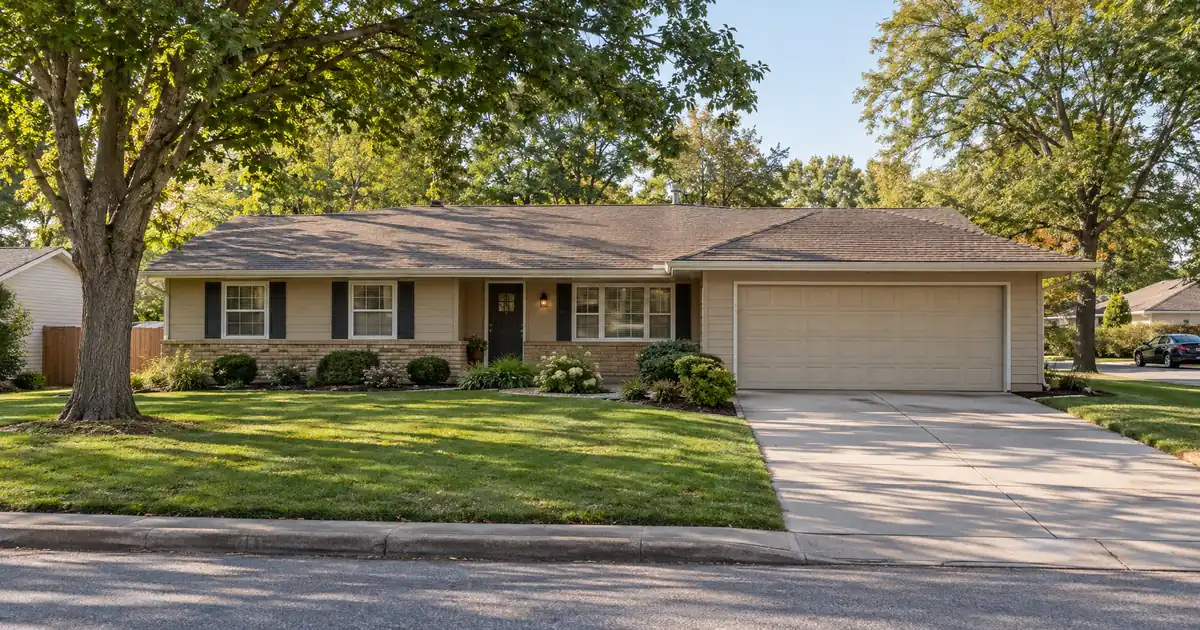
The Quick Read: A DSCR cash-out lets you keep a finished rehab, pull cash against it, and keep collecting rent. A sale releases the most cash at once and ends the rent stream. The better choice depends on what your next project needs and whether the rent can carry a larger loan.
- A cash-out is a financing event. A sale is a disposition that can create a tax bill.
- Cash-out proceeds are capped by leverage and rental coverage. A sale releases the full equity, minus costs and tax.
- Flip count is not the underwriting test. Seasoning, appraised value, and rent are.
- Many scaling flippers end up doing both: selling the thin deals and keeping the strong renters.
The Honest Answer: Who Each Option Is Really For
A DSCR cash-out refinance suits the flipper who wants to build a rental portfolio. DSCR stands for debt service coverage ratio. It compares a property’s rent to its full monthly obligation: principal, interest, taxes, insurance, and any HOA dues (together, PITIA). The loan is reviewed primarily on property-level rental income covering the payment, subject to lender guidelines. It pays off your hard-money or bridge loan, covers costs, and returns what is left as cash.
DSCR Cash-Out Calculator
Run the cash-out numbers in your market
Rate is an editable market assumption — the live benchmark loads when available.
Prefilled with starting assumptions — enter your property’s value, balance, taxes, and insurance for a more accurate picture.
Program parameters update from Lendmire’s centralized guideline source. Taxes and insurance are editable estimates.
Fallback assumption · General Freddie Mac market benchmark, not a Lendmire loan offer. Property value, balance, taxes, and insurance are editable estimates. Maximum loan-to-value varies by lender, program, property type, and seasoning. Not a Loan Estimate, approval, or commitment to lend. Program availability and eligibility are subject to lender guidelines, credit approval, property review, and underwriting.
Selling suits the flipper whose business is resale. It gives you the largest lump sum and no landlord duties. It also gives you no rent and no appreciation on that property afterward.
Neither choice is smarter in the abstract. The choice turns on your next deal. If the next project needs a down payment, a cash-out may be enough. If it needs a full capital stack, a sale may be the only way to produce that much cash.
Side-by-Side
| Factor | DSCR Cash-Out | Sell and Roll Proceeds |
|---|---|---|
| Review basis | Rent vs. PITIA, plus credit | Buyer’s lender qualifies the buyer |
| Documentation | Lease or market-rent opinion, entity papers | Contract, payoff letter, title work |
| Property types | Rentable, appraisable rentals | Any marketable property |
| Entity vesting | LLC possible, subject to lender program eligibility | Entity signs the sale |
| Timeline | Seasoning, appraisal, loan review | Listing, buyer’s financing, title work |
| Reserves | Commonly about 6 months of PITIA | None required of the seller |
| Cash released | Partial, capped by leverage and coverage | Full equity less costs and tax |
| Asset afterward | You keep it and the rent | Gone |
The sale column reflects published industry norms rather than any single program. The cash-out column reflects what select lenders in Lendmire’s wholesale network typically want. One property type note: manufactured homes (single- and double-wide), log homes, and barndominiums are not offered in the network’s DSCR programs, so those exits are sale-only.
The comparison also leaves out pricing on purpose.
When a DSCR Cash-Out Is the Better Fit
Choose the cash-out when the rent can carry the loan and the next deal needs only part of your equity.
On a cash-out refinance of a standard rental, most programs in the network top out around 75% LTV. LTV is loan-to-value: the new loan as a share of appraised value. Short-term-rental collateral is more conservative, with a 70% cash-out ceiling. About 6 months of ownership, measured from title recording, is the common seasoning expectation. Seasoning is simply the waiting period before a lender will refinance a recently bought property.
Credit matters too. A 620 floor exists in parts of the network, most programs want around 660, and 700 or higher opens the strongest leverage. Loan sizes run up to $3,000,000 on standard programs, and above $2,500,000 the network generally holds to 30-year fixed structures.
Here is a typical scenario. Picture a flipper who finishes a rehab and places a tenant. The appraiser prepares a market-rent schedule, which is Form 1007 for a single-unit property or Form 1025 for two to four units, per the Fannie Mae forms list. Those are only form names, since DSCR loans are not agency products. The new loan pays off the bridge lender, covers costs, and sends the rest to you. You keep the rent and the appreciation, and you only have to carry the larger debt.
The cash-out fits best when:
- Rent clearly covers the new, larger payment. Coverage can cap your loan before LTV does.
- The appraisal supports a value comfortably above your payoff.
- You can sit on reserves, commonly about 6 months of PITIA, with about 9 months typical on loans above $1,500,000. Conservative, lower-leverage files under $1,500,000 can sometimes see reserves waived.
- You want each rental underwritten on its own rent so the portfolio grows without a personal-income ceiling.
A word on coverage. 1.00 is where many select programs start, and a separate select-lender path takes coverage below 1.00 with leverage and terms adjusted. Stronger ratios generally open better leverage. The ratio still tells you only that rent covers PITIA. It does not mean the property cash flows, because repairs, vacancy, management, utilities, and capex all sit outside the calculation. A bigger loan also thins whatever cushion you had.
For flippers who hold some properties in an LLC, the question of who sits on title matters early. Lendmire’s piece Cash-Out Refinance vs Selling an LLC Rental to Pay a Partner covers that side in more depth.
When Selling and Rolling Proceeds Is the Better Fit
Choose the sale when the property cannot support its own loan or when your next deal needs every dollar of equity.
A sale makes sense in several situations:
- The appraisal comes in short. If value lands near your payoff, the 75% ceiling leaves little cash. Refinancing would recycle almost nothing while adding debt and costs.
- Rent is thin. When rent barely covers PITIA, the loan may be small or unavailable at the leverage you need.
- A capital item is due. A roof, systems work, or a major repair eats the cash you would have pulled out.
- The next project needs a lump sum. A cash-out releases a portion of your equity. A sale releases all of it, less selling costs and tax.
- You do not want tenants. Some flippers run a resale business and never intend to be landlords. A rental held reluctantly tends to be a poorly managed rental.
- The property type is outside the programs. Manufactured, log, and barndominium properties are not offered in the network, so a sale is the exit.
Selling also carries a different tax picture. A cash-out is a loan, not a sale. A sale is a taxable event, and a flipper’s gain can be treated differently from a long-term holder’s depending on dealer-versus-investor status. Courts look at facts such as how often you sell and why you acquired the property, as described in The Tax Adviser’s coverage of a Tax Court dealer case. Tax treatment varies, and investors should keep clear records and speak with a qualified tax professional before relying on any result.
Can You 1031 a Flip Instead?
Usually not. The IRS states that real property held primarily for sale does not qualify as like-kind. That is the category most flips fall into. A flipper who converted a property into a genuine rental with documented investment intent may be in a different position, and that is a question for a CPA.
The rule has a statutory clock: the IRS 45-day identification deadline and the 180-day exchange period, as laid out in The Tax Adviser’s overview of like-kind exchanges. Those are tax rules, not loan timelines. A 1031 also releases no spendable cash, so it does not solve a down-payment problem.
For most scaling flippers, “selling and rolling proceeds” means a taxable sale followed by redeploying what is left.
How Do You Decide Across a Whole Pipeline?
Sort each project into sell, hold, or bridge again, then let exits fund entries.
A repeatable rule works better than deciding deal by deal under pressure. Here is a practical way to sort a pipeline:
1. Rank by rent coverage. Projects with strong coverage and a solid appraisal are hold candidates. Projects at the thin end are sale candidates.
2. Check seasoning. If a property has not reached about 6 months from title recording, the cash-out is not yet available. Plan the exit before you close the bridge loan, not after. Some select lenders may have exceptions for documented all-cash purchases, but those are program-specific, and a hard-money purchase generally does not fit them.
3. Test the next deal’s cash need. Ask whether it needs a down payment or a full stack. A cash-out can cover the first. Only a sale covers the second.
4. Keep reserves. Several holds at once means several sets of reserves. Do not let growth drain the cash that keeps each property safe.
5. Settle vesting early. Moving a deed into an LLC after purchase can add title review and may reset seasoning for some lenders. Decide on entity structure before the purchase records, subject to lender program eligibility.
In many broker-side files, the deals that go wrong are not the ones where the flipper chose wrong. They are the ones where the flipper planned the exit late. A short appraisal or thin rent discovered after the bridge loan is already running leaves one option, and it is rarely the best one.
A hybrid is common. Sell the projects that cannot support a loan, keep the ones that can, and use the cash-outs from the keepers to fund the next bridge-financed purchase.
DSCR vs. conventional financing
There are two common ways to finance an investment property, and they qualify you differently — here’s how investors weigh them.
Why investors choose it
- Qualifies on the property’s rental income — no personal tax returns, W-2s, or pay stubs needed to document income.
- No personal debt-to-income ceiling to clear, so existing mortgages and obligations don’t cap your borrowing the same way.
- Can be closed in an LLC, keeping the property inside a business entity.
- Built for scaling — not held to the limit on number of financed properties that conventional financing applies.
- Underwriting centers on the deal: generally qualifies when the rent covers the payment, a 1.00x coverage ratio being a common baseline (confirmed in underwriting).
- Designed specifically for investment property, including long-term and, where the program allows, short-term rentals.
Where it’s strong
- Often the lowest ongoing financing cost for a buyer who fully qualifies on personal income — a fit for a first property or a cost-first purchase.
Trade-offs for investors
- Requires full personal income documentation and must fit within a debt-to-income limit — salary, existing debts, and other mortgages all count.
- Typically held in your personal name rather than a business entity.
- Caps how many financed properties you can carry, which can become a ceiling as a portfolio grows.
- Evaluates you as a borrower as much as the property, which usually means more paperwork.
How investors usually choose: a first or single property often optimizes for the lowest financing cost; portfolio builders often optimize for leverage, vesting in an LLC, and scaling past conventional caps. The right answer depends on your goals, the property, and current guidelines — both paths run through select lenders in Lendmire’s wholesale network, with eligibility and terms confirmed in underwriting.
What Does the Larger Loan Do to Your Coverage?
A cash-out raises the loan on the property. A bigger loan means a bigger payment, so the coverage ratio on that property drops. A property that cleared comfortably on the bridge payoff may land close to the floor on the new loan.
That matters in two ways. First, thin coverage can cap your cash-out below what LTV alone would allow. Second, thin coverage leaves little room for a vacancy or repair. Run the ratio on the new loan, not the old one, before you commit to holding.
A larger down payment on a purchase lowers the payment and can lift the ratio. It never erases leverage caps, credit floors, reserve rules, or property eligibility. The strongest files clear both tests: enough equity and enough rental coverage.
The Verdict
Keep and cash out when rent supports a larger loan, the appraisal clears your payoff with room to spare, and the next project needs a down payment rather than a full stack. This path builds a portfolio and keeps the asset working.
Sell when the numbers are thin, a capital item is due, the property sits outside the programs, or your business is resale at its core. This path gives you the most cash and the cleanest break.
For a scaling flipper the realistic answer is a mix. Treat each finished project as a separate decision, and run both sets of numbers before the bridge loan matures. For more on how these loans work, the complete DSCR loans guide walks through programs, qualification, and structures.
Frequently Asked Questions
Does my flip count affect whether I can get a DSCR cash-out?
Flip count is not the underwriting test. The lender looks at seasoning, appraised value, rent coverage, credit, and reserves on that property. Experience is more relevant to your bridge lender than to the DSCR refinance that takes it out.
Can a DSCR cash-out pay off my hard-money loan?
Yes, that is the usual mechanic. The new loan pays off the existing lien and costs, and the remainder comes to you as cash. How much remains depends on the 75% ceiling on standard rentals, your rent coverage, and the appraised value.
Does a strong DSCR waive the waiting period?
No. Seasoning and coverage are separate tests, and a strong ratio does not shorten the roughly 6-month expectation measured from title recording. Some select lenders in the network have program-specific exceptions, so ask before you assume either way.
Can I use a 1031 exchange on a property I flipped?
Usually not, because the IRS excludes property held primarily for sale. A dealer-versus-investor determination depends on facts and circumstances, so a CPA should make that call.
Is clearing 1.00 coverage the same as positive cash flow?
No. Coverage compares rent to PITIA only. Repairs, vacancy, management, utilities, and capex are outside it, so a property can clear the ratio and still lose money in a bad month.
Next Steps
If you are buying or refinancing a rental property and want to see how the numbers work, Lendmire can help you compare DSCR loan options based on the property income, credit profile, leverage, and investor goals. As a broker, Lendmire arranges DSCR investor loans through select lenders in its wholesale network, which spans 41 markets, including Washington, D.C. Qualification is subject to lender guidelines, and nothing here is a commitment to lend. Call 828-256-2183 or request a quote.
A deeper walk-through of investment-property equity extraction lives in Lendmire’s guide to cash-out refinance on an investment property.
For current guidelines and terms, see Lendmire’s DSCR loan programs page.
About Lendmire
Lendmire, NMLS# 2371349, is a non-QM mortgage broker serving real estate investors in 41 markets, including Washington, D.C., through DSCR investor loan programs. Qualification is generally reviewed around the subject property’s rental income, not the borrower’s W-2 history — a practical fit for LLC-titled portfolios and self-employed investors. All scenarios remain subject to lender review and program guidelines. Two consecutive Scotsman Guide Top Mortgage Workplace recognitions (2025, 2026).
Get Started
Ready to find the right loan for you?
In about 30 seconds you can review financing options available for your investment property. No commitment required.
Informational only. Not a Loan Estimate, approval, or commitment to lend. Program availability and eligibility are subject to lender guidelines, credit approval, property review, and underwriting.
References
1. Fannie Mae – Selling & Servicing Guide Forms
2. The Tax Adviser – Real estate dealer or investor, recent Tax Court case
3. IRS – Like-kind exchanges, Real estate tax tips
4. The Tax Adviser – Like-kind exchanges of real estate
Brandon Miller
Founder & CEO, Mortgage Loan Originator, Lendmire LLC
- Mortgage Loan Originator · NMLS# 1129696 · Verify on NMLS Consumer Access
- North Carolina Real Estate Broker · License# 343312 · Verify on NCREC
- North Carolina Insurance Producer · License# 19053198 · Property, Casualty, Life, Health · Verify on NAIC SBS
- Lendmire LLC · Firm NMLS# 2371349 · Verify firm licensure
Compliance and disclosures. Lendmire (NMLS# 2371349) is a licensed mortgage broker and is not a direct lender, depository institution, financial advisor, or tax professional. Content in this article is general market analysis and educational information — not financial, legal, or tax advice for any specific situation. Lendmire does not guarantee loan approval; every transaction is subject to underwriting by the funding lender. Mortgage pricing and loan program guidelines are subject to change at any time without notice and vary by borrower characteristics, property type, and state regulations. Lendmire complies with Equal Housing Opportunity. Licensure verification: NMLS Consumer Access.