
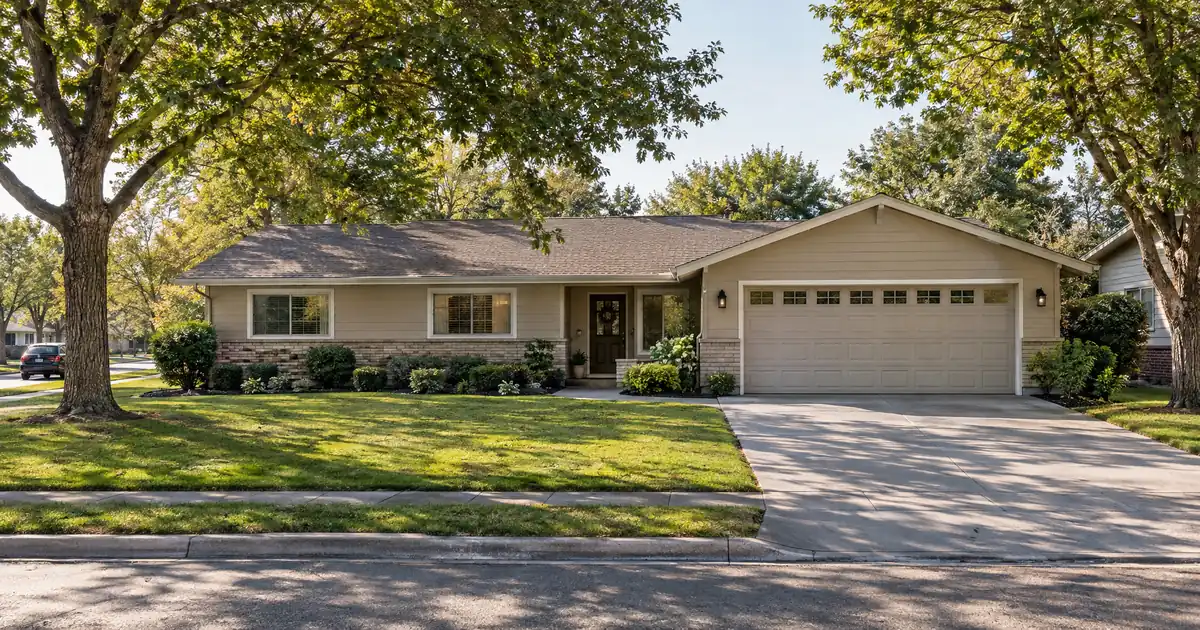
The Quick Read: Usually, yes. An expired lease does not by itself block a DSCR cash-out refinance, because most programs in the wholesale network use the lower of the signed lease and the appraiser’s market rent, and market rent can carry the file when the lease has lapsed. The real risk is thin documentation, not ineligibility.
- A tenant who stays and keeps paying generally rolls into a month-to-month tenancy, which is workable when it is written down.
- Cash-out refinances on standard rentals top out around 75% LTV, with about 6 months of ownership seasoning.
- Coverage is rent divided by the new, larger payment. 1.00 is where select programs start, and stronger ratios open better terms.
- Sign a renewal or written holdover agreement before the appraisal is ordered, so the file tells one rent story.
- Programs differ on how they treat month-to-month tenancies, so confirm with the specific program before ordering anything.
An expiring lease feels like a deadline. It is mostly a paperwork question. Across the wholesale network, the files that stall on lease status stall because the rent evidence is messy, not because the tenancy ended. This article covers how lenders count rent when a lease lapses, what happens at each stage of the file, and when to renew first versus go now. For the broader picture, Lendmire’s complete DSCR loans guide covers how the product works end to end.
DSCR Cash-Out Calculator
Run the cash-out numbers in your market
Rate source: Freddie Mac 30-yr average via FRED® — Federal Reserve Bank of St. Louis · effective Oct 8, 2026
Prefilled with starting assumptions — enter your property’s value, balance, taxes, and insurance for a more accurate picture.
Program parameters update from Lendmire’s centralized guideline source. Taxes and insurance are editable estimates.
As of Oct 8, 2026 · General Freddie Mac market benchmark, not a Lendmire loan offer. Property value, balance, taxes, and insurance are editable estimates. Maximum loan-to-value varies by lender, program, property type, and seasoning. Not a Loan Estimate, approval, or commitment to lend. Program availability and eligibility are subject to lender guidelines, credit approval, property review, and underwriting.
How Does the Lender Count Rent When a Lease Ends?
The rent used for lender review is usually the lower of two numbers: the signed lease and the appraiser’s market rent. A lease above market gets capped at market. A lease below market pulls the ratio down. When a lease has expired, market rent often does the work, and the lease matters less than the proof of what the tenant actually pays.
Here is the plain version of the legal side. When a fixed-term lease ends and the tenant stays with the landlord’s consent, the tenancy generally becomes month-to-month on the same terms. A university tenant-counseling page describes it this way, and a legal-aid explainer on holding over says that if the landlord allows the tenant to stay, a month-to-month tenancy results unless the original lease said otherwise. Many states codify this. Notice periods for ending a month-to-month tenancy vary by state, so that part is a local-law question, not a lending one.
From the lender’s side, a month-to-month tenancy is workable when it is written down and backed by payment proof. It is a weaker file than a fresh lease. Weaker is not ineligible.
Coverage is then tested on the new payment. DSCR is the rent used for lender review divided by PITIA: principal, interest, taxes, insurance, and any HOA dues. A cash-out refinance raises the loan balance, so the test runs against the larger payment, not the old one. Clearing 1.00 is not the same as positive cash flow. Vacancy, repairs, management, utilities, and capex all sit outside the ratio.
What Each Lease Situation Looks Like on a File
The table below sorts the common situations by what the lender leans on and what the borrower should hand over. Treat it as a pattern, not a promise. Programs differ, and every file is reviewed individually.
| Situation | Rent the lender relies on | What to provide | Usual fix |
|---|---|---|---|
| Lease with months left | Lower of lease and market | Signed lease | None needed |
| Expires during the file | Lower of lease and market | Lease plus renewal offer | Renew before appraisal |
| Expired, tenant stays | Often market rent | Rent history, written holdover | Sign a short renewal |
| Month-to-month | Often market rent | Signed agreement, bank records | Convert to a new term |
| Tenant leaving | Market rent alone | Turn plan, listing evidence | Re-lease first |
| Vacant | Market rent alone | Explanation, rent-ready proof | Program-dependent |
Two notes on that table. First, a vacant refinance is stricter than a vacant purchase on most programs. Some lenders in the network will allow one or two rent-ready vacant units in a multifamily property, and others want a tenant in place. Second, a verbal arrangement with no paper is the weakest version. Market rent gets used, and a simple signed lease plus deposit records is the fix.
What Documents Carry the File?
When the lease has lapsed, the documents replace it. Provide a renewed lease if one exists. If not, assemble the rent history, a signed written holdover or month-to-month agreement, and bank records or deposits showing the tenant is paying. For a two-to-four-unit property, add a rent roll that flags each expiring and month-to-month unit.
The appraiser then documents market rent. On a single-family rental that is the comparable rent schedule, commonly called the 1007. The instructions for the form say it is prepared by the appraiser as an attachment to the appraisal and is used to get market rent for a single-family investment property. On two-to-four-unit properties the equivalent is the 1025. A quick contrast matters here: those are agency form names, and DSCR loans are not agency products. The form is simply a familiar format for documenting market rent.
The market-rent figure and the lease figure then get reconciled. If the two tell different stories, the file draws questions. That is why sequencing matters.
When Does the Lease Date Matter? A Milestone View
The question a lot of landlords actually have is not “is my lease expired today” but “what if it expires halfway through the file?” Here is how it plays at each stage.
1. Application. The lender sees the lease dates on the rent roll or lease copy. An expiring lease gets flagged, not rejected.
2. Appraisal. The appraiser opines on market rent. If a renewal lands after the appraisal, the file can carry two different rent stories. Settle the lease before the appraisal is ordered.
3. Underwriting. The underwriter reconciles lease, payment history, and market rent, then picks the lower-of figure for the coverage test. A fresh renewal or a documented month-to-month agreement gives them clean paper.
4. Closing. Some programs want lease evidence confirmed again near the end. A tenant who gives notice mid-file is the real hazard, because the property can drift toward vacant status while the loan is still pending.
The pattern across the network is consistent: the earlier the lease paperwork is settled, the fewer questions come back later.
Renew First, Wait, or Go Now?
The decision turns on three things: whether the tenant will sign, whether rent is at market, and how much cushion the coverage ratio has.
| Your position | Likely move | Why |
|---|---|---|
| Tenant stays, rent at market | Go now, or sign a short renewal | Month-to-month works with paper |
| Tenant stays, rent below market | Renew at market if the tenant agrees | Market rent lifts coverage |
| Tenant stays, ratio already strong | Go now | Below-market rent still clears |
| Tenant won’t sign | Go with month-to-month paper | Proof of payment carries the file |
| Tenant leaving | Re-lease first, then refinance | Vacant refinances face stricter review |
| Rent control applies | Don’t count on a market-rate jump | Local rules may limit the increase |
Renewing at market before the appraisal can raise documented rent, but only if the tenant agrees and local rules allow it. A mid-term rent increase needs the tenant’s consent, and tenant relations matter. Pushing a long-term tenant out the door for a slightly better ratio is rarely a good trade. The tenant-counseling page also notes that rent control gives tenants stronger protection, so a jump to market at renewal may be limited. That is a caution, not a rule for every jurisdiction. Rent-increase limits are local law, so check them before promising a lender a higher number.
Below-market legacy rent is the bigger obstacle than the expiry itself. A landlord who bought years ago and has a loyal tenant paying well under market sees the coverage ratio pulled down because the lower-of rule uses market rent only when it is the smaller number. If renewal at market isn’t possible, a smaller loan amount helps the ratio. The decision then becomes how much cash to take out, not whether to refinance.
This one is a genuine judgment call. Taking less cash keeps coverage healthy, while pushing to the 75% ceiling tightens it. Chaining several cash-outs on the same property erodes the cushion further. Run both versions before choosing.
Multi-Unit Files With Mixed Expiries
On a two-to-four-unit property, each unit gets its own line on the rent roll. Leased units carry their lease or documented payment history. Vacant units are generally counted at market rent, and some programs want them rent-ready. Units expiring or month-to-month get flagged.
The practical habit is to reconcile the rent roll against the appraiser’s schedule before the file goes in. If unit two shows a lapsed lease and the rent roll doesn’t say so, the underwriter finds it anyway, and the file loses time to a question that a one-line note would have answered. Staggered expiries are normal on small multifamily. They only become a problem when the paper doesn’t match the facts.
Where the General Rule Breaks
Three places the “usually yes” answer gets weaker.
Lender variation. Some programs treat month-to-month more cautiously than others, and some want a minimum remaining lease term. A few lenders in the network are flexible on holdover tenancies, and the strictest overlays want a renewed lease. Confirm with the specific program before ordering the appraisal.
Vacant properties. Refinances are stricter than purchases. Treatment differs by program, so a vacant cash-out is a program-by-program question. Where a program allows it, expect to explain the vacancy and show the unit is rent-ready.
Short-term rentals. The 1007 is built on monthly-lease comparables, so it does not map neatly onto a nightly-rate property. Fannie Mae has an appraiser update on short-term rentals and the 1007 that touches the issue. For these files, platform data is typically used instead of a lease, and multiplying a nightly rate by 30 is not the right method. Short-term rental cash-out refinances generally sit at a lower LTV ceiling of 70%, versus 75% on standard rentals, with about 12 months of hosting history and a 640+ score expected.
The Pre-Expiry Checklist
In the last 90 days before a lease ends, a landlord planning a cash-out can work through this sequence:
1. Pull the lease and note the end date, current rent, and deposit. 2. Ask the appraiser for the likely market rent range based on comparable rentals, so you know whether renewal at market is realistic. 3. Offer the tenant a renewal or a short written extension. Get it signed before the appraisal. 4. If the tenant declines, get a signed month-to-month agreement and save bank records showing payment. 5. For multi-unit properties, update the rent roll and flag each lapsing unit. 6. Check that seasoning is met, about 6 months from title recording on a recent purchase. 7. Confirm reserves, which commonly run around 6 months of PITIA and about 9 months above $1,500,000, subject to lender guidelines.
DSCR vs. conventional financing
There are two common ways to finance an investment property, and they qualify you differently — here’s how investors weigh them.
Why investors choose it
- Qualifies on the property’s rental income — no personal tax returns, W-2s, or pay stubs needed to document income.
- No personal debt-to-income ceiling to clear, so existing mortgages and obligations don’t cap your borrowing the same way.
- Can be closed in an LLC, keeping the property inside a business entity.
- Built for scaling — not held to the limit on number of financed properties that conventional financing applies.
- Underwriting centers on the deal: generally qualifies when the rent covers the payment, a 1.00x coverage ratio being a common baseline (confirmed in underwriting).
- Designed specifically for investment property, including long-term and, where the program allows, short-term rentals.
Where it’s strong
- Often the lowest ongoing financing cost for a buyer who fully qualifies on personal income — a fit for a first property or a cost-first purchase.
Trade-offs for investors
- Requires full personal income documentation and must fit within a debt-to-income limit — salary, existing debts, and other mortgages all count.
- Typically held in your personal name rather than a business entity.
- Caps how many financed properties you can carry, which can become a ceiling as a portfolio grows.
- Evaluates you as a borrower as much as the property, which usually means more paperwork.
How investors usually choose: a first or single property often optimizes for the lowest financing cost; portfolio builders often optimize for leverage, vesting in an LLC, and scaling past conventional caps. The right answer depends on your goals, the property, and current guidelines — both paths run through select lenders in Lendmire’s wholesale network, with eligibility and terms confirmed in underwriting.
Program Numbers to Hold Next to the Lease Question
A lease problem is one test. The other tests still apply. On a standard investment property, cash-out refinance leverage tops out around 75% LTV. Credit tiers run 620, 660, 680, and 700, with 620 as the floor and the best leverage reserved for higher scores. Loan sizes run up to $3,000,000 on standard programs, and smaller balances route through select lenders in the network. Coverage of 1.00 is where select programs start. A separate select-lender path takes coverage below 1.00, with leverage and terms adjusted. Terms vary by lender guidelines, property type, leverage, credit profile, and full file review.
How much cash comes out depends on rent used for lender review, the new payment, reserves, and the 75% ceiling. It is not a guaranteed figure. Manufactured homes, log homes, and barndominiums are not offered through these DSCR programs, whatever the lease status. DSCR loans are designed for non-owner-occupied investment properties, and because they are business-purpose investor loans, they are reviewed differently from a standard owner-occupied mortgage. Qualification runs primarily on property-level rental income covering the payment, subject to lender guidelines. DSCR is not a no-paperwork product: credit, reserves, appraisal, title, and property condition all still apply.
For related reading, Lendmire’s piece DSCR Cash-Out Lease Requirements When All Units Are Leased covers the cleaner scenario.
Tax treatment can depend on how the funds are used and how the property is held; investors should keep clear records and speak with a qualified tax professional before relying on any deduction.
Key Terms Defined
Holdover tenant: A tenant who stays past the lease end date, usually with the landlord’s consent, and keeps paying rent.
Month-to-month tenancy: A rental with no fixed end date that renews each month until either side gives proper notice.
Rent roll: A unit-by-unit list of tenants, rents, and lease dates for the property.
Market rent: The rent an appraiser concludes the property would command, based on comparable rentals.
Lower-of rule: The practice of using the smaller of the signed lease rent and market rent for the coverage test.
PITIA: Principal, interest, taxes, insurance, and any HOA dues, the monthly obligation the rent must cover.
Frequently Asked Questions
Can I cash out with a month-to-month tenant?
Yes, on most programs. A month-to-month tenancy is workable when it is written down and the tenant’s payments are documented with bank records or deposits. Expect the lender to lean on market rent, and expect a slightly weaker file than one with a fresh lease. Some programs treat month-to-month more cautiously, so confirm before the appraisal is ordered.
What if the lease ends before closing?
The file adjusts rather than fails. The lender re-checks lease status near the end, so a renewal or signed holdover agreement keeps the paper clean. The bigger risk is a tenant giving notice, because the property can drift toward vacant status while the loan is pending. If that happens, talk to the broker immediately about program treatment.
Does a lease above market rent help my coverage ratio?
No. Under the lower-of rule, a lease above market is capped at market. Only a lease below market changes the math, and it pulls the ratio down. Renewing a below-market tenant at market rent can raise documented rent, if the tenant agrees and local rules allow it.
Can I refinance if the property is vacant after the tenant moved out?
It depends on the program. Refinances are stricter than purchases, and treatment differs. Where a program allows it, the appraiser’s market rent stands alone, and the lender may want an explanation, listing evidence, or proof the unit is rent-ready. Re-leasing first is often the cleaner route.
Do business-purpose DSCR loans come with consumer-mortgage disclosure rules?
No. Credit extended primarily for a business purpose is exempt from Regulation Z, and Regulation X likewise exempts business-purpose loans. That is why consumer-mortgage disclosure timing rules do not apply to these loans.
If you are buying or refinancing a rental property and want to see how the numbers work, Lendmire can help you compare DSCR loan options based on the property income, credit profile, leverage, and investor goals. Programs are subject to lender guidelines and this is not a commitment to lend.
Investors weighing their equity options can start with Lendmire’s guide to cash-out refinance on an investment property.
About Lendmire
A DSCR-focused mortgage broker, Lendmire (NMLS# 2371349) places investor financing across 41 markets — 40 states plus Washington, D.C. — with DSCR eligibility generally reviewed by the lender on property cash flow instead of tax returns, subject to lender guidelines. Scotsman Guide named Lendmire a Top Mortgage Workplace in 2025 and 2026.
Get Started
Ready to find the right loan for you?
In about 30 seconds you can review financing options available for your investment property. No commitment required.
Informational only. Not a Loan Estimate, approval, or commitment to lend. Program availability and eligibility are subject to lender guidelines, credit approval, property review, and underwriting.
References
1. University of San Francisco – Lease Info
2. People’s Law Library of Maryland – Holding Over
3. Freddie Mac – Form 1000 / Form 1007 instructions
4. Fannie Mae – Appraiser Update on short-term rentals and Form 1007
This article is part of Lendmire’s investment property cash-out refinance program — full qualification details, guidelines, and scenarios live on the program page.
Related reading: DSCR Cash-Out Documentation When a Lease Expires During Refinance · DSCR Cash-Out Lease Rules for Month-to-Month and Expired Leases · Rental HELOC Underwriting for a Lease Ending in Three Months
Brandon Miller
Founder & CEO, Mortgage Loan Originator, Lendmire LLC
- Mortgage Loan Originator · NMLS# 1129696 · Verify on NMLS Consumer Access
- North Carolina Real Estate Broker · License# 343312 · Verify on NCREC
- North Carolina Insurance Producer · License# 19053198 · Property, Casualty, Life, Health · Verify on NAIC SBS
- Lendmire LLC · Firm NMLS# 2371349 · Verify firm licensure
Disclosure information. Lendmire is a state-licensed mortgage brokerage under NMLS# 2371349. Lendmire is not a depository institution, direct lender, or financial advisor — all loans referenced are placed through wholesale lender partners and are subject to each lender's underwriting standards. This article is provided for general informational purposes and is not a commitment to lend, nor does it constitute financial, legal, or tax advice. Loan programs, terms, rates, and qualification standards change without notice and depend on borrower profile, property type, and the state in which the subject property is located. Equal Housing Opportunity provider. NMLS Consumer Access: nmlsconsumeraccess.org.