
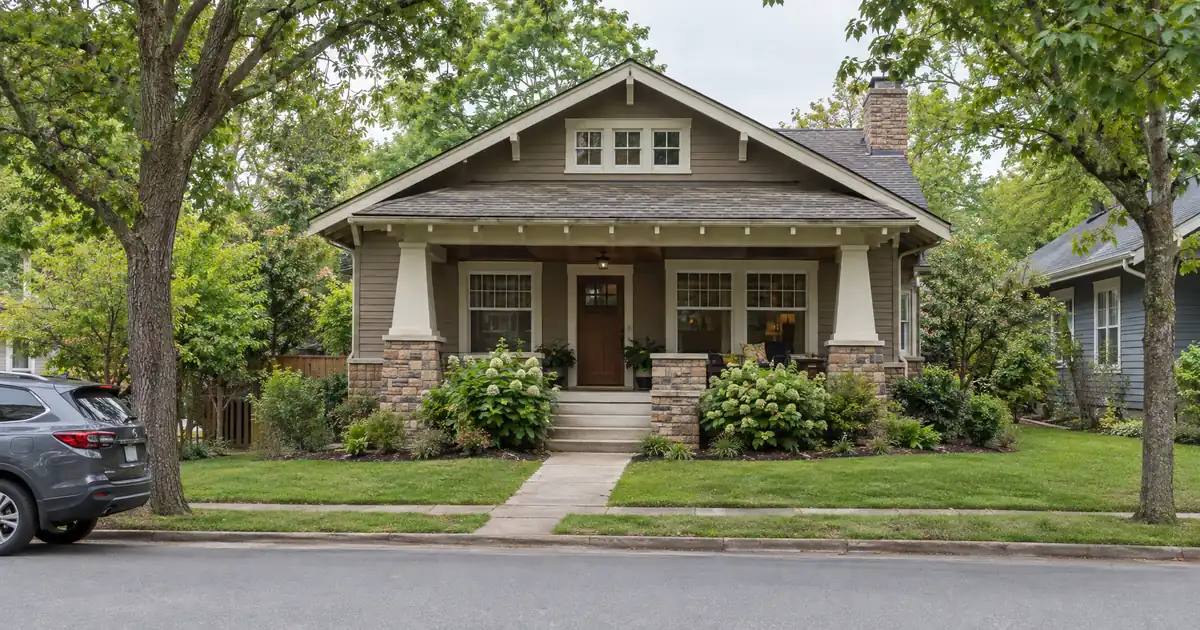
The Quick Read: The state where the owner lives does not decide whether a DSCR cash-out refinance is available. The state where the rental sits, the borrowing entity, and the lender’s own footprint do. Across most programs in a wholesale network, an out-of-state owner is underwritten on the property, the entity, and the guarantor, so distance changes paperwork logistics rather than eligibility.
- Eligibility follows the property’s state, not the owner’s home address.
- Cash-out on a standard rental typically tops out around 75% LTV, with about 6 months of seasoning.
- Rent is tested against the full monthly obligation, and 1.00 is where select programs start.
- Prepayment rules can differ by the property’s state.
- Manufactured homes, log homes, and barndominiums are not offered.
If you live in one state and own a rental in another, the useful question is not whether your home state allows this. It is whether a lender in the network is active in the property’s state, on that property type, for your borrowing structure. This explainer walks through that question step by step, then covers the edge cases where the general rule bends.
DSCR Cash-Out Calculator
Run the cash-out numbers in your market
Rate source: Freddie Mac 30-yr average via FRED® — Federal Reserve Bank of St. Louis · effective Oct 8, 2026
Prefilled with starting assumptions — enter your property’s value, balance, taxes, and insurance for a more accurate picture.
Program parameters update from Lendmire’s centralized guideline source. Taxes and insurance are editable estimates.
As of Oct 8, 2026 · General Freddie Mac market benchmark, not a Lendmire loan offer. Property value, balance, taxes, and insurance are editable estimates. Maximum loan-to-value varies by lender, program, property type, and seasoning. Not a Loan Estimate, approval, or commitment to lend. Program availability and eligibility are subject to lender guidelines, credit approval, property review, and underwriting.
What “State Availability” Actually Means
State availability is a three-layer question: is the program offered in the property’s state, does the borrowing entity or vesting method fit, and can the closing mechanics be completed there. Your home state appears in none of the three layers.
Layer one is footprint. Every wholesale lender keeps its own list of states where it lends, and those lists differ. A state that one lender skips may be fully served by another. That is why a broker who sees many lenders’ guidelines can often find a path where a single lender’s page says no.
Layer two is structure. Most investors close in an LLC, with an individual signing a separate guaranty, subject to lender program eligibility. Some files close in an individual’s name. Which approach works can depend on the property’s state and the program.
Layer three is mechanics: who runs the closing, which documents get recorded, and how title and insurance are handled locally. A remote owner can complete these steps without traveling in most cases, though the logistics take more coordination.
Lendmire’s DSCR platform covers 40 states plus Washington, D.C., which makes it a 41-market footprint arranged through select lenders in its wholesale network. Availability within that footprint still varies by lender, property type, and loan structure, so the property’s state is always the first thing to confirm.
Does Your Home State Matter?
No. Where you live is not an underwriting factor on a DSCR file. The loan is reviewed primarily on property-level rental income covering the payment, subject to lender guidelines, along with credit, reserves, and entity documents.
Here is how common ownership situations play out:
| Situation | Does it change eligibility? |
|---|---|
| Owner and rental in the same state | No. Standard file. |
| Owner in one state, rental in another | No. Property state governs. |
| LLC formed in a third state | Possibly. May need foreign registration. |
| Former home now rented out | Possibly. Needs lease and occupancy proof. |
The third row is where owners get surprised. An LLC formed in one state that holds property in another may need to register as a foreign entity in the property’s state, and lenders commonly ask for a good-standing certificate. That is a paperwork task, not an eligibility barrier, but it is worth sorting out before the file is opened.
The fourth row is a question about occupancy. A former primary residence that is now fully tenant-occupied can be treated as an investment property, but the lender will want a lease and clear documentation that the owner no longer lives there.
How Underwriting Treats the File, Step by Step
A DSCR cash-out follows a consistent sequence regardless of owner location. Knowing the order helps a remote owner prepare the right items at the right time.
Step 1: Confirm the collateral state and property type. Start with whether lenders in the network are active there. Single-family, condos, and 2-4 unit properties are common collateral. Manufactured homes (single- and double-wide), log homes, and barndominiums are not offered in the network’s DSCR programs.
Step 2: Confirm business purpose. DSCR loans are designed for non-owner-occupied investment properties. Because they are business-purpose investor loans, they are reviewed differently from a standard owner-occupied mortgage. The borrower signs a business-purpose acknowledgment, and the lender expects the proceeds to serve an investment or business use.
Step 3: Set the borrowing entity. The LLC signs the note and deed of trust, while an individual guarantor signs separately. Names should match across title, insurance, the appraisal, and the lease. One caution: deeding a property into an LLC right before the refinance can reset the seasoning clock and raise due-on-sale questions with the existing lender, so talk to an attorney before moving title. The federal due-on-sale statute is at 12 U.S.C. § 1701j-3.
Step 4: Order the appraisal and rent schedule. Appraisers commonly use Form 1007 for single-family rent and Form 1025 for 2-4 unit small income properties. The appraiser’s market rent and appraised value, not the owner’s expectations, drive the maximum loan and the coverage ratio.
Step 5: Test the coverage ratio. DSCR is monthly rent divided by PITIA, which is principal, interest, taxes, insurance, and any association dues. Most files in the network are built around a 1.00 starting point for select programs, and stronger ratios open better pricing and leverage.
Step 6: Check seasoning and cost basis. Seasoning is lender policy, not law, and typically runs about 6 months from the recorded deed. Inside that window, many programs size the loan on the lower of appraised value or documented cost. Owners who recently bought often run into this before anything else.
Step 7: Reserves, credit, title, insurance. Reserves are commonly around 6 months of PITIA, stepping up to about 9 months on loans above $1,500,000. Credit tiers run from a 620 floor in parts of the network, with most programs wanting around 660 and 700+ unlocking the strongest leverage.
Step 8: Prepayment structure. The property’s state can change what penalty a lender may attach. More on that below.
The Parameters That Shape a Cash-Out
Cash-out refinance on a standard investment rental tops out at 75% LTV across most of the network. Rate-and-term refinance, where no cash comes back at closing, can reach higher leverage on a standard rental. A refinance that returns cash to the borrower is a cash-out and takes the 75% ceiling, not the purchase figure. Every figure here varies by lender and program — guidelines, property type, leverage, and credit profile all apply.
Short-term rental collateral is treated differently. Cash-out on STR collateral is typically limited to around 70% LTV, and lenders usually want a 640+ score and about 12 months of hosting history.
Loan sizes run roughly up to $3,000,000 on standard programs, with smaller balances routed through select lenders in the network. Equity available is never a guaranteed cash figure. It depends on rent used for lender review, PITIA, reserves, and the leverage ceiling working together.
For files below 1.00, programs are available through select lenders in the network, with leverage and terms adjusted. No-ratio structures are available only through select lenders, generally for borrowers who already own a primary residence. Both are narrower paths, and a file that only works through one of them deserves a harder look at the property rather than the loan type.
One more point worth stating plainly: clearing 1.00 is not the same as positive cash flow. Repairs, vacancy, management, utilities, and capex all sit outside the calculation.
Where the General Rule Breaks
The owner’s address does not matter, but several property-side factors do. These are the named edge cases.
Prepayment penalties vary by the property’s state
A handful of states bar or limit prepayment penalties on investor loans, and some depend on whether the borrower is an entity or an individual. Thresholds and exceptions differ from state to state and change over time. For a BRRRR investor who expects to refinance again in a few years, this matters more than almost any other state-level detail. Check the specific state before choosing a penalty structure.
The Texas homestead rule is about homesteads, not rentals
Texas is the state people ask about most, because its constitution restricts cash-out on a homestead. Article XVI, Section 50(a)(6) governs home equity loans, cash-out refinances, and HELOCs on a Texas homestead, as the Texas Real Estate Research Center at Texas A&M explains. A non-homestead rental sits outside that framework. So a DSCR cash-out on an out-of-state owner’s Texas rental is not a 50(a)(6) loan, and the limits come from the lender’s program matrix. The picture changes if the owner moves in, because an owner-occupied Texas property enters homestead territory.
Licensing is the real state-by-state variable
The state-level variable sits on the lender side, not the borrower side. Business-purpose lending is not uniformly exempt from licensing. A law-firm analysis from Geraci LLP describes it as a state-by-state question, with many states not requiring a lender license for business-purpose loans and others depending on collateral, borrower type, and volume. Some states also offer broker-related exemptions. That is why one wholesale lender may be active in a state while another is not, and why the answer to “is my state served?” is a footprint question rather than a rule about owners.
The business-purpose wrinkle for small rentals
Business-purpose credit is generally outside the federal consumer-credit rule set, and so is credit extended to an entity rather than a natural person. The eCFR text of 12 CFR 1026.3 sets out the exemption. The CFPB’s own page on the section adds two details that matter to rental owners: credit to improve or maintain a rental is deemed business purpose if the property has more than two units, while for smaller rentals the answer depends on the facts, and business-purpose credit becomes consumer credit only if the old obligation is satisfied and replaced by a new one for consumer purposes. Much DSCR collateral is one to four units, so the business purpose needs to be real, not just a label on the file.
Short-term rentals and distance
A remote owner of an STR needs hosting history, platform exports or a manager report, and evidence the property can legally operate. Distance does not make the property ineligible. It makes the evidence slower to gather, so start collecting it before the file is opened.
What a Remote Owner Actually Does
The practical difference for an out-of-state owner is logistics. Appraisals and rent schedules are ordered through the lender’s appraisal channel, and a local appraiser visits the property. The property manager can supply the lease, rent roll, and ledger. Title and closing happen locally in the property’s state, and many closings can be handled by mobile notary or remote signing arrangements, depending on the state and title company.
The documentation burden mirrors a local owner’s file: identity, credit, reserves, entity papers, insurance, lease, and title. DSCR does not mean no paperwork. What it skips is personal income documentation, because qualification runs on the property’s income.
For owners who can’t point to a clean documentation trail, Lendmire’s article How To Cash Out Refinance A Rental Property Without Showing Income explains what the file still needs.
DSCR vs. conventional financing
There are two common ways to finance an investment property, and they qualify you differently — here’s how investors weigh them.
Why investors choose it
- Qualifies on the property’s rental income — no personal tax returns, W-2s, or pay stubs needed to document income.
- No personal debt-to-income ceiling to clear, so existing mortgages and obligations don’t cap your borrowing the same way.
- Can be closed in an LLC, keeping the property inside a business entity.
- Built for scaling — not held to the limit on number of financed properties that conventional financing applies.
- Underwriting centers on the deal: generally qualifies when the rent covers the payment, a 1.00x coverage ratio being a common baseline (confirmed in underwriting).
- Designed specifically for investment property, including long-term and, where the program allows, short-term rentals.
Where it’s strong
- Often the lowest ongoing financing cost for a buyer who fully qualifies on personal income — a fit for a first property or a cost-first purchase.
Trade-offs for investors
- Requires full personal income documentation and must fit within a debt-to-income limit — salary, existing debts, and other mortgages all count.
- Typically held in your personal name rather than a business entity.
- Caps how many financed properties you can carry, which can become a ceiling as a portfolio grows.
- Evaluates you as a borrower as much as the property, which usually means more paperwork.
How investors usually choose: a first or single property often optimizes for the lowest financing cost; portfolio builders often optimize for leverage, vesting in an LLC, and scaling past conventional caps. The right answer depends on your goals, the property, and current guidelines — both paths run through select lenders in Lendmire’s wholesale network, with eligibility and terms confirmed in underwriting.
Key Terms Defined
DSCR (debt service coverage ratio): The property’s monthly rent divided by its monthly PITIA, used to judge whether rent covers the payment.
PITIA: Principal, interest, taxes, insurance, and association dues, the full monthly obligation on the property.
Seasoning: The length of time you have owned the property, usually measured from the recorded deed, before a lender will count a cash-out against appraised value.
Foreign LLC registration: Registering an entity formed in one state so it can hold property or do business in another.
Collateral state: The state where the rental property sits, which controls footprint, recording, and prepayment rules.
Cash-out refinance: A new loan that pays off the old one and returns cash to the borrower, limited by leverage and coverage tests.
The Investor Decision in Practice
For an out-of-state owner, the decision usually comes down to three questions.
First, is the property in a state the network serves, on an eligible property type? If it’s a manufactured home, log home, or barndominium, the answer is no regardless of state. Second, does the file clear both tests, enough equity under the 75% cash-out ceiling and enough rental coverage? A larger down payment lowers the payment and can lift the ratio, but it never erases leverage caps, credit floors, reserve rules, or property eligibility. Third, what will you do with the proceeds? Pulling equity to buy another rental where the coverage ratio still works is a cleaner thesis than pulling equity for something unrelated to the portfolio. Final terms depend on lender guidelines, property type, leverage, and the borrower’s complete credit picture.
A cash-out is a loan, not a sale, so it avoids the tax event of selling. Tax treatment varies; consult a qualified professional.
The flip points matter. If your seasoning window hasn’t elapsed, or the property has a thin coverage ratio, waiting or choosing a lower-leverage structure may beat forcing a cash-out. If the state’s prepayment rules are restrictive and you plan to refinance again soon, the penalty structure can matter more than the leverage. And if your home state is the one you’re worried about, stop worrying. It isn’t in the file.
For the full program picture, the complete DSCR loans guide covers qualification across purchase and refinance.
Frequently Asked Questions
Can I get a DSCR cash-out refinance on a rental in a state where I don’t live?
Yes, in most cases, as long as a lender in the network is active in the property’s state and the property type is eligible. The file is underwritten on the property, the entity, and the guarantor. Your residence is not an underwriting factor, though distance can add document-gathering steps.
Does my LLC have to be formed in the same state as the property?
Not necessarily, but an LLC formed elsewhere may need to register as a foreign entity in the property’s state, and lenders commonly ask for good-standing documentation. Entity treatment is subject to lender program eligibility, so confirm the structure before the file is opened.
Do the Texas homestead cash-out rules apply to my Texas rental?
No, those rules attach to a homestead, not a non-homestead rental. A rental owned by an out-of-state investor falls under the lender’s program limits instead. If you ever occupy the property as your home, the analysis changes.
Why would one lender serve my property’s state and another not?
Each lender holds its own licensing and program footprint, and business-purpose licensing is set state by state. A broker working with many lenders can compare footprints and route the file to one active in that state.
Can I use a DSCR cash-out on a short-term rental I manage remotely?
Often yes, with tighter terms. Cash-out on STR collateral typically runs around 70% LTV, and lenders usually want about 12 months of hosting history and a 640+ score.
If you are buying or refinancing a rental property and want to see how the numbers work, Lendmire can help you compare DSCR loan options based on the property income, credit profile, leverage, and investor goals. Reach the team at 828-256-2183 or request a quote.
For current guidelines and terms, see Lendmire’s DSCR loan programs page.
About Lendmire
As a DSCR and non-QM mortgage broker, Lendmire — NMLS# 2371349 — connects investors with wholesale lending channels across 41 markets, including Washington, D.C. The property’s rental income, not the borrower’s traditional personal-income documentation, is central to lender review, which works for self-employed operators and portfolios beyond four financed properties. Scotsman Guide named Lendmire a Top Mortgage Workplace in both 2025 and 2026.
A deeper walk-through of investment-property equity extraction lives in Lendmire’s guide to cash-out refinance on an investment property.
Get Started
Ready to find the right loan for you?
In about 30 seconds you can review financing options available for your investment property. No commitment required.
Informational only. Not a Loan Estimate, approval, or commitment to lend. Program availability and eligibility are subject to lender guidelines, credit approval, property review, and underwriting.
References
1. Cornell LII – 12 U.S.C. § 1701j-3
2. Texas Real Estate Research Center at Texas A&M – What to Know About Home Equity Loans in Texas
3. Geraci LLP – The Multi-State Licensing Minefield
4. eCFR – 12 CFR 1026.3, Exempt Transactions
5. CFPB – Section 1026.3 Exempt Transactions
This article is part of Lendmire’s investment property cash-out refinance program — full qualification details, guidelines, and scenarios live on the program page.
Related reading: DSCR Cash-Out Refinance Requirements After Recalculation · Can You Use DSCR Delayed Financing on a 2-4 Unit Property? · How Much a DSCR Delayed Financing Proceeds Cap Limits Your Return
Brandon Miller
Founder & CEO, Mortgage Loan Originator, Lendmire LLC
- Mortgage Loan Originator · NMLS# 1129696 · Verify on NMLS Consumer Access
- North Carolina Real Estate Broker · License# 343312 · Verify on NCREC
- North Carolina Insurance Producer · License# 19053198 · Property, Casualty, Life, Health · Verify on NAIC SBS
- Lendmire LLC · Firm NMLS# 2371349 · Verify firm licensure
Legal disclosures. Lendmire (NMLS# 2371349) is a state-licensed mortgage brokerage that arranges financing through wholesale lender relationships. Lendmire is not a direct lender, depository institution, or registered financial advisor. The discussion above is general informational content about real estate financing — it is not financial, legal, or tax advice, and readers should consult licensed professionals for guidance on their individual circumstances. Loan inquiries are subject to lender underwriting; this article does not represent a commitment to lend. Loan terms, rates, and qualification standards vary by borrower, property, and state, and are subject to change at any time. Equal Housing Opportunity. NMLS Consumer Access: nmlsconsumeraccess.org.