
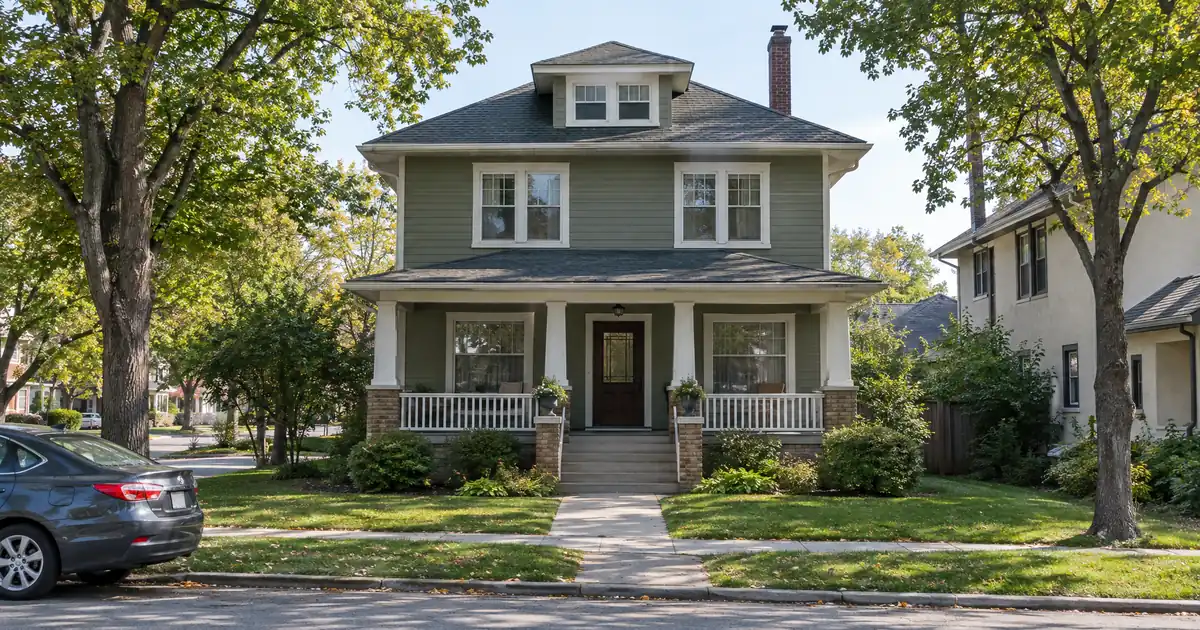
The Quick Read: Not directly: a tenant in place does not slow a rental HELOC by itself, because investment lines up to $500,000 ordinarily run on an automated valuation with nobody entering the unit, and the tenant only becomes a scheduling issue when a secondary valuation or a borrower-requested appraisal sends someone inside.
- Valuation decides it. An automated valuation is a computer estimate. The tenant never sees it.
- Documents come next. The lease is occupancy proof. A lease ending soon is a reason to add paperwork, not a decline trigger.
- Title is the bigger trap. A property deeded to an LLC stalls a rental HELOC far more often than any tenant does.
- Rentals skip one wait. A line on a rental avoids a cancellation window that primary-home lines carry.
A HELOC (home equity line of credit) is a revolving line secured by a property you already own. Lendmire brokers these lines through select wholesale partners. The rental version has its own rules, and most of them have nothing to do with who sleeps in the unit.
How large a line the equity supports.
An equity line is sized by combined loan-to-value, occupancy, and credit — not by rental coverage. Switch the occupancy or the credit band and the ceiling moves with it.
Investment-property lines require a 700 minimum credit score; second-home lines start at a 640 minimum and primary-residence lines at 600, and the combined-LTV ceiling steps down as the credit band drops on primary-residence and second-home lines and holds on investment-property lines; the line cap steps down on primary-residence lines and holds at every tier on investment-property and second-home lines.
A debt-to-income ratio above 45% requires 680+ credit. Profiles under 640 are limited to single-family homes. At least 75% of the approved line is drawn at closing. Ceilings, floors, and caps update from Lendmire’s centralized guideline source.
Line estimate
Illustrative estimate only — not a quote, Loan Estimate, approval, or commitment to lend. The rate is an editable assumption; equity-line pricing is variable through both the draw and repayment periods and never converts to fixed. Occupancy and credit drive the ceiling together: an investment property tops out at 70% combined LTV (minimum credit 700, line cap $500,000); a second home tops out at 90% combined LTV (minimum credit 640, line cap $500,000), with the ceiling stepping down as the credit band drops (the cap holds at every tier); a primary residence tops out at 90% combined LTV (minimum credit 600), and its $750,000 maximum line is available only at 75% combined LTV or below with a 700-or-better credit profile (720 on the longer-runway program) and a full appraisal. Lines above $500,000 require a full appraisal. Credit, debt-to-income, property type, and full underwriting review all affect the final line.
Short Answer, Situation by Situation
A tenant changes the file only when an appraiser must enter the unit or the lease runs short. Otherwise occupancy is paperwork. Here is how the common situations look across the wholesale network.
| Tenant situation | Effect on timing | What to provide |
|---|---|---|
| Mid-lease, automated valuation | None | Copy of the lease |
| Mid-lease, appraisal ordered | Scheduling risk | Tenant notice, access plan |
| Lease ending soon | Added paperwork | Renewal or payment history |
| Month-to-month holdover | Added paperwork | Rent payment history |
| Vacant | No lease needed | Proof of insurance, re-let plan |
Notice what is missing: a column saying the tenant blocks the loan. A tenant is evidence of a working rental, not an obstacle. A vacant unit is not automatically smoother, either. For this product the rule is about owner-occupied versus investment, not whether somebody is home.
Where the Process Actually Touches Your Tenant
Most steps of a rental HELOC never involve the tenant. Only valuation access and lease paperwork do. The table walks the stages in order.
| Stage | What happens | Tenant involved? |
|---|---|---|
| Pick the collateral | Rental or your own home secures the line | No |
| Credit and DTI | Personal credit and debts reviewed | No |
| Valuation | Automated estimate, sometimes more | Only if someone visits |
| Lease and file documents | Lease, liens, insurance gathered | Lease copy only |
| Title and closing | Vesting checked, line signed | No |
Step two surprises people. A rental HELOC is qualified on you, meaning credit score and debt-to-income ratio (DTI), not on rent coverage. That is the sharp contrast with a DSCR loan, where the property’s rent against its payment is the main test. On this network the credit floor for an investment line is 700, and the maximum DTI is generally 50%, subject to lender guidelines.
The Valuation Fork: Where a Tenant Can Matter
Valuation is the one place a tenant becomes a scheduling variable. On this network, investment lines top out at $500,000 and full appraisals begin only above that figure. So an investment HELOC sits in the automated-valuation lane and commonly closes with no traditional appraisal.
NerdWallet’s explainer on HELOCs for investment properties makes the same market-level point: requirements are stricter than on a primary home, and a computer estimate of value may replace an in-person appraisal.
Two things can pull you out of that lane:
- A higher combined loan-to-value (CLTV). CLTV adds every lien on the property, including the new line, and divides by value. On an investment property the ceiling is 70% CLTV. A file near that ceiling may draw a secondary valuation.
- Your own request. A borrower may ask for a full appraisal in any case.
Either path can put an appraiser inside an occupied unit. Then tenant notice, scheduling and goodwill drive the delay. Give the tenant plenty of notice and flexible time slots. If the appraiser cannot get in, the file waits.
Short-term rentals add a wrinkle. A guest-occupied unit is a different access problem, and the standard long-term rent schedule form cannot support short-term income, per Class Valuation’s note on Form 1007. Appraisal rent forms matter mostly on DSCR files, which we will get to.
What Really Slows a Rental HELOC File
Title, equity room and documents slow rental files more often than tenants do. Across the files this network sees, the delays rank roughly like this.
1. Title held in an LLC. An investment line must be vested in an individual or a revocable living trust. LLCs, corporations, partnerships, and irrevocable, blind or land trusts cannot hold title. A rental already deeded to an LLC needs a vesting change first, or a DSCR cash-out instead. Lendmire’s piece How to Close a Rental HELOC Once Title Is in a Single-Member LLC covers that fix. It looks like a tenant delay from the outside. It is not.
2. No equity room. The ceiling is property value times the CLTV cap, minus existing liens. A freshly financed rental often has nothing left. That is a decline, not a delay.
3. Thin document packages. A realistic checklist includes the lease, a statement for every lien, proof of insurance, a list of financed properties, and a note on any known tenant departure and re-letting plan.
4. Property-level snags. An HOA that restricts rentals, a recorded solar lien, or a listing for sale can stall a file. A property listed for sale, or within the past 60 days, is ineligible in some of the states served. Manufactured homes, co-ops, condotels, log homes and commercial or mixed-use properties are not eligible at all.
5. Tenant access. Real, but conditional. It matters only when the valuation lane includes a visit.
The lease deserves its own note. A lease that ends soon is not a decline trigger. Neither is a month-to-month holdover. Either one is simply a reason to supply a renewal or a rent payment history. And the lease does not size the line. Credit, DTI and CLTV do.
Worked Example: Three Landlords, Three Files
These are modeled illustrations, not sourced market data. All three own a single-family rental under the $500,000 line cap, hold title personally, and sit comfortably under 70% CLTV.
Landlord one: cooperative tenant, mid-lease. The file runs in the automated-valuation lane. The lease goes in the package and the tenant never hears about the loan. Friction: low.
Landlord two: hard-to-reach tenant. The file is flagged for a secondary valuation, which requires an appraiser to have interior access. The tenant ignores two scheduling requests. The file waits on a person who is not a party to the loan. Friction: highest of the three, and entirely tied to the visit. Advance notice and flexible windows reduce it.
Landlord three: vacant unit. No lease to document, so the file needs proof of insurance and a re-letting plan instead. Access is easy if a visit happens. Friction: low, but not provably lower than landlord one.
Landlord two’s pain comes from a single branch of the process. Take that branch away and the tenant disappears from the story.
Experience note: in files like these, the delay people blame on a tenant is usually a missing lien statement, a vesting mismatch or a lease that lapsed mid-file. Fixing those before submission is a cleaner use of an afternoon than coaching a tenant.
A Wait Your Rental Line Does Not Have
Here is the structural twist. A HELOC on your own home carries a federal cancellation right, while a line secured by a rental does not. The CFPB’s home equity booklet explains that the cancellation right applies when the home is your principal dwelling. Regulation Z, section 1026.23 sets out that consumer-credit rescission period, which is tied to consumer-purpose credit secured by a principal dwelling. FindLaw’s overview adds that it covers only the principal residence, not a vacation or second home. Business-purpose lending on an investment property, which is how a DSCR loan is structured, is exempt from these consumer-disclosure rules under Regulation Z, section 1026.3.
The practical result: a rental-secured line has no mandatory post-signing waiting window. So a rental line is not automatically slower than a primary-home line. In one respect it is structurally lighter.
One warning. If you borrow against your own home to fund a rental, the cancellation right applies, because the collateral is your residence. That line is underwritten under owner-occupied rules. Different property, different ceiling (up to 90% CLTV, but only at a 720-or-better credit profile).
Landlord’s Prep Checklist
Do these before you apply. Each one removes a branch where a delay could start.
1. Confirm vesting. Title should sit in your name or a revocable living trust.
2. Pull the equity math. Value times the CLTV cap, minus every lien. If it is thin, stop here.
3. Gather the lease and rent history. Add a renewal or payment record if the lease ends soon.
4. Collect every lien statement, plus proof of insurance and a list of financed properties.
5. Warn the tenant early, in case a visit gets ordered. Offer flexible time slots.
6. Check the HOA and any solar financing for rental restrictions or recorded liens.
7. Note any known departure and your re-letting plan.
And open the line before you write an offer on the next deal. A line you are still chasing mid-contract is the wrong kind of pressure.
When a Different Product Fits Better
The real tenant-slows-the-file scenario belongs to appraisal-based loans, not the HELOC. A DSCR cash-out refinance is the usual example. DSCR stands for debt service coverage ratio: monthly rent divided by the full monthly payment (principal, interest, taxes, insurance and any HOA dues, together called PITIA). A DSCR loan is reviewed primarily on property-level rental income covering the payment, subject to lender guidelines. There the tenant usually has to give the appraiser access, and a tenant who ignores scheduling can stall the file.
Here is how the two compare on the points investors ask about.
| Factor | Rental HELOC | DSCR cash-out refinance |
|---|---|---|
| Main qualifier | Personal credit and DTI | Rent against PITIA |
| Leverage ceiling | 70% CLTV (investment) | Around 75% LTV, standard rentals |
| Valuation | Usually automated | Appraisal-based |
| Title | Individual or revocable trust | LLC titling, subject to program terms |
| Tenant access | Only if a visit is ordered | Usually needed |
On DSCR, 1.00 coverage is where many select programs start, and a separate select-lender path takes coverage below 1.00 with leverage and terms adjusted. Clearing 1.00 is not the same as positive cash flow, since repairs, vacancy and management sit outside the ratio. Cash-out files commonly expect about six months of seasoning. For the full mechanics, see Lendmire’s complete DSCR loans guide.
Which one is right? Honestly, it is a toss-up that turns on title and credit. An investor with an LLC-held rental and strong rent coverage leans DSCR. An investor with personal-name title, a 700-plus score and modest leverage may prefer the line.
Key Terms Defined
Automated valuation model (AVM): a computer estimate of property value built from public records and recent sales, with no one visiting the property.
CLTV (combined loan-to-value): all liens on the property, including the new line, divided by the property’s value.
Occupancy evidence: the lease or rent history that shows the property is tenant-occupied.
Cancellation right (rescission): a short federal window to cancel a loan secured by your principal home. It does not apply to rentals.
DTI (debt-to-income ratio): your monthly debts divided by your monthly income, the main test for a rental HELOC.
Draw period: the stretch when you can borrow from the line. On investment lines it is five years, followed by a 25-year repayment period, with at least 75% of the line drawn at closing.
Frequently Asked Questions
Does a month-to-month tenant hurt a rental HELOC?
Not as a decline trigger. A holdover tenant just means the file needs rent payment history in place of a fresh lease. It is a documentation point, so include a clean record of what the tenant has paid.
What if my lease ends while the file is open?
A lease ending soon is also not a decline trigger. Supply a renewal if you have one, or payment history if the tenant stays on a month-to-month basis. Add a note on your re-letting plan if the tenant is leaving.
Does the tenant have to be home for the valuation?
In the automated lane, nobody visits, so the question never comes up. If a secondary valuation or a borrower-requested appraisal is ordered, the appraiser needs interior access. Give the tenant notice and flexible scheduling windows.
Is a vacant rental smoother to finance?
Not necessarily. The occupancy rule separates owner-occupied from investment, not occupied from vacant. A vacant unit swaps lease paperwork for insurance proof and a re-letting plan.
Does the three-day cancellation wait apply to a rental HELOC?
No. The cancellation right applies only when the collateral is your principal dwelling, so a line secured by a rental skips it. A line on your own home, even one funding a rental purchase, still carries it. Tax treatment can depend on how the funds are used and how the property is held; investors should keep clear records and speak with a qualified tax professional before relying on any deduction.
Next Step
If you are considering a home equity line and want to see how the numbers work, Lendmire can help you compare HELOC options based on the property, the equity available, credit profile, combined leverage, and your goals. Reach the team at 828-256-2183. Availability, leverage and terms are subject to lender guidelines and full file review. This is not a commitment to lend. Rental HELOC programs are offered in Lendmire’s 16 full-service states, a narrower footprint than its DSCR investor loans in 41 markets, including Washington, D.C.
A tenant is rarely the reason a rental line stalls; the reason is usually sitting in the county deed records.
About Lendmire
Lendmire is a mortgage brokerage (NMLS# 2371349) arranging home equity lines of credit — primary-residence, second-home and investment-property lines — through a wholesale lending network in its 16 full-service states. Eligibility is determined by the lender on each file. Scotsman Guide named Lendmire a Top Mortgage Workplace in both 2025 and 2026.
Get Started
Ready to find the right loan for you?
In about 30 seconds you can review financing options available for your home or investment property. No commitment required.
Informational only. Not a Loan Estimate, approval, or commitment to lend. Program availability and eligibility are subject to lender guidelines, credit approval, property review, and underwriting.
References
1. NerdWallet, Can You Get a HELOC on an Investment Property?
2. Class Valuation, Appraisal Form 1007 and Short-Term Rentals
3. CFPB, What You Should Know About Home Equity Lines of Credit
4. CFPB, Regulation Z § 1026.23, Right of rescission
5. FindLaw, Home Equity Loans: The Three-Day Cancellation Rule
This article is part of Lendmire’s investment property HELOC program — full qualification details, guidelines, and scenarios live on the program page.
Related reading: DSCR Cash-Out Documentation When a Lease Expires During Refinance · How to Clear a Solar Lien on Your First Rental Before a DSCR Cash-Out · How to Keep a Standing HELOC on a Rental to Fund the Next Deal
Brandon Miller
Founder & CEO, Mortgage Loan Originator, Lendmire LLC
- Mortgage Loan Originator · NMLS# 1129696 · Verify on NMLS Consumer Access
- North Carolina Real Estate Broker · License# 343312 · Verify on NCREC
- North Carolina Insurance Producer · License# 19053198 · Property, Casualty, Life, Health · Verify on NAIC SBS
- Lendmire LLC · Firm NMLS# 2371349 · Verify firm licensure
Compliance and disclosures. Lendmire (NMLS# 2371349) is a licensed mortgage broker and is not a direct lender, depository institution, financial advisor, or tax professional. Content in this article is general market analysis and educational information — not financial, legal, or tax advice for any specific situation. Lendmire does not guarantee loan approval; every transaction is subject to underwriting by the funding lender. Mortgage pricing and loan program guidelines are subject to change at any time without notice and vary by borrower characteristics, property type, and state regulations. Lendmire complies with Equal Housing Opportunity. Licensure verification: NMLS Consumer Access.