
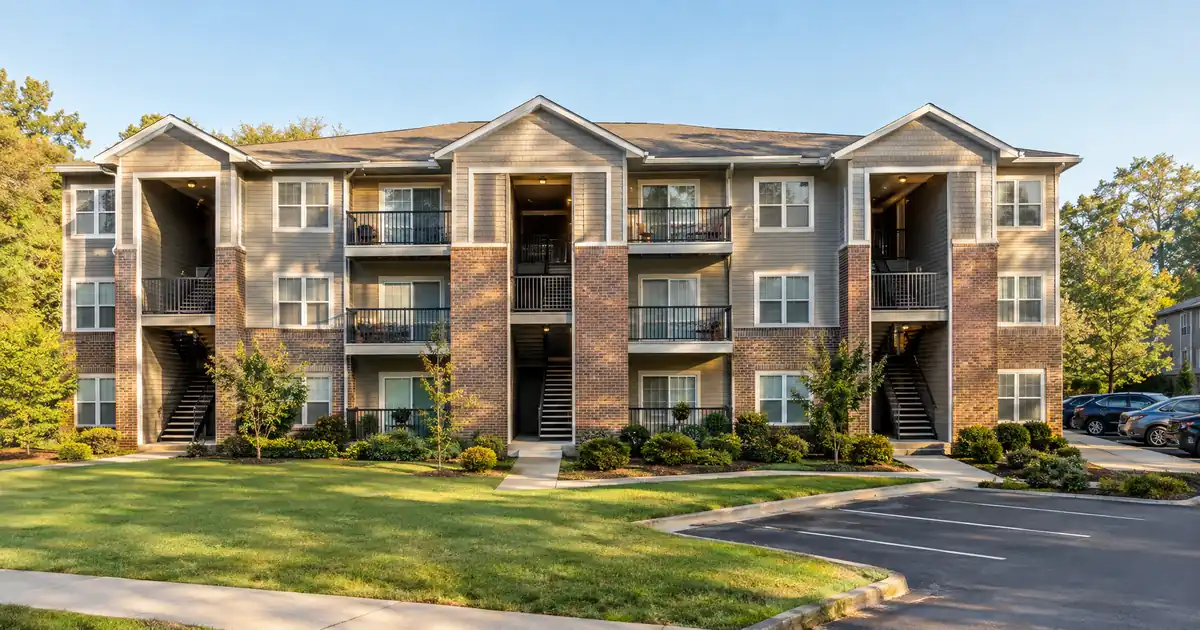
The Quick Read: Usually yes, but only through a lender that reviews the building as well as the unit, because pending litigation does not automatically bar a rental home equity line, though it can end the file at a big bank. Eligibility turns on what the suit is about and who is being sued.
- A rental HELOC is a home equity line of credit secured by an investment property you already own.
- On this network, an investment line tops out at 70% combined loan-to-value (CLTV) and $500,000, with a 700 minimum credit score.
- Condominiums, including non-warrantable ones, are eligible property types. Condotels and co-ops are not.
- Safety and structural suits are the hardest category. Routine or insured claims are usually treated differently.
- If the line is declined, a DSCR cash-out refinance or a line on a different property can still reach the equity.
Why Does a Lawsuit Change Which Lender Looks at the File?
A lawsuit against the building changes the lender pool, not the borrower’s credit. Agency-backed lenders have a written litigation trigger and often must decline. Lenders that keep loans on their own books or sell to private investors set their own rules, so the answer can differ from one lender to the next.
How large a line the equity supports.
An equity line is sized by combined loan-to-value, occupancy, and credit — not by rental coverage. Switch the occupancy or the credit band and the ceiling moves with it.
Investment-property lines require a 700 minimum credit score; second-home lines start at a 640 minimum and primary-residence lines at 600, and the combined-LTV ceiling steps down as the credit band drops on primary-residence and second-home lines and holds on investment-property lines; the line cap steps down on primary-residence lines and holds at every tier on investment-property and second-home lines.
A debt-to-income ratio above 45% requires 680+ credit. Profiles under 640 are limited to single-family homes. At least 75% of the approved line is drawn at closing. Ceilings, floors, and caps update from Lendmire’s centralized guideline source.
Line estimate
Illustrative estimate only — not a quote, Loan Estimate, approval, or commitment to lend. The rate is an editable assumption; equity-line pricing is variable through both the draw and repayment periods and never converts to fixed. Occupancy and credit drive the ceiling together: an investment property tops out at 70% combined LTV (minimum credit 700, line cap $500,000); a second home tops out at 90% combined LTV (minimum credit 640, line cap $500,000), with the ceiling stepping down as the credit band drops (the cap holds at every tier); a primary residence tops out at 90% combined LTV (minimum credit 600), and its $750,000 maximum line is available only at 75% combined LTV or below with a 700-or-better credit profile (720 on the longer-runway program) and a full appraisal. Lines above $500,000 require a full appraisal. Credit, debt-to-income, property type, and full underwriting review all affect the final line.
Start with the agency side, because that is where the “litigation means denial” idea comes from. Fannie Mae’s Condo Project Manager activity-feed list flags a project when the HOA, sponsor or developer is a named party to pending litigation. The suit has to relate to safety, structural soundness, habitability or functional use of the project. That trigger is narrower than most investors assume, and it only binds loans sold to the agencies.
A rental HELOC on this network does not follow that path. A building that fails agency standards is called non-warrantable. Scotsman Guide defines nonwarrantable as a project that falls short of the standards for government-sponsored and government-backed loans. It also notes that originators with lenders willing to finance those units gain an edge. The same piece tells originators to scrutinize HOA documents for pending litigation and delinquent dues.
Here is how that plays out for you. Many banks and credit unions decline condos held as rentals before they ever read the HOA paperwork. A lender that accepts non-warrantable condos will read it closely. Litigation is one item in a longer review, and the lender weighs it with everything else it finds.
What Happens When a Condo Building in Litigation Meets a Rental HELOC?
The unit and the building are judged separately. Across Lendmire’s wholesale network, investment HELOC programs accept condominiums, including non-warrantable ones, as property types. The lender then runs a second review on the building. Pending litigation, heavy investor ownership, one owner controlling many units and a large commercial component all land in that second review.
The line itself has fixed boundaries. Here is what most files look like on an investment property:
- Maximum CLTV: 70% on an investment property, with no higher tier. CLTV counts your first mortgage plus the new line against the property’s value.
- Credit: 700 minimum. Scores above 700 do not buy more leverage on an investment line.
- Line size: up to $500,000 on an investment property. There is no larger investment tier.
- Structure: a 5-year interest-only draw followed by a 25-year repayment period. The line sits in first or second lien position, and at least 75% is drawn at closing.
- Debt-to-income: 50% maximum, subject to lender guidelines.
- Valuation: investment lines at this size commonly use an automated valuation instead of a traditional appraisal.
That last point can mislead. An automated valuation estimates what the unit is worth. It does not clear the building’s legal problems. The project review runs alongside it, and a lawsuit shows up there.
Title is the other early filter. A HELOC must be held by you personally or by your revocable living trust. An LLC cannot hold title on these lines. A DSCR loan is the opposite: it may allow LLC vesting, subject to lender program requirements. If your condo already sits in an LLC, the line needs a vesting change, or you move to a DSCR cash-out instead.
Availability is narrower than most people expect. Lendmire arranges rental HELOCs in 16 full-service states, which is fewer than its 41-market DSCR footprint (40 states plus Washington, D.C.) Every figure above is subject to lender guidelines and a full file review. It is not a commitment to lend.
Does the Type of Lawsuit Matter?
Yes. The nature of the suit does more to decide the outcome than the mere fact that one exists. Lenders in this space weigh what the suit claims, how much money is at risk, whether insurance covers it and whether it threatens the building’s finances or condition. No published threshold by dollar amount or suit type exists, so treat the table below as a practitioner’s triage and not a rulebook.
| Type of suit | Likely lender concern | What to do |
|---|---|---|
| Structural or safety defect | Building condition and marketability | Expect scrutiny. Get the engineer’s report |
| Construction defect vs. developer | Repair cost and assessments | Ask whether a repair fund exists |
| Contractor or vendor billing dispute | Association finances | Get the budget and legal-cost estimate |
| Owner vs. board dispute | Governance and cost | Ask counsel for a plain-English summary |
| Insured injury claim or collection | Usually minor | Provide the insurance letter if asked |
| Suit over unit use, such as rental limits | Rental eligibility of your unit | Check the rules before applying |
Safety and structural suits are the hardest category, even for flexible lenders. A suit that questions whether the building is sound goes straight to the value of the collateral. Routine matters such as a collection action or an insured claim usually get lighter treatment.
Who sues whom also matters. An HOA suing a developer for defects often means repairs are coming and money may be collected. An HOA being sued usually means legal costs the owners may share. Either way, the lender wants to know what the case could cost the building.
Borrower-side litigation is a separate question. A lawsuit against you personally is not a building problem, though a lender may ask for an explanation. Keep the two straight when you talk to a lender, so you answer the right question.
How Does the Lender Learn About the Suit?
Through the HOA or condo questionnaire, which the association completes and discloses. Lenders rely on those disclosures. For your own file, expect to ask the management company for a package and read it before you pay for anything.
Request these items:
- The completed condo or HOA questionnaire
- Current budget and financial statements
- The reserve study
- The master insurance certificate
- Recent meeting minutes
- A litigation disclosure or attorney letter
- Any special-assessment notices
- Engineering reports, if the suit involves construction or safety
Lenders use these documents in different combinations. The Fannie Mae project-review FAQ, which describes how agency lenders review projects, calls such documents neither prescriptive nor exhaustive. That is also how non-agency lenders operate, and it is why a clean questionnaire answer on day one saves effort later.
Read the litigation answer first. Then read the minutes, because the minutes usually explain what the questionnaire only summarizes. If the board has discussed an assessment or a repair fund, you will see it there.
What Else Stacks With the Lawsuit?
Litigation rarely arrives alone. Lenders look at it next to everything else the building shows, and a second flag can matter more than the suit itself.
Investor concentration. A building where many units are rented, or where one owner controls many units, draws extra review even with no lawsuit. Add a suit and the lender sees two risk signals in one project.
Delinquent dues. Scotsman Guide notes that one owner’s unpaid fees or defaults can hurt values for every owner in the building. It also notes that litigation can lead to special assessments. A special assessment is a one-time charge the HOA levies on owners to fund a major cost.
Short-term rental activity. A building with heavy nightly-rental activity may be treated as a condotel. Condotels are not offered on investment HELOCs on this network. Short-term rental rules can vary by city, county, HOA, and property type, so investors should confirm local rules before relying on projected rental income.
Dues and the rent math. If you later use a DSCR loan, HOA dues sit on the payment side of the calculation. DSCR stands for debt service coverage ratio, which compares rent to the full monthly payment (PITIA: principal, interest, taxes, insurance and association dues). Litigation that raises dues or triggers an assessment can lower your coverage ratio even when rent stays flat.
Clearing a DSCR threshold also does not mean the property cash-flows. Repairs, vacancy, management and capital costs sit outside the calculation, and a building in a lawsuit can add to them.
A practitioner observation: on files like this, the lawsuit is rarely the only thing a lender questions. A building with a suit, a thin reserve fund and several delinquent owners reads very differently from a building with a suit and a healthy reserve. The financial health of the association often decides which one the lender treats as workable.
A Worked Example: The Existing Owner
Run the numbers on this hypothetical (the figures are modeled, not market data). Picture an investor who owns a rented condo unit held in her own name. A few years after buying, the HOA sues the original builder over defects in the building envelope. She wants a line to fund her next down payment.
Step one is to check the property. A condo is an eligible property type on the investment line, and non-warrantable status is not an automatic bar. Her unit is not a condotel, and she is not in an LLC, so the title question is clear.
Step two is the leverage test. She adds her existing first mortgage to the line she wants. That combined figure has to stay at or under 70% of the unit’s value, and her credit score has to be at least 700. If the first mortgage already uses most of that room, the line may be small or may not fit at all.
Step three is the building review. She gets the questionnaire, the reserve study, and the minutes. The suit is against the developer, which means the association may collect money for repairs. Insurance is current, and the reserve fund is adequate. That reads better than a suit against the association itself.
Step four is the judgment call. If the engineer’s report points to structural issues, a lender may stop there regardless of her credit. If the claims are about cosmetic or envelope repairs, a lender in the network may be willing to look. Either way, the lender decides, subject to guidelines, credit approval and the full file review.
What If the Answer Is No?
If one lender declines, ask whether the reason was the building, the leverage or the title. Each has a different fix. The table below shows realistic paths by borrower situation.
| Situation | Realistic path |
|---|---|
| Owner of a rented unit, building in a suit | Rental HELOC through a lender that accepts non-warrantable condos |
| Condo held in an LLC | DSCR cash-out, or a vesting change for a HELOC |
| Building flagged as a condotel | Equity from a different property |
| Safety or structural suit | Line on another property, or wait for resolution |
| Declined by a bank | Place the file with a non-bank lender |
A DSCR cash-out refinance is the main alternative. On most of the network, a cash-out on a standard long-term rental tops out around 75% LTV, with about 6 months of seasoning as the common expectation. The coverage ratio matters there, and 1.00 is where many select programs start. A separate select-lender path takes coverage below 1.00, with leverage and terms adjusted. The complete DSCR loans guide walks through how that math works.
You can also borrow against a different property, where the building’s legal problems do not follow the collateral. Or you can wait. Resolving a suit, replenishing reserves and curing delinquencies can reopen cheaper options, and agency eligibility can return when the board fixes the deficiencies that triggered the flag. Waiting costs time, so weigh it against what the funds were for.
Tax treatment can depend on how the funds are used and how the property is held; investors should keep clear records and speak with a qualified tax professional before relying on any deduction.
Key Terms Defined
Non-warrantable condo: a condo project that falls outside agency lending standards, often because of litigation, investor concentration, delinquent dues or thin reserves. It is a financing label, not a defect in your unit.
CLTV (combined loan-to-value): your first mortgage plus the new line, divided by the property’s value.
Second lien: a loan that sits behind your first mortgage and is paid second if the property is sold or foreclosed.
Special assessment: a one-time charge the HOA levies on owners to cover a major repair or cost.
Condotel: a condo operated like a hotel, with a rental desk or pooled rental program. It is not offered on investment lines on this network.
HOA questionnaire: the form the association completes for a lender, covering finances, insurance, ownership mix and legal matters.
Frequently Asked Questions
Does it matter if my HOA is the plaintiff or the defendant?
Yes. An HOA suing a builder often means repair funds may come in. An HOA being sued often means legal costs the owners could share through dues or assessments. Lenders read the two differently, and they also read the subject of the suit, so ask for a plain summary from the association’s counsel.
Will my line be frozen if a lawsuit is filed after I close?
That depends on the line agreement and the lender, and no general rule covers it. Read the terms on changes to the property or its condition before you sign. Ask the lender directly how a later lawsuit against the building would be handled.
Can I borrow against another property instead?
Yes, and it is a common workaround. A line on a different property avoids the building’s legal problems entirely. The investment line limits still apply: 70% CLTV, a 700 minimum credit score and a $500,000 cap, subject to lender guidelines and the borrower’s three-line exposure limit.
Can the building become warrantable again?
It can. Boards can often cure the problems that caused the flag, including repair, reserve, insurance and litigation deficiencies. Once the suit ends and the finances recover, cheaper conventional options may reopen. How long that takes depends on the case, and suits can run for years.
Do special assessments change my numbers?
Yes, they can. An assessment is a real cost to you, and a rise in dues counts on the payment side of any DSCR calculation. On a HELOC, a higher carrying cost can also affect your debt-to-income picture. Ask the HOA whether any assessment is planned before you apply.
Next Step
If you are considering a home equity line and want to see how the numbers work, Lendmire can help you compare HELOC options based on the property, the equity available, credit profile, combined leverage, and your goals. As a broker, it places the file with a lender in its wholesale network, and that lender decides.
A lawsuit does not end a condo’s borrowing options, but it narrows them to the lenders willing to read the building’s documents and judge the case on its merits.
About Lendmire
Lendmire is a mortgage brokerage (NMLS# 2371349) arranging home equity lines of credit — primary-residence, second-home and investment-property lines — through a wholesale lending network in its 16 full-service states. Eligibility is determined by the lender on each file. Scotsman Guide named Lendmire a Top Mortgage Workplace in both 2025 and 2026.
Get Started
Ready to find the right loan for you?
In about 30 seconds you can review financing options available for your home or investment property. No commitment required.
Informational only. Not a Loan Estimate, approval, or commitment to lend. Program availability and eligibility are subject to lender guidelines, credit approval, property review, and underwriting.
References
1. Fannie Mae (document 37326)
2. Scotsman Guide – Condominium Expertise Can Pay Dividends
3. Scotsman Guide – The Condo Conundrum
This article is part of Lendmire’s investment property HELOC program — full qualification details, guidelines, and scenarios live on the program page.
Related reading: Rental HELOC Calculator for a Portfolio Down Payment Strategy · Digital Rental HELOC vs Bank HELOC on a 2 to 4 Unit · Rental HELOC Fees When You Are Protecting a Low First Lien
Brandon Miller
Founder & CEO, Mortgage Loan Originator, Lendmire LLC
- Mortgage Loan Originator · NMLS# 1129696 · Verify on NMLS Consumer Access
- North Carolina Real Estate Broker · License# 343312 · Verify on NCREC
- North Carolina Insurance Producer · License# 19053198 · Property, Casualty, Life, Health · Verify on NAIC SBS
- Lendmire LLC · Firm NMLS# 2371349 · Verify firm licensure
Disclosures. The information presented in this article is general market commentary, not financial, legal, or tax advice. Lendmire is a mortgage brokerage (NMLS# 2371349) — not a direct lender or depository institution — and loan placement is subject to lender underwriting. Nothing in this content represents a commitment to lend. Loan terms, pricing, and program availability vary based on borrower qualifications, property characteristics, and state of subject property, and are subject to change at any time. Lendmire complies with Equal Housing Opportunity requirements. Consumer access: nmlsconsumeraccess.org.