
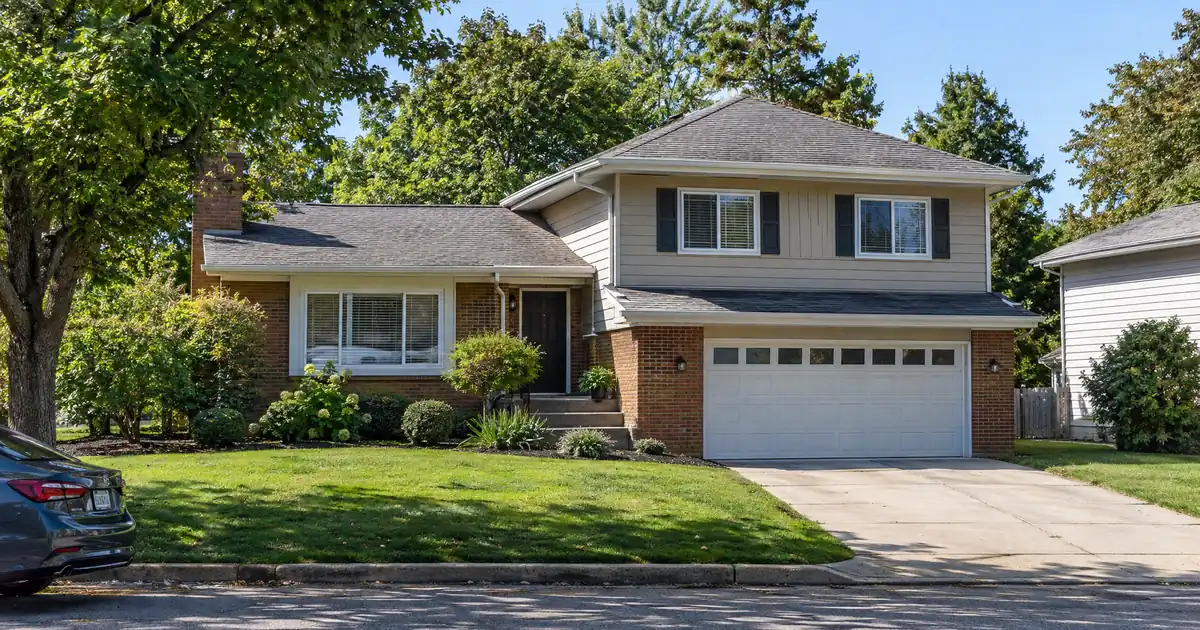
The Quick Read: Usually yes. Paying out a co-owner of a rental you keep is a business use of the money, because you are consolidating ownership of an income-producing asset, and lenders reviewing a DSCR cash-out generally treat it that way when the paperwork shows the cash going to a partner who holds a real interest in the property.
- The rental must be non-owner-occupied, and the loan is a business-purpose investor loan.
- Cash-out refinances on standard rentals typically top out around 75% LTV across most of the network, with about 6 months of ownership (seasoning) expected.
- The rent must cover the larger payment after the buy-out, and 1.00 is where select programs start.
- Appraised value, the leverage cap, the old payoff, and costs decide whether the cash covers what the partner is owed.
- Every file is reviewed by the lender individually, subject to lender guidelines. Nothing here is a commitment to lend.
You own a rental with someone else and one of you wants out. The natural fix is to refinance, pull cash, and pay the partner. The question is whether that cash counts as business purpose. This guide walks through why it usually does, where it gets murky, and what decides whether the numbers work.
DSCR Cash-Out Calculator
Run the cash-out numbers in your market
Rate source: Freddie Mac 30-yr average via FRED® — Federal Reserve Bank of St. Louis · effective Oct 8, 2026
Prefilled with starting assumptions — enter your property’s value, balance, taxes, and insurance for a more accurate picture.
Program parameters update from Lendmire’s centralized guideline source. Taxes and insurance are editable estimates.
As of Oct 8, 2026 · General Freddie Mac market benchmark, not a Lendmire loan offer. Property value, balance, taxes, and insurance are editable estimates. Maximum loan-to-value varies by lender, program, property type, and seasoning. Not a Loan Estimate, approval, or commitment to lend. Program availability and eligibility are subject to lender guidelines, credit approval, property review, and underwriting.
Key Terms Defined
Business purpose: The loan is made for investing or running a business, not for personal, family, or household use. DSCR loans are built for non-owner-occupied investment property.
DSCR (debt service coverage ratio): Monthly rent divided by the full monthly housing payment: principal, interest, taxes, insurance, and any HOA dues (together, PITIA).
Cash-out refinance: A new loan that pays off the old mortgage and returns the extra cash to the owner.
Seasoning: The waiting period between owning a property and refinancing it. About 6 months from title recording is a common expectation for cash-out.
Redemption versus cross-purchase: In a redemption, the ownership entity buys the departing partner’s interest. In a cross-purchase, the remaining owner buys it personally.
Release: The paperwork that frees the departing partner from the old loan and from any claim on the property.
Why Does a Partner Buy-Out Usually Count?
A partner buy-out usually counts because the money buys an ownership interest in a rental you keep. That is an investment use, not consumption. DSCR loans are designed for non-owner-occupied investment properties, and because they are business-purpose investor loans, they are reviewed differently from a standard owner-occupied mortgage.
Think about what the money does. Before the closing, you and a partner own the property together. After it, you own it alone. The asset stays in service, the rent keeps coming, and the cash went to acquire the other side’s share. Nobody bought a boat.
One honest caveat. No rule names partner buy-outs on a list of approved uses. The conclusion comes from how business purpose is judged for rental property, plus how lenders underwrite these files. The lender’s own guidelines and its business-purpose certificate have the final word.
What Does “Business Purpose” Actually Test?
It tests the primary purpose of the credit, not a menu of approved uses. Federal commentary on the business-purpose exemption says the lender must decide in each case whether a loan is primarily for a business purpose. It also treats credit to acquire, improve, or maintain non-owner-occupied rental property as business purpose, regardless of unit count, per the CFPB’s official commentary on the exemption.
A buy-out is not an acquisition from a stranger. It does acquire the other owner’s interest in the rental, which fits that reading naturally. For money that falls outside the safe harbor, examiners look at factors such as how the borrower’s occupation relates to the use of funds, how much income the asset produces compared with the borrower’s total income, and the size of the transaction. The OCC’s examination chapter on truth in lending lists them. A buy-out of a rental partner points toward business purpose on each one.
The same commentary carries a 14-day limit. If the owner expects to occupy the property for more than 14 days in the coming year, it cannot be treated as non-owner-occupied under that rule. Its example is a beach house the owner uses for a month each summer.
Business Purpose Is Not the Same as Tax-Deductible
Many investors mix these up. A buy-out is generally not a deductible expense. It is the purchase of an asset interest. It can still be a perfectly good business-purpose use of loan proceeds. The two questions have different answers and different audiences: the lender cares about purpose, and your CPA cares about tax. Tax treatment can depend on how the funds are used and how the property is held; investors should keep clear records and speak with a qualified tax professional before relying on any deduction.
What Do Lenders Look At on These Files?
Lenders look at the property first and your paperwork second. Across most programs in the network, a cash-out on a standard rental tops out around 75% LTV, and the 6-month ownership clock must have run. Rent comes from the appraiser’s rent schedule, Form 1007 for single-family and Form 1025 for two to four units.
Credit matters too. A 620 floor exists in parts of the network, most programs want around 660, and 700 or better opens the strongest leverage tiers. Reserves vary by lender, leverage, and loan size. Around 6 months of PITIA is common, and loans above $1,500,000 typically step up to about 9 months. Standard programs go up to $3,000,000.
Your personal income is not the central test. The loan is reviewed primarily on property-level rental income covering the payment, subject to lender guidelines. That is a big reason investors prefer this route for a partner payout.
Here is a point many people miss. Clearing 1.00 coverage is not the same as positive cash flow. DSCR compares rent to PITIA only. Repairs, vacancy, management, utilities, and capex sit outside the calculation, so a property that clears the ratio can still be tight in real life.
How the Buy-Out Works, Step by Step
1. Confirm the collateral. It must be a non-owner-occupied rental. You will sign an occupancy and business-purpose certification.
2. Identify what the partner holds. Gather the operating or partnership agreement, any note, the recorded deed, and the entity’s ownership records.
3. Fix the price in writing. Agree on the valuation method before the appraisal is ordered. A common approach ties the price to the refinance appraisal and nets out assumed sale costs.
4. Underwrite the property. The lender sizes the loan on appraised value and checks rent against the full payment.
5. Route the money at closing. Title pays the old mortgage and costs first. Net cash then goes to the departing partner against a signed assignment or redemption and a release.
6. Record the result. The deed and entity records should show you as the sole owner.
The deciding math is simple. Appraised value times the leverage cap, minus the old payoff and costs, must exceed what the partner is owed. Rent must also cover the larger payment. If either test fails, the buy-out does not fit in one refinance.
Lendmire’s piece Can a Cash-Out Refinance Buy Out a Partner Who Is on Title? covers the vesting side in more depth.
Equity Partner, Money Partner, Family Member: What Changes?
| Partner type | What they hold | What gets signed |
|---|---|---|
| Equity partner | Ownership share | Assignment or redemption, release |
| Money partner (debt) | A note with a payoff | Payoff letter, note satisfaction |
| Family member or spouse | Ownership, often by deed | Deed or assignment, release |
The difference matters because returning capital and buying out ownership are different transactions. The documents must say whether repayment ends the stake. An equity partner needs a buy-out price. A debt partner has a payoff amount. If the paper is vague, the lender will ask questions, and a vague file is a slow file.
A partner who sits on title in a personal name creates another wrinkle. The refinance is only as clean as the vesting, so the deed has to show who really owns the property before anyone signs.
DSCR vs. conventional financing
There are two common ways to finance an investment property, and they qualify you differently — here’s how investors weigh them.
Why investors choose it
- Qualifies on the property’s rental income — no personal tax returns, W-2s, or pay stubs needed to document income.
- No personal debt-to-income ceiling to clear, so existing mortgages and obligations don’t cap your borrowing the same way.
- Can be closed in an LLC, keeping the property inside a business entity.
- Built for scaling — not held to the limit on number of financed properties that conventional financing applies.
- Underwriting centers on the deal: generally qualifies when the rent covers the payment, a 1.00x coverage ratio being a common baseline (confirmed in underwriting).
- Designed specifically for investment property, including long-term and, where the program allows, short-term rentals.
Where it’s strong
- Often the lowest ongoing financing cost for a buyer who fully qualifies on personal income — a fit for a first property or a cost-first purchase.
Trade-offs for investors
- Requires full personal income documentation and must fit within a debt-to-income limit — salary, existing debts, and other mortgages all count.
- Typically held in your personal name rather than a business entity.
- Caps how many financed properties you can carry, which can become a ceiling as a portfolio grows.
- Evaluates you as a borrower as much as the property, which usually means more paperwork.
How investors usually choose: a first or single property often optimizes for the lowest financing cost; portfolio builders often optimize for leverage, vesting in an LLC, and scaling past conventional caps. The right answer depends on your goals, the property, and current guidelines — both paths run through select lenders in Lendmire’s wholesale network, with eligibility and terms confirmed in underwriting.
When Does It Get Murky?
It gets murky when part of the cash is not going to the partner. If some proceeds are for personal use, the primary-purpose factors apply to the whole loan, not just that slice. A cash-out that pays a partner and also covers a personal bill can put the classification at risk.
Other gray spots:
- Partial payouts. The payout should match what the agreement says the partner is owed.
- Divorce-driven buy-outs. The documents matter even more, and legal counsel is the right first call.
- Personal occupancy. If you will stay in the property more than 14 days, the non-owner-occupied reading breaks down. For owner-occupied rentals, the rules change: acquisition credit is business purpose only above 2 units, and improvement credit only above 4 units, per Compliance Alliance.
- Properties that are not rentals. Land or a flip gets no automatic treatment. Purpose gets judged on its facts.
Why the care? Calling a consumer loan business purpose can expose a lender to real penalties. That is why lenders ask for a use-of-proceeds statement, and why a clear paper trail protects you as much as them.
What About an LLC?
Holding the property in an LLC does not make the question disappear. Lenders still document purpose and usually want a personal guarantor, subject to lender program eligibility. The structure of the buy-out also changes who signs.
In a redemption, the LLC buys the departing member’s interest, so the entity is the buyer. In a cross-purchase, you buy it personally. That choice affects who is the borrower and how the deal is taxed, so bring in your CPA before you pick one. The departing member must also come off the guaranty and the old loan, which only a payoff of the old mortgage accomplishes. A deed change alone does not release anyone.
Where the Numbers Break
Picture a rental with a modest mortgage and healthy equity. At the 75% LTV ceiling on a cash-out, the net after payoff and costs may comfortably cover a minority partner’s share. Now picture the same partner owed half of a property that is already heavily leveraged. The net cash falls short, and no appraisal fixes that. Exact terms depend on the lender’s guidelines, property type, leverage, and a full review of the borrower’s file.
Coverage is the second test. Paying a large share enlarges the debt on a property you keep, so rent has to carry more. A property that sat comfortably above 1.00 can slide toward it after the payout. Stronger ratios open better pricing and leverage, so the buy-out can cost you more than the cash alone. If coverage lands below 1.00, a separate path is available through select lenders in the network, with leverage and terms adjusted.
Think of it this way: the strongest files clear both tests. Enough equity AND enough rental coverage. A larger down payment on a purchase can lift DSCR, but on a refinance the lever is how much you borrow. It never erases leverage caps, credit floors, reserve rules, or property eligibility.
DSCR files with a partner payout often fail on the first test rather than the second. Investors tend to anchor on the value they feel the property has, while the lender sizes to the appraisal and the cap. The partners’ handshake number and the appraised number are rarely the same. Agreeing on a method up front, not a figure, saves the argument later.
What If One Refinance Is Not Enough?
Several alternatives exist when the equity does not stretch.
| Option | Fits when |
|---|---|
| DSCR cash-out | Equity and rent both clear the tests |
| Phased payout | The partner will accept installments |
| Smaller share first | You can buy part now and the rest later |
| Bridge loan | You need cash before seasoning is met |
| Sale | The numbers cannot work at any structure |
A sale is the fallback, and it is not a failure. If the property cannot carry the debt, selling and splitting proceeds may beat a stretched refinance. Lendmire’s article How a W-2 Investor Documents Business-Purpose DSCR Cash-Out is useful if your own paperwork is the sticking point. The complete DSCR loans guide covers the wider program picture.
Documents to Gather
- The partnership or operating agreement
- The signed buy-out agreement with the valuation method
- The assignment, redemption, or deed
- The release of the departing partner
- A payoff statement for the old loan
- The business-purpose and occupancy certification
- A settlement statement showing the payout going to the partner
This set tells the lender who owned what, what they were paid, and why. Keep copies. Clear records help with the loan file and with your tax professional.
Frequently Asked Questions
Does the payout have to go straight from closing to my partner?
It usually should. The cleanest file shows title paying the old mortgage and costs, then sending net cash to the departing partner against a signed assignment or redemption and release. Cash to you first, then to the partner, can work in some programs, but it adds a step where the use of funds gets harder to document.
Can I use a DSCR cash-out to repay a money partner instead of an equity partner?
Often yes, because repaying a lender or investor on a rental you keep is also a business use. The documents just need to show what is being paid and whether it ends the partner’s stake. A note payoff and an ownership buy-out are different transactions with different paperwork.
Does holding the rental in an LLC change the answer?
Not the answer, but the paperwork. Lenders still collect a business-purpose certificate and usually a personal guarantor, subject to lender program eligibility. Whether the LLC redeems the interest or you buy it in a cross-purchase changes who signs and how it is taxed, so involve a CPA.
What if I plan to stay in the property sometimes?
Occupancy can break the non-owner-occupied reading. Expected use of more than 14 days in the coming year is the federal benchmark for that rule. Occupying the property yourself usually pushes you out of DSCR territory altogether, so settle that before applying.
What if rent does not cover the bigger payment after the buy-out?
Coverage below 1.00 is available through select lenders in the network, with leverage and terms adjusted. You could also pay the partner in phases, buy a smaller share, or pay down the balance. Check coverage before you sign a buy-out agreement, not after.
If you are buying or refinancing a rental property and want to see how the numbers work, Lendmire, a mortgage broker arranging DSCR financing through select lenders across 41 markets, including Washington, D.C., can help you compare DSCR loan options based on the property income, credit profile, leverage, and investor goals.
A partner buy-out is a business decision first and a loan question second, so settle the price method and the coverage math before anyone signs anything.
Investors weighing their equity options can start with Lendmire’s guide to cash-out refinance on an investment property.
About Lendmire
Lendmire (NMLS# 2371349) is a DSCR-focused mortgage broker that helps arrange investor financing across 41 markets, including Washington, D.C., through wholesale and investor-lending channels. DSCR eligibility is generally reviewed by the lender around the property’s rental income rather than personal income documentation, subject to lender guidelines — which works for self-employed investors, LLC operators, and portfolios above four financed properties. Scotsman Guide named Lendmire a Top Mortgage Workplace in both 2025 and 2026.
Get Started
Ready to find the right loan for you?
In about 30 seconds you can review financing options available for your investment property. No commitment required.
Informational only. Not a Loan Estimate, approval, or commitment to lend. Program availability and eligibility are subject to lender guidelines, credit approval, property review, and underwriting.
References
1. CFPB, Official Commentary on Regulation Z Section 1026.3
2. OCC, Comptroller’s Handbook: Truth in Lending Act
3. Compliance Alliance, Regulation Z and Investment Properties
This article is part of Lendmire’s investment property cash-out refinance program — full qualification details, guidelines, and scenarios live on the program page.
Related reading: Can a BRRRR Investor Return Partner Capital at the DSCR Refinance? · Cash-Out Refinance vs Selling the Rental to Repay a Due Money Partner · How to Get Hard Money Cash Out of a Rental for a Business Purpose
Brandon Miller
Founder & CEO, Mortgage Loan Originator, Lendmire LLC
- Mortgage Loan Originator · NMLS# 1129696 · Verify on NMLS Consumer Access
- North Carolina Real Estate Broker · License# 343312 · Verify on NCREC
- North Carolina Insurance Producer · License# 19053198 · Property, Casualty, Life, Health · Verify on NAIC SBS
- Lendmire LLC · Firm NMLS# 2371349 · Verify firm licensure
Required disclosures. Lendmire (NMLS# 2371349) operates as a licensed mortgage broker, not a direct lender or depository. The discussion in this article is general in nature and should not be relied upon as financial, legal, or tax advice — every investment scenario is unique and should be reviewed by a qualified professional. Any loan inquiry is subject to lender underwriting, and this article is not a commitment to lend or a guarantee of approval. Mortgage rates, loan terms, and program guidelines vary by borrower, property, and state, and may change without notice. Equal Housing Opportunity. Verify licensure at NMLS Consumer Access.