
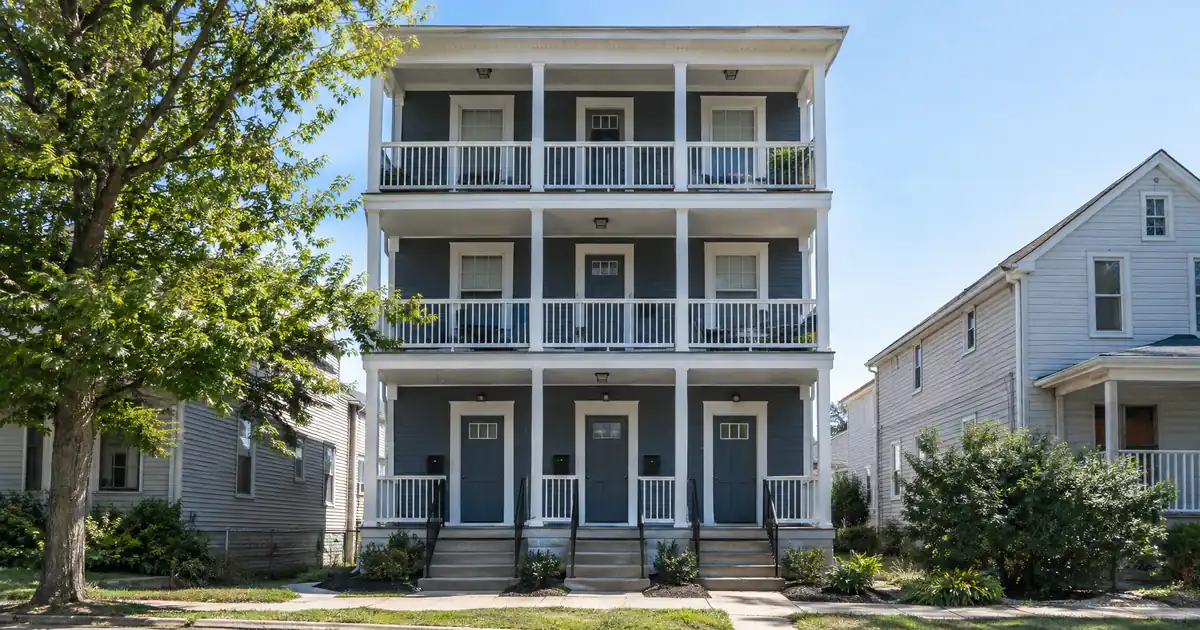
The Quick Read: A release clause is the contract term that lets you sell or refinance one property out of a blanket loan without paying off the whole pool, and it exists only if the note says so, usually at a release price above that property’s share of the debt, with conditions on what remains. It is a negotiated term, not a legal right. Read it before you sign, because fixing it later means asking the lender for a favor.
- A blanket loan puts one mortgage on several properties, so every property secures the whole debt.
- Without a release clause, a lender has no duty to free one property early.
- The release price is usually a premium over the property’s allocated share, by design.
- Small pools feel a release more, because the remaining one or two properties must carry the leftover balance.
- Terms vary by lender and program, so get the exact release language in writing.
Why Can’t You Just Sell One Unit From a Blanket Loan?
You can’t because every property in the pool secures the entire loan. A buyer’s title company needs a clean lien release before it can deliver clear title. The lender decides whether and how that release happens.
Traditional mortgages carry a due-on-sale clause, which makes the full debt payable when the secured property is sold. Federal law generally allows lenders to enforce it. A blanket loan’s release clause is the exception built into the contract. It permits a sale of part of the collateral with a partial repayment.
Barnes Walker’s legal glossary says a lender is not obligated to release a property when the loan has no release clause. When the clause exists, the release is recorded in the official records and the release price is applied to principal. No outside rule requires a blanket note to include one. It is private contract language, and that is why two blanket loans can behave very differently on exit.
Release clauses grew out of subdivision and development lending. The provision is frequently found in tract-development construction loans, where a builder sells lots one at a time. Applying that world’s habits to a portfolio of duplexes and fourplexes works, but the numbers you see online often come from the development side.
Key Terms Defined
Blanket loan: One loan secured by two or more properties instead of a separate mortgage on each.
Cross-collateralization: Each property backs the whole debt, so trouble on one can reach the others.
Allocated amount: The slice of the total loan the documents assign to each property.
Release price: The amount you must pay the lender to free one property from the lien.
Release factor: The multiple applied to the allocated amount to set the release price. A factor above 100% means a premium.
Post-release re-test: The lender’s check of whether the remaining properties still meet its leverage and coverage standards.
DSCR: Debt service coverage ratio. It compares a property’s rent to its monthly PITIA, meaning principal, interest, taxes, insurance, and any association dues.
LTV: Loan-to-value, the loan balance as a share of the property’s value.
Mechanical clause: Wording that says the lender shall release when listed conditions are met.
Discretionary clause: Wording that says the lender may release, which leaves the call to the lender.
How a Release Works, Step by Step
A release follows a repeatable path: notice, a price, payment, recording, and a new balance. Each step is a place where the note’s wording matters.
1. The note contains the clause. Nothing below happens without it.
2. The documents allocate the loan. Each property carries an allocated amount, set at origination.
3. You give notice of a sale or refinance. The note usually names what the lender needs to see, such as a purchase contract.
4. The lender states the release price. It comes from the formula in the note, plus any fees.
5. Sale proceeds go to the lender through title or escrow. The payment reduces principal.
6. A recorded instrument removes the lien. If the price is not met, Barnes Walker explains the property stays under the blanket and the seller cannot deliver clear title.
7. The lender re-tests what remains. A fresh valuation or a rent check on the remaining properties is common.
8. The loan continues on the rest. The balance is lower, and the remaining properties still secure all of it.
What Does the Release Price Look Like, and What Do You Net?
The release price is usually more than the property’s allocated share. That premium is deliberate. Barnes Walker’s glossary explains that a factor above 100% makes the paydown outpace the collateral released, which strengthens the lender’s position on what is left.
The same source reports two common formulas in development lending. One is 110%–125% of the pro-rata allocation. The other is 70%–90% of the sale price. Treat those as market-reported ranges from another lending niche, not as terms of any program Lendmire places files with.
Run a hypothetical with percentages only. Say a pool has four rentals, each allocated 25% of the loan, and the release factor is 120%. Releasing one property requires paying down 30% of the original balance. The remaining three properties then hold 70% of the original balance against 75% of the original collateral. Leverage on what remains improves slightly, which is exactly what the lender is buying with the premium. Leverage, reserves, and pricing vary by lender and program; the final terms follow the full file review.
Now compare the two formulas. A factor tied to allocation does not care whether you sold at a gain. A percentage-of-sale-price formula scales with the sale. Your net proceeds are the sale price minus the release price, closing costs, and any prepayment charge. The premium effectively keeps some of your equity locked in the remaining pool.
Many investors see the premium as a fee. A better view: it is equity you get back later, when you sell or refinance the rest.
What Does “2–4 Unit” Change?
Unit count changes the collateral, the allocation, and the concentration risk. A duplex, triplex, or fourplex is one property in the pool, whatever number of doors it has. The lender allocates debt to the building, not the unit.
That has three consequences:
- Allocation follows value and rent, not door count. A fourplex usually carries a larger slice than a duplex, but the documents decide.
- Mixed pools behave differently. A pool of one-unit homes and 2–4 unit buildings means the property you want to sell may be the one carrying the most rent.
- Small counts concentrate risk. A pool of two or three buildings feels a release harder than a pool of ten.
Take the two-property case. You hold two buildings allocated 50% each and release one at a 120% factor. You pay down 60% of the original balance. The remaining building holds 40% of the debt, so leverage falls. Coverage is the question. If the building you sold was the stronger rent producer, the remaining rent has to carry the remaining payment on its own. A sale can leave a pool that looked healthy at a 1.00 DSCR or better looking thin on the survivor. Terms vary by lender guidelines, property type, leverage, credit profile, and full file review.
DSCR compares rent to PITIA only. Clearing it is not the same as positive cash flow, since repairs, vacancy, management, utilities, and capex sit outside the calculation. A re-test that passes on paper can still leave a tight property.
On most files across the wholesale network, purchase leverage lands at 75%–80% LTV, and cash-out tops out around 75% on standard rentals. A lender testing the leftover pool will usually look through that same lens, subject to lender guidelines. Reserves are another place a release can bite. They commonly run around 6 months of PITIA, stepping up to about 9 months on loans above $1,500,000.
A practitioner pattern worth knowing: on pooled files, the investors who run into trouble are rarely surprised by the premium. They are surprised that the lender re-tested the remaining properties and that the survivors no longer met the original coverage standard. Run the post-release numbers before you sign, not on sale day.
Mechanical vs. Discretionary Clauses
The difference is one word: shall or may. A mechanical clause turns a release into a checklist. A discretionary clause turns it into a request.
| Feature | Mechanical | Discretionary |
|---|---|---|
| Key wording | Lender shall release | Lender may release |
| Predictability | High | Low |
| Lender consent | Not needed if tests are met | Required each time |
| Negotiating leverage | You have it up front | Lender holds it later |
| Best for | Planned exits | Long holds, no sales planned |
Discretionary wording can let a lender decline even when a clause exists. That makes it close to having none. If you expect to sell any property in the pool, push for mechanical language and a defined formula. Both are far easier to get at origination than after closing, when adding a clause generally requires lender consent and is treated as a new negotiation.
Release Conditions to Expect
Beyond the price, release clauses usually carry conditions. Expect some mix of these, and ask for each in writing.
| Condition | What it controls |
|---|---|
| Release price formula | Multiple of allocation or share of sale |
| Minimum paydown | Smallest payment that triggers a release |
| Release frequency caps | How many releases per period |
| Remaining security test | Minimum collateral that must stay |
| Coverage re-test | Whether remaining rent still covers the payment |
| Leverage re-test | Whether remaining LTV stays within limits |
| Fees and processing steps | Lender charges and what they need from you |
| Prepayment interaction | Whether a paydown triggers a prepayment charge |
Market surveys report that some pooled programs cap releases per year. Whether any lender in the network applies a cap, and at what level, depends on the lender and program. The point is not any single number. The point is that each row in that table is negotiable before closing and nearly fixed after.
Sale Release, Refinance Release, or Substitution?
A release is not only about sales. The trigger matters because each path changes who gets paid and what the lender re-tests.
| Path | How it works | Watch for |
|---|---|---|
| Sale release | Buyer’s funds pay the release price | Clean title depends on full payment |
| Refinance release | New loan on one property pays the price | New loan must meet its own leverage and credit tests |
| Substitution | You swap in different collateral | Lender approval and fresh valuation |
A refinance release is the path most 2–4 unit investors overlook. If you want to pull one building out of the pool and replace its debt with its own loan, the new lender tests that building alone. Cash-out refinance on a standard rental tops out around 75% LTV across most of the network, with about 6 months of seasoning as the common expectation. Exact terms depend on the lender’s guidelines, property type, leverage, and a full review of the borrower’s file.
Substitution is the least standardized path. Whether a lender will accept replacement collateral is a negotiation, and any substituted building has to meet property-eligibility rules. Manufactured homes, log homes, and barndominiums are not offered in the network’s DSCR programs, so they cannot be swapped in.
If Your Note Has No Release Clause
Without a clause, the lender owes you nothing on a partial release. You still have options, but each costs more flexibility or more money.
1. Ask for lender consent. Some lenders will agree to a release for a price and new conditions. It is a negotiation, not a right.
2. Refinance the pool. A new loan, possibly separate loans on each property, pays off the blanket.
3. Pay the blanket off in full. This works when the sale proceeds cover the whole balance.
4. Hold the property. Not a failure. Sometimes the best exit is no exit.
If you are considering a blanket loan and expect to sell, treat the missing clause as a dealbreaker. Pooling is a cost on flexibility, and a clause is how you buy some of it back.
Blanket Loan or Separate Loans?
The honest answer depends on your exit plan. A blanket is a long-hold tool. Separate loans are an exit-flexibility tool.
| Your plan | Likely better fit |
|---|---|
| Hold everything long term | Blanket can work |
| May sell one building soon | Separate loans |
| Want to refinance buildings one at a time | Separate loans |
| Want one payment and one closing | Blanket |
| Mixed strong and weak buildings | Separate loans |
Separate loans let you pay off only the loan tied to that property, with no sign-off tied to the rest of the portfolio. That is the main appeal. The blanket’s main appeal is convenience, one set of documents and one servicer for the pool. Cross-collateralization is the cost. A default or vacancy problem on one building can reach every building, and the lender can pursue the whole collateral pool.
The stronger play for many small 2–4 unit investors is separate loans, unless the pool is very stable and the exit plan is distant. Investors with a longer horizon could argue the other way, and they would not be wrong. Across the network, loans reach up to $3,000,000 on standard programs, with smaller balances available through select lenders on standard programs, though availability for a pooled structure depends on the lender. Lendmire arranges DSCR financing through select lenders in its wholesale network and can show how the numbers compare. The complete DSCR loans guide covers the basics of qualifying on property income.
What to Get in Writing Before You Sign
Ask for these items in the loan documents, not in an email.
- The clause itself, with mechanical wording if possible.
- The allocated amount for each property.
- The release price formula and factor.
- Any minimum paydown or release frequency cap.
- The post-release coverage and leverage tests.
- Fees, processing steps, and notice requirements.
- Prepayment charges and how a release interacts with them.
- Whether title held in an LLC changes anything, which is subject to lender program eligibility, and whether guaranty obligations continue after a release.
Tax treatment can depend on how the funds are used and how the property is held. Investors should keep clear records and speak with a qualified tax professional before relying on any deduction.
Frequently Asked Questions
Does a blanket loan always let me sell one property?
No. It does only if the note includes a release clause. Without one, the lender has no obligation to release a single property, and a sale would require negotiating consent or paying off the loan.
Is the release price the same as the property’s share of the loan?
Usually not. Market sources describe release prices set above the allocated share, often 110%–125% in development lending. The premium protects the lender on the remaining collateral. Any program’s exact factor depends on the lender and the note.
Does a strong portfolio DSCR make a release automatic?
No. Lenders may re-test the remaining properties on coverage, leverage, or both. A pool that clears 1.00 as a whole can look different after the strongest rent producer leaves. Select programs start at 1.00 coverage, and a separate select-lender path takes coverage below 1.00 with leverage and terms adjusted.
Can I add a release clause after closing?
Rarely on your terms. It generally has to be negotiated at origination, and adding one later requires the lender’s consent and is usually treated as a new negotiation. Ask before you sign.
Does the law require a release clause?
No. It is a private contract term. The due-on-sale rule is the background that makes it matter, since without a clause, a sale can trigger the whole debt.
Next Step
If you are buying or refinancing a rental property and want to see how the numbers work, Lendmire can help you compare DSCR loan options based on the property income, credit profile, leverage, and investor goals. Quotes are not a commitment to lend, and every file is underwritten individually by the lender.
About Lendmire
Lendmire — NMLS# 2371349 — is a mortgage brokerage specializing in DSCR investor loans, helping arrange financing across 41 markets, including Washington, D.C., through wholesale and investor-lending channels. The model centers on property-level rental income reviewed by the lender rather than W-2 documentation, subject to lender guidelines, suiting entity-owned and multi-property investors. Lendmire holds Scotsman Guide Top Mortgage Workplace recognition for 2025 and 2026.
Get Started
Ready to find the right loan for you?
In about 30 seconds you can review financing options available for your investment property. No commitment required.
Informational only. Not a Loan Estimate, approval, or commitment to lend. Program availability and eligibility are subject to lender guidelines, credit approval, property review, and underwriting.
References
1. Cornell LII – 12 U.S.C. § 1701j-3
2. Barnes Walker – Partial Release
3. Barnes Walker – Partial Release Clause
This article is part of Lendmire’s DSCR loan program — full qualification details, guidelines, and scenarios live on the program page.
Related reading: Rental HELOC Calculator for a Portfolio Down Payment Strategy · Digital Rental HELOC vs Bank HELOC on a 2 to 4 Unit · Rental HELOC Fees When You Are Protecting a Low First Lien
Brandon Miller
Founder & CEO, Mortgage Loan Originator, Lendmire LLC
- Mortgage Loan Originator · NMLS# 1129696 · Verify on NMLS Consumer Access
- North Carolina Real Estate Broker · License# 343312 · Verify on NCREC
- North Carolina Insurance Producer · License# 19053198 · Property, Casualty, Life, Health · Verify on NAIC SBS
- Lendmire LLC · Firm NMLS# 2371349 · Verify firm licensure
Disclosure information. Lendmire is a state-licensed mortgage brokerage under NMLS# 2371349. Lendmire is not a depository institution, direct lender, or financial advisor — all loans referenced are placed through wholesale lender partners and are subject to each lender's underwriting standards. This article is provided for general informational purposes and is not a commitment to lend, nor does it constitute financial, legal, or tax advice. Loan programs, terms, rates, and qualification standards change without notice and depend on borrower profile, property type, and the state in which the subject property is located. Equal Housing Opportunity provider. NMLS Consumer Access: nmlsconsumeraccess.org.