
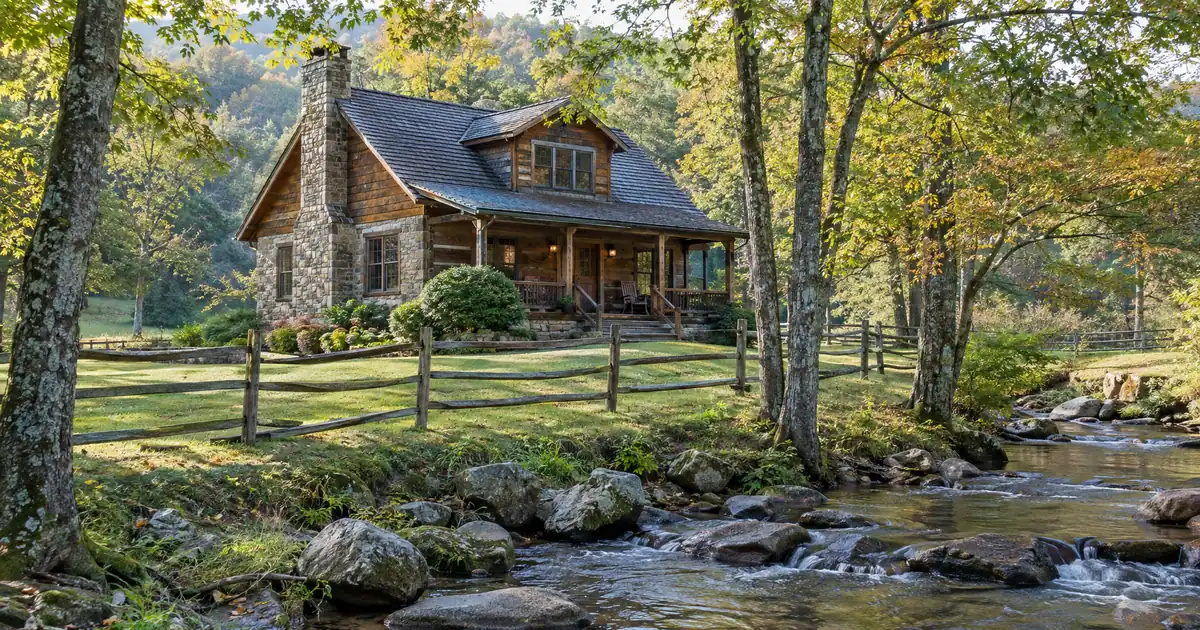
The Quick Read: Usually, yes. Your home state does not decide the outcome, but the parcel does, so it has to pass acreage, rural, and rent-coverage tests. Lenders look at the land and the house, not your mailing address.
- Eligibility follows the property and the borrowing entity, not where you live.
- Cash-out on a standard rental tops out around 75% LTV across most of our network, with about 6 months of ownership expected.
- Acreage caps and rural labels are the usual sticking points, and they often cut leverage instead of ending the file.
- Working farms, ranches, orchards, log homes, barndominiums, and manufactured homes are not offered.
- Rent from the dwelling has to cover the full payment. Rent from the land generally does not count.
Does Living Out of State Change Anything?
No, not in any way that matters to the loan. A DSCR loan (debt service coverage ratio loan) qualifies primarily on property-level rental income covering the payment, subject to lender guidelines. Your personal income is not the test, so a remote address does not weaken the file.
DSCR Cash-Out Calculator
Run the cash-out numbers in your market
Rate source: Freddie Mac 30-yr average via FRED® — Federal Reserve Bank of St. Louis · effective Oct 8, 2026
Prefilled with starting assumptions — enter your property’s value, balance, taxes, and insurance for a more accurate picture.
Program parameters update from Lendmire’s centralized guideline source. Taxes and insurance are editable estimates.
As of Oct 8, 2026 · General Freddie Mac market benchmark, not a Lendmire loan offer. Property value, balance, taxes, and insurance are editable estimates. Maximum loan-to-value varies by lender, program, property type, and seasoning. Not a Loan Estimate, approval, or commitment to lend. Program availability and eligibility are subject to lender guidelines, credit approval, property review, and underwriting.
Across the wholesale network Lendmire works with, the property’s state sets the rules. The owner’s state does not. A parcel in a state where lenders in the network operate is eligible to be reviewed, whether you live next door or two time zones away.
What remote ownership does add is logistics. You will sign with a notary somewhere else. If you hold title in an LLC formed in a third state, that entity may need to register in the property’s state, depending on program guidelines. A remote owner also needs a property manager or a lease the lender can verify, because nobody from your side is walking the lot.
If you are weighing other ways to tap equity from a distance, Lendmire’s piece Texas DSCR Cash-Out Requirements for an Out-of-State Rental Owner covers the document side in more depth.
How Does Acreage Change a DSCR Cash-Out?
Acreage changes the appraisal first and the leverage second. Lenders want a residential rental, not a land play. A large parcel makes the value harder to support, the resale pool smaller, and the use easier to question.
Lenders restrict acreage for four practical reasons:
- Comparable sales on big parcels are scarce, so appraisals get harder to defend.
- A large parcel can look agricultural, which moves the file out of residential DSCR.
- The buyer pool for a rural house on many acres is small, which matters if the loan ever goes bad.
- The house, not the land, produces the rent. Value that sits in the dirt does not help coverage.
Acreage caps differ from lender to lender. We will not hand you a single number, because the honest answer is that it depends on the program and the area. Many lenders will still review a larger lot, but some exclude the excess land from the appraised value. That lowers the value the loan is built on.
Here is how the common situations usually play out.
| Scenario | Usual treatment | What to ask |
|---|---|---|
| House on a modest lot | Clean residential path | Anything unusual about the lot? |
| House on a larger lot | Reviewed case by case | Is excess land excluded from value? |
| Rural-classified area | Often lower leverage | How does this lender define rural? |
| Barns, stables, crops | Looks agricultural | Do outbuildings change the file? |
| Working farm or ranch | Not offered | Is an agricultural loan the right category? |
| Log home or barndominium | Not offered | Is it truly a conventional build? |
Rural usually costs leverage instead of triggering a flat no. Plan for less cash out than the same house would produce in a suburb.
Does the Rent Still Cover It?
This is where many acreage deals stall. DSCR compares monthly rent to PITIA, which is principal, interest, taxes, insurance, and any association dues. A cash-out makes the loan larger, so coverage drops unless rent is strong enough to absorb the bigger payment.
Acreage makes that squeeze tighter. The rent comes from the house. The value, and therefore the loan, includes land that rents for nothing.
Run the numbers this way, using modeled assumptions only. Say you own a modest three-bedroom house on a large rural lot, held well past the 6-month seasoning window. Seasoning is the waiting period a lender wants after you take title before it will lend against the equity. On the current loan, coverage looks healthy at roughly 1.25x. You ask for a cash-out at the 75% LTV ceiling. The new payment is much bigger, and coverage slides toward 1.00x, even though the rent never changed. Leverage, reserves, and pricing vary by lender and program; the final terms follow the full file review.
Two things follow:
- The rent can cap your loan before your equity does. Having 60% equity does not mean you can pull 60% out.
- If the ratio lands under 1.00, you are not necessarily done. 1.00 is where many select programs start, and a separate select-lender path takes coverage below 1.00 with leverage and terms adjusted. A larger down payment or smaller cash-out can also lift the number.
One more point matters here. Clearing 1.00 is not the same as positive cash flow. DSCR leaves out repairs, vacancy, management, utilities, and capital expenses. On rural property, with well and septic systems and long drives for contractors, those costs can be real. Size your cash-out against the whole budget, not just the ratio.
What Counts as Rent on Acreage?
Rent from the dwelling counts. Land income generally does not. A lease on the house, or a market-rent opinion from the appraiser, is what the underwriter uses.
Hunting leases, grazing arrangements, and crop leases are different income streams. A DSCR underwriter generally will not add them to the house rent to reach the ratio. And if the land is actively farmed, the property starts to look like a farm. Working farms, ranches, and orchards are not offered through the network’s DSCR programs. They belong to agricultural lending.
A house with stables or barns can raise the same flag. Even when the house alone would qualify, outbuildings used for agriculture may change how the lender classifies the whole property. If you have outbuildings, describe their use to your broker before anyone orders an appraisal.
Vacancy matters too. A property that sits empty at refinance is generally not eligible, so lease it first. Short-term rentals work differently. A remote owner typically needs about 12 months of hosting history or a manager’s report. Leverage is lower than on a standard rental: cash-out tops out at 70% on short-term-rental collateral and 75% on standard rentals. Short-term rental rules can vary by city, county, HOA, and property type, so confirm local rules before relying on projected rental income.
Why Acreage Deals Get Declined, and the Fixes
Most declines trace back to one of five problems. Each has a fix, and each fix has a price.
| Problem | Likely fix | Trade-off |
|---|---|---|
| Lot exceeds program cap | Different lender, or split the parcel | Time and surveying cost |
| Excess land excluded | Accept lower appraised value | Less cash out |
| Rural label | Lower-leverage rural program | Smaller proceeds |
| Coverage too thin | Smaller cash-out or more equity left in | Less cash to redeploy |
| Agricultural use | Remove or document non-farm use | May not be possible |
The strongest files clear both tests: enough equity and enough rental coverage. A bigger equity cushion does not erase acreage caps, credit floors, reserve rules, or property eligibility. A strong ratio does not rescue a parcel the lender classifies as a farm.
Credit and reserves still apply. A 620 score is the floor in parts of the network, most programs want around 660, and 700 or higher opens the strongest leverage tiers. Reserves vary by lender, leverage, loan size, and transaction type. Roughly 6 months of PITIA is common, stepping up to about 9 months for loans above $1,500,000. Loan sizes run up to $3,000,000 on standard programs.
Here is a practitioner observation. In files we place, acreage declines rarely come as a surprise to a borrower who checked three things before applying. The first is total lot size against the program cap. The second is whether the neighborhood reads as built-up or isolated on a satellite view. The third is whether the appraiser can find rural comparable sales at all. Remote owners skip that homework more often than local ones, because the property is out of sight.
Business Purpose and Occupancy (the One Rule Worth Knowing)
DSCR loans are designed for non-owner-occupied investment properties. Because they are business-purpose investor loans, they are reviewed differently from a standard owner-occupied mortgage.
Occupancy is the line to watch. Under the CFPB’s Regulation Z commentary, an owner who expects to occupy the property for more than 14 days in the coming year can take the loan out of the non-owner-occupied category. If you plan to use the acreage as a weekend retreat, that is a conversation for a different loan type.
Purpose matters as well as property type. As Compliance Alliance explains, the purpose of the loan proceeds matters, so not every investment property is automatically treated as business purpose. If you plan to spend the cash-out on personal expenses, tell your broker up front.
Tax treatment can depend on how the funds are used and how the property is held; investors should keep clear records and speak with a qualified tax professional before relying on any deduction.
A Remote Owner’s Pre-Application Checklist
You can run most of this from your desk.
1. Confirm total acreage from the deed or county record, and compare it to the lender’s cap.
2. Check satellite imagery for neighboring structures and roads. A parcel that looks isolated invites a rural label.
3. List every outbuilding and what it is used for.
4. Confirm the dwelling is a conventional build. Log homes, barndominiums, and manufactured homes are not offered.
5. Make sure a signed lease is in place, or arrange one if the house is vacant.
6. Pull your payoff statement, entity documents, and a business-purpose statement.
7. Line up a market-rent opinion and ask how comparable rural rentals will be found.
8. Ask your broker which lenders in the network accept your acreage and rural designation before you pay for an appraisal.
The goal is to find the dealbreaker before spending money on it.
DSCR vs. conventional financing
There are two common ways to finance an investment property, and they qualify you differently — here’s how investors weigh them.
Why investors choose it
- Qualifies on the property’s rental income — no personal tax returns, W-2s, or pay stubs needed to document income.
- No personal debt-to-income ceiling to clear, so existing mortgages and obligations don’t cap your borrowing the same way.
- Can be closed in an LLC, keeping the property inside a business entity.
- Built for scaling — not held to the limit on number of financed properties that conventional financing applies.
- Underwriting centers on the deal: generally qualifies when the rent covers the payment, a 1.00x coverage ratio being a common baseline (confirmed in underwriting).
- Designed specifically for investment property, including long-term and, where the program allows, short-term rentals.
Where it’s strong
- Often the lowest ongoing financing cost for a buyer who fully qualifies on personal income — a fit for a first property or a cost-first purchase.
Trade-offs for investors
- Requires full personal income documentation and must fit within a debt-to-income limit — salary, existing debts, and other mortgages all count.
- Typically held in your personal name rather than a business entity.
- Caps how many financed properties you can carry, which can become a ceiling as a portfolio grows.
- Evaluates you as a borrower as much as the property, which usually means more paperwork.
How investors usually choose: a first or single property often optimizes for the lowest financing cost; portfolio builders often optimize for leverage, vesting in an LLC, and scaling past conventional caps. The right answer depends on your goals, the property, and current guidelines — both paths run through select lenders in Lendmire’s wholesale network, with eligibility and terms confirmed in underwriting.
If the Parcel Doesn’t Fit
If the file fails on acreage or use, you have a short list of paths.
- Trim the lot. A parcel split can bring the residential portion inside program limits, though it takes surveying and local approvals.
- Take the lower value. Some lenders exclude excess land from appraisal. You get less cash, but the loan can proceed.
- Use a lower-leverage rural program. This works if the house is conventional and the rent is solid.
- Move to a different loan category. A working farm or hobby operation points to agricultural or portfolio lending, not DSCR.
- Wait and restructure. Sometimes the better move is to lease the property, season the loan, or reduce the cash-out request.
This one is a toss-up for many owners. Splitting the parcel can unlock the best terms, but it also costs time and may shrink the asset you wanted to borrow against. Compare the cost of the split to the extra cash it would free up.
Investment-property HELOC lines cap at $500,000 total. For the wider picture of how these loans fit together, see the complete DSCR loans guide.
Key Terms Defined
DSCR: the ratio of a property’s monthly rent to its monthly debt payment. A 1.00 means rent equals the payment.
PITIA: principal, interest, taxes, insurance, and association dues, the full monthly obligation on the loan.
LTV: loan-to-value, the loan balance divided by the appraised value.
Cash-out refinance: a new loan that pays off the old one and returns the leftover equity to you as cash.
Seasoning: the waiting period after you take title before a lender will lend against your equity, about 6 months here.
Business-purpose loan: a loan made for an investment or business use, not for a home you live in.
Frequently Asked Questions
Does my home state matter for a DSCR cash-out?
No. Eligibility follows the property’s state and the borrowing entity. Your address does not enter the ratio. Remote ownership mainly adds notary and entity-registration logistics.
Can I hold the acreage in an LLC?
Often, yes, subject to lender program eligibility. If the LLC was formed in a different state than the property, it may need to register where the property sits. Ask before you close on the refinance, not after.
What if I have more land than the lender’s cap?
Some lenders exclude the excess land from the appraised value. Others will not review the file at all. Because caps vary across the network, a broker can sort lenders by how they treat your lot size before you spend on an appraisal.
Do hunting or grazing leases help me qualify?
Generally, no. The underwriter counts rent from the dwelling. Land income can look agricultural, and agricultural use can move the file out of DSCR.
Can I cash out if I own the property free and clear?
Generally, yes, subject to lender guidelines. Ownership well past the 6-month mark satisfies seasoning, and the payoff is simply zero. The 75% LTV ceiling on standard rentals still caps the amount, and rent still has to cover the new payment.
Next Step
If you are buying or refinancing a rental property and want to see how the numbers work, Lendmire can help you compare DSCR loan options based on the property income, credit profile, leverage, and investor goals. Lendmire is a broker arranging DSCR financing through select lenders in its wholesale network across 41 markets, including Washington, D.C. Programs change, every file is underwritten individually, and nothing here is a commitment to lend.
Acreage is the one place where the rent-first logic of DSCR runs into the lender’s view of the land, so test the parcel before you test the ratio.
For the mechanics of pulling equity out of a rental property, see Lendmire’s guide to cash-out refinance on an investment property.
About Lendmire
Lendmire is a non-QM mortgage brokerage (NMLS# 2371349) arranging DSCR investor loans in 41 markets, including Washington, D.C., through wholesale and investor-lending channels. DSCR loans are evaluated by the lender on rental income rather than personal income, subject to lender guidelines — a fit for LLC-owned portfolios, self-employed investors, and operators scaling beyond conventional loan caps. Recognized as a Scotsman Guide Top Mortgage Workplace in 2025 and 2026.
Get Started
Ready to find the right loan for you?
In about 30 seconds you can review financing options available for your investment property. No commitment required.
Informational only. Not a Loan Estimate, approval, or commitment to lend. Program availability and eligibility are subject to lender guidelines, credit approval, property review, and underwriting.
References
1. CFPB Regulation Z, Section 1026.3
2. Compliance Alliance: Regulation Z and Investment Properties
This article is part of Lendmire’s investment property cash-out refinance program — full qualification details, guidelines, and scenarios live on the program page.
Related reading: Rental HELOC Calculator for a Portfolio Down Payment Strategy · Digital Rental HELOC vs Bank HELOC on a 2 to 4 Unit · Rental HELOC Fees When You Are Protecting a Low First Lien
Brandon Miller
Founder & CEO, Mortgage Loan Originator, Lendmire LLC
- Mortgage Loan Originator · NMLS# 1129696 · Verify on NMLS Consumer Access
- North Carolina Real Estate Broker · License# 343312 · Verify on NCREC
- North Carolina Insurance Producer · License# 19053198 · Property, Casualty, Life, Health · Verify on NAIC SBS
- Lendmire LLC · Firm NMLS# 2371349 · Verify firm licensure
Compliance and disclosures. Lendmire (NMLS# 2371349) is a licensed mortgage broker and is not a direct lender, depository institution, financial advisor, or tax professional. Content in this article is general market analysis and educational information — not financial, legal, or tax advice for any specific situation. Lendmire does not guarantee loan approval; every transaction is subject to underwriting by the funding lender. Mortgage pricing and loan program guidelines are subject to change at any time without notice and vary by borrower characteristics, property type, and state regulations. Lendmire complies with Equal Housing Opportunity. Licensure verification: NMLS Consumer Access.