
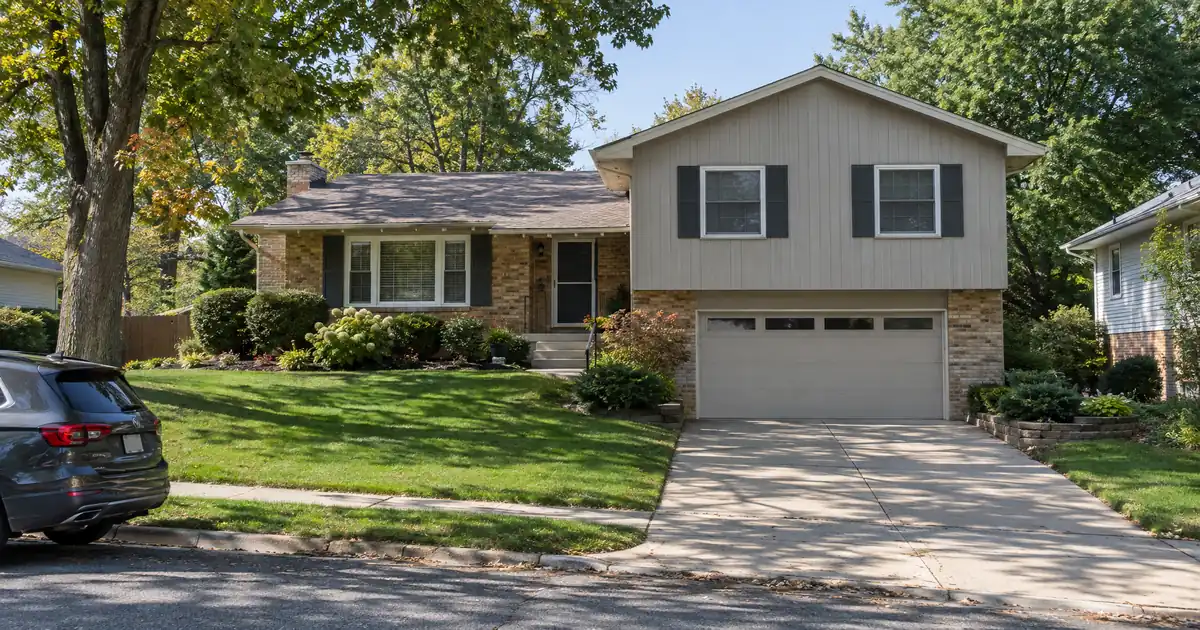
The Quick Read: A HELOC on the home you live in puts that home up as collateral, so the real risks are a lien on your residence, a payment that can change after the draw period, and a line a lender may freeze when you need it, all of which differ sharply from borrowing against a rental. The risk is manageable for many borrowers, but it is not small.
- The lien attaches to the house you live in, not to the rental you might buy with the money.
- A lender may be able to freeze or reduce an approved line, so it is not a dependable backstop.
- Pricing on the line floats and does not convert to fixed on the network Lendmire places files with, so the payment can change.
- A DSCR loan puts the collateral on the rental instead, which is a structural difference worth weighing.
Key Terms Defined
HELOC is a home equity line of credit: a revolving line secured by your home that you draw from, then repay.
CLTV is combined loan-to-value: all loans against the home, added together, divided by its value.
Draw period is the early stretch when you can borrow and usually pay interest only. A fully amortizing repayment period follows.
Lien is the lender’s legal claim on the property if the debt goes unpaid.
DSCR is the debt service coverage ratio: a rental’s monthly rent compared with its full monthly payment of principal, interest, taxes, insurance and any association dues.
How large a line the equity supports.
An equity line is sized by combined loan-to-value, occupancy, and credit — not by rental coverage. Switch the occupancy or the credit band and the ceiling moves with it.
Investment-property lines require a 700 minimum credit score; second-home lines start at a 640 minimum and primary-residence lines at 600, and the combined-LTV ceiling steps down as the credit band drops on primary-residence and second-home lines and holds on investment-property lines; the line cap steps down on primary-residence lines and holds at every tier on investment-property and second-home lines.
A debt-to-income ratio above 45% requires 680+ credit. Profiles under 640 are limited to single-family homes. At least 75% of the approved line is drawn at closing. Ceilings, floors, and caps update from Lendmire’s centralized guideline source.
Line estimate
Illustrative estimate only — not a quote, Loan Estimate, approval, or commitment to lend. The rate is an editable assumption; equity-line pricing is variable through both the draw and repayment periods and never converts to fixed. Occupancy and credit drive the ceiling together: an investment property tops out at 70% combined LTV (minimum credit 700, line cap $500,000); a second home tops out at 90% combined LTV (minimum credit 640, line cap $500,000), with the ceiling stepping down as the credit band drops (the cap holds at every tier); a primary residence tops out at 90% combined LTV (minimum credit 600), and its $750,000 maximum line is available only at 75% combined LTV or below with a 700-or-better credit profile (720 on the longer-runway program) and a full appraisal. Lines above $500,000 require a full appraisal. Credit, debt-to-income, property type, and full underwriting review all affect the final line.
The Myth: A HELOC Is Just a Safe, Flexible Cushion
Many homeowners treat a HELOC as a safety net they can tap for a rental down payment, a repair or a gap in cash flow. The belief persists for understandable reasons. Pricing is low-pressure at first, the draw period often asks for interest only, and an unused line feels like it costs nothing.
The Reality
A HELOC is a loan against your primary residence, and the five beliefs below are where the real risk hides. Across the wholesale network, a primary-residence line typically runs from $25,000 up to $750,000, and the credit and leverage tiers change as the amount grows.
| Myth | What is actually true |
|---|---|
| Only draws matter | The lien attaches at closing |
| The line is mine to use | A lender may freeze or cut it |
| The payment stays low | It can change after the draw period |
| Only the first mortgage matters | Missed HELOC payments put the home at risk |
| Home or rental, same risk | The exposure sits on your residence |
Myth 1: I Only Owe Something If I Draw
Verdict: the lien exists whether or not you spend a dollar.
When the line closes, the lender records a claim against your home. Annual fees can apply even when the balance is zero. On the wholesale programs Lendmire places files with, at least 75% of the line is drawn at closing. So the idea of a standing cushion you never touch does not match how these lines are built.
People believe this myth because credit cards work that way. A card has no lien on your house, and a HELOC does. The fair takeaway is simple: size the line to what you will use, not to the most you qualify for.
Myth 2: Once I Am Approved, the Line Is Mine to Use
Verdict: approval does not lock in access.
A lender can often freeze or reduce a HELOC under specific conditions. The CFPB’s official commentary on HELOC rules treats a significant drop in property value as one such ground. It offers a safe harbor: if the gap between your credit limit and your available equity shrinks by 50 percent, that counts as significant. A material change in your finances is another ground, but only if the lender reasonably believes you can no longer meet the payments.
You get some protection. The FDIC’s guidance to lenders says the lender must send written notice of the action, with specific reasons. That notice requirement comes from consumer-credit rules covering a HELOC, which is a separate matter from a business-purpose DSCR loan, since DSCR loans are exempt from TRID under Regulation Z (12 CFR 1026.3). The commentary also says the lender must restore the line if you ask and no other ground for suspension remains.
A freeze is not a demand for repayment. Your balance and terms stay in place, but you lose access to more cash. Here is the catch: freezes tend to arrive when values fall or income drops, which is exactly when a rental investor might need the line most.
Myth 3: The Payment Stays Low and Predictable
Verdict: the payment can change, and often does.
Most lines have a draw period with interest-only payments, then a repayment period where principal comes due. On this network, the two draw structures on primary residences are a 3-year interest-only draw followed by 17 years of repayment, and a 5-year draw followed by 25 years. Pricing floats during both periods and does not convert to fixed.
Two shifts can hit a borrower at once: payments reset when repayment starts, and the floating price may move. Lenders review your file on the interest-only payment at the maximum draw, with a debt-to-income limit of 50%, or 45% for credit profiles from 600 to 679. That tests whether you can carry the line on day one, not whether you can carry it after the draw period ends.
The belief persists because the early payments feel light. A sensible habit is to ask what the payment looks like once principal is due, before you sign.
Myth 4: My Home Is Only at Risk If I Miss the First Mortgage
Verdict: a missed HELOC payment puts the home at risk even when the first mortgage is current.
The HELOC lender holds a lien on the same house. In many cases it can pursue its own remedies after a default on the line, and state law shapes how. Being current on the first mortgage does not shield you.
A related belief is that a HELOC simply disappears if the first mortgage forecloses. In many cases a senior foreclosure does wipe the junior lien off the title. The unpaid balance, however, often remains as unsecured debt you can still be pursued for, depending on state rules. A fixed rate would make payments more predictable, but it would not change the collateral.
Some lines are standalone and sit in first position, and others sit in second position. Either way, the home secures the debt. The practical step: if you struggle, contact the lender early, because options narrow once a default is on record.
Myth 5: Borrowing Against My Home Is the Same Risk as Borrowing Against the Rental
Verdict: the exposure lands in a different place.
Say you use a primary-home line for the down payment on a rental. If the rental sits vacant or repairs run long, the lender behind your HELOC still looks to the house you live in. Investors sometimes call this correlated risk. A market downturn can hit rents, home values and your own income in the same stretch, and a lender may freeze the line in that same stretch.
The ceilings reflect the risk. On a primary residence, the program ceiling is 90% CLTV, but that tier exists only at a 720-or-better credit profile and only up to $500,000. At 720, you face a tradeoff: 90% CLTV up to $500,000, or a larger line up to $750,000 at a reduced 75% CLTV. A line above $500,000 is primary-residence only, requires a 700 credit profile or better (720 on the longer-runway structure), caps at 75% CLTV, and needs a full appraisal. An investment-property line caps at 70% CLTV with no higher tier.
Equity lines also have title limits. They must be held by an individual or a revocable living trust, so a property deeded to an LLC cannot hold one. These lines are available in 16 full-service states, narrower than the 41-market DSCR footprint.
Tax treatment can depend on how the funds are used and how the property is held; investors should keep clear records and speak with a qualified tax professional before relying on any deduction.
Where DSCR Financing Fits Instead
For a pure rental purchase, many investors move to a DSCR loan, which qualifies primarily on property-level rental income covering the payment, subject to lender guidelines. DSCR loans are designed for non-owner-occupied investment properties. Because they are business-purpose investor loans, they are reviewed differently from a standard owner-occupied mortgage. Personal debt-to-income is typically not the test, though credit and the full file are still reviewed.
Typical ranges across the network:
- Purchases: most land at 75% to 80% LTV, and select high-leverage programs reach 85% at a score around 700 or better.
- Cash-out refinances: most top out near 75% LTV, with about six months of seasoning as a common expectation.
- Coverage: 1.00 is where select programs start, and stronger ratios open better terms. A separate select-lender path goes below 1.00, with leverage and terms adjusted.
- Credit: most programs want about 660, with a 620 floor in parts of the network.
Clearing 1.00 is not the same as positive cash flow. Repairs, vacancy, management and utilities sit outside the DSCR calculation. Even so, the collateral is the rental, not your residence. For a deeper walkthrough, see Lendmire’s complete DSCR loans guide.
A Quick Self-Check Before You Borrow
- Could your budget absorb a higher payment once repayment starts?
- Do you hold reserves to cover a frozen line?
- Is the purpose a one-time use you can plan around?
- Does your equity margin leave room if values dip?
If two or more answers worry you, a smaller line, or a structure that puts the collateral on the rental, deserves a look. For how a rental line costs and behaves, see Lendmire’s explainer 5 Myths About What a Rental HELOC Costs and How It Works.
Frequently Asked Questions
Can I lose my home if my first mortgage is current?
Yes, in principle. The HELOC is secured by the same house, so missing its payments can lead to remedies against the home. State law shapes the process, and lenders often prefer workouts, so contact the lender early.
Can a lender freeze my HELOC after approval?
Often, yes. A significant drop in value or a material financial change can be grounds, and the lender must give written notice with reasons. The line can usually be restored if the cause is resolved.
Does a primary-home HELOC affect a DSCR loan application?
Typically not as a debt-to-income test, since DSCR files qualify primarily on property-level rental income, subject to lender guidelines. Credit and the full file are still reviewed, and a drawn line can affect your cash reserves and credit profile.
What credit score do I need for a primary-home line on this network?
The program floor is 600. At 600 the ceiling is 60% CLTV, and at 720 it can reach 90% CLTV up to $500,000.
Can I use a primary-home HELOC for a rental down payment?
Often yes, but the HELOC agreement controls what the funds may be used for, so read it. The home remains the collateral, which is the core risk to weigh.
Next Step
If you are considering a home equity line and want to see how the numbers work, Lendmire can help you compare HELOC options based on the property, the equity available, credit profile, combined leverage, and your goals.
About Lendmire
Lendmire (NMLS# 2371349) is a mortgage brokerage serving homeowners and real estate investors in its 16 full-service states. Home equity lines of credit are arranged through wholesale lending channels; Lendmire brokers the line and the lender underwrites each application under its occupancy-based guidelines. Scotsman Guide named Lendmire a Top Mortgage Workplace in both 2025 and 2026.
Get Started
Ready to find the right loan for you?
In about 30 seconds you can review financing options available for your home or investment property. No commitment required.
Informational only. Not a Loan Estimate, approval, or commitment to lend. Program availability and eligibility are subject to lender guidelines, credit approval, property review, and underwriting.
References
This article is part of Lendmire’s home equity line of credit program — full qualification details, guidelines, and scenarios live on the program page.
Related reading: Rental HELOC Calculator for a Portfolio Down Payment Strategy · Digital Rental HELOC vs Bank HELOC on a 2 to 4 Unit · Rental HELOC Fees When You Are Protecting a Low First Lien
Brandon Miller
Founder & CEO, Mortgage Loan Originator, Lendmire LLC
- Mortgage Loan Originator · NMLS# 1129696 · Verify on NMLS Consumer Access
- North Carolina Real Estate Broker · License# 343312 · Verify on NCREC
- North Carolina Insurance Producer · License# 19053198 · Property, Casualty, Life, Health · Verify on NAIC SBS
- Lendmire LLC · Firm NMLS# 2371349 · Verify firm licensure
Disclosure information. Lendmire is a state-licensed mortgage brokerage under NMLS# 2371349. Lendmire is not a depository institution, direct lender, or financial advisor — all loans referenced are placed through wholesale lender partners and are subject to each lender's underwriting standards. This article is provided for general informational purposes and is not a commitment to lend, nor does it constitute financial, legal, or tax advice. Loan programs, terms, rates, and qualification standards change without notice and depend on borrower profile, property type, and the state in which the subject property is located. Equal Housing Opportunity provider. NMLS Consumer Access: nmlsconsumeraccess.org.