
The Quick Read: Sometimes, but only when the plan pays the balances off within a few years, the borrower can absorb a payment that floats, and the pledged property is a risk worth taking, because a HELOC turns unsecured card debt into a lien that can lead to foreclosure if it goes unpaid. The lower cost is real. So is the collateral.
- A HELOC is a revolving line secured by the property, so missed payments put the property at risk in a way card debt does not.
- The payment floats and starts out interest-only, so the balance may not shrink unless the borrower pays principal on purpose.
- On the wholesale network Lendmire places files with, an investment-property line tops out at 70% CLTV and $500,000.
- Investment lines must be titled to an individual or a revocable trust, not an LLC.
- For rental owners, a DSCR cash-out refinance is a different tool that qualifies primarily on rent, subject to lender guidelines.
How Does a HELOC to Consolidate Credit Cards Actually Work?
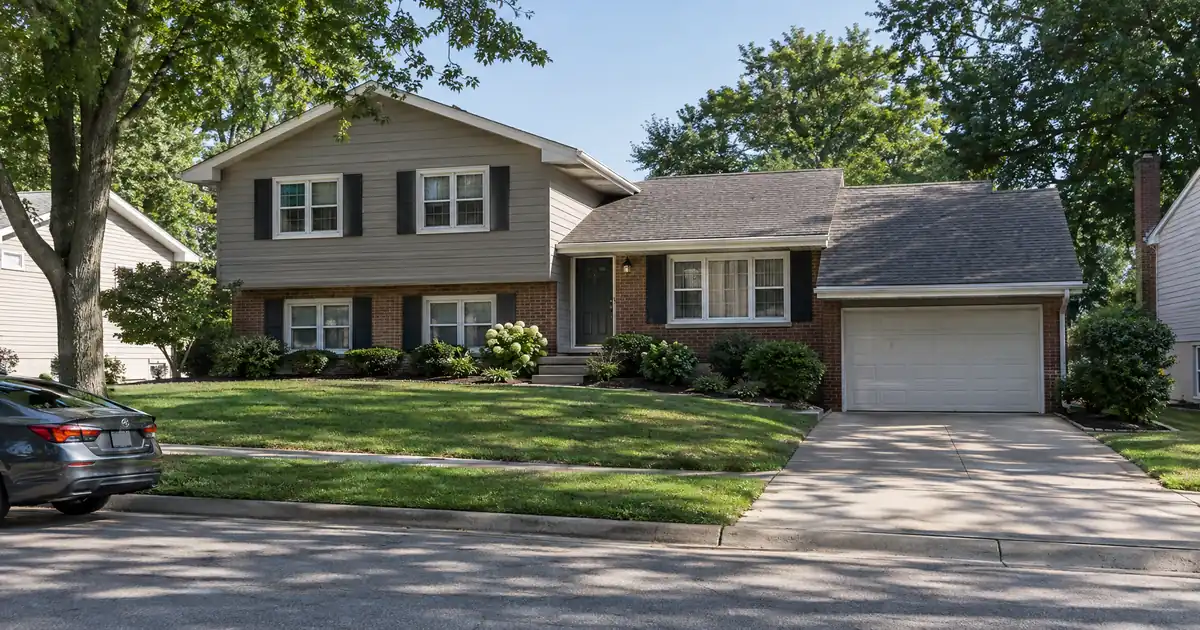
A HELOC lets a borrower draw against home or property equity, pay off the card balances, and then repay the line instead. The cards go to zero, and the debt now sits behind a lien on real estate.
How large a line the equity supports.
An equity line is sized by combined loan-to-value, occupancy, and credit — not by rental coverage. Switch the occupancy or the credit band and the ceiling moves with it.
Investment-property lines require a 700 minimum credit score; second-home lines start at a 640 minimum and primary-residence lines at 600, and the combined-LTV ceiling steps down as the credit band drops on primary-residence and second-home lines and holds on investment-property lines; the line cap steps down on primary-residence lines and holds at every tier on investment-property and second-home lines.
A debt-to-income ratio above 45% requires 680+ credit. Profiles under 640 are limited to single-family homes. At least 75% of the approved line is drawn at closing. Ceilings, floors, and caps update from Lendmire’s centralized guideline source.
Line estimate
Illustrative estimate only — not a quote, Loan Estimate, approval, or commitment to lend. The rate is an editable assumption; equity-line pricing is variable through both the draw and repayment periods and never converts to fixed. Occupancy and credit drive the ceiling together: an investment property tops out at 70% combined LTV (minimum credit 700, line cap $500,000); a second home tops out at 90% combined LTV (minimum credit 640, line cap $500,000), with the ceiling stepping down as the credit band drops (the cap holds at every tier); a primary residence tops out at 90% combined LTV (minimum credit 600), and its $750,000 maximum line is available only at 75% combined LTV or below with a 700-or-better credit profile (720 on the longer-runway program) and a full appraisal. Lines above $500,000 require a full appraisal. Credit, debt-to-income, property type, and full underwriting review all affect the final line.
The mechanics run in a simple order. The lender values the property. It sets a limit based on combined loan-to-value, credit, and debt-to-income. The borrower draws, and the draw pays the card issuers.
Two features on this network matter for consolidation. First, a standalone line can sit in first or second lien position. Second, at least 75% of the line must be drawn at closing. That means the line should be sized close to the card balances, not to the maximum equity available. A borrower who opens a large line and draws only a small amount does not fit the structure.
The payment structure has two phases. Depending on the program, the draw period is 3 years interest-only followed by 17 years of full amortization, or 5 years interest-only followed by 25 years of full amortization. Investment lines use the 5-year draw and 25-year repayment structure only. Pricing floats across both phases and never converts to fixed.
That floating pricing is the first reason to be careful. Interest-only means nothing goes to principal during the draw period. When repayment begins, the payment steps up because principal now enters the picture.
Why Do People Choose It, and What Is the Catch?
The case for it is a lower cost of borrowing. Card debt is unsecured, and lenders price that risk in. A line secured by property usually costs less.
The catch is the same fact viewed from the other side. NerdWallet points out that unsecured debt can be discharged in bankruptcy and secured debt cannot. It suggests asking whether the plan clears the consumer debt within five years, and exploring alternatives first. It adds that borrowers with good credit probably have other consolidation options that do not put the home at risk.
A Kiplinger analysis of using home equity for card debt makes the same trade explicit: the lower cost comes because the home serves as collateral.
Consider the common failure pattern. An owner consolidates six cards, feels relief, and then runs the cards up again. Now the owner carries the line and fresh balances. InCharge, a nonprofit credit counseling group, warns that stretching payments over many years can keep a borrower in debt longer, and that re-borrowing is the usual way consolidation fails.
Where the Risk Table Gets Specific
Here is how the main risks look in practice.
| Risk | What it looks like | Mitigation |
|---|---|---|
| Collateral | Missed payments threaten the property | Keep the draw limited to card balances |
| Floating payment | Payment rises when the index moves | Stress-test a higher payment before drawing |
| Payment step-up | Principal enters at repayment | Add principal payments during the draw |
| Longer term | Lower payment, but more total interest | Compare total interest, not payment |
| Re-borrowing | Cards refill after payoff | Auto-pay and set spending limits |
| Equity spent | Less equity for repairs or a next deal | Weigh against investment plans |
The U.S. consumer finance regulator CFPB calls this move risky and lists three more costs: closing costs that can run to hundreds or thousands of dollars, a value drop that can leave the borrower underwater and make selling or refinancing harder, and equity that may not be there later for emergencies or repairs.
Rate Versus Term: Separating the Two Effects
Many consolidation pitches blur two different savings. One is a lower cost of money. The other is a longer repayment window. A smaller monthly payment can come entirely from the longer window while total interest actually rises.
Run the comparison as three paths for the same borrower, keeping the structure and not the dollars in mind:
| Path | Monthly payment | Total interest | Main danger |
|---|---|---|---|
| Stay on the cards | High | Highest if balances linger | Compounding balances |
| HELOC, paid off fast | Moderate | Lowest | Needs discipline |
| HELOC, stretched long | Lowest | Can exceed the fast path | Years of extra interest |
The honest test is to hold the payoff timeline constant. If the HELOC saves money over the same payoff window, the savings are real. If savings appear only because the term is longer, the borrower has simply paid more slowly.
Is It Right for You? A Go/No-Go Checklist
The answer shifts with the investor profile. A borrower with stable income, a plan to clear the balance in a few years, and meaningful equity beyond the line may find a HELOC reasonable. A borrower with irregular income, or one who keeps refilling the cards, should think twice.
| Good fit if | Think twice if | Skip it if |
|---|---|---|
| Balances clear in about five years | Income swings month to month | Cards refill after payoff |
| Equity stays well above the line | Payment could not survive a rise | The shortfall is a spending problem |
| Draw is sized to the card balances | Rental cash flow is already thin | A lower-risk option exists |
Run the five-year test from NerdWallet first. If the plan does not get the cards paid off in that window, the lower cost may not be worth the collateral.
What Do the Network Guidelines Say About Eligibility?
A HELOC through Lendmire’s wholesale partners looks different depending on the occupancy of the property. Lendmire is a broker, not the lender, and every figure below is subject to lender guidelines and full file review. Availability is limited to the 16 states where Lendmire runs full-service retail operations, which is narrower than its 41-market DSCR footprint.
| Occupancy | Maximum CLTV | Credit floor | Maximum line |
|---|---|---|---|
| Primary residence | Up to 90% (only at 720+ credit) | 600 | $750,000 |
| Second home | Up to 90% (only at 720+ credit) | 640 | $500,000 |
| Investment property | 70% | 700 | $500,000 |
Several details trip up borrowers:
- A primary residence line above $500,000 requires at least a 700 credit profile (720 on the longer-draw structure), caps at 75% CLTV, and requires a full appraisal.
- Debt-to-income tops out at 50%, with 45% for scores between 600 and 679. The lender qualifies the borrower on the interest-only payment calculated on the maximum draw.
- Lines at or below $500,000 ordinarily run an automated valuation, though a higher CLTV may require a second look.
- A bankruptcy needs four years of seasoning from discharge or dismissal.
The title rule is the sharpest difference for investors. The individual borrower or a revocable living trust must hold title. LLCs, corporations, partnerships, and land or irrevocable trusts cannot. A rental already deeded to an LLC needs a vesting change or a different structure.
Can an Investor Use a HELOC on a Rental?
Yes, with limits. An investment-property line caps at 70% CLTV, requires a 700 minimum score, and runs to $500,000. Underwriting rests on the borrower’s credit and debt-to-income, not on the rent the property earns.
That has a direct consequence for a landlord who already has DSCR financing. A HELOC behind an existing first lien adds a second payment to the same property. If the rent covers the first loan comfortably but the combined payment pushes coverage near the lender’s floor, the next refinance or purchase gets harder. Run the math on both liens together before drawing.
Equity spent on card payoff also cannot fund the next down payment. For an investor building a portfolio, that opportunity cost can matter more than the interest savings.
There is also a rule for owner-occupied borrowers. The CFPB HELOC brochure notes that some plans prohibit renting out the home, so confirm the line’s terms before converting a residence to a rental.
When Does a DSCR Cash-Out Make More Sense?
A DSCR cash-out refinance is a different tool, not a bigger HELOC. It replaces the existing first mortgage with a new first lien on a non-owner-occupied investment property. It qualifies primarily on property-level rental income covering the payment, subject to lender guidelines, and the property can be held in an LLC, subject to program terms.
Across the wholesale network, cash-out on a standard rental generally tops out around 75% LTV, and about six months of seasoning is the common expectation. Coverage of 1.00 is where many select programs start, with a separate select-lender path available below 1.00, with leverage and terms adjusted. Stronger ratios open better terms. Credit expectations run from a 620 floor in parts of the network to around 660 for most programs, and 700 or higher for the strongest leverage tiers.
Reserves vary by lender, leverage, and loan size, commonly around 6 months of PITIA. A DSCR loan cannot tap equity in the borrower’s own residence, so it solves a different problem than a HELOC on a primary home.
Two honest cautions apply. First, a cash-out replaces the existing first lien, so a borrower with a low-cost first mortgage gives it up. A HELOC behind that first may preserve it. Second, clearing 1.00 coverage does not mean the property cash-flows positively, because repairs, vacancy, management, and utilities sit outside the calculation.
The decision tends to flip on the entity and the portfolio. For a personally titled home with a first mortgage worth keeping, the HELOC may fit better. For an LLC-held portfolio, a DSCR cash-out becomes the practical path. Lendmire’s piece on HELOCs versus cash-out refinances on rental property walks through that comparison, and the complete DSCR loans guide covers how the rent-based test works across the network.
What Are the Alternatives to Putting a Lien on Property?
Several options leave the property out of it.
| Option | Secured by property? | Payment type | Main tradeoff |
|---|---|---|---|
| HELOC | Yes | Floating, interest-only first | Foreclosure risk |
| Fixed home equity loan | Yes | Predictable | Still a lien |
| Personal consolidation loan | No | Fixed | Costs more than secured debt |
| Balance transfer | No | Promotional | Offer window ends |
| Credit counseling plan | No | Structured | Requires discipline |
CNBC Select notes that a consolidation loan costs more than a home equity loan but less than a card, and it does not put the home at risk. Borrowers who qualify for an unsecured option often find the cost gap smaller than the risk gap.
A self-employed owner has a few extra wrinkles, which Lendmire covers in its piece Should a Self-Employed Homeowner Use a HELOC to Consolidate Debt?.
What Happens After the Cards Are Paid Off?
The cards still exist, and so does the habit. Three guardrails help.
1. Set the HELOC payment to include principal, even during the interest-only draw period.
2. Automate the payoff so the line shrinks on schedule.
3. Keep a spending limit on the cards, or freeze them if balances start to climb again.
Closing the old cards can reduce available credit, which may hurt a score. Keeping them open helps utilization but invites the same temptation. The right choice depends on the borrower’s discipline, not a universal rule. A new account and a hard inquiry can also dip a score before it improves.
If payments become hard to make, contact the lender early. Options before default are usually better than options after one.
Tax treatment can depend on how the funds are used and how the property is held; investors should keep clear records and speak with a qualified tax professional before relying on any deduction.
Key Terms Defined
CLTV (combined loan-to-value): The total of all liens on a property divided by its value.
Draw period: The early phase of a HELOC when the borrower can draw funds and typically pays interest only.
Repayment period: The later phase when the line stops advancing and payments include principal.
DSCR (debt service coverage ratio): Monthly rent divided by the property’s monthly principal, interest, taxes, insurance, and any HOA dues.
Lien: A legal claim against a property that secures a debt.
What Are the Next Steps?
Start by listing every card balance and deciding whether a five-year payoff is realistic. Then compare the HELOC against the unsecured options above. If a rental is involved, test the combined payments against its rent before drawing.
If you are considering a home equity line and want to see how the numbers work, Lendmire can help you compare HELOC options based on the property, the equity available, credit profile, combined leverage, and your goals. Reach the team at 828-256-2183.
Frequently Asked Questions
Can a HELOC be used on a rental property to pay off credit cards?
Yes, within limits. On the wholesale network Lendmire places files with, an investment-property line caps at 70% CLTV, requires a 700 minimum credit profile, and runs up to $500,000. The borrower, not an LLC, must hold title, and underwriting rests on personal credit and debt-to-income rather than rent.
Will consolidating cards with a HELOC raise my credit score?
Not automatically. A new account and a hard inquiry can lower a score at first. Lower card utilization may help over time, but the result depends on the borrower’s full credit file and on whether the cards are used again.
How much of the line has to be drawn at closing?
At least 75% of the line is drawn at closing on the programs in the wholesale network. That means a borrower consolidating cards should size the line close to the balances being paid off, not to the maximum equity available.
Is a HELOC payment fixed?
No. Pricing floats across both the draw and repayment periods and never converts to fixed. The draw phase is interest-only, so payments typically rise when repayment begins and principal enters the picture.
Should a landlord use a DSCR cash-out instead?
It depends on the entity, the first mortgage, and the portfolio. A DSCR cash-out qualifies primarily on rent covering the payment and can work for LLC-held properties, but it replaces the existing first lien. A HELOC may preserve a low-cost first mortgage but is limited to personal titling and borrower-based underwriting.
About Lendmire
As a mortgage broker (NMLS# 2371349), Lendmire helps homeowners and real estate investors in its 16 full-service states open home equity lines of credit arranged through wholesale lenders. Lendmire is never the lender; line amounts, ceilings and terms are set by the lender under its guidelines. Scotsman Guide named Lendmire a Top Mortgage Workplace in both 2025 and 2026.
Get Started
Ready to find the right loan for you?
In about 30 seconds you can review financing options available for your home or investment property. No commitment required.
Informational only. Not a Loan Estimate, approval, or commitment to lend. Program availability and eligibility are subject to lender guidelines, credit approval, property review, and underwriting.
References
1. NerdWallet: Home equity to consolidate debt
2. Kiplinger: Using home equity to pay off credit card debt
3. InCharge Debt Solutions: Home equity loan vs. debt consolidation
4. CFPB: Consolidating credit card debt
6. CNBC Select: Home equity loan to pay off credit card debt
This article is part of Lendmire’s home equity line of credit program — full qualification details, guidelines, and scenarios live on the program page.
Related reading: Can You Consolidate Credit Cards With a HELOC on Your Home? · Should a Self-Employed Homeowner Use a HELOC to Consolidate Debt? · Should You Use a HELOC to Consolidate Credit Card Debt?
Brandon Miller
Founder & CEO, Mortgage Loan Originator, Lendmire LLC
- Mortgage Loan Originator · NMLS# 1129696 · Verify on NMLS Consumer Access
- North Carolina Real Estate Broker · License# 343312 · Verify on NCREC
- North Carolina Insurance Producer · License# 19053198 · Property, Casualty, Life, Health · Verify on NAIC SBS
- Lendmire LLC · Firm NMLS# 2371349 · Verify firm licensure
Required disclosures. Lendmire (NMLS# 2371349) operates as a licensed mortgage broker, not a direct lender or depository. The discussion in this article is general in nature and should not be relied upon as financial, legal, or tax advice — every investment scenario is unique and should be reviewed by a qualified professional. Any loan inquiry is subject to lender underwriting, and this article is not a commitment to lend or a guarantee of approval. Mortgage rates, loan terms, and program guidelines vary by borrower, property, and state, and may change without notice. Equal Housing Opportunity. Verify licensure at NMLS Consumer Access.