
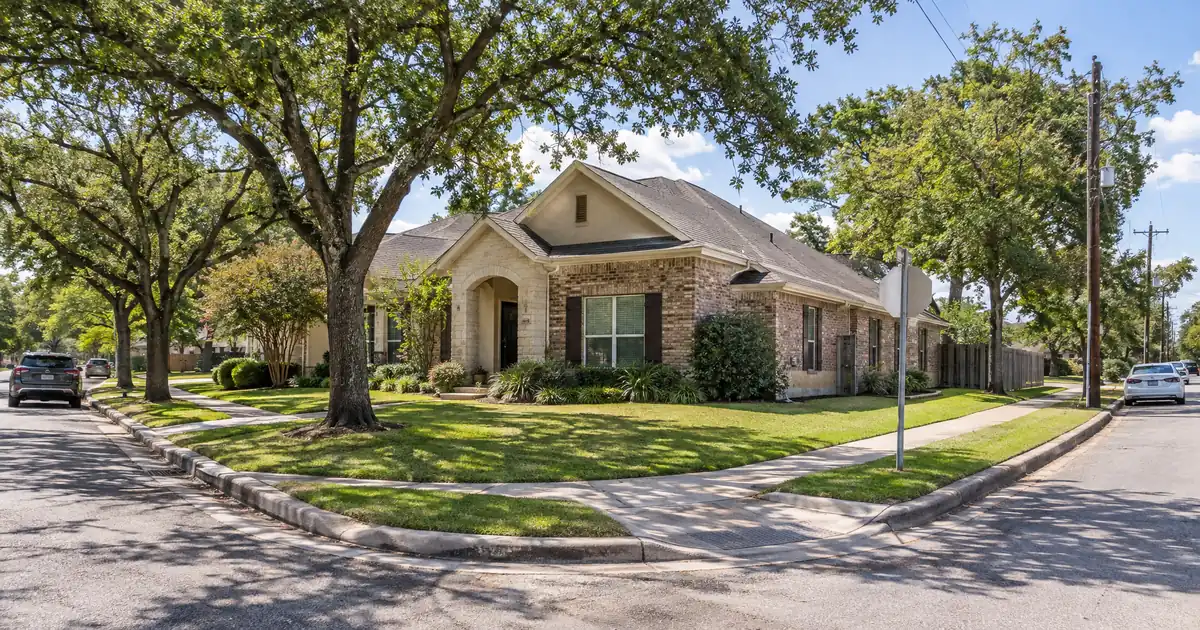
The Quick Read: No. A Texas homestead can secure only one home equity lien at a time, and the state counts a HELOC and a cash-out refinance as the same category of loan. Income documentation, credit score, and reserves do not change that, because the limit is a legal rule rather than a lender preference.
- Both a HELOC and a cash-out refinance on a Texas primary residence are Section 50(a)(6) loans, so the homestead has one slot.
- Combined debt on the homestead is capped at 80% of its value, whatever the credit tier.
- Paying off the old line at the new closing is the usual workable path.
- A rental that was never your homestead sits outside these rules.
- Strong DSCR files need both enough equity and enough rental coverage.
Picture the investor with a paid-down home and a rental in mind. The natural plan is a HELOC for the down payment, then a cash-out later when the numbers improve. In Texas, that second step collides with the first. Here is why, what the exceptions are, and where investors pull equity instead.
How large a line the equity supports in Texas.
An equity line is sized by combined loan-to-value, occupancy, and credit — not by rental coverage. Switch the occupancy or the credit band and the ceiling moves with it.
Investment-property lines require a 700 minimum credit score; second-home lines start at a 640 minimum and primary-residence lines at 600, and the combined-LTV ceiling steps down as the credit band drops on primary-residence and second-home lines and holds on investment-property lines; the line cap steps down on primary-residence lines and holds at every tier on investment-property and second-home lines.
A debt-to-income ratio above 45% requires 680+ credit. Profiles under 640 are limited to single-family homes. At least 75% of the approved line is drawn at closing. Ceilings, floors, and caps update from Lendmire’s centralized guideline source.
Line estimate
Illustrative estimate only — not a quote, Loan Estimate, approval, or commitment to lend. The rate is an editable assumption; equity-line pricing is variable through both the draw and repayment periods and never converts to fixed. Occupancy and credit drive the ceiling together: an investment property tops out at 70% combined LTV (minimum credit 700, line cap $500,000); a second home tops out at 90% combined LTV (minimum credit 640, line cap $500,000), with the ceiling stepping down as the credit band drops (the cap holds at every tier); a primary residence tops out at 80% combined LTV (minimum credit 600), and its $750,000 maximum line is available only at 75% combined LTV or below with a 700-or-better credit profile (720 on the longer-runway program) and a full appraisal. Lines above $500,000 require a full appraisal. Credit, debt-to-income, property type, and full underwriting review all affect the final line.
Why Does Texas Treat a HELOC and a Cash-Out as the Same Thing?
Texas groups cash-out refinances, home equity loans, and HELOCs under one constitutional rule. All three are Section 50(a)(6) extensions of credit, and a homestead can secure only one of them at a time. A HELOC is not a lighter product here.
The source is Article XVI, Section 50 of the Texas Constitution, which protects the homestead from forced sale and carves out narrow exceptions. Texas A&M’s Real Estate Research Center explains that the covered loans fall into three categories: cash-out refinancing, home equity loans, and HELOCs. You can read the text yourself at Justia’s reproduction of Section 50.
Most borrowers assume a HELOC is just a second lien that sits behind whatever first mortgage exists. In many states, that is true. In Texas, if the first lien is itself a cash-out loan, a HELOC behind it would be a second 50(a)(6) lien. The rule forbids that.
Other rules apply to the loan itself:
- Combined debt secured by the homestead, including the new loan, cannot exceed 80% of fair market value.
- A 12-day waiting period applies before a home equity loan closes, per the Texas OCCC advisory bulletins.
- The loan may close only at the office of the lender, an attorney, or a title company.
- A non-borrowing spouse’s consent is required.
- Texas equity liens are non-recourse unless there was actual fraud.
HELOCs add their own limits. Each draw must be at least $4,000, and you cannot draw with a card or preprinted checks. The OCCC confirms the draw minimum in its guidance on HELOC advances.
What Does the Title Company Actually See?
The title commitment decides the outcome. It shows every lien on the property, and the lender checks whether any existing lien is a 50(a)(6) loan. If one is, a new equity line fails at that step.
Say you refinanced years ago and took cash out. That first lien is a 50(a)(6) loan. Now you apply for a HELOC behind it. The title company sees the earlier cash-out designation, and the HELOC lender cannot proceed. An attorney who advises Texas lenders flags a second-lien HELOC over a first lien that turns out to be a 50(a)(6) loan as a common and hard-to-cure error. A violation can carry serious penalties, including potential forfeiture of principal and interest.
Not every first lien triggers this. A purchase-money first mortgage is not a 50(a)(6) loan. Neither is a rate-and-term refinance of a purchase-money loan. A plain first mortgage with a HELOC behind it is the clean case, and it works.
Across our wholesale network, we see this trip people up when a refinance history is buried in an old file. The borrower remembers “a refinance,” not whether cash came out. Pulling the title history early settles it before anyone pays for an appraisal.
Your Situation, Mapped
| Your homestead today | Can you add this? |
|---|---|
| Plain purchase-money first mortgage | A HELOC is possible |
| Prior cash-out first lien | No HELOC behind it |
| Existing HELOC, want cash-out | Only if the line is paid off at closing |
| Existing equity loan, want a HELOC | No, one slot only |
| Rate-and-term refinance of a purchase loan | Not an equity lien, so no conflict |
| Rental never occupied as homestead | Outside Section 50 |
The Three Sequencing Answers, Reconciled
You will see three different answers online: never, roll it into one closing, or wait and do it later. They are all partly right, because each describes a different situation.
Never, while the lien stands. A 50(a)(6) loan cannot be made while an existing HELOC stays secured by the homestead. As long as the old lien is in place, the answer is no.
Roll it into one closing. The workable path is to pay off the old line using the new loan. The new loan is then itself the single 50(a)(6) lien. You swap the slot rather than adding a second one. The 80% combined cap still applies to the new total.
Wait, then act. An owner with a home equity loan generally must wait one year from closing before refinancing it. That spacing slows how fast you can recycle homestead equity. Rentals are not on that clock.
There is also an exit. Since 2018, Section 50(f)(2) allows an equity loan to be refinanced into an ordinary rate-and-term loan if conditions are met. A lender guideline lists them: the old loan is seasoned at least 12 months, no cash comes out, combined leverage stays at or below 80%, and the borrower signs an affidavit acknowledging the refinance. Without those conditions, a refinance of an equity loan is a new 50(a)(6) origination. The statute’s finer points deserve a title attorney’s read before you rely on them.
How Do the Three Products Compare?
| Feature | HELOC | Cash-out refinance | Home equity loan |
|---|---|---|---|
| Texas category | 50(a)(6) | 50(a)(6) | 50(a)(6) |
| Structure | Revolving line | Replaces first lien | Closed-end second lien |
| Draw minimum | $4,000 per draw | Not applicable | Not applicable |
| Combined cap | 80% of value | 80% of value | 80% of value |
| Coexist with another 50(a)(6)? | No | No | No |
Does Income Documentation Change Any of This?
No. Bank-statement income, a higher score, and extra reserves can help you qualify for one equity product. They cannot create a second slot. Qualification and lien validity are separate questions, and the lien rule is decided first.
For the HELOC itself, the programs we place files with vary by occupancy. On a Texas primary residence, combined leverage tops out at 80%, so the higher tiers in the broader matrix never apply to a homestead. Pricing and available terms vary by lender, borrower profile, property type, and full underwriting review. Lines above $500,000 are primary-residence only and require a full appraisal. Second homes floor at 640 and investment properties at 700. Everything is subject to lender guidelines and full file review.
The Texas waiting period, one-lien rule, and 12-month seasoning bind primary residences only. Texas second homes and investment properties are eligible as non-homestead transactions. Properties are limited to 10 acres.
Where Else Can You Pull Equity?
Rental and investment property is the cleaner source. Section 50 home equity rules do not apply to a rental or investment property, as the Texas A&M research center notes. Limits on a rental cash-out come from the loan program, not the state constitution.
Investment-property HELOC lines on our network run up to 70% combined leverage with a 700 minimum score, and they cap at $500,000. A DSCR cash-out refinance is the other route. It is a business-purpose loan for non-owner-occupied property. It qualifies primarily on property-level rental income covering the payment, subject to lender guidelines. Most DSCR cash-out files top out around 75% LTV on a standard rental, with about six months of seasoning common. Short-term-rental collateral typically tops out near 70% on cash-out.
Coverage works like this: 1.00 is where many select programs start, while a separate select-lender path takes coverage below 1.00 with leverage and terms adjusted. Clearing 1.00 is not the same as positive cash flow. DSCR compares rent to the full housing payment only, and repairs, vacancy, and management sit outside it. Our complete DSCR loans guide covers the mechanics.
One caution: a property that carried a 50(a)(6) lien while it was your homestead is different from a rental you never lived in. Have title counsel review it before assuming a clean investor refinance. And if you move back into a rental, it re-enters homestead territory.
For a deeper look at the homestead side, see Lendmire’s piece Can a Texas Homestead Hold a Bank Statement HELOC and a Cash-Out Lien?.
Key Terms Defined
50(a)(6) loan: A Texas home equity loan under the state constitution, covering cash-out refinances, home equity loans, and HELOCs.
Homestead: The home you live in as your primary residence, which Texas protects from forced sale.
Combined loan-to-value (CLTV): All loans secured by the property, added together, divided by its value.
Non-recourse: The lender can take the property but cannot pursue your other assets, absent fraud.
Seasoning: The waiting period between two loan events.
DSCR: Debt service coverage ratio, which compares a rental’s income to its full housing payment.
Questions to Ask Before You Apply
- Is any lien on my homestead a 50(a)(6) loan, and does the title commitment say so?
- If I have a line today, will it be paid off at the new closing?
- Will the combined total stay at or under 80% of value?
- Does the spouse need to attend closing?
- Is the property I want to borrow against ever occupied as my homestead?
Frequently Asked Questions
Can I get a HELOC after a cash-out refinance on my Texas homestead?
Not while the cash-out lien remains. The cash-out first lien is a 50(a)(6) loan, and the homestead can secure only one. A refinance out of that loan under Section 50(f)(2) may reopen the door if its conditions are met, so have title counsel confirm your history.
Can I do a cash-out refinance if I already have a HELOC?
Only if the HELOC is paid off or rolled into the new loan at closing. The new loan becomes the single equity lien, and combined debt must stay within the 80% cap.
Do these limits apply to my rental property?
No. They attach to the homestead, not to rentals that were never occupied as one. Limits on a rental cash-out come from the loan program’s leverage, credit, and seasoning rules.
Does a higher credit score or bank-statement income help?
It helps with qualifying, not with lien validity. The one-slot rule is constitutional, so no income documentation type or reserve level creates a second equity lien.
What happens if a lender gets it wrong?
A violation of the Section 50(a)(6) requirements can carry penalties, including possible forfeiture of principal and interest if it is not cured. That is why lenders review title closely and why you should too.
If you are weighing a home equity line against a cash-out refinance and want to see how the numbers work, Lendmire can help you compare HELOC options based on the property, the equity available, credit profile, combined leverage, and your goals. Tax treatment varies; consult a qualified professional before relying on any deduction.
Investors weighing their equity options can start with Lendmire’s guide to cash-out refinance on an investment property.
About Lendmire
Lendmire (NMLS# 2371349) is a mortgage broker. Home equity lines of credit — on a primary residence, a second home or an investment property — are arranged through wholesale lenders in Lendmire’s 16 full-service states, and every line is underwritten by the lender under its program guidelines. Scotsman Guide named Lendmire a Top Mortgage Workplace in both 2025 and 2026.
Get Started
Ready to find the right loan for you?
In about 30 seconds you can review financing options available for your home or investment property. No commitment required.
Informational only. Not a Loan Estimate, approval, or commitment to lend. Program availability and eligibility are subject to lender guidelines, credit approval, property review, and underwriting.
References
1. Texas A&M Real Estate Research Center
2. Texas Constitution Art. XVI §50
3. Texas OCCC advisory bulletins
4. Texas OCCC guidance on HELOC advances
This article is part of Lendmire’s home equity line of credit program — full qualification details, guidelines, and scenarios live on the program page.
Related reading: Can a Texas Homestead Hold a Bank Statement HELOC and a Cash-Out Lien? · Texas Refinance Requirements for a First and Second Mortgage · Can a High-Closing-Cost Texas Owner Hold a HELOC and Cash-Out Lien?
Brandon Miller
Founder & CEO, Mortgage Loan Originator, Lendmire LLC
- Mortgage Loan Originator · NMLS# 1129696 · Verify on NMLS Consumer Access
- North Carolina Real Estate Broker · License# 343312 · Verify on NCREC
- North Carolina Insurance Producer · License# 19053198 · Property, Casualty, Life, Health · Verify on NAIC SBS
- Lendmire LLC · Firm NMLS# 2371349 · Verify firm licensure
Compliance and disclosures. Lendmire (NMLS# 2371349) is a licensed mortgage broker and is not a direct lender, depository institution, financial advisor, or tax professional. Content in this article is general market analysis and educational information — not financial, legal, or tax advice for any specific situation. Lendmire does not guarantee loan approval; every transaction is subject to underwriting by the funding lender. Mortgage pricing and loan program guidelines are subject to change at any time without notice and vary by borrower characteristics, property type, and state regulations. Lendmire complies with Equal Housing Opportunity. Licensure verification: NMLS Consumer Access.