
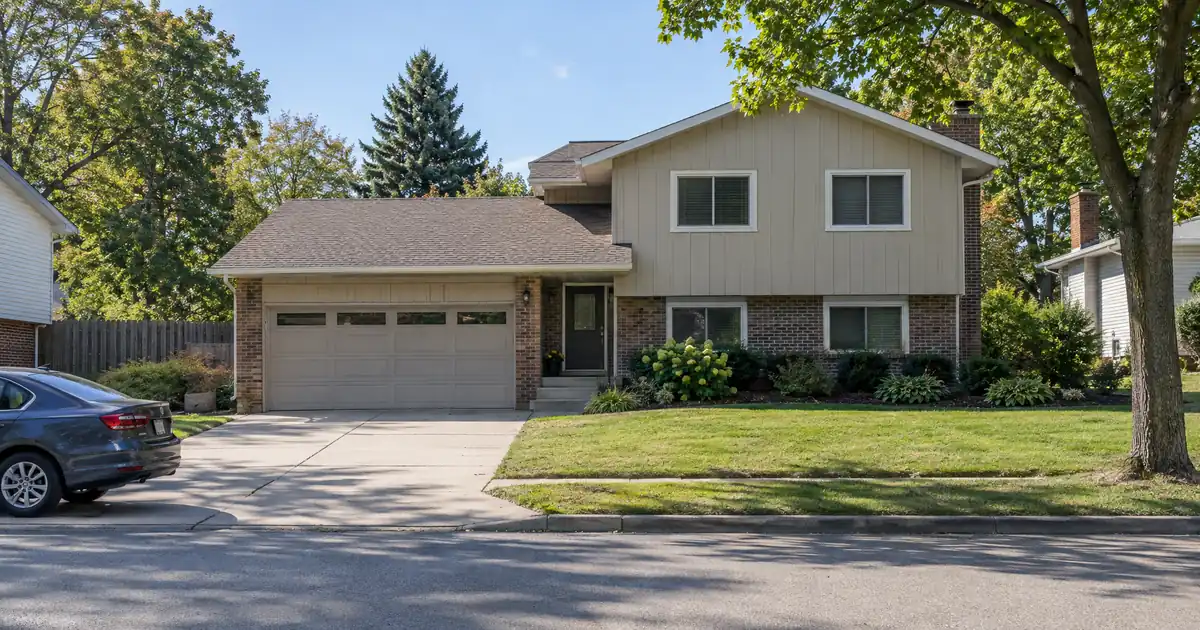
The Quick Read: You get a HELOC on an inherited home once probate is closed and the deed is recorded in your name, because a lender can only take a lien from someone who legally owns the property. From there, the lender reviews your equity, credit, debt load, and how the home is used. Leverage caps depend on whether the home is your residence, a second home, or a rental.
- Title comes first. A will alone does not move ownership; the deed does.
- Occupancy sets the ceiling. On this network, an investment line tops out at 70% CLTV and $500,000.
- Primary-residence lines can reach 90% CLTV, but only at a 720 credit profile and up to $500,000.
- The home must be held by you or by your revocable living trust. An LLC cannot hold title on these lines.
- If you plan to keep the home as a rental and the HELOC doesn’t fit, a DSCR cash-out refinance is the usual alternative.
Inheriting a house feels like a finish line. For a lender, it is the starting gun on a paperwork sequence. The equity is real, but you can’t borrow against it until the legal record says it’s yours.
How large a line the equity supports.
An equity line is sized by combined loan-to-value, occupancy, and credit — not by rental coverage. Switch the occupancy or the credit band and the ceiling moves with it.
Investment-property lines require a 700 minimum credit score; second-home lines start at a 640 minimum and primary-residence lines at 600, and the combined-LTV ceiling steps down as the credit band drops on primary-residence and second-home lines and holds on investment-property lines; the line cap steps down on primary-residence lines and holds at every tier on investment-property and second-home lines.
A debt-to-income ratio above 45% requires 680+ credit. Profiles under 640 are limited to single-family homes. At least 75% of the approved line is drawn at closing. Ceilings, floors, and caps update from Lendmire’s centralized guideline source.
Line estimate
Illustrative estimate only — not a quote, Loan Estimate, approval, or commitment to lend. The rate is an editable assumption; equity-line pricing is variable through both the draw and repayment periods and never converts to fixed. Occupancy and credit drive the ceiling together: an investment property tops out at 70% combined LTV (minimum credit 700, line cap $500,000); a second home tops out at 90% combined LTV (minimum credit 640, line cap $500,000), with the ceiling stepping down as the credit band drops (the cap holds at every tier); a primary residence tops out at 90% combined LTV (minimum credit 600), and its $750,000 maximum line is available only at 75% combined LTV or below with a 700-or-better credit profile (720 on the longer-runway program) and a full appraisal. Lines above $500,000 require a full appraisal. Credit, debt-to-income, property type, and full underwriting review all affect the final line.
This guide walks the sequence from a closed estate to an open line. It covers how underwriting treats an inherited home, the structures available, and where the general rule breaks. It also covers how a rental-minded heir should think about the decision. For the wider picture of investor financing, Lendmire’s complete DSCR loans guide covers the rental side in depth.
What Does “After Probate” Actually Mean to a Lender?
It means three things are true at once: the court has finished with the estate, the deed moving the home to you is signed and recorded, and a title search shows no gaps. Until all three are in place, nobody can pledge the property as collateral.
A HELOC is an open-end line of credit. You borrow against your home equity, repay, and borrow again during a draw period, as the CFPB explains. Equity is the home’s value minus what is owed on it.
Here is why a will isn’t enough. A Texas probate firm puts it plainly: title doesn’t pass automatically based on the will, it passes once probate is completed. The will names who gets the house. The deed makes it so.
While probate is open, the court appoints a personal representative. Letters Testamentary go to the executor when there is a will. Letters of Administration go to the administrator when there isn’t. Those letters prove who can act for the estate. They do not make you the owner, and they do not turn the house into collateral for your personal credit line.
Key Terms Defined
Probate: The court process that confirms a will, settles debts, and authorizes the transfer of a dead person’s property.
Letters Testamentary / Letters of Administration: Court documents that prove the personal representative’s authority to act for the estate.
Estate deed: The deed the personal representative signs to move the home from the estate to the heir.
CLTV (combined loan-to-value): All loans secured by the home, added together and divided by its value. A leftover lien shrinks the line you can open.
Draw period: The stretch when you can borrow from the line, usually interest-only here, before repayment starts.
TOD deed: A transfer-on-death deed that moves the home to a named person without probate.
DSCR: Debt service coverage ratio, or rent divided by the full monthly housing obligation. It is how rental loans are measured.
Who Can Sign? A Title-Status Decision Table
The right path depends on how the home came to you. Rules vary by state, and a probate attorney or title company should confirm yours.
| How the home passed | Who can borrow | Realistic outcome |
|---|---|---|
| Probate open, no letters | Nobody | Wait; no one has authority |
| Probate open, letters issued | Personal representative, for the estate | Heir HELOC generally not available |
| Probate closed, deed recorded | The heir | HELOC review can begin |
| Revocable trust | Trustee or heir, per trust terms | Can skip probate; paperwork still needed |
| TOD or survivorship deed | The named person | Can skip probate; recording steps apply |
| Heirs’ property, no probate | Nobody with clear title | Possession without clear title |
The trust and TOD routes can skip probate. Even so, state recording and affidavit requirements may apply before the title is clean.
The Roadmap From Closed Estate to Open Line
Here is the sequence a lender and title company will walk through.
1. Get certified documents. Order several certified copies of the death certificate and letters. Institutions and title companies typically want originals.
2. Deed the home out of the estate. The personal representative signs a deed to the heir, backed by the letters and any court orders.
3. Record the deed. Public records must match the ownership being pledged. A lien can’t attach to a deed that sits in a drawer.
4. Run a title search. This finds outstanding mortgages, an old HELOC, or a missing signature. Gaps in authority or recording get flagged here.
5. Order valuation. A date-of-death value from the estate is a tax and accounting number. Lenders want a current value.
6. Apply with your own file. Credit, debt load, and occupancy are yours. The deceased’s credit is not part of the review.
7. Close the line. Expect the usual line costs. The CFPB’s HELOC booklet notes appraisal, application, title-search, and closing fees may apply.
While you wait, keep the home insured and maintained, find any existing liens, and gather your own income and credit documents. Time spent here saves time later.
What Do Lenders Actually Review?
Across the wholesale network Lendmire works with, the review boils down to five things: title, equity, credit, debt load, and occupancy. These are typical ranges from select lenders, subject to lender guidelines and full file review.
| Item | Typical network guidance |
|---|---|
| Credit | 600 program floor; 700 minimum on investment |
| DTI | 50% maximum; 45% at 600-679 credit |
| Line size | $25,000 to $750,000 |
| Valuation | Automated at or below $500,000; full appraisal above |
| Title holder | Individual or revocable living trust |
A few details matter for heirs. Debt load is qualified on the interest-only payment calculated on the maximum draw, so a large line tests you harder than the amount you actually borrow at first. The score model keys to the primary wage earner. Inheriting the house is not income, so self-employed heirs document earnings under the applicable program, subject to lender guidelines.
At least 75% of the line is drawn at closing. Pricing floats and never converts to fixed. That is a different animal from a flexible, draw-as-needed line, so plan for it.
Why Occupancy Changes Everything
Occupancy is the single biggest dial. The same house gets different ceilings depending on how you use it.
| Occupancy | Max CLTV | Credit minimum | Max line |
|---|---|---|---|
| Primary residence | 90% at 720+ (up to $500,000) | 600 | $750,000 |
| Second home | 90% at 720+ | 640 | $500,000 |
| Investment property | 70% | 700 | $500,000 |
On a primary residence, the lower credit tiers step down: 85% CLTV at 660 to 700-plus up to $500,000, 80% at 640, and lower at 600 to 620. A line above $500,000 is primary-residence only. It requires a credit profile of 700 or better (720 on the longer-runway structure, described below), caps at 75% CLTV, and requires a full appraisal.
Structure also follows occupancy. Primary and second-home lines offer two draw structures. One is a 3-year interest-only draw followed by a 17-year repayment. The other is a 5-year draw followed by a 25-year repayment, which Lendmire calls the longer-runway structure. Investment lines use the 5-year draw and 25-year repayment only.
Picture an heir who inherits a house and rents it to a tenant. That is an investment property for underwriting. It gets the 70% ceiling and the 700 credit floor, not the primary-residence tiers. Describing it otherwise to a lender is a compliance problem, not a workaround. Many banks also decline rental-property HELOCs altogether, which is why investors report the market for them as thin.
What If Co-Heirs Are Involved?
Everyone on the deed typically has to approve a lien on the property. A consumer finance report notes that co-heirs must agree to the loan but need not all be co-borrowers.
That distinction matters. One heir can often be the borrower while the others consent and sign the lien documents. If one heir refuses, the line usually stalls. Then the realistic options are a buyout of that heir’s share, a partition, or a sale. A lawyer should guide that conversation, because state law differs.
What If the Home Already Has a Mortgage or HELOC?
You generally don’t owe the decedent’s debt personally, but the lien stays attached to the home. A decedent’s HELOC remains a debt of the estate, secured by the property. It has to be dealt with before title moves cleanly.
Your options are usually the same four: keep paying the existing loan, pay it off, refinance it, or sell. A leftover lien also eats into your new line, because CLTV counts every lien. Probate delay lets interest keep accruing, which shrinks equity further.
If the home has a mortgage you want to keep, federal rules generally prevent a lender from calling the loan due solely because a qualifying relative inherited. Servicers also have a process to confirm heirs. That keeps the old loan alive. It does not give you a new HELOC.
A Worked Example
Say you inherit a home valued at $400,000 after a current valuation, and you plan to rent it out. That makes it an investment property, so the network ceiling is 70% CLTV.
If there’s no existing lien, 70% of the value is the most all liens combined can total. The line can use that full allowance, up to the $500,000 cap.
Now suppose the estate left an old mortgage balanced at about a quarter of the home’s value. That lien counts toward the 70%. The room left for your line is the 70% ceiling minus that 25%, so roughly 45% of value. Same house, same ceiling, much smaller line.
These figures are illustrative, not an offer. Real files depend on the valuation, credit tier, and lender review.
HELOC or DSCR Cash-Out: Which Fits a Keeper Rental?
If you plan to hold the home as a rental, a HELOC tests your personal income and debt ratios. A DSCR cash-out refinance tests the property. It qualifies primarily on property-level rental income covering the payment, subject to lender guidelines. DSCR loans are designed for non-owner-occupied investment properties, so they are reviewed differently from a standard owner-occupied mortgage.
| Factor | HELOC | DSCR cash-out |
|---|---|---|
| Reviewed on | Your income and debt ratio | Property rent vs. payment |
| Title holder | Individual or revocable trust | LLC allowed, subject to program terms |
| Max leverage (rental) | 70% CLTV | Around 75% LTV across most of the network |
| Structure | Revolving line, floating | Term loan, 30-year fixed spine |
On the DSCR side, 1.00 is where select programs start, and stronger coverage opens better leverage and pricing. Coverage below 1.00 is available through select lenders in the network, with leverage and terms adjusted. Clearing 1.00 isn’t the same as positive cash flow, since repairs, vacancy, and management sit outside the ratio. Cash-out typically expects about 6 months of seasoning, subject to lender guidelines.
If the heir already has a property deeded to an LLC, note the sharpest difference. An LLC cannot hold title on these HELOC lines, so a vesting change or a DSCR cash-out is the way forward. For the documentation side of an inherited-home line, see Lendmire’s guide to getting your first HELOC on an inherited home using bank statements.
Where the General Rule Breaks
- Texas homestead. A Texas primary residence is a homestead and caps at 80% combined loan-to-value, with a 12-day waiting period and 12-month seasoning. Second homes and investment properties are non-homestead.
- Listed for sale. A property listed, or listed within the past 60 days, is ineligible in NC, PA, TN, TX, and WA. Lendmire covers that situation in its guide to getting a bank statement HELOC after taking your home off the market.
- Ineligible property. Manufactured homes, co-ops, condotels, log homes, and agricultural or mixed-use zoning are not eligible.
- Exposure caps. A borrower is limited to three lines, and an owner of more than 15 financed properties isn’t eligible.
- Availability. HELOC lines are arranged in Lendmire’s 16 full-service states: AL, CA, CO, FL, GA, IN, MI, MT, NM, NC, OH, PA, TN, TX, VA, and WA. That is narrower than the 41-market DSCR footprint.
- Occupancy shortcuts. Some advice suggests applying while the home is still your residence. Don’t. Misstating occupancy is a compliance problem, and lenders verify it.
The Risks Worth Naming
A HELOC puts the home behind the debt. Fall behind and you can lose it. The CFPB’s booklet also warns that the line’s terms may restrict renting the home out, so read that clause before you sign. Pricing floats through both the draw and repayment periods. When repayment starts, the payment shifts from interest-only to fully amortizing, which is a real step up.
Tax treatment can depend on how the funds are used and how the property is held; investors should keep clear records and speak with a qualified tax professional before relying on any deduction.
Honestly, for a keeper rental the question is usually not “can I get a HELOC?” It is “should the borrowing test me or the property?” Run both before choosing.
Frequently Asked Questions
Can I get a HELOC before probate ends?
Generally no. Until the deed is in your name, you don’t have the legal ability to pledge the home. The personal representative can act for the estate, but a standard heir HELOC isn’t available during an open probate.
Does the deceased person’s credit matter?
No. The lender reviews your credit, income, and debt load. The decedent’s history doesn’t carry over, though a lien they left on the property does.
Does an inherited home count as an investment property?
It does if you rent it out. Occupancy drives the product, so a tenanted home is underwritten as an investment property. On this network that means a 70% CLTV ceiling and a 700 credit minimum.
What if the home is in a trust?
A revocable living trust can hold title on these lines, and a trust can skip probate. The paperwork still has to show who has authority. Irrevocable, blind, and land trusts cannot hold title.
Which value does the lender use?
A current valuation. Lines at or below $500,000 ordinarily use automated valuation, and a full appraisal is required above that or on request. The date-of-death value is a tax number.
If you are considering a home equity line and want to see how the numbers work, Lendmire can help you compare HELOC options based on the property, the equity available, credit profile, combined leverage, and your goals. Reach the team at 828-256-2183. Every figure here is subject to lender guidelines and full file review, and nothing is a commitment to lend.
Inherited equity rewards the heir who finishes the paperwork first and picks the product that matches how the house will actually be used.
About Lendmire
Lendmire, NMLS# 2371349, is a mortgage brokerage that arranges home equity lines of credit through wholesale lending partners in its 16 full-service states. Lines on primary residences, second homes and investment properties are each reviewed individually by the lender under the program’s occupancy, credit and combined-loan-to-value guidelines. Scotsman Guide named Lendmire a Top Mortgage Workplace in both 2025 and 2026.
Get Started
Ready to find the right loan for you?
In about 30 seconds you can review financing options available for your home or investment property. No commitment required.
Informational only. Not a Loan Estimate, approval, or commitment to lend. Program availability and eligibility are subject to lender guidelines, credit approval, property review, and underwriting.
References
2. Texas probate law firm – title and will
3. Settled Estate – transfer property after death
5. BiggerPockets – HELOC on investment rental properties
6. Yahoo Finance – home equity loan on inherited property
This article is part of Lendmire’s home equity line of credit program — full qualification details, guidelines, and scenarios live on the program page.
Related reading: Can Heirs Who Won’t Sell an Inherited Home Get a Bank Statement HELOC? · How to Get Your First HELOC on an Inherited Home Using Bank Statements · How to Build Toward a HELOC After a Small Down Payment
Brandon Miller
Founder & CEO, Mortgage Loan Originator, Lendmire LLC
- Mortgage Loan Originator · NMLS# 1129696 · Verify on NMLS Consumer Access
- North Carolina Real Estate Broker · License# 343312 · Verify on NCREC
- North Carolina Insurance Producer · License# 19053198 · Property, Casualty, Life, Health · Verify on NAIC SBS
- Lendmire LLC · Firm NMLS# 2371349 · Verify firm licensure
Disclosure information. Lendmire is a state-licensed mortgage brokerage under NMLS# 2371349. Lendmire is not a depository institution, direct lender, or financial advisor — all loans referenced are placed through wholesale lender partners and are subject to each lender's underwriting standards. This article is provided for general informational purposes and is not a commitment to lend, nor does it constitute financial, legal, or tax advice. Loan programs, terms, rates, and qualification standards change without notice and depend on borrower profile, property type, and the state in which the subject property is located. Equal Housing Opportunity provider. NMLS Consumer Access: nmlsconsumeraccess.org.