
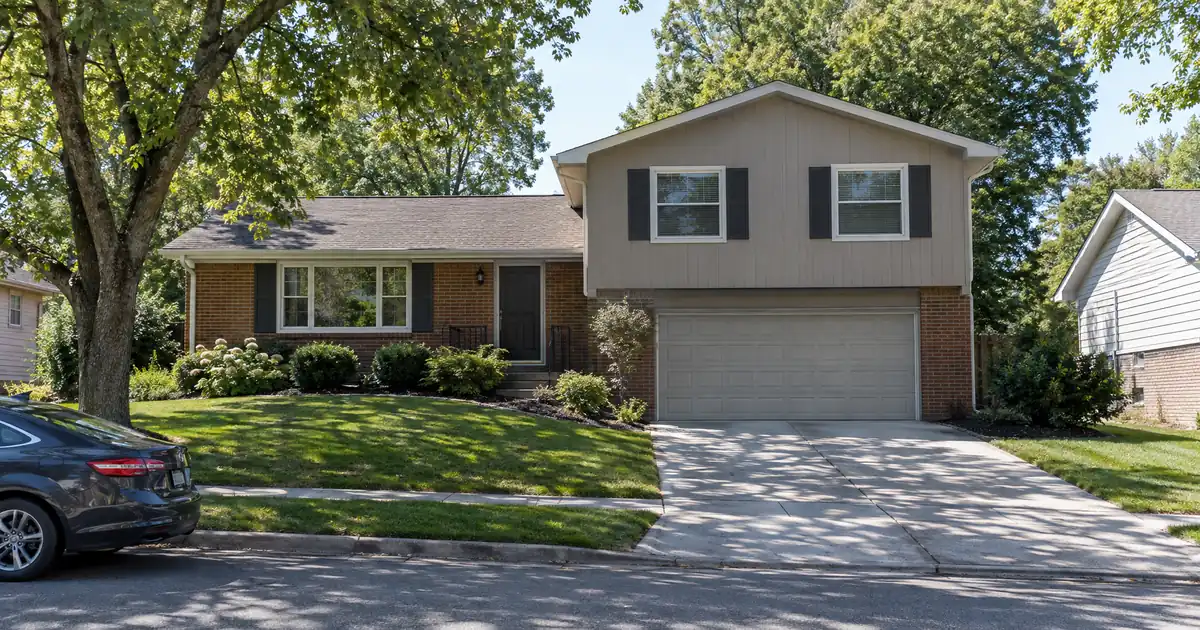
The Quick Read: A widowed homeowner on one income is denied a HELOC because the lender tests documented income, debt-to-income ratio, credit and equity, and a paid-off house answers only the collateral question while the loss of a second income weakens the ability-to-repay question that decides most files. Widowhood itself is never the reason on the file. The reason is almost always a smaller income carrying the same debts and the size of the line requested.
- The most common causes are a debt-to-income ratio pushed up by lost income, income that is real but not documented in an accepted form, a requested line that is too large for the income, and thin or changed credit.
- Equity does not rescue a file. A widow can own a $700,000 home free and clear and still be turned down, as Benzinga’s report on a recently widowed homeowner describes.
- A denial from one lender is not a denial from every lender, because overlays differ from one institution to the next.
- A widowed investor with rental properties has a second option: a DSCR cash-out refinance qualifies primarily on property-level rental income covering the payment, subject to lender guidelines.
Why Does One Income Sink a HELOC Application?
One income sinks the application because the ratio of debt to income gets worse the moment a paycheck, pension or second benefit drops out. The mortgage, car loan, cards and the new line payment all sit on a smaller number. The underwriter does not weigh the loss or the reason for it. The underwriter weighs the arithmetic.
How large a line the equity supports.
An equity line is sized by combined loan-to-value, occupancy, and credit — not by rental coverage. Switch the occupancy or the credit band and the ceiling moves with it.
Investment-property lines require a 700 minimum credit score; second-home lines start at a 640 minimum and primary-residence lines at 600, and the combined-LTV ceiling steps down as the credit band drops on primary-residence and second-home lines and holds on investment-property lines; the line cap steps down on primary-residence lines and holds at every tier on investment-property and second-home lines.
A debt-to-income ratio above 45% requires 680+ credit. Profiles under 640 are limited to single-family homes. At least 75% of the approved line is drawn at closing. Ceilings, floors, and caps update from Lendmire’s centralized guideline source.
Line estimate
Illustrative estimate only — not a quote, Loan Estimate, approval, or commitment to lend. The rate is an editable assumption; equity-line pricing is variable through both the draw and repayment periods and never converts to fixed. Occupancy and credit drive the ceiling together: an investment property tops out at 70% combined LTV (minimum credit 700, line cap $500,000); a second home tops out at 90% combined LTV (minimum credit 640, line cap $500,000), with the ceiling stepping down as the credit band drops (the cap holds at every tier); a primary residence tops out at 90% combined LTV (minimum credit 600), and its $750,000 maximum line is available only at 75% combined LTV or below with a 700-or-better credit profile (720 on the longer-runway program) and a full appraisal. Lines above $500,000 require a full appraisal. Credit, debt-to-income, property type, and full underwriting review all affect the final line.
Picture a household near a 35% debt-to-income ratio on two incomes. If one income disappears, the household income falls by about a third, and the same debts now land near 52%. That is a hypothetical, but the shape is common. The file goes from comfortable to over the limit without a single new debt.
Bankrate’s HELOC denial guidance reports that roughly 47.59% of HELOC applications were denied in the latest quarter it cites, far more than primary mortgage denials. Almost half of applicants are turned down in general, so a widow on one income is entering a process that already declines many files.
A second pattern shows up in widow files specifically. A pension often ends at death, so the survivor is left with Social Security alone. That income is real and counts, but it is smaller than what the household carried before. If the requested line is sized to the old household, the file fails on line size alone.
Key Terms Defined
DTI (debt-to-income ratio): monthly debt payments divided by documented gross monthly income, which is the number that moves most after a spouse dies.
CLTV (combined loan-to-value): the first mortgage balance plus the new line, divided by the property’s value.
Ability to repay: the lender’s judgment, based on income, debts and credit history, that the borrower can handle the payment on the line.
Documented income: income that appears in an accepted form, such as a benefit award letter, a benefit statement, a 1099, traditional personal-income documentation and matching bank deposits.
Draw period: the stretch of a HELOC when interest-only payments are allowed before full repayment begins.
How Does Underwriting Actually Treat the File?
Underwriting runs five checks in order, and a widowed one-income file can fail at any of them. The lender sets the credit limit by looking at ability to repay, which the CFPB’s HELOC booklet describes as income, debts, other obligations and credit history. Here is how each step plays out.
1. Equity and CLTV. A valuation sets the property value, and many lenders then take a percentage of that value and subtract the existing mortgage balance. For lines at or below $500,000, the wholesale network ordinarily runs an automated valuation instead of a traditional appraisal. A borrower can still request a full appraisal in any case.
2. Income verification. Social Security, survivor benefits, pensions and retirement distributions can count when documented. Typical paper is a benefit verification or award letter and the annual benefit statement. Income that is not on traditional personal-income documentation and in bank deposits is hard for an underwriter to count, a point that AOL’s piece on why banks turn down retirees makes about documentation.
3. DTI. Debts are divided by documented gross monthly income. On this network the maximum is 50%, it drops to 45% for credit profiles from 600 to 679, and a ratio above 45% requires at least a 680 score. The payment is qualified on interest-only, calculated on the maximum draw, so a large line hurts even if the borrower plans to draw little.
4. Credit. The lender pulls a score and reviews tradelines. Credit history built in a late spouse’s name, or authorized-user accounts that drop off, can leave a thinner file than the borrower expects. The network’s score model is a single-bureau score keyed to the primary wage earner.
5. Decision. The lender approves, counters with a smaller line, or denies. A denial carries written reasons, covered below.
One more point applies to widows with an existing line. A lender may re-underwrite an open-end line after a change in marital status when the credit was granted partly on the spouse’s income. An existing HELOC is therefore not automatically safe after a death.
The Denial-Reason Table
Most denials fall into six causes, and most of them have a fix. This table shows how each cause appears on a widowed file and what usually moves it.
| Denial reason | How it shows up | Fixable? |
|---|---|---|
| DTI too high | Lost wages or pension, same debts | Often, with a smaller line or paid-down debt |
| Income not documented | Missing award letters or statements | Usually, with paperwork |
| Line too large for income | Request sized to the old household | Yes, resize the request |
| Credit changed | Thin file, joint accounts closed | Sometimes, over time |
| Title not cleared | Deed still in late spouse’s name | Yes, once title is updated |
| Equity or CLTV short | Value or balance leaves too little room | Sometimes |
Title deserves a closer look because it is the quiet one. The network requires the line to be held by the individual borrower or a revocable living trust. A deed that still names the late spouse has to be cleared before a lender can close a lien on the property.
Which Income Counts, and Where the Rule Breaks
Documented survivor income counts, but several edge cases break the general rule. These are the ones that catch widowed borrowers most often.
Asset depletion. Many banks convert savings into qualifying income on a purchase mortgage but not on a HELOC. AOL’s reporting says credit unions and private banks that hold loans in portfolio tend to have more flexibility. Ask before applying, since a formal denial costs a hard inquiry.
Survivor benefits and continuance. A widow’s survivor benefit counts with an award letter. Benefits paid for a dependent child count only if they will continue long enough, and lenders differ on what that means. Do not assume a single fixed period applies to every benefit.
Gross-up of non-taxable income. Some first-mortgage practice adds back the tax advantage on non-taxable benefits. A bank’s HELOC overlay may not do the same, so a borrower should not build a plan on it.
Property type. Primary residences are easier to qualify than second homes, and investment lines are stricter. On this network, the minimum credit score is 600 on a primary residence, 640 on a second home and 700 on an investment property.
Lender variation. One lender’s overlay is not another’s. A credit union or portfolio lender can approve a file that a large retail lender declined.
How the Market Compares With the Wholesale Network
Market-wide surveys and network guidelines differ, and a widow comparing offers should know which number belongs to which. The market figures below come from Bankrate and describe lenders broadly. The network column describes the wholesale partners Lendmire places files with, subject to lender guidelines and full file review.
| Factor | Market surveys report | Network guideline |
|---|---|---|
| Credit score | 640 or higher | 600 floor, primary residence |
| DTI | Up to about 43% | 50% max, 45% at 600-679 |
| Equity left | At least 15% to 20% | Set by CLTV tier |
| CLTV cap | About 80% to 85% | Investment: 70% |
On a primary residence the network ceiling reaches 90% CLTV, but only at a 720 or better credit profile and on lines up to $500,000. On a second home the same 90% ceiling also requires 720 or better. On an investment property the ceiling is 70% CLTV and the line caps at $500,000. A line above $500,000 is available on primary residences only, with a 700 or better credit profile (720 on the longer draw structure), a 75% CLTV cap and a full appraisal.
Two draw structures exist on primary residences and second homes: a three-year interest-only draw with a 17-year repayment, and a five-year draw with a 25-year repayment. Investment lines run the five-year structure only. At least 75% of the line is drawn at closing, and pricing floats throughout. Availability is limited to Lendmire’s 16 full-service states, which is narrower than its DSCR footprint.
What Do Anti-Discrimination Rules Say About Widows?
Marital status and age cannot be the reason for a denial. The CFPB’s Circular 2023-03 restates that the Equal Credit Opportunity Act bars discrimination on both. It also says the stated reasons for an adverse action must be specific, so a vague reference to internal policy is not enough.
That has a practical use. A denial notice, or the written reasons a borrower can request, should name income, DTI, credit or equity. If the stated reason does not match the file, the borrower should ask the lender to explain it in writing.
What to Do After a Denial
A denial is a diagnosis, and the fix depends on the stated reason. The sequence below works for most widowed files.
1. Get the reasons in writing. The specific cause decides everything that follows.
2. Document the income that exists. Collect award letters, annual benefit statements, pension and retirement statements, and two or more months of matching deposits.
3. Resize the request. A smaller line can turn a denial into an approval, because the payment is qualified on the maximum draw.
4. Clear title and clean up credit. Update the deed, close or retitle accounts held by the late spouse, and keep balances low before the next pull.
5. Try a different lender type. Credit unions and portfolio lenders can handle fixed income differently. For more on this, see Lendmire’s piece Common HELOC Denial Reasons and the Wholesale Fix for Each.
6. Consider alternatives. A fixed home equity loan, a cash-out refinance or a reverse mortgage each underwrite differently.
When the HELOC Is the Wrong Tool
A widowed investor with rentals often has real equity, strong property income and thin personal income on paper. A bank-style HELOC underwrites the person, so that profile fails exactly where it is strongest. Investment-property HELOC lines on this network also cap at $500,000 total, with a 700 minimum credit profile.
One BiggerPockets thread on HELOCs against investment property offers investor commentary on this. It notes that a HELOC shows up as a debt and tradeline rather than as an asset or reserve, and that a DSCR loan does not factor in the borrower’s DTI. That is forum opinion, not a rule, but it matches how the files behave.
DSCR loans are designed for non-owner-occupied investment properties. Because they are business-purpose investor loans, they are reviewed differently from a standard owner-occupied mortgage. The loan is reviewed primarily on property-level rental income covering the payment, subject to lender guidelines. The complete DSCR loans guide walks through the mechanics.
Here is how the numbers typically look across the network.
- Cash-out leverage: tops out around 75% LTV on standard rentals, with about 6 months of seasoning as the common expectation.
- Coverage: 1.00 is where select programs start, and stronger ratios open better pricing and leverage. A separate select-lender path takes coverage below 1.00, with leverage and terms adjusted.
- Credit: a 620 floor exists in parts of the network, most programs want around 660, and 700 or better unlocks the strongest tiers.
- Loan size: up to $3,000,000 on standard programs (smaller balances available through select lenders).
- Reserves: commonly around 6 months of PITIA, though reserves vary by lender, leverage, loan size and transaction type.
- Entity: a property held in an LLC can be financed on a DSCR loan, subject to lender program eligibility. A HELOC cannot be placed on an LLC-held property.
Two cautions matter here. First, a DSCR cash-out replaces the first lien, so an existing low-cost first mortgage goes away, while a HELOC leaves it in place. Weigh that before choosing. Second, clearing 1.00 is not positive cash flow. The ratio compares rent to PITIA only, and repairs, vacancy, management, utilities and capex sit outside it.
Practitioner view: on widow files with rentals, the sticking point is rarely the property income. It is usually paperwork on the entity or title after the death, so reserves documentation and clean ownership records do more work than any pricing conversation.
A paid-off primary residence is a different case from a rental. A DSCR loan is for investment property, so a widow whose only asset is her home still needs the HELOC path or another home-equity product. Tax treatment can depend on how the funds are used and how the property is held; investors should keep clear records and speak with a qualified tax professional before relying on any deduction.
Next Step
If you are considering a home equity line and want to see how the numbers work, Lendmire can help you compare HELOC options based on the property, the equity available, credit profile, combined leverage, and your goals. For rentals, the same review can include a DSCR cash-out. Reach the team at 828-256-2183 or through the quote request page. Any calculator on the site is an illustrative estimate, not a quote or commitment to lend.
Frequently Asked Questions
Can a lender deny me because I am a widow or because of my age?
No. Marital status and age cannot be the basis of a denial under the Equal Credit Opportunity Act. The legitimate reasons are documented income, DTI, credit and equity, and the notice should say which one applied.
Does a paid-off house guarantee approval?
No. Free and clear ownership covers collateral only, and the lender still underwrites income, DTI and credit. The widow in the Benzinga report held a $700,000 home outright and was still declined because her fixed income was too small for the line she requested.
Does Social Security count as income for a HELOC?
Yes, when it is documented. A benefit award letter, the annual benefit statement and matching bank deposits are the usual proof. The common failure is a missing document, not the source of the income.
Can large savings stand in for income?
Usually not on a HELOC. Many banks use asset depletion on purchase mortgages but not on equity lines, while credit unions and portfolio lenders may be more flexible. Ask before applying.
What if I own rentals and my personal income is low?
A DSCR cash-out refinance qualifies primarily on property-level rental income covering the payment, subject to lender guidelines. Coverage below 1.00 is available through select lenders in the network, with leverage and terms adjusted.
About Lendmire
Lendmire (NMLS# 2371349) is a mortgage broker that arranges investor financing through select lenders in its wholesale network, with DSCR programs in 41 markets, including Washington, D.C. Home equity lines are available only in Lendmire’s 16 full-service states. Lendmire is not the lender, and every figure above is subject to lender guidelines and full file review. Scotsman Guide named Lendmire a Top Mortgage Workplace in both 2025 and 2026.
Get Started
Ready to find the right loan for you?
In about 30 seconds you can review financing options available for your home or investment property. No commitment required.
Informational only. Not a Loan Estimate, approval, or commitment to lend. Program availability and eligibility are subject to lender guidelines, credit approval, property review, and underwriting.
References
1. Benzinga, recently widowed homeowner denied a HELOC
2. Bankrate, what to do if denied a HELOC
4. AOL, why banks turn down retirees
6. BiggerPockets, HELOC on investment property and DSCR
This article is part of Lendmire’s home equity line of credit program — full qualification details, guidelines, and scenarios live on the program page.
Related reading: Can a Widowed Homeowner Get a HELOC on One Income After a Bank Denial? · How to Get a HELOC as a Widowed Homeowner After a Bank Denial · How to Document Retirement Income for a HELOC as a Widowed Homeowner
Brandon Miller
Founder & CEO, Mortgage Loan Originator, Lendmire LLC
- Mortgage Loan Originator · NMLS# 1129696 · Verify on NMLS Consumer Access
- North Carolina Real Estate Broker · License# 343312 · Verify on NCREC
- North Carolina Insurance Producer · License# 19053198 · Property, Casualty, Life, Health · Verify on NAIC SBS
- Lendmire LLC · Firm NMLS# 2371349 · Verify firm licensure
Required disclosures. Lendmire (NMLS# 2371349) operates as a licensed mortgage broker, not a direct lender or depository. The discussion in this article is general in nature and should not be relied upon as financial, legal, or tax advice — every investment scenario is unique and should be reviewed by a qualified professional. Any loan inquiry is subject to lender underwriting, and this article is not a commitment to lend or a guarantee of approval. Mortgage rates, loan terms, and program guidelines vary by borrower, property, and state, and may change without notice. Equal Housing Opportunity. Verify licensure at NMLS Consumer Access.