
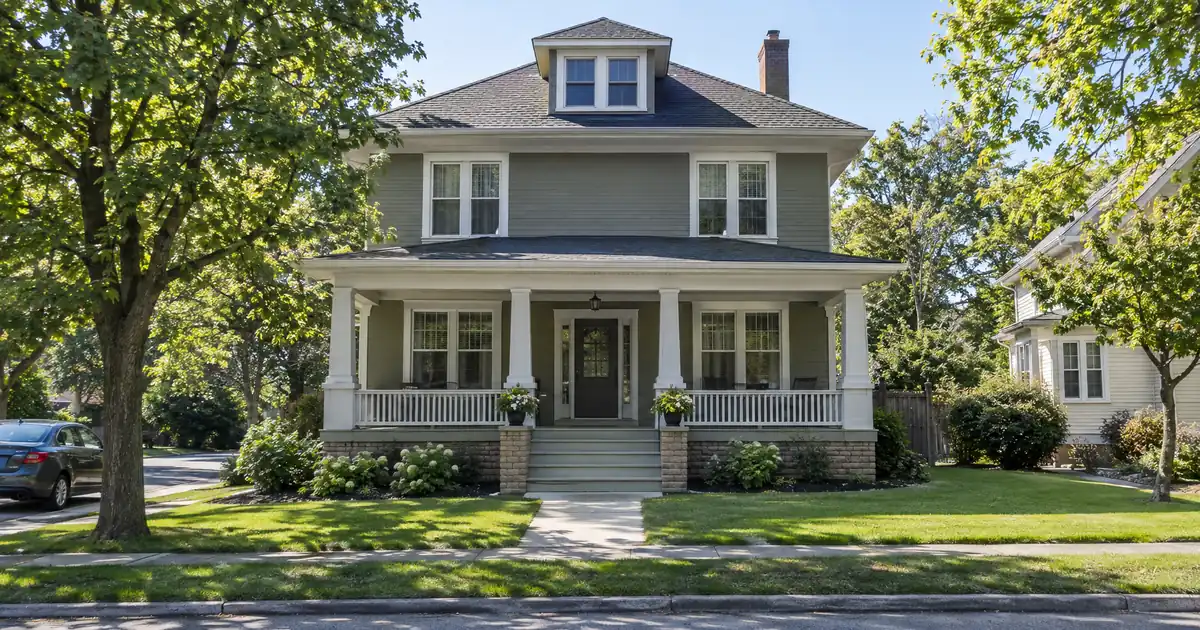
The Quick Read: Usually yes, as long as the trust is revocable, the trustee has written authority to borrow against the property, and the lender’s program accepts trust vesting. Retirement does not block approval; what changes is how income is documented. On our wholesale network, the title must sit in the individual borrower or an inter vivos revocable living trust, and irrevocable, blind, or land trusts cannot hold title on the line.
- A revocable living trust is generally acceptable. Irrevocable, blind, and land trusts are not.
- Social Security, pensions, retirement distributions, and annuities can all support the income side, subject to lender guidelines.
- An unfunded trust, meaning the deed was never recorded in the trustee’s name, is the most common stall.
- On an investment property the line caps at 70% CLTV and $500,000; limits on a primary residence are higher.
- A rental held in an LLC cannot take this line. A DSCR cash-out is the usual alternative.
Retired homeowners usually ask two questions at once. Will a lender approve me without a paycheck? And does the living trust my attorney set up complicate things? Both have workable answers. The deciding factors are documentation and the precise wording of the title, not age.
How large a line the equity supports.
An equity line is sized by combined loan-to-value, occupancy, and credit — not by rental coverage. Switch the occupancy or the credit band and the ceiling moves with it.
Investment-property lines require a 700 minimum credit score; second-home lines start at a 640 minimum and primary-residence lines at 600, and the combined-LTV ceiling steps down as the credit band drops on primary-residence and second-home lines and holds on investment-property lines; the line cap steps down on primary-residence lines and holds at every tier on investment-property and second-home lines.
A debt-to-income ratio above 45% requires 680+ credit. Profiles under 640 are limited to single-family homes. At least 75% of the approved line is drawn at closing. Ceilings, floors, and caps update from Lendmire’s centralized guideline source.
Line estimate
Illustrative estimate only — not a quote, Loan Estimate, approval, or commitment to lend. The rate is an editable assumption; equity-line pricing is variable through both the draw and repayment periods and never converts to fixed. Occupancy and credit drive the ceiling together: an investment property tops out at 70% combined LTV (minimum credit 700, line cap $500,000); a second home tops out at 90% combined LTV (minimum credit 640, line cap $500,000), with the ceiling stepping down as the credit band drops (the cap holds at every tier); a primary residence tops out at 90% combined LTV (minimum credit 600), and its $750,000 maximum line is available only at 75% combined LTV or below with a 700-or-better credit profile (720 on the longer-runway program) and a full appraisal. Lines above $500,000 require a full appraisal. Credit, debt-to-income, property type, and full underwriting review all affect the final line.
Does a Living Trust Block a HELOC?
A revocable living trust does not block a HELOC. Most programs we place files with accept one, usually after reviewing a certification of trust. The real obstacles are an unfunded trust, missing borrowing authority, or a lender that simply does not accept trust vesting.
Acceptance is a lender policy, not a legal rule. Some servicers decline to place an open-ended line inside a revocable trust at all, while many others allow it. That spread is exactly why the same retiree can get a yes from one lender and a no from another. Across a wholesale network, a trust-held home is a routine file, as long as the paperwork is clean.
On this network, the line can be written in first or second lien position, and title must be held by the individual or an inter vivos revocable living trust. Lendmire’s piece Can You Get a HELOC on a Home in a Revocable Living Trust? goes deeper on the vesting side.
What About the Due-on-Sale Clause?
Moving a primary home into a revocable trust generally does not trigger a due-on-sale demand. Federal law protects that transfer when the borrower stays a beneficiary and keeps living there. It does not require any lender to write a HELOC on trust property, though.
The statute behind this protection is the Garn-St. Germain Act, codified at 12 U.S.C. §1701j-3. Its implementing rule, 12 CFR Part 191, is narrower. It covers a transfer into a trust in which the borrower is and remains the beneficiary and occupant. The rule also adds a notice condition: the borrower cannot refuse to give the lender a reasonable way to learn of a later transfer of the beneficial interest or a change in occupancy. The official 2024 text of section 191.5 spells this out.
Here is the catch for investors. The protection applies to residential property of fewer than five units, and attorney commentary notes the statute and the regulation word the occupancy requirement differently. It also offers no comfort for transfers into an LLC. Moving a rental into a trust or LLC carries more uncertainty than moving a primary home. Talk to a real estate attorney before retitling anything that has a mortgage on it.
Does Retirement Itself Hurt Approval?
No. Age is not a ground for denial, and retirement is not a disqualifier. A retiree is underwritten like any other borrower: credit, debt-to-income, equity, and documented income. When a retiree is turned down, the cause is usually the way income was documented, not the birth date.
The income sources lenders commonly look at include Social Security, pensions, retirement-account distributions, annuities, and investment income. The proof is ordinary paperwork:
| Income type | Typical support |
|---|---|
| Social Security | Award letter, bank deposits |
| Pension | Award letter or 1099-R |
| IRA or 401(k) draws | Account statements, distribution history |
| Annuity | Contract or payout statement |
| Part-time or consulting | Traditional personal-income documentation, bank statements |
| Rental income | Leases, traditional personal-income documentation |
Bank statements matter mainly when income is mixed. Benefit deposits are easy to trace. Transfers between a retiree’s own accounts are not income, and large one-off deposits need explanations.
Equity does not replace income. A retiree with a paid-off home can still need documented qualifying income. On our network the debt-to-income ceiling is 50%, dropping to 45% for credit profiles from 600 to 679, and the ratio is tested on the interest-only payment calculated on the maximum draw. That last detail surprises retirees. The line is qualified at its fullest use, not at the amount they plan to draw.
How the Title Process Works
The title track runs alongside income, and it is where trust files stall. Five steps cover most of it.
1. Fund the trust. The recorded deed must show the trustee as owner. A signed but unfunded trust is the classic delay.
2. Confirm trust type and powers. The lender checks that the trust is revocable, who the trustee is, and whether the trustee may borrow against real estate. A certification of trust often replaces the full trust document.
3. Match names. The deed, certification, and application must agree.
4. Sign correctly. The trustee typically signs the security instrument as trustee. With co-trustees, such as a married couple, expect all of them to sign.
5. Expect title and insurance review. Moving a home into a trust may call for an update to the title insurance policy.
If the trust is silent on borrowing powers, an attorney’s amendment may be needed first. If a trustee has died or stepped aside, the file needs proof of succession. Lendmire’s guide How to Close a HELOC on a Home Held in a Living Trust walks through the closing mechanics.
Which Occupancy Is the Home? The Numbers Change
Occupancy sets the ceiling, so state it before comparing anything. The figures below are eligibility ranges across select wholesale partners, subject to lender guidelines and full file review.
| Occupancy | Minimum credit | Top CLTV tier | Max line |
|---|---|---|---|
| Primary residence | 600 | 90% at 720+ | $750,000 |
| Second home | 640 | 90% at 720+ | $500,000 |
| Investment property | 700 | 70% | $500,000 |
The 90% figure exists only at a 720-or-better credit profile, and a primary-residence line above $500,000 requires a 700 credit profile or better (720 on the longer-runway structure), caps at 75% CLTV, and needs a full appraisal. The investment line is the narrowest: there is no tier above 70% CLTV and no line above $500,000. Lines at or below $500,000 ordinarily run an automated valuation, though a higher CLTV may require a secondary valuation, and a borrower can always request a full appraisal.
Structure matters for retirees on a fixed budget. Primary residences and second homes can choose a 3-year interest-only draw with a 17-year repayment, or a 5-year draw with a 25-year repayment. Investment lines use the 5-year draw and 25-year repayment only. At least 75% of the line is drawn at closing, and pricing floats through both periods without converting to fixed. The tail matters most: when the draw ends, the payment resets to full amortization, which can come as a shock if it was never planned for.
Eligible property includes single-family, 2-4 units, PUDs, townhomes, and condominiums, including non-warrantable ones. Manufactured homes, co-ops, condotels, and log homes are not eligible.
The Retiree Who Owns Rentals: Two Products, Two Questions
For a retiree-investor, the better question is often which property holds the equity and how it should be underwritten. A HELOC reads the person: credit, DTI, and documented income, where pension and Social Security can count. A DSCR loan reads the property: rent against the full housing payment, on non-owner-occupied investment property only. A retiree’s primary home in a trust is therefore never DSCR collateral.
For a rental held in a revocable trust, both products can work. The choice turns on a few things:
- Cash needed. An investment-property line tops out at $500,000 total, and no tier exists above that.
- The existing first mortgage. A HELOC leaves it in place, while a cash-out replaces it. On a paid-off rental, the HELOC sits in first position, so the benefit of keeping a low first mortgage disappears.
- Which story is cleaner. A retiree with modest taxable income but strong rent may prefer DSCR. A retiree with strong benefits but thin rent coverage may prefer the HELOC.
On DSCR, a cash-out refinance across most of our network tops out around 75% LTV on a standard rental, with roughly six months of seasoning the common expectation, and 70% when the collateral is a short-term rental. Many select programs start at 1.00 coverage, and a separate select-lender path goes below 1.00 with leverage and terms adjusted. Credit of about 660 is typical, with 700+ unlocking the strongest tiers. And remember that clearing 1.00 is not the same as positive cash flow, because repairs, vacancy, and management sit outside the calculation. The complete DSCR loans guide covers those mechanics. Leverage, reserves, and pricing vary by lender and program; the final terms follow the full file review.
An entity strategy changes the answer sharply. LLCs, corporations, and partnerships cannot hold title on the HELOC, so an LLC-titled rental needs either a vesting change or a DSCR cash-out. A revocable trust keeps both options open, subject to lender program eligibility.
Edge Cases Retirees Run Into
- Irrevocable trusts. Not accepted for title on this network. Mainstream lenders rarely write them either.
- Trust that turns irrevocable at death. The lender looks at current status, so an inherited rental held by a successor trustee needs separate review.
- Co-trustees. A spouse or adult child serving as co-trustee typically has to sign.
- Exposure limits. A borrower is limited to three lines, and an owner of more than 15 financed properties is not eligible.
- Derogatory credit. A bankruptcy needs four years of seasoning from discharge or dismissal.
Common Reasons Retiree Trust Files Get Stuck
Most delays are paperwork, not policy. The trust was never funded by deed. The certification names a different trustee than the application. Borrowing power is missing from the trust language. Income was described verbally but not documented, or a large deposit has no explanation. Fix those before applying and the file is far cleaner. Equity alone never rescues a thin income story.
Key Terms Defined
Revocable living trust: A trust the owner can change or cancel, which lenders on this network accept as a title holder.
Certification of trust: A short document confirming the trust exists, who the trustee is, and what powers the trustee has.
Trustee: The person authorized to sign for the trust, often the retiree and a spouse.
CLTV: Combined loan-to-value, which counts the first mortgage and the line together against the property’s value.
Due-on-sale clause: A loan term letting a lender demand repayment when ownership transfers.
Funded trust: A trust whose property has actually been deeded into it.
This article is general information, not legal or tax advice. Tax treatment varies; consult a qualified professional, and speak with an attorney or CPA about your own trust, your estate plan, and your finances before you borrow.
If you are considering a home equity line and want to see how the numbers work, Lendmire can help you compare HELOC options based on the property, the equity available, credit profile, combined leverage, and your goals. Lendmire is a broker arranging financing through select lenders in its wholesale network, with DSCR investor programs across 41 markets, including Washington, D.C.
Frequently Asked Questions
Can I get a HELOC if my house is in a living trust?
Yes, when the trust is revocable and the trustee is permitted to borrow against the property. The lender usually reviews a certification of trust and confirms the deed is recorded in the trustee’s name. Irrevocable, blind, and land trusts cannot hold title on the line.
Is Social Security enough to qualify?
It can count toward qualifying income, and it is easy to document with an award letter and deposits. Whether it is enough depends on debt-to-income, credit, and the amount of the line. Pension, annuity, and retirement-account distributions can be added to the picture, subject to lender guidelines.
Does moving my home into a trust trigger the due-on-sale clause?
Generally not for a primary residence when you stay as beneficiary and occupant, and the lender can still require notice of later changes. Rentals and transfers into an LLC carry more uncertainty, so confirm with an attorney before retitling a mortgaged property.
Can a retiree get a HELOC on a rental property held in a trust?
Yes, on this network. An investment line needs a 700 credit profile or better, caps at 70% CLTV and $500,000, and uses the 5-year draw and 25-year repayment structure. A rental already deeded to an LLC needs a vesting change or a DSCR cash-out instead.
What happens to the line if the retiree dies or becomes incapacitated?
A successor trustee generally needs to show proof of succession, and the lender looks at the trust’s current status. The details vary by lender and trust language, so an estate attorney should review them before the line is opened.
About Lendmire
Lendmire is a mortgage brokerage (NMLS# 2371349) arranging home equity lines of credit — primary-residence, second-home and investment-property lines — through a wholesale lending network in its 16 full-service states. Eligibility is determined by the lender on each file. Scotsman Guide named Lendmire a Top Mortgage Workplace in both 2025 and 2026.
Get Started
Ready to find the right loan for you?
In about 30 seconds you can review financing options available for your home or investment property. No commitment required.
Informational only. Not a Loan Estimate, approval, or commitment to lend. Program availability and eligibility are subject to lender guidelines, credit approval, property review, and underwriting.
References
1. Cornell LII, 12 U.S.C. §1701j-3
3. GovInfo, 12 CFR §191.5 (2024 edition)
4. FedLaws, Garn-St. Germain Act explainer
This article is part of Lendmire’s home equity line of credit program — full qualification details, guidelines, and scenarios live on the program page.
Related reading: How to Close a HELOC on a Living Trust Home in Retirement · How to Close a Bank Statement HELOC on a Home in a Living Trust · Can You Get a Bank Statement HELOC in a Living Trust?
Brandon Miller
Founder & CEO, Mortgage Loan Originator, Lendmire LLC
- Mortgage Loan Originator · NMLS# 1129696 · Verify on NMLS Consumer Access
- North Carolina Real Estate Broker · License# 343312 · Verify on NCREC
- North Carolina Insurance Producer · License# 19053198 · Property, Casualty, Life, Health · Verify on NAIC SBS
- Lendmire LLC · Firm NMLS# 2371349 · Verify firm licensure
Disclosure information. Lendmire is a state-licensed mortgage brokerage under NMLS# 2371349. Lendmire is not a depository institution, direct lender, or financial advisor — all loans referenced are placed through wholesale lender partners and are subject to each lender's underwriting standards. This article is provided for general informational purposes and is not a commitment to lend, nor does it constitute financial, legal, or tax advice. Loan programs, terms, rates, and qualification standards change without notice and depend on borrower profile, property type, and the state in which the subject property is located. Equal Housing Opportunity provider. NMLS Consumer Access: nmlsconsumeraccess.org.