
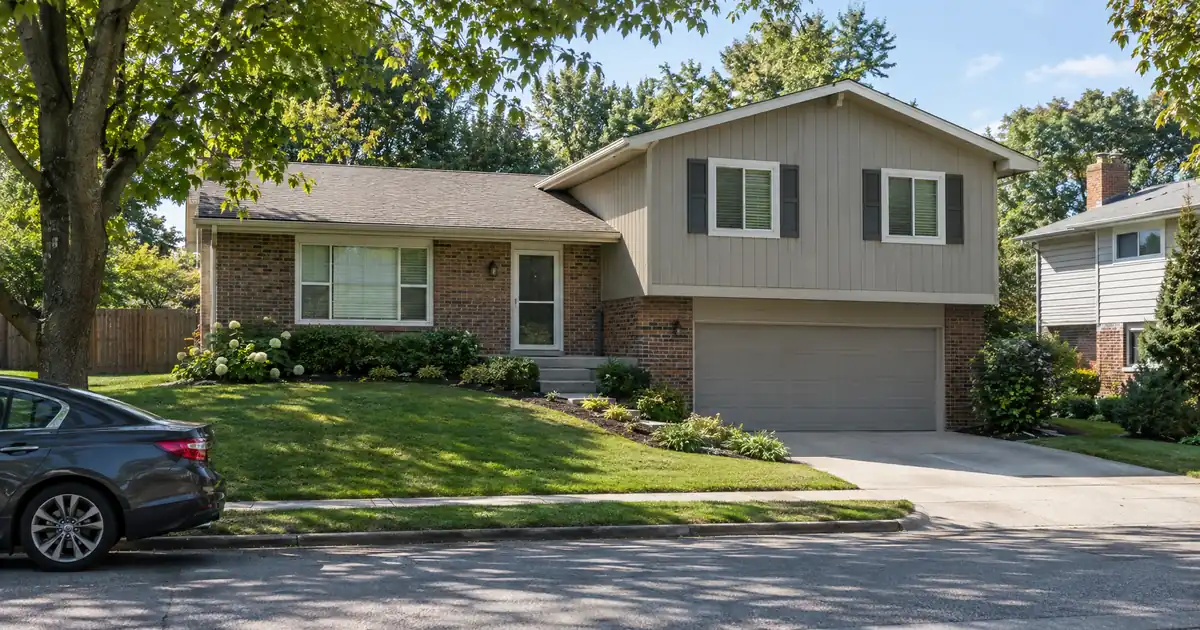
The Quick Read: A HELOC suits a free-and-clear owner with a modest, cost-certain ADU, clean personal title, and strong credit, while a renovation loan suits a larger or less certain build that needs money tied to the finished value and released against construction progress. A HELOC is a home equity line of credit, a revolving line secured by your property. An ADU is an accessory dwelling unit, a second small home on the same lot. With no mortgage on the property, nothing sits ahead of your new lender, so the real questions are how the loan is sized and who holds title.
- A HELOC sizes against what the home is worth today. A renovation loan can look at what the property should be worth once the ADU is done.
- Network HELOC lines on an investment property top out at 70% CLTV and $500,000, and they require a 700 or better credit profile.
- Title decides a lot: a HELOC needs the home held by you personally or in a revocable living trust, and an LLC cannot hold it.
- Neither product counts projected ADU rent the way an investor might hope.
- A DSCR cash-out refinance is a third route when the home sits inside an LLC. It is sized on today’s appraisal, not your after-repair value.
CLTV means combined loan-to-value. It is every loan against the property added together, divided by the property’s value. With no mortgage, your new line is the whole number.
How large a line the equity supports.
An equity line is sized by combined loan-to-value, occupancy, and credit — not by rental coverage. Switch the occupancy or the credit band and the ceiling moves with it.
Investment-property lines require a 700 minimum credit score; second-home lines start at a 640 minimum and primary-residence lines at 600, and the combined-LTV ceiling steps down as the credit band drops on primary-residence and second-home lines and holds on investment-property lines; the line cap steps down on primary-residence lines and holds at every tier on investment-property and second-home lines.
A debt-to-income ratio above 45% requires 680+ credit. Profiles under 640 are limited to single-family homes. At least 75% of the approved line is drawn at closing. Ceilings, floors, and caps update from Lendmire’s centralized guideline source.
Line estimate
Illustrative estimate only — not a quote, Loan Estimate, approval, or commitment to lend. The rate is an editable assumption; equity-line pricing is variable through both the draw and repayment periods and never converts to fixed. Occupancy and credit drive the ceiling together: an investment property tops out at 70% combined LTV (minimum credit 700, line cap $500,000); a second home tops out at 90% combined LTV (minimum credit 640, line cap $500,000), with the ceiling stepping down as the credit band drops (the cap holds at every tier); a primary residence tops out at 90% combined LTV (minimum credit 600), and its $750,000 maximum line is available only at 75% combined LTV or below with a 700-or-better credit profile (720 on the longer-runway program) and a full appraisal. Lines above $500,000 require a full appraisal. Credit, debt-to-income, property type, and full underwriting review all affect the final line.
Side-by-Side
The two products answer different questions. A HELOC asks what you and your home qualify for today. A renovation loan asks whether the project is real, budgeted, and worth what you claim. The HELOC column reflects the program parameters across the wholesale network where Lendmire places these files. The renovation column reflects published industry norms, so treat it as a typical pattern, not a promise from any one lender.
| Factor | HELOC (network parameters) | Renovation loan (industry norms) |
|---|---|---|
| Review basis | Personal credit and DTI up to 50% | Borrower plus project and finished value |
| Loan size set by | Today’s value and a CLTV cap | Often expected post-build value and budget |
| Lien position | First lien on a free-and-clear home | New first lien |
| Documentation | Title, credit, income, debts, valuation | Plans, builder, budget, permits, appraisal |
| Property types | Single-family, 2-4 units, PUD, townhome, condo | Varies; ADU legality and zoning matter |
| Entity vesting | Individual or revocable trust only | Varies; LLC-held homes often need another structure |
| Fund release | Draw as invoices arrive, with 75%+ drawn at closing | Staged releases against progress |
| Timeline, qualitatively | Fewer steps before the first draw | More steps: plans, builder, inspections |
| Reserves | Set file by file | Commonly expected; varies by lender |
| Projected ADU rent | Not counted | Often limited or not counted |
DTI is debt-to-income, your monthly debts divided by your monthly income. For lines, the borrower’s DTI is reviewed around the interest-only payment at the maximum draw, even if you plan to draw less. A 50% ceiling applies, and a ratio above 45% needs a 680 or better profile.
When a HELOC Is the Better Fit
A HELOC is the better fit when the project is small to mid-sized, the budget is firm, the title is clean, and your personal profile is strong. It is a borrower-driven product. Nobody reviews your plans or inspects the framing.
Picture an owner converting a garage into a studio with a contractor quote in hand and a strong credit profile. Nothing about that file needs a construction lender. The line opens, invoices get paid, and the owner skips the permit-and-plan paperwork a renovation lender would layer on.
Here are the network numbers that matter:
- Investment property: the ceiling is 70% CLTV, with a 700 minimum credit profile and a maximum line of $500,000.
- Primary residence: 720 or better reaches 90% CLTV up to $500,000. Lower tiers step down from there, and a profile at 700 qualifies for 75% CLTV up to $750,000 or 85% up to $500,000.
- Second home: the same 720 pairing reaches 90% CLTV up to $500,000, with a 640 minimum credit profile.
- Larger lines: a line above $500,000 is for primary residences only, caps at 75% CLTV, and needs a full appraisal. It requires a 700 or better credit profile, or 720 on the program with the longer interest-only runway.
On a free-and-clear home, equity is rarely what stops you. Occupancy, title, and your personal debt picture usually do. Those caps are a ceiling, not an offer.
The structure carries two details that surprise people. First, at least 75% of the line is drawn at closing. That is a lot of borrowed money sitting idle if the ADU is a phased build. Second, the line’s cost floats through the draw period and the repayment period and never converts to fixed. Investment lines run an interest-only draw of five years, then 25 years of full amortization.
Lines at or below $500,000 ordinarily run an automated valuation, so there is usually no traditional appraisal. That means the value is today’s value, with no credit for the unit you haven’t built.
Who should skip it: anyone whose ADU budget is uncertain, whose plan leans on borrowing against the finished product, or whose home is titled in an LLC.
When a Renovation Loan Is the Better Fit
A renovation loan is the better fit when the build is large, the budget needs outside discipline, or you want financing tied to the property’s value after the ADU exists. NerdWallet’s ADU financing explainer describes two routes: borrow against equity, or replace your financing with a construction or renovation loan. It adds that renovation and construction loans generally let you borrow more than equity products do.
That “borrow more” point gets weaker when you own the home outright. Renovation loans are often pitched to owners without much equity, and the Terner Center at UC Berkeley says exactly that. Your equity is probably not thin. So the advantage shifts to something else: structure. Funds release in stages as work is verified, someone checks the budget, and an as-completed appraisal supports the loan size.
Run the numbers on a detached backyard unit with a long build and several trades. A staged release protects you from paying out money ahead of the work. It also protects the lender, which is why the paperwork load is heavier. Expect a contractor, plans, a budget, permits, and an appraisal that values the finished project.
The tradeoffs are real. The Terner paper reports that renovation loans are denied at relatively high rates and that contractors often avoid them. Contractors dislike staged payouts tied to inspections. If your builder insists on a deposit and weekly payments, a draw schedule can strain that relationship.
For contrast only, Fannie Mae’s Selling Guide shows its standard renovation product permits investment properties as well as primary homes. That is an agency product with its own rules. DSCR loans are not agency products, so none of those rules carry over to a DSCR file.
A renovation loan also does little to turn future rent into borrowing power. The same Terner paper reports that agency products often don’t recognize ADU income, and that appraisals often undervalue ADUs. Don’t plan on a lender counting rent from a unit that doesn’t exist yet.
Who should skip it: anyone with a small, simple project, a builder who won’t work with draw schedules, or a tight calendar. A renovation loan adds process, and that process only pays off on a bigger job.
What Decides It Before Either Product Matters
Title, occupancy, and the legal status of the ADU decide which products are even on the table. Settle these first. They matter more than the product comparison.
Title. Network HELOCs require the home to be held in fee simple or leasehold by you personally or by a revocable living trust. LLCs, corporations, partnerships, and irrevocable, blind, or land trusts cannot hold title. That is the sharpest structural gap versus a DSCR loan. If your paid-off rental already sits in an LLC, retitling is one path. A DSCR cash-out is the other.
Occupancy. A HELOC on a rental is possible, but NerdWallet’s guide to HELOCs on investment property says the lender pool is smaller than for a primary home and the borrowing limits are lower. That matches what the network shows: a 70% CLTV ceiling on investment lines versus up to 90% on a primary residence at a 720 profile.
Property type. HELOC lines cover single-family, 2-4 units, PUD, townhome, and condominium, including non-warrantable condos. Manufactured homes, co-ops, condotels, log homes, and commercial, mixed-use, or agricultural-zoned property are not eligible. A borrower is limited to three lines, and one who owns more than 15 financed properties is not eligible.
ADU legality. Permits and zoning belong in the plan before any loan does. A line that funds an unpermitted build leaves you holding the risk.
Availability. Home equity lines are placed in 16 full-service states, which is narrower than the 41-market DSCR footprint, Washington, D.C. included. A DSCR cash-out refinance has a wider reach. DSCR means debt service coverage ratio, monthly rent divided by the full housing payment, or PITIA (principal, interest, taxes, insurance, and any association dues).
The Third Route: DSCR Cash-Out on a Rental
If the free-and-clear property is a rental, or sits in an LLC, a DSCR cash-out refinance is worth pricing next to the other two. Lendmire’s complete DSCR loans guide covers the mechanics.
DSCR loans are designed for non-owner-occupied investment properties. Because they are business-purpose investor loans, they are reviewed differently from a standard owner-occupied mortgage.
Here is how it works on most files. Cash-out typically tops out around 75% LTV on a standard rental, and about six months of seasoning is the common expectation. The loan is sized on the new appraisal, not your projected after-repair value, so it does not reward a build you haven’t finished. The loan is reviewed primarily on property-level rental income covering the payment, subject to lender guidelines. Entity-owned rentals are often workable, subject to program terms.
On coverage, 1.00 is where many select programs start. A separate select-lender path takes coverage below 1.00, with leverage and terms adjusted. Stronger ratios open better leverage. One caution: clearing 1.00 is not the same as positive cash flow. Repairs, vacancy, management, and utilities sit outside the calculation.
Where Each Option Goes Wrong
Both products fail in predictable ways, and most of the damage comes from the draw structure and the budget, not the product itself.
HELOC risks.
- The line can shrink. Lenders can freeze or reduce a line if the home’s value drops or your finances worsen. A line that vanishes mid-build is a bad surprise.
- The cost floats. It can rise during the draw and the repayment period and never converts to fixed.
- Rental restrictions. Some line agreements limit renting the home, so read the terms before planning an ADU rental. The CFPB’s HELOC overview explains that a HELOC is an open-end line you can generally draw on up to a limit during the draw period.
- Early draw cost. Because 75% or more is drawn at closing, you carry interest on money your contractor hasn’t earned yet.
- No oversight. Nobody checks your build. If costs run over, the shortfall is yours alone.
- No credit for the unit. The valuation reflects today’s property, so the ADU adds nothing to your borrowing power.
Renovation loan risks.
- Appraisal shortfall. The as-completed value may come in below what you expected, so the loan is smaller than the budget.
- Heavier file. Plans, permits, a vetted builder, and inspection holds create more places for a file to stall.
- Builder friction. Some contractors steer clear of staged payouts.
- Sizing risk. A sizable first lien lands on a property that was debt-free.
Shared risk. Both put a debt-free property under a lien for the first time. The tradeoff is worth naming plainly. A HELOC is looser and more flexible, while a renovation loan is tighter and more structured.
Tax treatment can depend on how the funds are used and how the property is held; investors should keep clear records and speak with a qualified tax professional before relying on any deduction.
Which One Fits Which Owner?
Size the project honestly, then match it to the owner. (The mismatch between big projects and loose lines is where most regret starts.)
| Situation | Usually fits better |
|---|---|
| Small conversion, firm quote, strong credit | HELOC |
| Large detached build, phased costs | Renovation loan |
| Home held in an LLC | DSCR cash-out, or retitle first |
| Rental with solid rent and 6+ months owned | DSCR cash-out |
| Want financing tied to finished value | Renovation loan |
| Budget still uncertain | Neither yet; get bids first |
Honestly, this one is close for mid-sized projects. A HELOC’s flexibility is tempting, but the 75%-drawn-at-closing structure and the lack of oversight cut against a build with a long timeline. A renovation loan’s discipline helps on bigger jobs, though the added process is a real cost.
DSCR files in this kind of project often fail on sequencing, not math. Investors buy or retitle, start the build, and only then discover the lender wants six months of seasoning or a vesting change. Settling the title and the seasoning clock before the contractor mobilizes tends to prevent the worst surprises.
The Verdict
Choose the HELOC when the project is modest, the budget is certain, the title is personal, and you value flexibility over oversight. Choose a renovation loan when the project is large, the cost uncertain, or the plan depends on finished value. Use DSCR cash-out when the property is an LLC-held rental with real rent behind it. Nothing here suits every owner, and the right answer depends on the property, the program, and current lender guidelines.
If you are considering a home equity line and want to see how the numbers work, Lendmire can help you compare HELOC options based on the property, the equity available, credit profile, combined leverage, and your goals. You can reach the team at 828-256-2183, and Lendmire arranges these loans as a broker through select lenders in its wholesale network.
Frequently Asked Questions
Can I use a HELOC to build an ADU?
Yes, if you hold title personally or in a revocable living trust and meet the credit and DTI tests. The line funds whatever you pay your contractor. The tradeoff is that nobody reviews your plans, and the valuation reflects the home as it stands today.
Is a renovation loan better than a HELOC if I have no mortgage?
Not automatically. Renovation loans are often pitched to owners with thin equity, and you likely have plenty. They help most on large or uncertain builds, where staged releases and as-completed value matter. For a small, firm-priced project, a HELOC usually carries fewer steps.
Can I borrow against the future value of the ADU?
A HELOC cannot. It looks at current value, and the network’s automated valuation on lines at or below $500,000 reflects today’s property. Renovation structures can look at as-completed value, and the Terner Center reports that appraisals often undervalue ADUs. DSCR cash-out is also sized on the new appraisal, not projected after-repair value.
Will projected rental income from the ADU count?
Generally not for a HELOC, which is reviewed against your own credit and DTI. For renovation products, the Terner Center reports that agency programs often don’t recognize ADU income. A DSCR cash-out on an existing rental qualifies primarily on property-level rental income covering the payment, subject to lender guidelines.
Does the ADU need to be permitted first?
Plan on permits and zoning being settled before construction. Renovation lenders typically ask for permits and plans in the file, while a HELOC lender may not check, which leaves the risk with you. Local rules vary, so confirm them before you spend borrowed money.
About Lendmire
Lendmire, NMLS# 2371349, is a mortgage brokerage that arranges home equity lines of credit through wholesale lending partners in its 16 full-service states. Lines on primary residences, second homes and investment properties are each reviewed individually by the lender under the program’s occupancy, credit and combined-loan-to-value guidelines. Scotsman Guide named Lendmire a Top Mortgage Workplace in both 2025 and 2026.
Investors who want the broader program framework can review how DSCR loans work.
Get Started
Ready to find the right loan for you?
In about 30 seconds you can review financing options available for your home or investment property. No commitment required.
Informational only. Not a Loan Estimate, approval, or commitment to lend. Program availability and eligibility are subject to lender guidelines, credit approval, property review, and underwriting.
References
1. NerdWallet – Property line loans for ADUs
2. Terner Center for Housing Innovation, UC Berkeley – ADU financing paper
3. Fannie Mae Selling Guide B5-3.2-02
4. NerdWallet – Can you get a HELOC on an investment property?
5. CFPB – What is a home equity line of credit (HELOC)?
This article is part of Lendmire’s home equity line of credit program — full qualification details, guidelines, and scenarios live on the program page.
Related reading: HELOC vs Renovation Loan for an ADU on a Paid-Off Home · HELOC vs Renovation Loan vs Cash-Out Refinance for an ADU · HELOC vs Renovation Loan for an ADU Behind a Low First Mortgage
Brandon Miller
Founder & CEO, Mortgage Loan Originator, Lendmire LLC
- Mortgage Loan Originator · NMLS# 1129696 · Verify on NMLS Consumer Access
- North Carolina Real Estate Broker · License# 343312 · Verify on NCREC
- North Carolina Insurance Producer · License# 19053198 · Property, Casualty, Life, Health · Verify on NAIC SBS
- Lendmire LLC · Firm NMLS# 2371349 · Verify firm licensure
Disclosure information. Lendmire is a state-licensed mortgage brokerage under NMLS# 2371349. Lendmire is not a depository institution, direct lender, or financial advisor — all loans referenced are placed through wholesale lender partners and are subject to each lender's underwriting standards. This article is provided for general informational purposes and is not a commitment to lend, nor does it constitute financial, legal, or tax advice. Loan programs, terms, rates, and qualification standards change without notice and depend on borrower profile, property type, and the state in which the subject property is located. Equal Housing Opportunity provider. NMLS Consumer Access: nmlsconsumeraccess.org.