
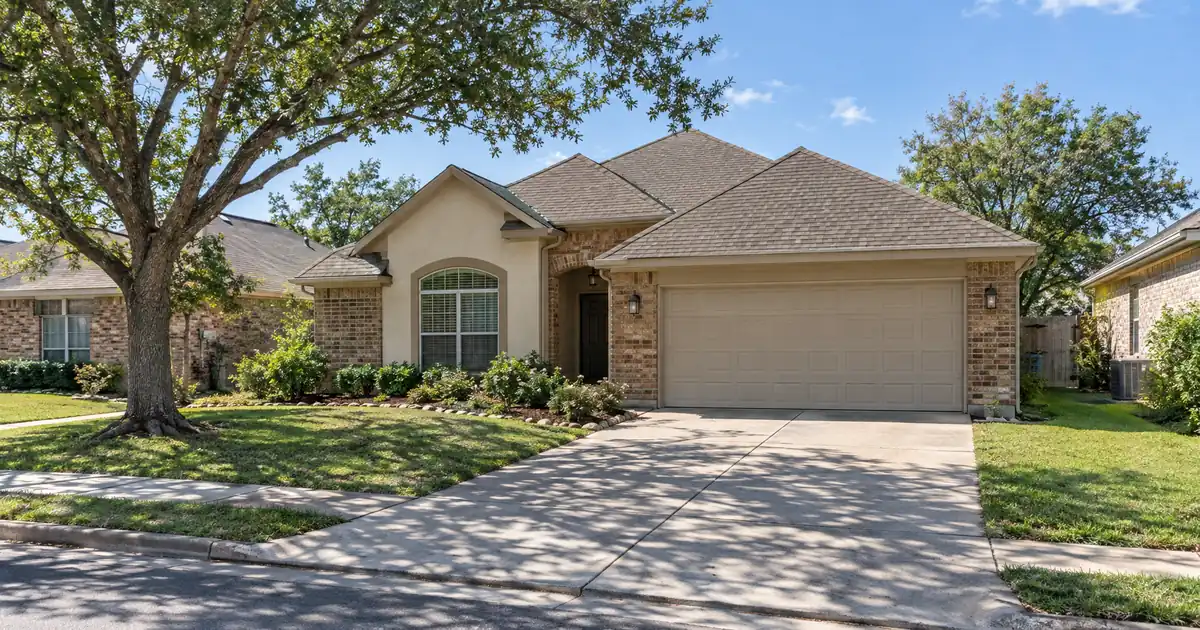
The Quick Read: A Texas homestead HELOC carries a small county recording fee, but that fee counts inside the state’s 2% cap on lender fees, and the homestead rules add a waiting period, a combined-loan limit of 80%, and one-lien-at-a-time limits that a rental property does not face. The practical question is which property you pledge, because that choice decides which rulebook applies.
- Recording is a county-set charge, billed per page, and it sits inside the 2% fee cap on a homestead line.
- A Texas primary residence caps at 80% combined loan-to-value (CLTV) on this network. An investment property line caps at 70% CLTV.
- Appraisal, survey and the base title premium sit outside the fee cap, so your total cash cost can exceed 2% without any violation.
- A rental owned outright or through an LLC is usually not a homestead, so the homestead rules do not attach to it.
- A HELOC does not replace purchase financing. A DSCR loan, which qualifies primarily on property-level rental income covering the payment, remains the tool for buying and cash-out refinancing rentals.
Why Texas Treats a Home Equity Line Differently
Texas protects the family home from most creditors. A lender can only lien a homestead for a short list of debts, and a home equity loan or line is one of them, but only if it meets a long list of conditions. That is why a Texas HELOC reads like a different product from the one in most other states.
How large a line the equity supports in Texas.
An equity line is sized by combined loan-to-value, occupancy, and credit — not by rental coverage. Switch the occupancy or the credit band and the ceiling moves with it.
Investment-property lines require a 700 minimum credit score; second-home lines start at a 640 minimum and primary-residence lines at 600, and the combined-LTV ceiling steps down as the credit band drops on primary-residence and second-home lines and holds on investment-property lines; the line cap steps down on primary-residence lines and holds at every tier on investment-property and second-home lines.
A debt-to-income ratio above 45% requires 680+ credit. Profiles under 640 are limited to single-family homes. At least 75% of the approved line is drawn at closing. Ceilings, floors, and caps update from Lendmire’s centralized guideline source.
Line estimate
Illustrative estimate only — not a quote, Loan Estimate, approval, or commitment to lend. The rate is an editable assumption; equity-line pricing is variable through both the draw and repayment periods and never converts to fixed. Occupancy and credit drive the ceiling together: an investment property tops out at 70% combined LTV (minimum credit 700, line cap $500,000); a second home tops out at 90% combined LTV (minimum credit 640, line cap $500,000), with the ceiling stepping down as the credit band drops (the cap holds at every tier); a primary residence tops out at 80% combined LTV (minimum credit 600), and its $750,000 maximum line is available only at 75% combined LTV or below with a 700-or-better credit profile (720 on the longer-runway program) and a full appraisal. Lines above $500,000 require a full appraisal. Credit, debt-to-income, property type, and full underwriting review all affect the final line.
The protection is old. The Texas Real Estate Research Center at Texas A&M traces homestead protection back to the 1800s. Purchase-money loans and property taxes were on the protected list from early on. Home equity lending was added later by constitutional amendment.
This matters for you as an investor because many Texas owners hold two kinds of real estate. One is the home they live in. The other is one or more rentals. The same word, equity, behaves differently on each.
Key Terms Defined
Homestead: the land and improvements you live in as your primary residence, which Texas shields from most creditors.
HELOC: a home equity line of credit, a revolving line secured by a lien on property you own.
CLTV: combined loan-to-value, meaning all debt secured by the property divided by its value.
Recording: filing your lien document with the county clerk so the public record shows it.
Deed of trust: the document that pledges the property as security for the loan.
Release of lien: the document filed after payoff that clears the lien from the record.
DSCR: debt service coverage ratio, the property’s rent divided by its full monthly obligation.
PITIA: principal, interest, taxes, insurance and association dues, the payment a DSCR loan measures against rent.
What Recording Does on a Texas Homestead
Recording puts your lender’s lien on the public record in the county where the property sits. It tells the world a lien exists and helps set the lender’s place in line behind or ahead of other liens. Without it, the loan is still a contract, but the lender’s claim is much weaker against later creditors.
Recording does not weaken your homestead protection in the way people fear. Texas protection blocks liens for debts outside the permitted list. A HELOC is on that list. Under Article XVI, Section 50 of the Texas Constitution, a lien is invalid unless it secures a described debt, and home equity debt qualifies when it meets the section’s conditions. A line you sign voluntarily is a valid lien, and the lender can enforce it.
What Recording Actually Costs
County recording fees are small in dollars and set by statute, so they vary by county. They are not negotiable with your lender. A published schedule from DeWitt County’s clerk shows how the pieces stack up:
- $5.00 for the first page.
- $4.00 for each additional page.
- A $10.00 records-management fee added to the filing.
- $0.25 for each indexed name beyond five.
- A records-archive fee, where the county has adopted one.
Your county may differ, so check the clerk’s published schedule before closing.
A HELOC deed of trust runs a few pages. Texas-required language, notices and signatures add length, and every added page adds to the bill. The statutory line is small. The bigger point is how the fee is treated, which comes next.
Does Recording Count Toward the 2% Cap?
Yes. Recording counts inside the cap on a Texas homestead line. A common assumption is that it falls outside, but the rule text says otherwise.
The cap implements the constitution’s limit on fees for these loans. 7 Tex. Admin. Code §153.5 limits, to 2% of the original principal, all fees necessary to originate, evaluate, maintain, record, insure or service the loan. Recording is named in that list. The carve-outs are narrow: a third-party appraisal, a licensed-surveyor survey, the state base title premium with endorsements, and a title examination report that costs less than the base premium.
The Finance Commission’s published rule text adds detail. Credit report, flood determination and tax certificate charges are fees inside the cap. So are third-party charges you are required to pay for originating the loan, such as an attorney’s document preparation. Charges a third party absorbs are not fees to you.
| Charge | Inside the 2% cap? |
|---|---|
| County recording | Inside |
| Origination and processing | Inside |
| Credit report and flood determination | Inside |
| Third-party appraisal | Outside |
| Survey | Outside |
| Base title premium and bona fide points | Outside |
One wrinkle: fees charged by an appraisal management company sit inside the cap even though the appraiser’s own fee does not. Lines at or below $500,000 often run an automated valuation instead of a full appraisal, though a borrower can request a full one.
Here is the consequence. The 2% cap does not mean your total closing costs equal 2%. Appraisal, survey and title can push total cash cost past that number, legally. The cap limits the lender-controlled bucket, not the whole bill.
The Homestead Rules That Touch Closing
On this network, several Texas rules bind primary residences only. That means your homestead, not a second home or a rental. Here is the sequence a homestead line follows:
1. Notice. The lender delivers a required written notice on a separate instrument. Closing cannot happen before the 12th day after you receive it. This is the 12-day waiting period.
2. Valuation. Combined debt on the home is limited to 80% CLTV on a Texas primary residence. That figure counts your existing first mortgage plus the new line. Credit tiers then place you at or below that ceiling.
3. Fees. The lender builds the fee stack, with recording inside the 2% cap.
4. Closing. The closing happens at the permanent office of a lender, attorney or title company. The lien must be in writing, carry the required disclosure language, and be signed by both spouses where you are married.
5. Recording. The deed of trust goes to the county clerk, who charges the county’s statutory fees.
6. Seasoning and liens. Twelve months of seasoning and a one-lien-at-a-time rule apply to a Texas primary residence. Expect that a new equity lien has to wait for the old one to clear.
Other network rules shape the Texas file too. Texas properties are limited to 10 acres. A property listed for sale, or listed within the past 60 days, is ineligible in Texas. At least 75% of the line is drawn at closing, and the draw is interest-only for a set period before repayment begins. After closing, Texas sets a minimum subsequent draw of $4,000 on the five-year draw structure.
Credit tiers decide where within the 80% ceiling you land. The program floor is a 600 score, and stronger profiles unlock higher tiers, but nothing above 80% CLTV applies to a Texas primary residence. These are typical guidelines from select wholesale partners, and every file is reviewed individually.
Where the Homestead Rule Stops: Rentals, LLCs and Other Edge Cases
The homestead rules attach to the homestead. A rental you own outright is usually not one, so a line on it is an ordinary lien. The 12-day wait, the 80% limit and the 2% fee cap do not apply to it as constitutional rules. Lender guidelines still apply, and those are their own set of limits.
On this network, an investment property line caps at 70% CLTV, with a minimum credit score of 700 and a maximum line of $500,000. Investment lines run a 5-year interest-only draw followed by a 25-year repayment. Texas rental HELOC vs homestead equity rules that apply walks through the same split from the rental side. Final terms depend on the lender’s guidelines, the property type, and the borrower’s complete credit picture.
| Feature | Texas homestead line | Texas investment line |
|---|---|---|
| Maximum CLTV | 80% | 70% |
| 12-day waiting period | Applies | Does not apply |
| One lien at a time | Applies | Does not apply |
| Seasoning | 12 months | Does not apply |
| Title held by | Individual or revocable trust | Individual or revocable trust |
Several edge cases deserve a close look:
- LLC-owned rentals. Homestead protection is for natural persons, not entities, so an LLC rental carries no homestead status. For a HELOC the issue runs the other way. An LLC, a corporation, a partnership, or an irrevocable, blind or land trust cannot hold title on these lines. A property already deeded to an LLC needs a vesting change or a DSCR cash-out instead, subject to program terms.
- A rental that is still a homestead. A temporary rental of the home does not necessarily change its character when you have not acquired another homestead. Whether a specific property is still a homestead is a legal question for a Texas attorney or title company.
- Rate-and-term refinance. A refinance with no cash out is generally not treated as a home equity loan under the homestead section. Cash-out is where the homestead conditions bite.
- Lender fees and the 2% cap. How certain fees are treated under the 2% cap is a detail to review with your attorney or title company, and any related tradeoff should be documented.
- Tax-code confusion. The homestead exemption on your property tax bill is a separate benefit from the forced-sale protection discussed here.
A Mistake Worth Avoiding: Pledging the Wrong Property
Say you own a paid-down home and a duplex. You need cash for a down payment on a third property. Pulling it from the home triggers the homestead conditions: notice, 12-day wait, one lien at a time, and the 80% limit.
Pulling it from the duplex runs on ordinary lender guidelines instead, at a lower 70% CLTV on a network investment line, with higher credit expectations. Neither path is automatically better. The home path has the higher leverage ceiling and the heavier rulebook. The rental path is simpler but allows less borrowing.
The decision comes down to equity, credit, and how much risk you want attached to your personal residence. A line against the family home puts that home on the line if a deal goes badly. Many Texas investors prefer to keep the personal residence out of the investment side of their balance sheet.
Where a DSCR Loan Fits Instead
A HELOC is a borrowing tool. It is not purchase financing, and its payment generally sits outside the DSCR ratio even though it still comes out of your pocket. For the property you are buying, the DSCR loan measures rent against that property’s own payment. The complete DSCR loans guide covers the mechanics from scratch.
Here is how DSCR files typically look across the network:
- Purchase: most files land at 75% to 80% LTV, which means 20% to 25% down. Select high-leverage programs reach 85% LTV with a score around 700 or better.
- Cash-out refinance on a standard rental: tops out around 75% LTV, with about 6 months of seasoning as the common expectation.
- Coverage: 1.00 is where many select programs start. A separate select-lender path takes coverage below 1.00, with leverage and terms adjusted.
- Credit: most programs want around 660, a 620 floor exists in parts of the network, and 700 or better unlocks the strongest leverage tiers.
- Reserves: they vary by lender, leverage and loan size, and commonly run around 6 months of PITIA.
Clearing 1.00 is not the same as positive cash flow. DSCR compares rent to PITIA only. Repairs, vacancy, management, utilities and capital expenses sit outside the calculation.
As a broker, Lendmire places files across several wholesale lenders. That lets it compare a DSCR cash-out against a HELOC on the same property. For a Texas owner the comparison often comes down to this: a HELOC adds a second lien and its own fee stack without a new first mortgage, while a DSCR cash-out replaces the first mortgage and brings its own costs.
Tax treatment can depend on how the funds are used and how the property is held; investors should keep clear records and speak with a qualified tax professional before relying on any deduction.
Closing Checklist for a Texas Homestead Line
Run through these items before you sign:
- Confirm the written notice date and count to the 12th day.
- Ask for the lender’s fee list and mark which items fall inside the cap.
- Check the county clerk’s published schedule for the recording line.
- Confirm the closing location is a lender, attorney or title company office.
- Confirm your spouse’s signature, if you are married.
- Ask how and when the release of lien gets recorded after payoff, then verify it in the county records.
- Check that title is held by you personally or by your revocable trust.
Experience matters on the last two items. On files that sit across several lenders, title vesting problems surface far more often than fee disputes. An LLC deed or an irrevocable trust is the usual culprit. Fixing it before application keeps the file clean.
Frequently Asked Questions
Do recording fees count toward the Texas 2% fee cap?
Yes. Recording is named in the rule’s list of covered fee purposes, so it counts inside the cap on a homestead line. Appraisal, survey, the base title premium and bona fide points are the main items outside it. Your total cash cost can therefore exceed 2% of the line without any violation.
How much does recording a HELOC deed of trust cost in Texas?
It depends on the county and the page count. County fees are set by statute and billed per page, and one published schedule shows a first-page fee of $5.00, $4.00 for each additional page, and a $10.00 records-management fee. Check your county clerk’s schedule for the exact figure. Your lender cannot negotiate it down.
Can I open a HELOC on a Texas rental property?
Generally yes, as a non-homestead transaction, subject to lender guidelines. On this network an investment line caps at 70% CLTV, requires a score of 700 or better, and maxes out at $500,000. The homestead conditions such as the 12-day wait and one-lien-at-a-time rule bind primary residences only.
Does homestead protection stop a lender from foreclosing on a HELOC?
No. Homestead protection blocks liens for debts outside the permitted list, and a properly structured home equity line is on that list. A line you sign voluntarily is a valid lien. The protection is why the conditions exist, not a defense against a loan you chose.
Can an LLC take out a HELOC on a rental?
Not on these lines. Title must be held by you personally or by a revocable living trust, and an LLC cannot hold title. If the property already sits in an LLC, the options are a vesting change or a DSCR cash-out refinance, subject to program terms.
Next Step
If you are considering a home equity line and want to see how the numbers work, Lendmire can help you compare HELOC options based on the property, the equity available, credit profile, combined leverage, and your goals. Home equity lines through the network are available in 16 full-service states, Texas among them, and every figure above is subject to lender guidelines and full file review. This is not a commitment to lend.
A Texas owner with a homestead and a rental is really choosing between two rulebooks, and a more affordable recording fee in the state will not matter as much as picking the right collateral.
About Lendmire
Lendmire (NMLS# 2371349) is a mortgage brokerage serving homeowners and real estate investors in its 16 full-service states. Home equity lines of credit are arranged through wholesale lending channels; Lendmire brokers the line and the lender underwrites each application under its occupancy-based guidelines. Scotsman Guide named Lendmire a Top Mortgage Workplace in both 2025 and 2026.
Get Started
Ready to find the right loan for you?
In about 30 seconds you can review financing options available for your home or investment property. No commitment required.
Informational only. Not a Loan Estimate, approval, or commitment to lend. Program availability and eligibility are subject to lender guidelines, credit approval, property review, and underwriting.
References
1. Texas Real Estate Research Center, Texas A&M
2. Texas Constitution, Article XVI (Justia)
4. Texas Finance Commission §153.5 text
This article is part of Lendmire’s home equity line of credit program — full qualification details, guidelines, and scenarios live on the program page.
Related reading: HELOC Rules for a Texas Homestead With a First Mortgage · How to Get a HELOC in Texas Under the Homestead Equity Rules · Texas HELOC Fee Cap for an Owner in a High-Cost Closing State
Brandon Miller
Founder & CEO, Mortgage Loan Originator, Lendmire LLC
- Mortgage Loan Originator · NMLS# 1129696 · Verify on NMLS Consumer Access
- North Carolina Real Estate Broker · License# 343312 · Verify on NCREC
- North Carolina Insurance Producer · License# 19053198 · Property, Casualty, Life, Health · Verify on NAIC SBS
- Lendmire LLC · Firm NMLS# 2371349 · Verify firm licensure
Disclosure information. Lendmire is a state-licensed mortgage brokerage under NMLS# 2371349. Lendmire is not a depository institution, direct lender, or financial advisor — all loans referenced are placed through wholesale lender partners and are subject to each lender's underwriting standards. This article is provided for general informational purposes and is not a commitment to lend, nor does it constitute financial, legal, or tax advice. Loan programs, terms, rates, and qualification standards change without notice and depend on borrower profile, property type, and the state in which the subject property is located. Equal Housing Opportunity provider. NMLS Consumer Access: nmlsconsumeraccess.org.