
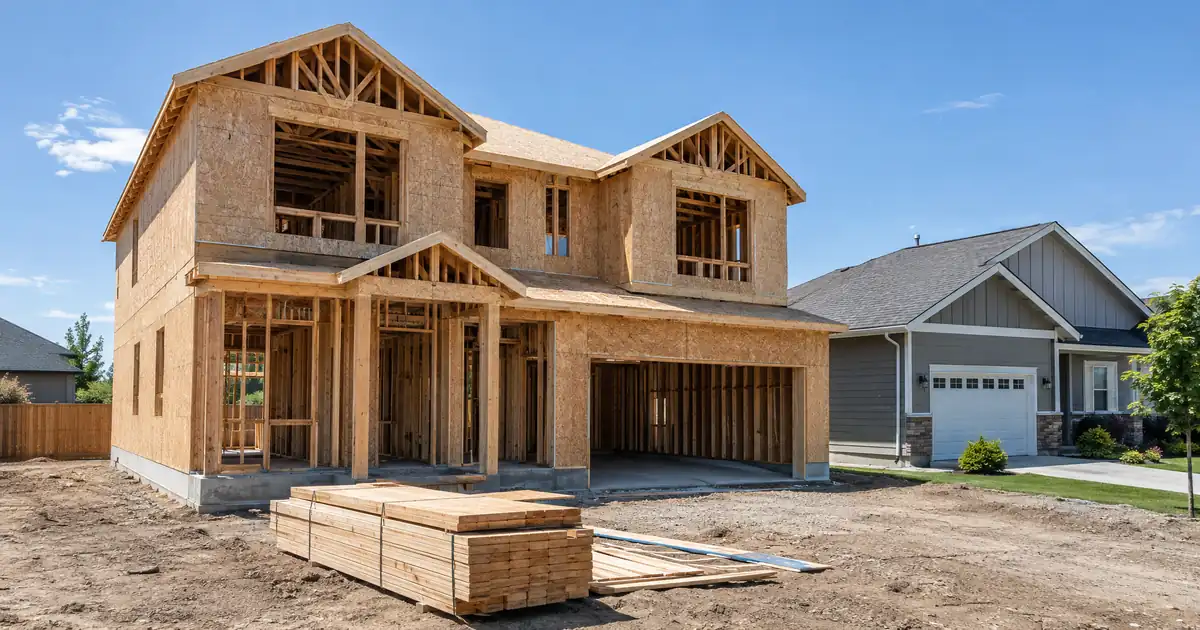
The Quick Read: As of September 28, 2026, my answer is “not on a floating-rate line without a hard look at the cost.” Homeowners hold a record amount of equity, so paying for a pool out of a home equity line looks easy. But the Fed raised its target range on September 16, and 30-year mortgage rates have climbed for several weeks running. A pool is a want, not an investment. Price the debt first, then decide whether the backyard is worth it.
Key Takeaways
- The Fed raised the federal funds target by a quarter point on September 16, 2026, to a range of 3¾ to 4 percent. It was the first hike since 2023.
- That move repriced prime-linked borrowing, which is what most home equity lines track. It did not directly reprice a fixed-rate mortgage.
- Fixed mortgage rates were already rising before the Fed acted. Freddie Mac’s weekly survey has gained three weeks in a row.
- Record equity is real. Tappable equity, the part you can borrow against, is a smaller number than total equity.
- A pool adds cost and upkeep. I found no dated data in this window showing it adds resale value, so I won’t claim it does.
What Changed This Month
The Fed moved first. The Federal Open Market Committee raised the target range by a quarter point to 3¾–4 percent on September 16. The Fed’s same-day implementation note set the rate it pays on reserve balances at 3.90 percent, effective September 17. The vote was unanimous. Advisor Perspectives called it the first increase since 2023.
The committee had held rates at its July 29 meeting. Before that, it sat out five meetings after cutting from late 2024 into late 2025. So this was a turn, not a continuation.
Here is the part most headlines blurred. The Fed did not set your mortgage rate that day. Fixed mortgage rates follow longer-term bond yields, and those were climbing already. Mortgage News Daily ran a headline on September 16 that said it plainly: “No, The Fed Didn’t Hike Mortgage Rates Today.”
Now the mortgage numbers, each with its publisher:
- Freddie Mac’s survey put the 30-year fixed at 6.76% for the week of September 10, up 5 basis points from the prior week. A basis point is one hundredth of a percentage point.
- Freddie Mac’s survey for the week of September 17 put it at 6.95%, up 19 basis points. A year earlier it was 6.26%.
- Freddie Mac’s survey for the week of September 24 put it at 7.03%, up 8 basis points. Fox Business noted it was the first reading above 7% since January 2025.
Freddie Mac’s releases show three straight weekly gains. Some trackers cite “four weeks,” which only works if you count from a different start date, so I’ll stick to what Freddie’s own releases show.
The daily index runs hotter. Mortgage News Daily’s index closed at 7.24% on September 16, the day of the Fed decision. Freddie’s weekly survey lags the daily index, and per Mortgage News Daily it no longer accounts for points. Two sources, two numbers. Both point the same way.
The 10-year Treasury yield, the bond that mortgage rates tend to follow, tells the same story. The Federal Reserve’s H.15 release shows it at 5.11% on September 23 and 5.24% on September 28.
Buyers noticed. The Mortgage Bankers Association’s weekly survey for the week ending September 18 showed refinance applications down 3 percent on the week and 62 percent below a year earlier. Its 30-year contract rate was 7.12 percent, the highest since May 2024. The adjustable-rate share of applications reached 9.8 percent.
What Does a Fed Hike Mean for a HELOC?
A HELOC is a revolving line secured by your home. Most carry a variable rate tied to the prime rate, which is the benchmark banks set a few points above the Fed’s target. When the Fed hikes, the big banks raise prime. Trade press reported that major banks did exactly that after the September 16 decision, by the same quarter point.
So a variable line costs more to carry than it did before September 16. If you already have a drawn balance on a prime-linked line, the increase can show up within one or two billing cycles. If you haven’t drawn yet, the same math applies to the draw.
Here is a plain hypothetical. If a variable rate moves from 8% to 8.25%, the change on a given balance is small in any single month. But the Fed’s own projections matter more than one hike. The median participant, per J.P. Morgan Asset Management’s read of the dot plot, expects one more quarter-point hike by year-end, ending 2026 at 4.1 percent. A floating balance is a bet that the next move is smaller than the last.
Fixed-rate home equity loans work differently. They are a lump sum at a set rate, and they do not reprice when prime moves. But new quotes can still change with the market, so a fixed second lien is not a way around today’s rate environment. It just removes the drift after you borrow.
If you want a sense of how these products are structured, our HELOC programs page carries the current guidelines. I’m not going to recite figures here. Details depend on the lender, the property and your file.
How Much Equity Is Really There?
The record is real. According to ICE’s data as reported by KQ2 and Stacker on September 15, mortgage holders held a record $18 trillion in total equity in the second quarter of 2026. Tappable equity, which ICE defines as what you can withdraw while keeping a cushion, was $11.7 trillion across 47.5 million borrowers.
Read those two numbers separately. Total equity is the headline. Tappable equity is the pool of money you could actually borrow against. And the tappable figure masks a spread: ICE notes many borrowers cannot reach their full share.
There’s a second warning in the same data. ICE counted about 813,000 underwater borrowers, up 44 percent from a year earlier. Underwater means owing more than the home is worth. Growth is thin. ICE put annual home-price growth at 1.5 percent in July, a 14-month high, which tells you equity is not rocketing upward from here.
My read: record equity is a stock of past gains, not a promise of future ones. Borrowing against it for something that won’t hold value deserves a harder look than borrowing against it for a roof or a kitchen.
Also keep the measures straight. ICE counts dollars of equity. ATTOM counts the share of properties with at least 50 percent equity. They measure different things, and a column that blends them is misleading.
Why Are So Many Owners Borrowing Against the House?
Because they don’t want to give up a low first mortgage. ICE’s June 2026 Mortgage Monitor said first-quarter second-lien withdrawals hit an 18-year high, and it attributed that to borrowers preserving low-rate first mortgages. That report is more than 45 days old, so treat it as background. But the logic holds.
The housing market adds to the pull. NAR’s August existing-home sales report, released September 10, showed sales down 2.0 percent on the month to a 3.98 million annual rate. Inventory was 1.62 million units, a 4.9-month supply, the highest in over a decade. The median price was $429,100, up 1.6 percent from a year earlier. NAR’s chief economist tied the dip to high mortgage rates.
New construction is no clear escape valve either. Census data for August, released September 24, showed new-home sales rising from July, though the Census Bureau flags wide margins of error on that monthly change. I wouldn’t hang a thesis on one print.
Put it together. Owners with cheap first mortgages are staying put. Moving costs more than renovating. Equity sits there, so a backyard project starts to look like the sensible use of it.
Maybe it is. But “I can borrow it” and “I should borrow it” are different questions.
Is a Pool an Investment?
No. I’ll say it flatly. A pool is a lifestyle purchase. It can be a great one, and plenty of families get years of use from theirs. But you should price it as spending, not as an asset that pays you back.
Here’s why I say that. I looked for dated data in this window on what a pool does to resale value and found none. That claim needs a source, so I’m leaving it out. If a contractor or a listing agent tells you a pool adds value, ask them to show you where that comes from.
What I can tell you is the financing side of the ledger. A pool financed on a floating line has three moving parts: the balance, the rate on that balance, and how long you carry it. The Fed just moved one of those. The next move is uncertain. And the longer you carry the balance, the more that uncertainty matters.
Contrast that with using equity for something with a return. We’ve written before about using a HELOC to buy an investment home. That is a different decision, because the asset can produce rent. A pool produces shade and summer afternoons. Not nothing. Not income either.
My Take
I’ve been in lending for eighteen years. In that time, the pattern I’d flag is the same each cycle: borrowers anchor on how much equity they have and skip over what the debt costs to carry.
This month makes it sharper. You have a record equity headline, a Fed hike and a 30-year rate that has gone up three weeks running. Each one nudges the borrower toward a “do it now before it gets worse” instinct. I’d resist that instinct for a discretionary purchase.
The case for waiting is simple. A pool will cost the same to build in a month, give or take. The loan might not. But the opposite case deserves a fair hearing too. If rates keep rising, a fixed-rate structure locked today could look good later. That’s a genuine toss-up, and anyone who tells you they know which way the next two Fed meetings go is guessing. The next FOMC meeting is listed for October 27 and 28.
Here’s where I land. If the project only works on a floating line and a falling-rate assumption, skip it. If it still works when you assume the rate on the line goes up again, you can think about it. Fine either way.
(And yes, I know it sounds like a killjoy answer. A debt you can’t comfortably carry is a worse summer than no pool.)
What I’d Do Now
None of this is advice to buy or sell a specific asset. It is how I’d work through the decision.
Decide whether it’s fixed or floating. A variable line moves with prime. A fixed-rate second lien does not reprice once you borrow. Know which one you’re comparing before you look at any number.
Stress the balance, not the teaser. Ask what happens to your cost if the line moves another quarter point by December, which is what the Fed’s median projection implies. If that breaks the budget, the project is too big or the structure is wrong.
Compare quotes on the same day. Rates have moved by double digits in basis points within a single week this month. Quotes gathered on different days are not comparable. Gather them together, and keep the dates.
If you like it, lock it. A rate lock holds a quoted rate for a set period on products that allow one. If you’ve decided to proceed and the structure works, locking removes the exposure to the next weekly move. If you’re still deciding, don’t let a lock deadline decide for you.
Leave a cushion. ICE defines tappable equity as what you can withdraw while keeping a cushion. Take that seriously. Home prices are rising only about 1.5 percent a year, and underwater borrowers are up. Borrowing right to the edge leaves you exposed if values soften.
Weigh the alternatives. A cash-out refinance would replace your whole first mortgage at today’s higher fixed rates. For owners with a low first mortgage, that is usually the wrong trade for a pool. Paying cash, or saving for a smaller project, belongs on the list too. I’ve also written about whether to cash out equity to invest, and the same discipline applies: price the debt against what the money does.
For a wider look at the picture, see record home equity meets rising rates.
If you’re weighing a purchase or a refinance this fall, Lendmire can walk you through how the current programs fit your file.
For the end-to-end picture of how these loans work — qualification, structures, and the full process — see Lendmire’s complete DSCR loans guide.
Frequently Asked Questions
Should I get a pool in September 2026?
Only if the project holds up when you assume borrowing costs rise again. The Fed raised its target range on September 16, and Freddie Mac’s survey has shown three straight weekly gains in the 30-year fixed. If you can pay for it without leaning on a floating line, the rate environment matters less.
Did the Fed hike raise my mortgage rate?
Not if you have a fixed-rate mortgage. Fixed rates follow longer-term bond yields, and those were already climbing. What the hike repriced was prime and the variable lines tied to it. A HELOC with a variable rate can reprice within a billing cycle or two. A fixed-rate home equity loan does not reset with prime, though new quotes can still change.
Is record home equity the same as money I can borrow?
No. ICE’s record is $18 trillion in total equity for mortgage holders in the second quarter of 2026. The tappable portion, which keeps a cushion in place, is $11.7 trillion. Many borrowers cannot reach their full share. Eligibility depends on the lender, your credit, the property and program guidelines, so check the HELOC programs page for current terms.
Would a fixed-rate loan be safer than a HELOC for a pool?
It removes the drift after you borrow, which is its main appeal. A variable line can cost more if the Fed hikes again, and the median projection in J.P. Morgan Asset Management’s read of the dot plot points to one more quarter-point move this year. But a fixed loan starts at today’s higher market, and it adds a set balance. Whether it fits depends on how long you’ll carry the debt.
Will a pool raise my home’s value?
I can’t point to dated data that says so, and I won’t guess. Price growth nationally was only 1.5 percent a year in July. Treat a pool as a spending decision. If you later find a credible source on resale value in your area, weigh it, but don’t borrow on the assumption.
About Lendmire
Lendmire — NMLS# 2371349 — is a mortgage brokerage whose founder writes this column. DSCR investor programs reach 41 markets, including Washington, D.C.; consumer programs such as bank statement, HELOC and down payment assistance loans are arranged in 16 states; every loan is placed with, and underwritten by, a wholesale lender under that lender’s guidelines. Scotsman Guide named Lendmire a Top Mortgage Workplace in both 2025 and 2026.
Get Started
Ready to find the right loan for you?
In about 30 seconds you can review financing options available for your home or investment property. No commitment required.
Informational only. Not a Loan Estimate, approval, or commitment to lend. Program availability and eligibility are subject to lender guidelines, credit approval, property review, and underwriting.
References
1. Federal Reserve Board – implementation note, September 16, 2026
2. Advisor Perspectives – Fed interest rate decision, September 16, 2026
3. Fox Business – mortgage rates, September 24, 2026
4. Federal Reserve – H.15 selected interest rates
5. Mortgage Bankers Association – weekly applications survey, September 23, 2026
6. J.P. Morgan Asset Management – FOMC statement, September 2026
7. KQ2 / Stacker – home equity reaches a record $18 trillion, September 15, 2026
8. NAR – existing-home sales report for August, September 10, 2026
This article is part of Lendmire’s Mortgage News series — every loan program’s qualification details, guidelines, and scenarios live on the loan options page.
Related reading: Why A Local Real Estate Broker Matters As Buyers Gain Leverage, September 2026? · September 2026: Buyers Need A Real Estate Agent As Supply Grows, Rates Climb · Listing Your Home For Sale This Fall As Inventory Climbs And Rates Rise
Brandon Miller
Founder & CEO, Mortgage Loan Originator, Lendmire LLC
- Mortgage Loan Originator · NMLS# 1129696 · Verify on NMLS Consumer Access
- North Carolina Real Estate Broker · License# 343312 · Verify on NCREC
- North Carolina Insurance Producer · License# 19053198 · Property, Casualty, Life, Health · Verify on NAIC SBS
- Lendmire LLC · Firm NMLS# 2371349 · Verify firm licensure
Important disclosures. Lendmire (NMLS# 2371349) is a licensed mortgage brokerage. Lendmire is not a direct lender, depository institution, or financial advisor. All loan inquiries are subject to lender underwriting; this article does not constitute a commitment to lend. Rates, terms, and program guidelines are subject to change without notice and vary by borrower profile, property type, and state. Information in this article is general in nature and is not financial, legal, or tax advice. Equal Housing Opportunity. NMLS Consumer Access: nmlsconsumeraccess.org.