
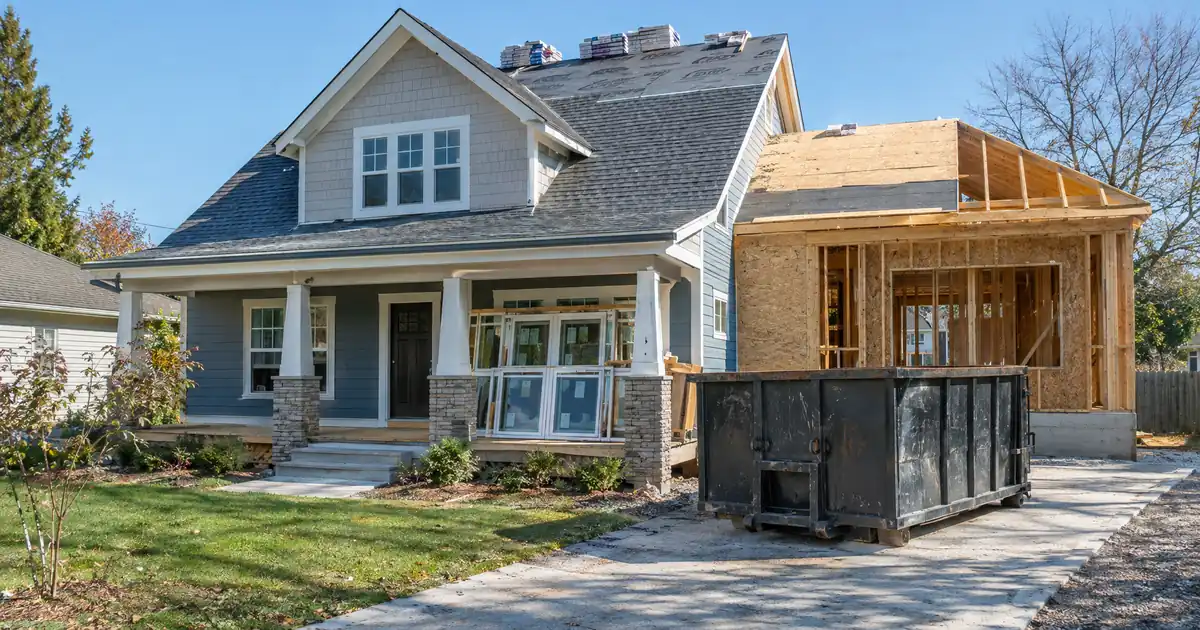
The Quick Read: A line of credit on equity you already hold and a short-term loan built around a specific project solve different problems, so the right choice depends on your equity, your credit, how the property is titled, and how you plan to exit.
- A HELOC underwrites the borrower and the equity left after the first mortgage. Hard money reviews the property’s value, the plan, and the exit.
- Hard money can fund a purchase plus rehab with no existing equity. A HELOC cannot.
- Investment-property HELOC lines cap at $500,000 total. Hard money on the Lendmire network can run up to $5,000,000, varying by lender, property, and experience.
- Neither product replaces long-term financing. Both are usually a bridge to it.
Side-by-Side
The HELOC column reflects published industry norms. The hard money column reflects select lenders in Lendmire’s wholesale network, and it varies by lender, property, and experience. Nothing here is a commitment to lend. Pricing is left to the calculator.
What this loan actually costs to carry.
Hard money is sized against the project and priced by time. Enter the deal and see how much the program will lend, the cash required at closing, the carry while you hold it, and what is left at the exit.
Leverage tiers on the current program: 85% with fewer than 2, 90% with 2 or more, 93% with 5 or more completed projects — every tier capped at 75% of after-repair value. Loan amounts up to $5,000,000, larger by exception; terms of 6 to 18 months, interest-only, no prepayment penalty. The rehab portion funds in draws against completed work, not at closing.
Program parameters shown update from Lendmire’s centralized guideline source. Rate, points, and months are editable assumptions, not quoted terms.
Cost cap sets the loan · positive spread
Illustrative estimate only — not a quote, Loan Estimate, approval, or commitment to lend. Rate, points, and months are editable assumptions. Hard money is business-purpose financing for real estate investors, not a consumer mortgage. Leverage on the current program tops out at 93% of project cost for investors with a documented track record, capped at 75% of after-repair value, with rehab funding up to 100% of the documented budget released in draws; actual terms vary by lender, borrower experience, property, and exit. Lendmire is a mortgage broker, not a lender.
| Factor | Investment Property HELOC | Hard Money |
|---|---|---|
| Review basis | Borrower credit, income, debts, equity | Property value, project plan, exit |
| Documentation | Personal income and debt review | Project budget, scope, exit plan |
| Collateral | Rental or another owned home | The investment property being bought or rehabbed |
| Property types | Typically 1-4 unit residential | Non-owner-occupied 1-4 units; ground-up to 10 units |
| Entity vesting | Usually an individual or revocable trust | Business-purpose; entity use subject to lender program eligibility |
| Structure | Revolving line: draw period, then repayment | Lump-sum term loan, 6-18 months, interest-only |
| Size | Capped at $500,000 total | Up to $5,000,000, larger by exception |
| Prepayment | Varies by lender | No prepayment penalty |
| Credit expectation | Typically strong; tiers vary | 620 minimum, with added conditions below 660 |
| Exit | Repay from sale, refinance, or cash flow | Sale or refinance at maturity |
When an Investment Property HELOC Is the Better Fit
A HELOC fits the investor who already holds real equity, has strong personal credit, and wants flexible access to cash without a hard maturity date. It works best for smaller, repeatable needs: a down payment, a repair budget, or a payoff.
The CFPB describes a HELOC as an open-end line you can borrow against repeatedly. It runs on a draw period, then repayment. That is the key difference from hard money. You borrow what you need, when you need it. You are not locked into a lump sum with a short clock.
The CFPB’s HELOC booklet explains how the limit is set. The lender applies a percentage to appraised value, then subtracts what you still owe on the mortgage. It also weighs your ability to repay, including income, debts, and credit history. The line also typically floats over time rather than staying fixed, and some plans require an initial advance.
On an investment property, the lender pool is smaller and the product is narrower than a primary-home line. The line cap is $500,000 total. There is no larger investment tier. Title is another gate. HELOC programs generally want the property held by an individual or a revocable trust. An LLC-owned rental often cannot use one.
HELOCs also make sense when the existing first mortgage is one you want to keep. A cash-out refinance replaces it. A HELOC sits beside it.
The catch is personal exposure. The CFPB warns that you could lose your home if you cannot repay. If the line is secured by your primary residence, that is the collateral. A failed rehab on a rental then puts your own house at risk.
When Hard Money Is the Better Fit
Hard money is the better fit when the deal needs financing that a personal-credit product cannot supply: a purchase with rehab, an entity-held property, or a borrower with equity tied up elsewhere. It is built for projects with a defined plan and a short runway.
Leverage on the network is tied to cost, not to a plain loan-to-value figure. All of this varies by lender, property, and experience.
- Fix-and-flip: 85% of project cost with fewer than two completed projects, 90% of project cost at two or more, and 93% of project cost at five or more. Every tier is capped at 75% of after-repair value.
- Bridge purchase without rehab: up to 80% of purchase price.
- Cash-out or rate-and-term refinance: up to 65% of value.
- Ground-up construction: up to 90% of cost and 75% of completed value at three or more completed projects.
- Rehab budget: up to 100% of the budget funds in draws against completed work. That is a rehab-budget figure, not a purchase loan-to-value.
There is no true 100% purchase program. The top tiers go to experienced investors. First-time investors qualify at the lower tiers.
Collateral is non-owner-occupied residential property, one to four units. Ground-up construction can run to ten units. Terms run six to eighteen months, interest-only, with no prepayment penalty. There are no multi-year options on the current program.
The underwriting stays asset-based. Lenders look at the property, the plan, and the exit. A 620 score is the floor, with added conditions below 660.
The trade-off is the maturity. The balance comes due on a short clock, and the exit has to work. If a rehab slips or a refinance does not come together, the investor carries the pressure. Short-term rental rules can vary by city, county, HOA, and property type, so investors should confirm local rules before relying on projected rental income at exit.
Where Each Product Breaks Down
Each product has a failure point. Knowing it saves a lot of rework.
HELOC files stall on three things. The first is title: an LLC on title ends the file with most programs. The second is equity. If the first mortgage eats most of the value, the line is small or zero. The third is the borrower’s overall debt picture. A portfolio of financed properties raises the debt load a lender sees.
Hard money files stall on the plan. A thin scope, an unrealistic after-repair value, or no clear exit gives the lender little to underwrite. Experience matters too, because the strongest tiers are reserved for investors with documented completed projects.
One misconception crosses both. A HELOC is not an investor-rent product. It does not qualify the property on its rent. DSCR is the product that does that, and it compares rent to the full monthly obligation. Clearing 1.00 on a DSCR file is also not the same as positive cash flow. Repairs, vacancy, management, and utilities sit outside that calculation.
Can the Two Be Used Together?
Yes, in sequence. An investor with equity in a home or rental can draw on a HELOC for part of the cash needed up front and use hard money for the rest of the project. That reduces the cash tied up in the deal.
Two cautions apply. First, a hard money lender may review where the borrowed funds came from, so confirm that early. Second, stacking debt raises your total exposure. If the exit slips, you have two obligations running at once. Run the downside case before you commit.
A common exit is long-term rental financing. Many investors refinance out of hard money into DSCR financing once the property is stabilized. Lendmire arranges that path through its wholesale network. Qualification there rests primarily on property-level rental income covering the payment, subject to lender guidelines. The complete DSCR loans guide covers how that works.
Standard DSCR purchase files typically land at 75%-80% LTV, and cash-out refinances top out around 75% LTV. Many programs start at 1.00 coverage. A separate select-lender path takes coverage below 1.00, with leverage and terms adjusted. The test is always two-sided: enough equity and enough rental coverage.
A Simple Decision Framework
Four questions settle most cases.
1. Do you already hold usable equity? If not, a HELOC is off the table. Hard money can still fund a purchase.
2. Is the property in an LLC? If so, HELOC programs generally will not work. A business-purpose loan is the usual path, subject to lender program eligibility.
3. Is the need under $500,000 and flexible? That points to a HELOC. A larger or project-based need points to hard money.
4. What is the exit? If the answer is a long-term refinance, plan that take-out before the first draw or first funding.
Key Terms Defined
HELOC: A revolving line of credit secured by property equity, with a draw period followed by repayment.
Loan-to-cost: The loan amount as a share of total project cost, not of the property’s current value.
After-repair value (ARV): The estimated value of the property once the planned rehab is complete.
Draw schedule: A set of rehab-budget releases paid out as completed work is verified.
Balloon: A balance due in full at maturity rather than paid down over time.
Exit strategy: How the borrower repays the loan: a sale or a refinance into longer-term financing.
The Verdict
Choose a HELOC if you have deep equity, strong personal credit, individual or trust title, and a need that fits under the line cap. It is flexible and avoids a hard maturity, but your personal credit and possibly your home carry the risk.
Choose hard money if the deal needs a purchase plus rehab, the property is held in an entity, or you want the loan judged on the project instead of your personal debt load. It carries a short maturity, so the exit plan has to be real.
Neither is the long-term answer. Both are tools for getting a property to the point where permanent financing makes sense.
Tax treatment can depend on how the funds are used and how the property is held. Keep clear records and speak with a qualified tax professional before relying on any deduction.
Frequently Asked Questions
Can I use a HELOC on my own home to buy a rental?
Yes, many investors do. The line is secured by your primary home, though, so a default puts that home at risk. Check the line’s terms too, since some plans restrict certain uses.
Can an LLC borrow against a rental with a HELOC?
Usually not. HELOC programs generally want title held by an individual or a revocable trust. Hard money is a business-purpose loan, and entity borrowing is available subject to lender program eligibility.
What is the largest investment-property HELOC?
Lines cap at $500,000 total, and there is no tier above that. Hard money on the network runs up to $5,000,000, larger by exception, varying by lender, property, and experience.
Is hard money only for borrowers with poor credit?
No. It is underwritten on the property, the plan, and the exit. A 620 score is the floor, and first-time investors qualify at lower leverage tiers. Many experienced investors use it to keep their own cash free.
What happens when a hard money term ends?
The balance comes due, typically through a sale or a refinance. Many investors refinance into long-term DSCR financing once the property is stabilized.
If you are buying, rehabbing or refinancing an investment property on a short timeline and want to see how the numbers work, Lendmire can help you compare hard money options based on the project, the exit plan, leverage, and your goals.
About Lendmire
As a DSCR and non-QM mortgage broker, Lendmire — NMLS# 2371349 — connects investors with wholesale lending channels across 41 markets, including Washington, D.C. The property’s rental income, not the borrower’s tax returns, is central to lender review, which works for self-employed operators and portfolios beyond four financed properties. Scotsman Guide named Lendmire a Top Mortgage Workplace in both 2025 and 2026.
The exit plan matters as much as the purchase price on short-term financing – see the hard money loan overview.
Get Started
Ready to find the right loan for you?
In about 30 seconds you can review financing options available for your investment property. No commitment required.
Informational only. Not a Loan Estimate, approval, or commitment to lend. Program availability and eligibility are subject to lender guidelines, credit approval, property review, and underwriting.
References
This article is part of Lendmire’s hard money loan program — full qualification details, guidelines, and scenarios live on the program page.
Related reading: Investment Property HELOC for Local Investors Funding a Purchase · Investment Property HELOC for Investors Asking Their Bank First · HELOCs on Investment Properties for Investors Who Keep Hearing No
Brandon Miller
Founder & CEO, Mortgage Loan Originator, Lendmire LLC
- Mortgage Loan Originator · NMLS# 1129696 · Verify on NMLS Consumer Access
- North Carolina Real Estate Broker · License# 343312 · Verify on NCREC
- North Carolina Insurance Producer · License# 19053198 · Property, Casualty, Life, Health · Verify on NAIC SBS
- Lendmire LLC · Firm NMLS# 2371349 · Verify firm licensure
Important disclosures. Lendmire (NMLS# 2371349) is a licensed mortgage brokerage. Lendmire is not a direct lender, depository institution, or financial advisor. All loan inquiries are subject to lender underwriting; this article does not constitute a commitment to lend. Rates, terms, and program guidelines are subject to change without notice and vary by borrower profile, property type, and state. Information in this article is general in nature and is not financial, legal, or tax advice. Equal Housing Opportunity. NMLS Consumer Access: nmlsconsumeraccess.org.