
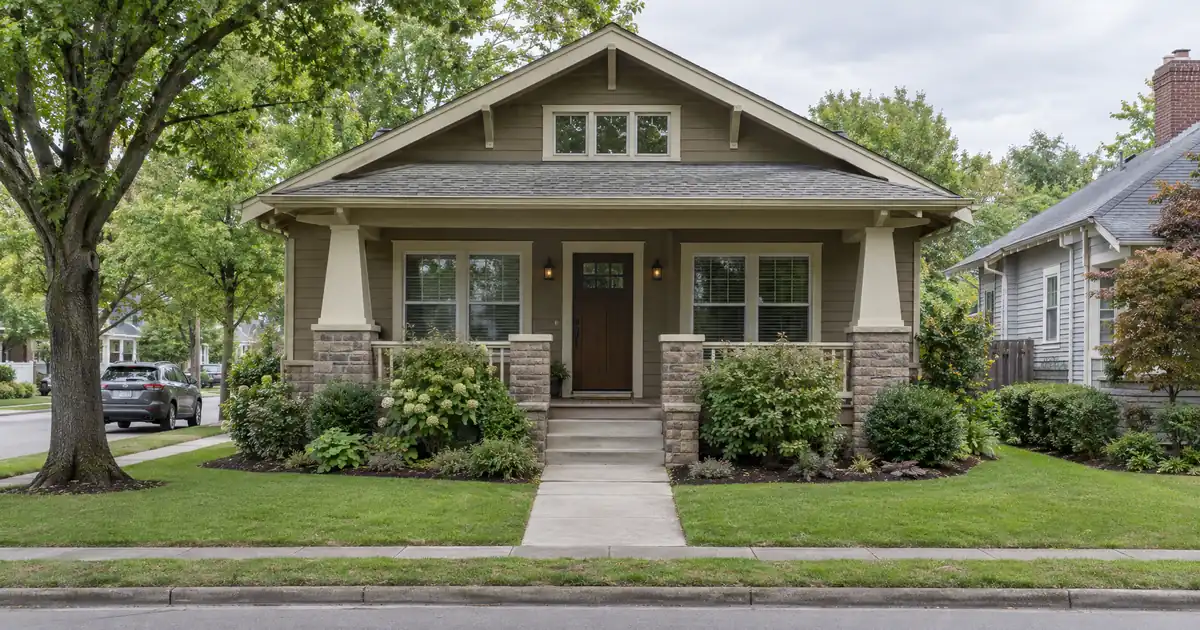
The Quick Read: Pulling equity from a rental this way replaces your current mortgage with a larger loan, pays off the old balance, and hands you the difference. On a standard long-term rental, the new loan is sized at no more than 75% of the appraised value. The rent must also cover the bigger payment, so the equity you keep depends on both tests.
- Across most of Lendmire’s wholesale network, cash-out on a standard long-term rental tops out at 75% of appraised value, so at least 25% of the value stays in the property.
- Closing costs and any existing mortgage payoff come out of your proceeds before you see a dollar.
- The new, larger payment is retested against rent, so coverage can limit your cash before the equity cap does.
- Most programs expect about 6 months of ownership, counted from title recording, before cash-out is available at full appraised value.
- Clearing a coverage test does not mean the property cash flows, because repairs, vacancy, and management sit outside the calculation.
Key Terms Defined
Cash-out refinance: a new first mortgage that pays off the old one and returns the leftover cash to you.
LTV (loan-to-value): the loan amount divided by the property’s appraised value.
DSCR (debt service coverage ratio): the property’s monthly rent divided by its full monthly housing payment.
PITIA: principal, interest, taxes, insurance, and any association dues, which together make up that payment.
Seasoning: the waiting period a lender wants between buying a property and refinancing it.
Delayed financing: a path for recent cash buyers to borrow against a property soon after purchase, usually capped near what they documented paying.
Remaining equity: the appraised value minus every loan against the property after the refinance closes.
DSCR Cash-Out Calculator
Run the cash-out numbers in your market
Rate source: Freddie Mac 30-yr average via FRED® — Federal Reserve Bank of St. Louis · effective Oct 8, 2026
Prefilled with starting assumptions — enter your property’s value, balance, taxes, and insurance for a more accurate picture.
Program parameters update from Lendmire’s centralized guideline source. Taxes and insurance are editable estimates.
As of Oct 8, 2026 · General Freddie Mac market benchmark, not a Lendmire loan offer. Property value, balance, taxes, and insurance are editable estimates. Maximum loan-to-value varies by lender, program, property type, and seasoning. Not a Loan Estimate, approval, or commitment to lend. Program availability and eligibility are subject to lender guidelines, credit approval, property review, and underwriting.
How Does a Cash-Out Refinance on a Single-Family Rental Work?
It is a swap, not an add-on. Credit Karma explains that a cash-out refinance is a first loan, so the new mortgage replaces your existing one rather than sitting behind it. Investment properties are also not eligible for FHA, USDA, or VA loans, which are limited to owner-occupied homes. That gap is why investors use conventional, portfolio, or DSCR financing.
Fortune confirms that cash-out is allowed on an investment property and is a common way to move equity into the next purchase. It also notes that conventional investor cash-outs carry added pricing adjustments on top of the base cost. That is one reason many investors look at rent-based programs.
DSCR loans are designed for non-owner-occupied investment properties. Because they are business-purpose investor loans, they are reviewed differently from a standard owner-occupied mortgage. The file qualifies primarily on property-level rental income covering the payment, subject to lender guidelines, instead of leaning on your paycheck.
How Much Equity Do You Keep?
You keep whatever the new loan does not take. If the loan is sized at 75% of value, 25% of value stays as your equity, no matter how much cash you pull. A lower loan amount leaves more equity behind, though it also means less cash in your hands at closing.
Here is the chain, expressed as a share of appraised value. These are modeled assumptions, not market data.
| Step | Existing loan | Free and clear |
|---|---|---|
| Appraised value | 100% | 100% |
| Maximum new loan (75% cap) | 75% | 75% |
| Minus existing payoff | 30% | 0% |
| Cash before closing costs | 45% | 75% |
| Equity left at the cap | 25% | 25% |
Closing costs come out of the cash line, so your real proceeds land below the figure in the table. A free-and-clear owner has the largest gap between loan and payoff, which makes the cash line look generous. The equity line barely moves, though, because the cap sets it. The calculator on this page can turn those percentages into illustrative dollars for your own scenario.
Two things can shrink the result. A lower appraisal cuts the maximum loan directly. A tighter coverage result can force a smaller loan than the cap allows. The number that matters is the lower of the two.
How Does Underwriting Treat It, Step by Step?
1. Value and leverage. A full appraisal sets the value. The 75% cap on a standard long-term rental applies to that figure, and nothing about strong rent lifts the cap.
2. Market rent. For a single-family rental, the appraiser typically completes a rent schedule such as Form 1000, the Freddie Mac and Fannie Mae single-family comparable rent schedule, which gives market rent for a single-family investment property. The appraiser sets that figure, not you.
3. Coverage on the new payment. The lender divides rent used for lender review by the full new PITIA. Select programs start at 1.00, and stronger ratios open better pricing and leverage.
4. Credit. A 620 floor exists in parts of the network, most programs want around 660, and 700 or higher unlocks the strongest leverage tiers.
5. Reserves. Reserves vary by lender, leverage, loan size, and transaction type. Around 6 months of PITIA is common, and loans above $1,500,000 typically step up to about 9 months.
6. Seasoning. Most files want about 6 months of ownership, measured from title recording.
7. Payoff. The old loan is paid from the new loan’s proceeds at closing. Check the old loan for a prepayment penalty first, since that cost reduces what you keep.
Loan sizes on standard programs run up to $3,000,000, and above $2,500,000 the network generally holds to 30-year fixed structures. Smaller balances route through select lenders in the network.
What Does It Do to Your Monthly Numbers?
A bigger loan means a bigger payment, so coverage falls as leverage rises. Picture the same house at two leverage levels. A property that covers its payment at a comfortable 1.40x on a loan around 50% of value may land closer to 1.00x to 1.10x at 75%, depending on how heavy taxes and insurance are. That is an illustration, not a forecast.
This is why rent can limit your cash before equity does. If the number is tight, a lower loan amount raises coverage because a smaller loan carries a smaller payment. Many investors pull less than the cap allows for exactly this reason.
One point trips up first-timers. DSCR compares rent to PITIA only. Clearing 1.00 does not mean positive cash flow, because repairs, vacancy, management, utilities, and capital expenses all sit outside the calculation. Budget for those separately before you decide how much to pull.
Where Does the General Rule Break?
Recent purchases and cash buyers. Inside the seasoning window, the loan may be sized on your cost basis instead of the appraised value. Some programs also offer delayed financing for recent cash buyers, capped near the documented investment. A renovation finishing does not start the clock. Title recording does.
Short-term rentals. Multiplying a nightly price by 30 does not produce a valid market rent. These files often rest on operating history or third-party revenue data, and the network expects about 12 months of hosting history and a 640 or higher score. Cash-out on short-term-rental collateral caps at 70%, against 75% on a standard long-term rental. Short-term rental rules can vary by city, county, HOA, and property type, so investors should confirm local rules before relying on projected rental income.
Lease versus market rent. Ask which one applies before you count on a particular ratio.
Coverage below 1.00. A separate select-lender path takes coverage below 1.00 with leverage and terms adjusted. No-ratio structures are available only through select lenders, generally for borrowers who already own a primary residence. Both come with trade-offs, so run them against a standard file.
Rate-and-term versus cash-out. On a rate-and-term refinance, which returns no cash at closing, the ceiling reaches 85%. The moment any cash comes back to you beyond the usual allowances, the lower 75% cash-out ceiling applies on a standard rental. Final terms depend on lender guidelines, property type, leverage, and the borrower’s complete credit picture.
Property type. Manufactured homes (single- and double-wide), log homes, and barndominiums are not offered. Holding title in an LLC works with many programs, subject to lender program eligibility.
Pre-appraisal estimates. A coverage figure before the appraisal is only an estimate, because the appraiser’s rent number replaces your assumption.
What Are the Alternatives to Cash-Out?
| Option | What you keep | Trade-off |
|---|---|---|
| Cash-out refinance | Ownership, new first loan | Larger balance and payment |
| Investment HELOC | Existing first loan stays | Lines cap at $500,000 total |
| Sell the property | Proceeds from the sale | You give up the asset |
| Equity partner | Some control, shared upside | Shared profit and decisions |
A HELOC leaves your first mortgage alone, which matters if that loan is a keeper. A cash-out replaces everything with one new first loan, which matters if you want one payment and a longer term. The strongest structures use the lender’s tools in the right order, not a single product for every goal.
Should You Do It? A Practical Decision Test
Start with the use of the cash. Pulling equity pays off only when the new use earns more than the added debt costs, after the extra payment, closing costs, and reserves. Cash used to fund the next down payment must also survive that property’s own seasoning, coverage, and reserve tests.
Ask four questions before you apply:
- Does coverage still clear your lender’s floor on the larger payment, with room to spare?
- Will the leftover 25% or more of equity still feel like a cushion if values soften?
- Can you cover repairs and vacancy out of pocket, since the ratio ignores them?
- Is the old mortgage free of a prepayment penalty that eats your proceeds?
Investors who plan several moves ahead should read Lendmire’s piece Can a Cash-Out Refinance Tap Most of Your Rental Equity?. Anyone weighing payoff against redeploying should see its guide How to Pay Off a Rental and Save Cash-Out Refinance Equity for Scaling. The complete DSCR loans guide covers the wider program picture.
Tax treatment can depend on how the funds are used and how the property is held; investors should keep clear records and speak with a qualified tax professional before relying on any deduction.
Programs change, and every file is underwritten individually, so treat each figure here as a typical range from select lenders in the network, not a commitment to lend.
Frequently Asked Questions
Can I do a cash-out refinance on a rental I just bought?
Usually only with limits. Most files want about 6 months of ownership from title recording before sizing on appraised value. Inside that window, the loan may be based on your cost basis. Recent cash buyers may qualify for a delayed-financing path, subject to lender guidelines.
How much cash will I actually receive?
Less than the cap suggests. Take the new loan, then subtract the existing payoff, junior liens, closing costs, and any holdbacks. At the 75% ceiling on a standard rental, at least a quarter of the value stays in the property. Rent coverage can reduce the loan further.
Does a passing coverage ratio mean the rental makes money?
No. The ratio compares rent to the full housing payment and nothing else. Repairs, vacancy, management, utilities, and capital spending are outside it, so a property can clear 1.00 and still run thin.
What credit score do I need?
It varies by program. A 620 floor exists in parts of the network, most programs want around 660, and 700 or higher opens the strongest leverage tiers. A higher score can improve leverage and terms but does not erase the 75% cap.
Does a larger down payment on the original purchase help a later cash-out?
Indirectly. More equity gives you more room under the cap, and a lower balance means a smaller payment and stronger coverage. It never removes reserve rules, credit floors, or property eligibility.
Next Step
If you are buying or refinancing a rental property and want to see how the numbers work, Lendmire can help you compare DSCR loan options based on the property income, credit profile, leverage, and investor goals. As a mortgage broker arranging DSCR investor loans across 41 markets, including Washington, D.C., it places files with select lenders in its wholesale network, and each lender reviews eligibility and approves.
For the mechanics of pulling equity out of a rental property, see Lendmire’s guide to cash-out refinance on an investment property.
About Lendmire
Lendmire — NMLS# 2371349 — is a mortgage brokerage specializing in DSCR investor loans, helping arrange financing across 41 markets, including Washington, D.C., through wholesale and investor-lending channels. The model centers on property-level rental income reviewed by the lender rather than W-2 documentation, subject to lender guidelines, suiting entity-owned and multi-property investors. Lendmire holds Scotsman Guide Top Mortgage Workplace recognition for 2025 and 2026.
Get Started
Ready to find the right loan for you?
In about 30 seconds you can review financing options available for your investment property. No commitment required.
Informational only. Not a Loan Estimate, approval, or commitment to lend. Program availability and eligibility are subject to lender guidelines, credit approval, property review, and underwriting.
References
1. Credit Karma — cash-out refinance on an investment property
2. Fortune — investment property cash-out refinance
3. Freddie Mac Form 1000 / Fannie Mae Form 1007 — Single-Family Comparable Rent Schedule
This article is part of Lendmire’s investment property cash-out refinance program — full qualification details, guidelines, and scenarios live on the program page.
Related reading: Rental Cash-Out Refinance for Investors Testing the Loan-to-Value Ceiling · Investment Property HELOC vs Cash-Out Refinance to Pull Cash Out · Home Equity Loan vs Cash-Out Refinance for a Rental Owner
Brandon Miller
Founder & CEO, Mortgage Loan Originator, Lendmire LLC
- Mortgage Loan Originator · NMLS# 1129696 · Verify on NMLS Consumer Access
- North Carolina Real Estate Broker · License# 343312 · Verify on NCREC
- North Carolina Insurance Producer · License# 19053198 · Property, Casualty, Life, Health · Verify on NAIC SBS
- Lendmire LLC · Firm NMLS# 2371349 · Verify firm licensure
Compliance and disclosures. Lendmire (NMLS# 2371349) is a licensed mortgage broker and is not a direct lender, depository institution, financial advisor, or tax professional. Content in this article is general market analysis and educational information — not financial, legal, or tax advice for any specific situation. Lendmire does not guarantee loan approval; every transaction is subject to underwriting by the funding lender. Mortgage pricing and loan program guidelines are subject to change at any time without notice and vary by borrower characteristics, property type, and state regulations. Lendmire complies with Equal Housing Opportunity. Licensure verification: NMLS Consumer Access.