
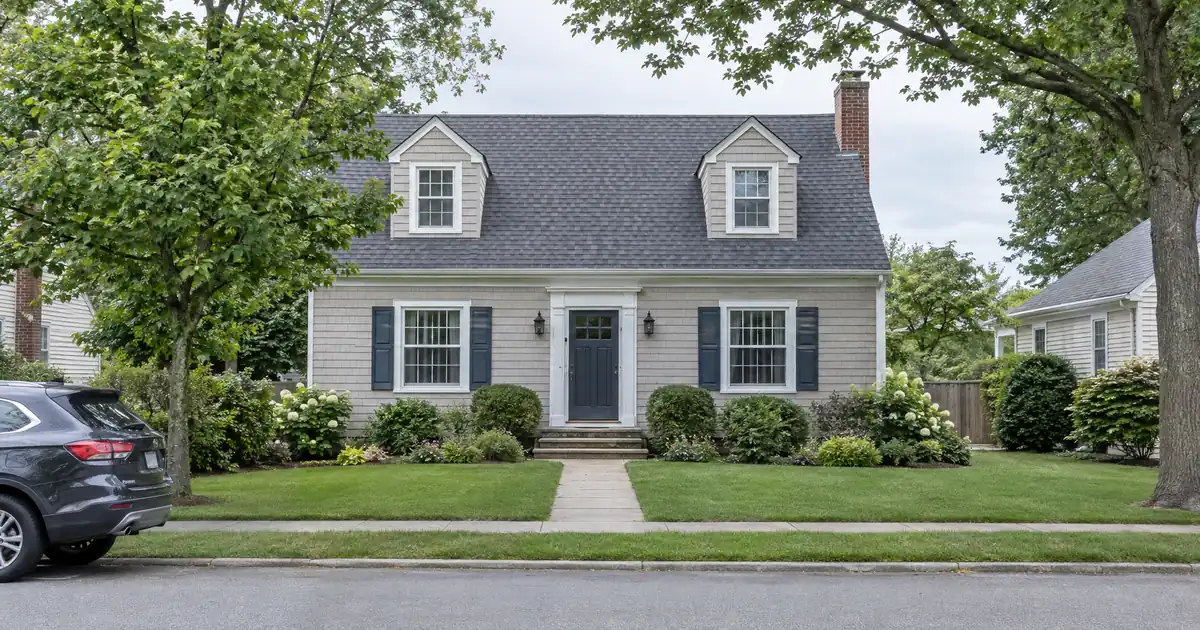
The Quick Read: Where you live rarely decides whether a rental qualifies for a cash-out refinance, because lenders look at the property, its appraised value, its rent, and your credit and reserves, while the size of the new loan is set by the lowest of several separate ceilings.
- Across most of our wholesale network, a cash-out refinance on a standard rental tops out around 75% LTV, and about 6 months of ownership is the usual expectation.
- Eligibility follows the property’s state. No state-specific leverage overlay applies to the standard programs we place.
- Loan size is the lowest of the value ceiling, the rent-coverage ceiling, and the program’s size band.
- Clearing 1.00 coverage does not mean the rental cash flows. Pulling more cash always lowers the ratio.
- Holding title in an LLC is usually workable, subject to lender program eligibility, but registering the entity in the property’s state is the real paperwork task.
You own a rental two time zones away and want to turn some of its equity into the down payment on the next one. The question is whether distance changes anything. This explainer walks through how the loan works, how size gets set, and where the usual rules bend. For the full background on how these loans work, see our complete DSCR loans guide.
DSCR Cash-Out Calculator
Run the cash-out numbers in your market
Rate source: Freddie Mac 30-yr average via FRED® — Federal Reserve Bank of St. Louis · effective Oct 8, 2026
Prefilled with starting assumptions — enter your property’s value, balance, taxes, and insurance for a more accurate picture.
Program parameters update from Lendmire’s centralized guideline source. Taxes and insurance are editable estimates.
As of Oct 8, 2026 · General Freddie Mac market benchmark, not a Lendmire loan offer. Property value, balance, taxes, and insurance are editable estimates. Maximum loan-to-value varies by lender, program, property type, and seasoning. Not a Loan Estimate, approval, or commitment to lend. Program availability and eligibility are subject to lender guidelines, credit approval, property review, and underwriting.
Key Terms Defined
Cash-out refinance: a new, larger loan that pays off the old one and hands you the difference at closing. A refinance that only pays off the old balance is a rate-and-term refinance.
LTV (loan-to-value): the new loan divided by the property’s appraised value. A 75% LTV means the loan equals three-quarters of value. Every figure here varies by lender and program — guidelines, property type, leverage, and credit profile all apply.
DSCR (debt service coverage ratio): the property’s rent divided by its full monthly obligation. This article uses the monthly residential version: rent divided by principal, interest, taxes, insurance, and any HOA dues.
PITIA: principal, interest, taxes, insurance, and association dues. It is the payment the rent has to cover.
Seasoning: the waiting period between buying a property and cashing out on it. It is lender policy, not law, and we measure it from the date title was recorded.
Reserves: liquid savings, counted in months of PITIA, that you hold after closing.
Does Living Out of State Change Eligibility?
Usually not. Your home address does not decide eligibility. The property’s state and the lender’s footprint do. Across the programs we place, a rental in one state is handled the same way as a rental in any other state we serve. We work across 41 markets, including Washington, D.C. The standard programs carry no state-specific leverage overlay, so the same tiers apply wherever the property sits.
What does change is the paperwork around ownership.
An LLC formed in one state can generally hold property in another. The property’s state then commonly expects the entity to register there as a foreign entity, and that can mean a registered agent and annual fees. Some owners form the LLC in the property’s state to skip that second registration. Others stay with their home-state entity because they would owe registration at home anyway. The right call depends on your attorney and accountant, not on the loan.
For the loan itself, a mismatch can slow the file down. If the entity on title was formed in a third state, the lender will want to see that it is in good standing and authorized where the property sits. Lenders commonly let an LLC stay on title with a personal guarantor, subject to lender program eligibility. That is a real difference from conventional lenders, which often ask you to deed the property out of the LLC first.
How the Remote Process Works
Distance is a logistics problem, not an underwriting problem. A typical out-of-state file moves through these steps:
1. Classify the request. Any cash beyond the payoff and closing costs makes it a cash-out.
2. Order the appraisal. An appraiser visits the property and reports value and market rent. Your tenant or property manager usually handles access, so tell them early.
3. Gather the property documents. You need the recorded deed and settlement statement for the seasoning clock, the payoff statement, the lease if occupied, insurance declarations, the tax bill, and any HOA statement.
4. Assemble entity papers. If an LLC holds title, the lender will want formation documents, an operating agreement, and good-standing evidence in the property’s state.
5. Document reserves. Bank statements show you hold the required months of PITIA.
6. Sign and fund. Ask your title company early about signing options for an owner who is far from the property, such as mobile or remote notarization. Availability depends on the title company and the state.
The step DSCR files skip is the conventional income package of W-2s and traditional personal-income documentation. The file qualifies primarily on property-level rental income covering the payment, subject to lender guidelines. Credit and reserves still matter.
How Is Loan Size Actually Set?
Loan size is the lowest of several separate ceilings, and any one of them can be the one that binds. Most people only think about the first.
The value ceiling. The new appraisal, not your own estimate, sets value. The maximum loan is appraised value times the program’s cash-out LTV cap. On a standard rental across most of our network, that cap is about 75% LTV on a cash-out refinance. On short-term-rental collateral, the cash-out ceiling drops to 70%. Final terms depend on lender guidelines, property type, leverage, and the borrower’s complete credit picture.
The coverage ceiling. The coverage test runs on the new, larger payment. Every dollar of cash you pull raises the payment and lowers the ratio. The largest loan the rent supports is the one that keeps coverage at the program’s floor. The 1.00 level is where many select programs start, and stronger ratios open better pricing and leverage.
The program size band. Standard programs reach up to $3,000,000, and smaller balances route through select lenders in the network. Above $2,500,000, the network generally holds to 30-year fixed structures. Larger loans also tend to bring tighter credit and reserve conditions.
Property-type haircuts. Short-term rentals, condos, and 2–4 unit buildings often carry lower leverage than a plain single-family rental.
Worked Example One: The Value Ceiling Binds
These are modeled assumptions, not market data. Picture a rental that appraises at 100 units of value, with an existing loan equal to 50% of value. At the 75% LTV cash-out ceiling, the new loan can reach 75% of value. That leaves 25% of value before closing costs and any required reserves. Say the rent covers that larger payment at around 1.25x. Coverage is not the problem here, so the value ceiling sets the loan. These specifics are subject to lender guidelines and a full review of property, leverage, and credit.
Worked Example Two: The Rent Binds
Now take the same property, but suppose the rent covers a full 75% loan at only about 0.90x. The value ceiling would allow the loan, yet the coverage test does not. You have three paths. You can take less cash, so the new payment is smaller and coverage reaches 1.00. You can ask a select lender in the network about a sub-1.00 path with leverage and terms adjusted. Or you can wait until the rent supports a larger loan.
Taking less than the maximum is often the stronger choice anyway. A smaller loan leaves room for vacancy, and lower leverage generally eases other requirements.
What Net Cash Really Means
Cash to you equals the new loan, minus the payoff, minus closing costs, minus anything the lender holds back. On some files, cash-out proceeds may count toward the reserve requirement, depending on the lender. Reserves vary by lender, leverage, loan size, and transaction type. About 6 months of PITIA is common, and loans above $1,500,000 typically step up to around 9 months. Conservative rate-and-term files at modest leverage under $1,500,000 can see reserves waived, but that does not carry over to cash-out files.
Where the Rent Number Comes From
The appraiser supplies the rent, using a market rent schedule known as Form 1007 that is prepared as an attachment to the appraisal. Form 1025 serves the same purpose for 2–4 unit buildings. Both are agency form names that DSCR programs borrow for their format. They do not make the loan an agency loan.
McKissock, an appraisal education provider, notes that on a refinance the form is used together with lease agreements or traditional personal-income documentation, and that the lender decides how income counts. In practice, the rent used is often the lower of your lease and the appraiser’s figure. A lease renewal signed after the appraisal does not change the appraised rent. If your tenant pays well below market, expect that to cap the loan.
Cash-Out Refinance or a Credit Line?
A cash-out refinance reprices your whole balance. A credit line leaves your first loan alone and adds a second one on top. The tradeoffs look like this:
| Factor | Cash-out refinance | Investment HELOC |
|---|---|---|
| Existing loan | Replaced entirely | Stays in place |
| Size ceiling | Up to $3,000,000, standard | $500,000 total cap |
| Leverage | About 75% LTV, standard rentals | Set by the lender |
| Best fit | Large equity pulls | Smaller, flexible draws |
If your current loan carries terms you like, a credit line can make sense for a smaller pull. If you need a large sum, the cash-out refinance is the tool built for it. Also check your existing loan for a prepayment penalty before refinancing, since many investor loans carry one and it comes out of your proceeds.
Where the General Rule Breaks
Short-term rentals. Cash-out on a short-term rental tops out at 70% LTV, below the 75% available on a standard rental. Expect a 640+ score and about 12 months of hosting history, with a 1.00 coverage floor on refinances. Rent is harder to measure, too. Fannie Mae’s Appraiser Update says Form 1007 was not designed for short-term rentals, because it calls for monthly market rent and cannot estimate a nightly fee. It also says appraisers must not multiply nightly rates by 30. So the lender picks a different income basis for those files. Short-term rental rules can vary by city, county, HOA, and property type, so investors should confirm local rules before relying on projected rental income. Terms depend on the lender’s guidelines, the property type, the leverage, and a full review of the credit profile.
Recent cash purchases. Conventional lending has a delayed financing exception that lets cash buyers refinance right away. DSCR programs set their own rules. Across most of our network, about 6 months from the recorded title date is the common expectation. If your purchase is recent, Lendmire’s piece on investors waiting on title seasoning covers how the clock works. Some programs size very recent purchases on the lower of cost basis or appraised value.
Credit. A 620 floor exists in parts of the network, but most programs want around 660. A 700+ score unlocks the strongest leverage tiers.
Property types. Manufactured homes, whether single- or double-wide, log homes, and barndominiums are not offered in our DSCR programs. That holds in every state.
Larger balances. As loans climb past $1,500,000, reserves rise, and past $2,500,000 the structure options narrow. If you are near either line, ask about it before ordering the appraisal.
Term structures. The spine of the network is the 30-year fixed. Extended terms such as a 40-year, interest-only periods, and ARM structures are available through select lenders in the network.
Coverage Is Not Cash Flow
A DSCR above 1.00 means the rent covers PITIA. It says nothing about repairs, vacancy, management fees, utilities, or capital expenses, because the calculation leaves them out. A rental can clear the test and still lose money in a bad month.
Cash-out makes this worse. It raises the balance and the payment, so cash flow falls with every dollar you pull. Before you commit, ask what the property does if it sits empty for a stretch. Tax treatment can depend on how the funds are used and how the property is held; investors should keep clear records and speak with a qualified tax professional before relying on any deduction.
A Pre-Application Checklist
Run through these gates before you ask for a quote.
| Gate | What lenders test | If it fails |
|---|---|---|
| Seasoning | About 6 months from title recording | Wait, or ask about options |
| Value | Appraised value times 75% LTV | Take less cash |
| Coverage | Rent against full PITIA | Smaller loan or adjusted path |
| Credit | Typically 660, floor of 620 | Strengthen before applying |
| Reserves | About 6 months of PITIA | Build savings first |
| Entity | Good standing in the property’s state | Register or restructure |
Each file is underwritten individually, and programs change, so treat these as typical ranges rather than promises.
What to Do With the Cash
Many investors recycle equity into the next down payment. A down payment on an investment-property purchase typically runs 20%–25%, which means most files land at 75%–80% LTV, and select high-leverage programs reach 85% LTV with a 700+ score. That is the “refinance” step of BRRRR (buy, rehab, rent, refinance, repeat).
A larger down payment lowers the monthly payment and can lift the DSCR. It does not erase leverage caps, credit floors, reserve rules, or property eligibility. The strongest files clear both tests: enough equity and enough rental coverage.
For deeper background on the mechanics discussed here, see Fannie Mae Appraiser Update June 2024.
Frequently Asked Questions
Does my home state matter for a rental cash-out refinance?
Usually no. Eligibility follows the property’s state, not your mailing address. What can change is entity paperwork, since an LLC may need to register in the property’s state. The standard programs carry no state-specific leverage overlay, so the same tiers apply wherever the rental sits.
How much cash can I take out of an out-of-state rental?
The new loan is capped at about 75% LTV on a cash-out refinance of a standard rental, or 70% on short-term-rental collateral. Your cash equals that loan, minus the payoff, minus closing costs and holdbacks. Rent coverage can lower the number further. Treat the maximum as a ceiling, not a promise. The exact numbers vary by lender and program and follow a full review of property, leverage, and credit.
Can I hold the property in an LLC formed in another state?
Often yes, subject to lender program eligibility. An LLC formed elsewhere can generally own property in the property’s state, but that state commonly expects a foreign registration. Ask your attorney which state to form in. Mismatched entity states can add paperwork to a refinance.
Does the lender use my lease or the appraiser’s rent?
The appraiser’s rent opinion usually governs, and when your lease is lower, the lower figure is often used. A renewal signed after the appraisal does not change the appraised rent. Short-term rentals use a different income basis, because the standard rent form cannot estimate nightly pricing.
Is passing the coverage test the same as positive cash flow?
No. Coverage compares rent to PITIA only. Repairs, vacancy, management, utilities, and capital expenses sit outside the ratio. Every dollar of cash-out also raises the payment, so a property that clears the test can still have thin monthly margins.
Next Step
If you are buying or refinancing a rental property and want to see how the numbers work, Lendmire can help you compare DSCR loan options based on the property income, credit profile, leverage, and investor goals. As a mortgage broker, Lendmire arranges financing through select lenders in its wholesale network. Qualification is subject to lender guidelines and credit approval. This is not a commitment to lend. Call 828-256-2183 or request a quote.
For an out-of-state owner, the most suitable loan can often be one sized to the weakest of value, rent, and reserves, so it helps to check all three before pursuing the maximum.
Investors weighing their equity options can start with Lendmire’s guide to cash-out refinance on an investment property.
For current guidelines and terms, see Lendmire’s DSCR loan programs page.
About Lendmire
Lendmire — NMLS# 2371349 — is a mortgage brokerage specializing in DSCR investor loans, helping arrange financing across 41 markets, including Washington, D.C., through wholesale and investor-lending channels. The model centers on property-level rental income reviewed by the lender rather than W-2 documentation, subject to lender guidelines, suiting entity-owned and multi-property investors. Lendmire holds Scotsman Guide Top Mortgage Workplace recognition for 2025 and 2026.
Get Started
Ready to find the right loan for you?
In about 30 seconds you can review financing options available for your investment property. No commitment required.
Informational only. Not a Loan Estimate, approval, or commitment to lend. Program availability and eligibility are subject to lender guidelines, credit approval, property review, and underwriting.
References
1. McKissock, Form 1007 and short-term rental appraisals
2. Fannie Mae Appraiser Update June 2024
This article is part of Lendmire’s investment property cash-out refinance program — full qualification details, guidelines, and scenarios live on the program page.
Related reading: Bridge Loan vs Investment Property Cash-Out Refinance to Pull Cash · 1099-Only Loan vs Hard Money for a Conventional Cash-Out Refinance · Home Equity Loan vs Cash-Out Refinance for a Rental Owner
Brandon Miller
Founder & CEO, Mortgage Loan Originator, Lendmire LLC
- Mortgage Loan Originator · NMLS# 1129696 · Verify on NMLS Consumer Access
- North Carolina Real Estate Broker · License# 343312 · Verify on NCREC
- North Carolina Insurance Producer · License# 19053198 · Property, Casualty, Life, Health · Verify on NAIC SBS
- Lendmire LLC · Firm NMLS# 2371349 · Verify firm licensure
Legal disclosures. Lendmire (NMLS# 2371349) is a state-licensed mortgage brokerage that arranges financing through wholesale lender relationships. Lendmire is not a direct lender, depository institution, or registered financial advisor. The discussion above is general informational content about real estate financing — it is not financial, legal, or tax advice, and readers should consult licensed professionals for guidance on their individual circumstances. Loan inquiries are subject to lender underwriting; this article does not represent a commitment to lend. Loan terms, rates, and qualification standards vary by borrower, property, and state, and are subject to change at any time. Equal Housing Opportunity. NMLS Consumer Access: nmlsconsumeraccess.org.