
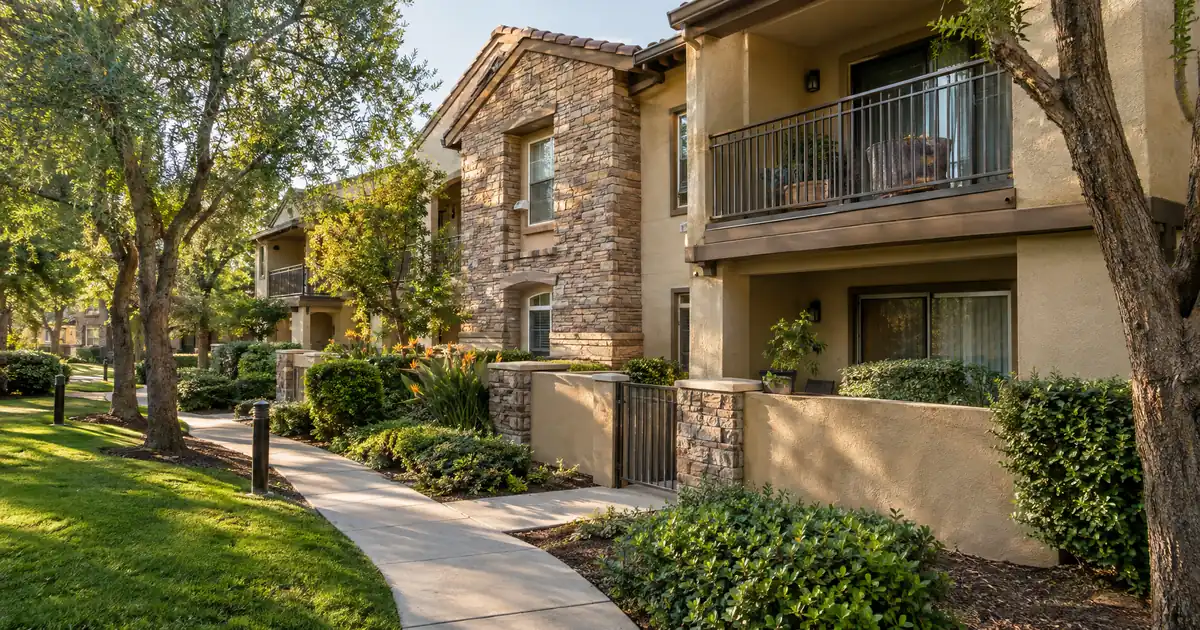
The Quick Read: A rented condo can usually be refinanced for cash on a DSCR loan, but two tests decide the result: whether the rent covers the new payment, and whether the building is acceptable collateral to the lender, and the leverage cap then sets how much equity you keep. A condo gets underwritten twice, once as a rental and once as a piece of a larger project. Your credit and your equity matter, but the association’s finances can matter just as much.
- On a cash-out refinance of an investment property, most programs in the network top out around 75% LTV, so you keep at least 25% of the appraised value as equity.
- About 6 months of ownership, measured from title recording, is the common seasoning expectation.
- HOA dues sit inside the payment in the coverage math. They are not subtracted from rent.
- A building with litigation, weak reserves, or heavy investor ownership can narrow your lender pool or lower your leverage.
- Clearing a 1.00 coverage ratio is not the same as positive cash flow.
How Does a Cash-Out Refinance on a Condo Rental Work?
A cash-out refinance replaces your current mortgage with a larger one, and the extra amount comes to you as cash. The new loan pays off the old balance, covers closing costs, and sends the remainder to you. That cash comes from equity you already own, so your equity shrinks and your total debt grows.
DSCR Cash-Out Calculator
Run the cash-out numbers in your market
Rate source: Freddie Mac 30-yr average via FRED® — Federal Reserve Bank of St. Louis · effective Oct 8, 2026
Prefilled with starting assumptions — enter your property’s value, balance, taxes, and insurance for a more accurate picture.
Program parameters update from Lendmire’s centralized guideline source. Taxes and insurance are editable estimates.
As of Oct 8, 2026 · General Freddie Mac market benchmark, not a Lendmire loan offer. Property value, balance, taxes, and insurance are editable estimates. Maximum loan-to-value varies by lender, program, property type, and seasoning. Not a Loan Estimate, approval, or commitment to lend. Program availability and eligibility are subject to lender guidelines, credit approval, property review, and underwriting.
Equity you keep is the appraised value minus the new loan balance. That is the number this article keeps coming back to. The cash you receive and the equity you keep move in opposite directions, and the leverage cap decides where they balance.
On a DSCR loan, the lender qualifies the file primarily on property-level rental income covering the payment, subject to lender guidelines. DSCR stands for debt service coverage ratio, and it compares monthly rent to the full monthly housing payment. DSCR loans are designed for non-owner-occupied investment properties. Because they are business-purpose investor loans, they are reviewed differently from a standard owner-occupied mortgage. The complete DSCR loans guide covers the basics if the term is new to you.
A condo adds a layer a house does not have. The building, its budget, its insurance, and its legal history are all part of the collateral.
Key Terms Defined
LTV (loan-to-value): the new loan balance divided by the appraised value. A 75% LTV means the loan equals three-quarters of the value. Final terms depend on the lender’s guidelines, the property type, and the borrower’s complete credit picture.
PITIA: principal, interest, taxes, insurance, and association dues. It is the full monthly payment the rent has to cover.
Seasoning: the waiting period a lender wants after you buy before it will let you pull cash out.
Warrantable condo: a project that meets the standard eligibility checks for agency-style loans. A non-warrantable project fails one or more of them, even if your unit is in perfect shape.
Condo questionnaire: a form the lender sends to the association to collect project-level facts such as litigation, delinquent dues, and reserves.
Rate-and-term refinance: a refinance that covers only the payoff and costs, with no cash back to you. Any cash back moves the file into the stricter cash-out bucket.
The Underwriting Process, Step by Step
The process runs in six steps, and each one can change your final number.
1. The request gets classified. Any cash beyond the payoff and closing costs makes it a cash-out. That puts the file under the tighter leverage cap.
2. The appraisal and rent schedule are ordered. A condo is appraised as an individual unit, and the appraiser also estimates market rent on a rent schedule (Form 1007 is the common one). Lenders usually use that market rent or the signed lease, and the exact selection rule differs by program.
3. Coverage gets calculated. Monthly rent is divided by PITIA, and the association dues are part of PITIA. A result of 1.00 means rent equals the payment. A result of 1.25 means rent covers it with 25% to spare.
4. The building gets reviewed. The lender collects the questionnaire, the budget, the financial statements, the reserve study, the master insurance certificate, board minutes, and a litigation disclosure.
5. The loan gets sized at the lowest of three limits. Those are the LTV cap, the loan amount the rent can support, and any property-type limit. The LTV cap can still bind even when the rent would support more.
6. Closing items come together. These include the payoff letter, hazard and HO-6 coverage for the unit, proof the master policy is adequate, the lease, your entity or vesting documents, and verified reserves.
Two clarifications matter here. A DSCR loan is light on personal income paperwork, but the property file is heavy. The questionnaire, budget, insurance, lease, and appraisal all have to line up.
The Two Tests: You and the Building
Think of the file as passing two separate gates. The first gate is about the borrower and the rent. The second is about the project.
| Factor | Borrower and rent test | Building test |
|---|---|---|
| What is checked | Credit, reserves, coverage ratio | Budget, reserves, litigation, insurance |
| Who controls it | You | The association board |
| How it fails | Thin coverage, low score | Lawsuit, underfunded reserves |
| Can you fix it | Often, with a lower loan or more cash | Rarely on your own |
The building gate is the one investors forget. The questionnaire asks about project completion, ownership concentration, delinquent assessments, litigation, insurance, deferred maintenance, and reserves. The agency version of that form is numbered 1076, and its sister form is 476. Non-QM programs run their own project reviews, and many borrow the same vocabulary of warrantable and non-warrantable.
A practitioner, Condo Approval Professionals, makes the point that the building can decide the outcome of a financing request. That matches how condo files tend to go across a wholesale network. A borrower with strong credit and plenty of equity can still hit a wall at the project level.
On a DSCR file, a building problem usually shifts you into a narrower pool of lenders rather than ending the file. Expect leverage and terms to adjust in that narrower pool.
How Much Cash Can You Actually Take Out?
Most programs in the network cap a cash-out refinance of a standard investment rental at 75% LTV. Your cash is that cap, applied to the appraised value, minus your current payoff, costs, prepaids, and any required escrows. The loan can be smaller than the cap if rent coverage does not support it.
Here is a modeled example using percentages only. These are illustrative assumptions, not market data.
- Assume the appraisal comes in at a value we call 100%.
- Your current loan balance equals 50% of that value.
- The cash-out cap is 75% of value on an investment property.
- The gap between the two is 25 points of value.
- Costs, prepaids, and escrows come out of that 25 points before you see a check.
So the cash you hold is meaningfully less than the gap on paper. The equity you keep is 25% of the value at closing, the amount the cap leaves untouched.
Loan size also matters. Standard programs run up to $3,000,000. Smaller balances route through select lenders in the network.
Credit sets which leverage tier you can reach. A 620 floor exists in parts of the network. Most programs want around 660, and a score of 700 or higher unlocks the strongest leverage tiers. Reserves commonly run around 6 months of PITIA, stepping up to about 9 months on loans above $1,500,000. Reserves vary by lender, leverage, loan size, and transaction type, so treat those as typical ranges.
Seasoning is the last gate. About 6 months of ownership, measured from title recording, is the common expectation. If you bought the unit recently, count from the recorded deed.
The first piece of this is covered further in Lendmire’s piece Can a Cash-Out Refinance Tap Most of Your Rental Equity?.
The Equity You Keep
Equity kept is the story most borrowers skip. They focus on the check and ignore the cushion.
| Measure | Before cash-out | After cash-out |
|---|---|---|
| Appraised value | 100% | 100% |
| Loan balance | 50% | Up to 75% |
| Equity you keep | 50% | At least 25% |
| Cushion if value drops 10% | 40% of original value | 15% of original value |
Run the last row yourself. If the value falls to 90 and the loan sits at 75, equity is 15. Your loan is now more than 83% of the new value. At the pre-refinance balance, the same drop leaves equity at 40, with plenty of room.
Condo values can be sensitive to the building. A special assessment, a lawsuit, or a rise in delinquent dues can soften every unit’s price at once. Comparable sales inside your own building drive the appraisal, so a thin sales history there can pull a value down. A low appraisal shrinks the loan you can take, and it can erase the cash-out entirely.
Because of that, a cash-out only makes sense when the money builds value or permanently retires more expensive debt. That is a judgment call, not a rule, but it is the right test.
HOA Dues and Rent Coverage
HOA dues go into the payment, dollar for dollar. They are not deducted from rent. That is the most common misunderstanding on condo files.
Typically only recurring monthly dues count in the payment. Some lenders also add known pending special assessments, spread over the loan term, and that treatment is lender-dependent. A larger cash-out loan raises the payment, and high dues push coverage down for the same rent.
Take the same condo, with the same rent, before and after (modeled assumptions, not sourced data):
- At about 50% leverage, coverage lands around 1.35x.
- At 75% leverage, the larger loan lowers coverage toward 1.10x.
- Add a meaningful increase in monthly dues, and the number can slip under 1.00x. Each figure is subject to lender guidelines and a complete review of property type, leverage, and credit.
A swing of a tenth of a point can move a file from the best pricing tier to a marginal one. One practitioner example shows how a monthly HOA charge can take a deal from 1.26 to 1.17.
Here is a point that trips up new investors. DSCR compares rent to PITIA only. Clearing 1.00 does not mean positive cash flow. Repairs, vacancy, management, utilities, and capital expenses all sit outside the calculation, so a condo can pass the test and still lose money some months.
Coverage of 1.00 is where many select programs start. A separate select-lender path takes coverage below 1.00, with leverage and terms adjusted. Stronger ratios open better pricing and leverage, so a lower loan is sometimes the smartest way to improve the file.
Where the General Rule Breaks
The rules above hold for a typical, healthy building. Several edge cases change them.
A non-warrantable project. The unit may be fine while the project fails one or more eligibility standards. Common triggers are high delinquency, single-entity ownership, developer control, litigation, underfunded reserves, and hotel-style or rental-pooling operations, according to The HOA Guide. Non-warrantable does not mean unfinanceable. It means the deal works out of standard agency channels, and in a DSCR context that usually means fewer lenders and adjusted leverage.
Master insurance. If a board switches the master policy from replacement cost to actual cash value, every unit can become non-warrantable. Ask for the current certificate before you commit to a refinance plan.
Litigation. Construction-defect suits are the most common financing killer in this category. Minor insured slip-and-fall suits are often overlooked, as Condo Approval Professionals notes.
Condotels and hotel-style use. Rental-pooling and hotel-style operations are flagged as non-warrantable triggers. How a lender treats them on leverage differs by program, so ask early.
Short-term rentals. Condo bylaws can bar short-term rental use outright. On a short-term rental cash-out, leverage tops out at 70% of value, versus 75% for a standard long-term rental. Programs also look for about 12 months of hosting history.
Agency reserve contrast. Agency condo rules are context here, not DSCR rules. One agency lender letter raises the minimum reserve allocation for condo projects from 10% to 15% of annual budgeted assessment income, and the trigger is the application date, not the closing date. Non-QM programs set their own overlays and may not mirror it. It matters mostly because it shows buildings are getting closer scrutiny.
A path back. A board vote on a reserve-funding plan can signal a route back to warrantability. That is an idea worth raising with the board, not a promise.
Structures and Variations
The spine of the network is the 30-year fixed loan. Extended terms, including 40-year structures, and interest-only periods are available through select lenders in the network. Adjustable-rate structures exist for investors who want them. Above $2,500,000, the network generally holds to 30-year fixed structures.
An interest-only period lowers the payment during that stretch, which can lift coverage. It does not change your leverage cap, your credit floor, or the property rules.
Ownership structure matters too. Many investors hold condos in an LLC, subject to lender program eligibility, and the vesting package adds paperwork at closing. Ask early which entity types a given lender accepts.
A few property types never enter the picture. Manufactured homes, log homes, and barndominiums are not offered in these DSCR programs.
A practitioner observation: on condo files, the lender usually requests the building documents first, because a project problem changes everything downstream. Pulling the budget, the reserve line, and the litigation history before you apply saves time and avoids a surprise. A useful quick test is to divide the reserve-contributions line by the total operating budget, as GoverningDocs suggests, and see whether reserves are being funded in a meaningful way.
Should You Do It? A Decision Framework
Start with the equity question. After the cap, are you comfortable with the cushion that remains? If the answer is no, a smaller draw may serve you better.
Then check coverage. Could the file clear its target ratio at a smaller loan? If rent barely covers the payment at full leverage, taking less cash can improve the file and your margin of safety.
Next, look at the building. An open assessment, a lawsuit, or a board about to raise dues are all reasons to wait.
Then check the alternatives.
| Option | How it works | Fit |
|---|---|---|
| Cash-out refinance | One new loan replaces the old one | Large one-time need |
| Investment HELOC | Revolving line, $500,000 total cap | Phased draws |
| Keep the loan | No change | Existing loan worth keeping |
A cash-out wipes out the old loan and replaces it with a single new one. A home equity line sits alongside it. If your current loan has terms you value, a line may preserve them.
Finally, think about what you will do with the cash. Many investors use proceeds for improvements, reserves, paying off higher-cost debt, or a down payment on the next rental. Tax treatment can depend on how the funds are used and how the property is held; investors should keep clear records and speak with a qualified tax professional before relying on any deduction.
A pre-application checklist for condo owners:
- Recorded deed date, to confirm seasoning.
- The lease and current rent.
- The latest association budget and financials.
- The reserve study and the master insurance certificate.
- The litigation disclosure.
- Current HOA dues and any pending assessments.
- Reserve funds, shown in your own accounts.
For readers planning to scale, Lendmire’s piece How to Pay Off a Rental and Save Cash-Out Refinance Equity for Scaling covers how to sequence the next purchase.
Frequently Asked Questions
Can I cash-out refinance a rented condo?
Usually yes, if the unit and the building both clear review. Across the network, most programs cap a cash-out on an investment property at about 75% LTV. The file qualifies primarily on property-level rental income covering the payment, subject to lender guidelines.
Do HOA dues hurt my chances?
They can, because dues sit in the payment and lower coverage for the same rent. Higher dues also raise the lender’s attention on building finances. A smaller loan can offset a high-dues building.
How soon after buying can I pull cash out?
Many programs expect about 6 months of ownership, measured from title recording.
What if the building is not approved?
The unit becomes non-warrantable, which closes the agency door but not every door. A narrower pool of select lenders may still review it, with leverage and terms adjusted. A board action that fixes reserves or ends litigation can change the picture.
Is a HELOC a better choice?
It depends on your need. Investment HELOC lines cap at $500,000 total, and they suit phased draws. A cash-out suits a single large need and can restructure the whole loan.
A Practical Next Step
If you are buying or refinancing a rental property and want to see how the numbers work, Lendmire can help you compare DSCR loan options based on the property income, credit profile, leverage, and investor goals. Lendmire is a broker that arranges financing through select lenders in its wholesale network across 41 markets, including Washington, D.C. Every file is underwritten individually. This is not a commitment to lend.
A deeper walk-through of investment-property equity extraction lives in Lendmire’s guide to cash-out refinance on an investment property.
About Lendmire
Lendmire (NMLS# 2371349) is a DSCR-focused mortgage broker that helps arrange investor financing across 41 markets, including Washington, D.C., through wholesale and investor-lending channels. DSCR eligibility is generally reviewed by the lender around the property’s rental income rather than personal income documentation, subject to lender guidelines — which works for self-employed investors, LLC operators, and portfolios above four financed properties. Scotsman Guide named Lendmire a Top Mortgage Workplace in both 2025 and 2026.
Get Started
Ready to find the right loan for you?
In about 30 seconds you can review financing options available for your investment property. No commitment required.
Informational only. Not a Loan Estimate, approval, or commitment to lend. Program availability and eligibility are subject to lender guidelines, credit approval, property review, and underwriting.
References
1. The HOA Guide: Fannie Mae Condo Questionnaire
2. Condo Approval Professionals: Why Condo Financing Falls Apart
3. GoverningDocs: Condo Financing and HOA Documents
4. GoverningDocs: Fannie Mae 15% Reserve Rule
This article is part of Lendmire’s investment property cash-out refinance program — full qualification details, guidelines, and scenarios live on the program page.
Related reading: Home Equity Line Requirements for a Condo Rental · Cash-Out Refinance Above Conforming vs Conforming Cash-Out Plus HELOC · DSCR HELOC for Landlords Weighing a Rental Cash-Out Refinance
Brandon Miller
Founder & CEO, Mortgage Loan Originator, Lendmire LLC
- Mortgage Loan Originator · NMLS# 1129696 · Verify on NMLS Consumer Access
- North Carolina Real Estate Broker · License# 343312 · Verify on NCREC
- North Carolina Insurance Producer · License# 19053198 · Property, Casualty, Life, Health · Verify on NAIC SBS
- Lendmire LLC · Firm NMLS# 2371349 · Verify firm licensure
Important disclosures. Lendmire (NMLS# 2371349) is a licensed mortgage brokerage. Lendmire is not a direct lender, depository institution, or financial advisor. All loan inquiries are subject to lender underwriting; this article does not constitute a commitment to lend. Rates, terms, and program guidelines are subject to change without notice and vary by borrower profile, property type, and state. Information in this article is general in nature and is not financial, legal, or tax advice. Equal Housing Opportunity. NMLS Consumer Access: nmlsconsumeraccess.org.