
The Quick Read: A specialist broker is usually the better fit when the file is built around the property and the entity, and a big-brand lender is usually the better fit when the borrower wants one familiar name and a conventional, income-based loan. Neither channel changes the math of the property. The rent still has to cover the payment, and credit, equity, and reserves still apply.
- A broker does not lend. A lender funds loans directly. Some institutions do both.
- DSCR files qualify primarily on property-level rental income covering the payment, subject to lender guidelines.
- Purchase leverage on most files runs 75%-80% LTV, with credit typically around 660 or higher.
- Reserves commonly run about 6 months of PITIA, and vary by lender, leverage, and loan size.
- A first-time landlord with traditional employment income may still prefer a conventional loan. The choice is a fit question, not a ranking.
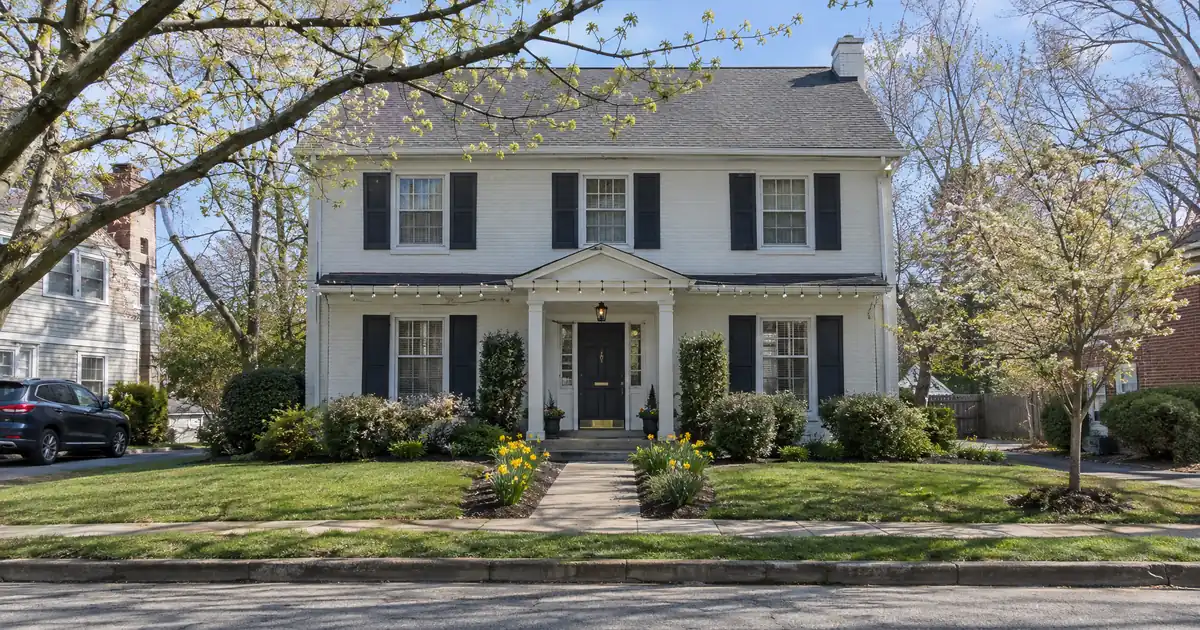
Picture a first-time landlord with one clean single-family rental in mind. Two doors are open. One is a well-known retail lender with a single underwriting desk. The other is a broker who can place the file with several non-QM investors. Both can be right. This piece breaks down the difference so the choice follows the file, not the brand.
DSCR Calculator
Run the numbers in your market
Rate source: Freddie Mac 30-yr average via FRED® — Federal Reserve Bank of St. Louis · effective Oct 15, 2026
Prefilled with starting assumptions — enter your own rent or nightly figures, taxes, insurance, and HOA for a more accurate picture.
Program parameters update from Lendmire’s centralized guideline source. Taxes and insurance are editable estimates.
As of Oct 15, 2026 · General Freddie Mac market benchmark, not a Lendmire loan offer. Rent, nightly rate, occupancy, taxes, and insurance are editable estimates. Short-term rental figures are estimates only and vary significantly by season, property type, management approach, and local short-term-rental rules — confirm local regulations before relying on them. Qualifying income for short-term rentals varies by program — some use appraisal market rent, others use documented STR history or projections — and is confirmed in underwriting. Not a Loan Estimate, approval, or commitment to lend. Program availability and eligibility are subject to lender guidelines, credit approval, property review, and underwriting.
Who Is Each Option Really For?
A big-brand lender fits borrowers whose personal income tells a clean story and who want one point of contact. A specialist broker fits borrowers whose best asset is the property itself, or who plan to buy through an LLC or scale past the first deal.
The CFPB explains the channel difference plainly. A lender makes direct loans. A broker does not lend money and can be used to find different lenders or loans. Some institutions operate as both, so ask whether a broker is involved.
That is a channel question. Whether the loan is DSCR or conventional is a product question. Most confusion comes from mixing the two. Decide the product first, then the channel. Lendmire’s complete DSCR loans guide covers the product side in full.
Side-by-Side
The left column reflects how Lendmire’s wholesale network places DSCR files. The right column reflects published industry norms for large retail lenders, which vary by institution.
| Factor | Specialist DSCR Broker | Big-Brand Lender (industry norms) |
|---|---|---|
| Review basis | Property rent vs. PITIA | Often borrower income and DTI |
| Personal income docs | Typically not the focus | Commonly required |
| Credit | 620 floor in parts of network; ~660 common | Varies by product and institution |
| Purchase leverage | Most files 75%-80% LTV | Varies by product |
| Entity vesting | LLC vesting common, per program terms | Often a personal borrower |
| Lender access | Several lenders, one file | One guideline set |
| Reserves | Commonly ~6 months PITIA; varies | Varies by product |
| Timeline | Depends on file and lender | Depends on file and lender |
Read the last row as a wash. Appraisal access, insurance quotes, and title work drive timing in either channel, not the brand on the door.
When a Specialist DSCR Broker Is the Better Fit
The broker channel wins when the file does not fit a single institution’s box. Four situations come up most.
The income story is messy. Heavy write-offs, self-employment, or several entities make personal income hard to present. DSCR qualifies primarily on property-level rental income covering the payment, subject to lender guidelines. Credit and reserves still get reviewed. The property qualifies more than the person does.
The plan is an LLC purchase. Many DSCR programs lend to entities, subject to program terms, and conventional financing generally centers on a personal borrower. Entity documents, operating agreement, and vesting questions are easier to route when the network has options.
The plan is more than one rental. A property-based product lets the investor keep scaling without personal income as the binding constraint. A broker sees many lenders’ guidelines at once, so a quirk in one program, like a property type or a first-time restriction, can be routed around.
The deal is nonstandard on terms. The spine of the network is the 30-year fixed. Extended terms and interest-only periods are available through select lenders, and ARM structures exist for investors who want them. Loan sizes run up to $3,000,000 on standard programs, and above $2,500,000 the network generally holds to 30-year fixed structures. Short-term rental files are also placed here: purchase to 75% LTV, cash-out around 70%, with a 640+ score and about 12 months of hosting history expected.
The broker’s limits matter too. A broker works inside upstream guidelines and cannot rewrite them. Quality varies. A generalist who “also does investment loans” is not the same as a DSCR specialist, so ask how many DSCR files the shop places and how the broker is paid. Compensation structures differ, and the question is fair to ask before committing.
When a Big-Brand Lender Is the Better Fit
A big-brand lender wins when the borrower qualifies cleanly on income and values a single relationship.
The borrower has traditional employment income and a simple file. A first-time landlord with steady, documented income often qualifies conventionally. If the numbers work and the paperwork is easy to produce, a conventional loan may be the more natural product. The DSCR vs. conventional comparison lays out the tradeoffs.
The borrower wants one familiar name. A nervous first-timer may value a known brand, an existing banking relationship, and one desk handling everything. That comfort is real, and servicing continuity can matter after the loan funds.
The property will be owner-occupied. If the buyer plans to move in, DSCR does not fit. DSCR loans are designed for non-owner-occupied investment properties. Because they are business-purpose investor loans, they are reviewed differently from a standard owner-occupied mortgage. The CFPB’s Truth in Lending exam manual treats credit to acquire rental property that is not owner-occupied as business-purpose credit. Loan purpose and occupancy decide the classification, so a buyer who intends to live in the home belongs in a different product.
The big brand has limits as well. It runs one set of guidelines. If the file trips an overlay, there is no second program to try. And not every large lender offers a DSCR product at all.
What the Ratio Does and Does Not Prove
Both channels use the same arithmetic when DSCR is the product: monthly rent divided by PITIA, meaning principal, interest, taxes, insurance, and association dues. On most files 1.00 is where select programs start. Stronger ratios open better leverage and terms. A separate select-lender path takes coverage below 1.00, with leverage and terms adjusted. No-ratio structures are available only through select lenders, generally for borrowers who already own a primary residence.
Clearing the ratio does not mean positive cash flow. Repairs, vacancy, management, utilities, and capex sit outside the calculation. A first-time landlord who treats 1.00 as profit will be surprised in year one.
A larger down payment lowers the payment and can lift the ratio. It does not erase leverage caps, credit floors, reserve rules, or property eligibility. The strongest files clear both tests: enough equity and enough rental coverage.
First-Time Landlord Scenarios
Run the numbers on common profiles. Each reads as a lean, not a rule.
| Scenario | Lean | Why |
|---|---|---|
| W-2 buyer, clean single-family rental, personal name | Either | Conventional may fit; DSCR adds entity flexibility |
| Self-employed buyer, heavy write-offs | Broker | Property income carries the file |
| LLC purchase, plan to add doors | Broker | Entity vesting, multiple programs |
| Buyer plans to live in the property | Big-brand | DSCR is for non-owner-occupied |
| Light-repair fixer-upper | Depends | Properties generally need to be rent-ready |
On the first-time question itself, DSCR is generally available to first-time investors, but policy varies by investor. This is where a broker’s network earns its place. Whether a file fits depends on investor-level rules, and a broker can check several at once. A big-brand lender gives one answer.
A Practical Vetting Checklist
Ask either channel the same questions.
1. How many investment-property files do you place or fund each month, and how many are DSCR?
2. Which property types and entity structures do the programs accept?
3. What leverage and credit tiers apply to a first-time owner on this property?
4. What reserves are expected, and how are they documented?
5. How are you paid, and is that disclosed up front?
6. Who handles document collection, and who do I call when the appraisal or insurance quote stalls?
Typical DSCR files include ID, entity documents if applicable, a lease or rent schedule, insurance, bank statements for reserves, and an appraisal with a rent schedule. They typically skip traditional personal-income documentation, W-2s, and pay stubs. Clean documents give any reviewer fewer preventable gaps.
Lendmire’s piece Broker vs Bank Investment Property HELOC for a First-Time Landlord covers adjacent questions without repeating this comparison.
DSCR vs. conventional financing
There are two common ways to finance an investment property, and they qualify you differently — here’s how investors weigh them.
Why investors choose it
- Qualifies on the property’s rental income — no personal tax returns, W-2s, or pay stubs needed to document income.
- No personal debt-to-income ceiling to clear, so existing mortgages and obligations don’t cap your borrowing the same way.
- Can be closed in an LLC, keeping the property inside a business entity.
- Built for scaling — not held to the limit on number of financed properties that conventional financing applies.
- Underwriting centers on the deal: generally qualifies when the rent covers the payment, a 1.00x coverage ratio being a common baseline (confirmed in underwriting).
- Designed specifically for investment property, including long-term and, where the program allows, short-term rentals.
Where it’s strong
- Often the lowest ongoing financing cost for a buyer who fully qualifies on personal income — a fit for a first property or a cost-first purchase.
Trade-offs for investors
- Requires full personal income documentation and must fit within a debt-to-income limit — salary, existing debts, and other mortgages all count.
- Typically held in your personal name rather than a business entity.
- Caps how many financed properties you can carry, which can become a ceiling as a portfolio grows.
- Evaluates you as a borrower as much as the property, which usually means more paperwork.
How investors usually choose: a first or single property often optimizes for the lowest financing cost; portfolio builders often optimize for leverage, vesting in an LLC, and scaling past conventional caps. The right answer depends on your goals, the property, and current guidelines — both paths run through select lenders in Lendmire’s wholesale network, with eligibility and terms confirmed in underwriting.
The Balanced Verdict
Choose the big-brand lender when personal income is clean, the property will be a conventional rental in your own name, and a single trusted relationship matters more than options. Choose the specialist broker when the property is the strongest part of the file, the entity matters, or the plan is to scale. Whichever door you pick, shop around, compare like for like, and get insurance and rent evidence early.
Tax treatment can depend on how the funds are used and how the property is held; investors should keep clear records and speak with a qualified tax professional before relying on any deduction.
If you are buying or refinancing a rental property and want to see how the numbers work, Lendmire can help you compare DSCR loan options based on the property income, credit profile, leverage, and investor goals. Lendmire is a mortgage broker arranging financing through select lenders in its wholesale network across 41 markets, including Washington, D.C. Programs change and every file is underwritten individually. This is not a commitment to lend.
Key Terms Defined
Broker: a professional who does not lend money and can place a file with different lenders.
Direct lender: an institution that originates and funds loans in-house under one guideline set.
PITIA: principal, interest, taxes, insurance, and association dues, the payment side of the ratio.
DSCR: monthly rental income divided by PITIA.
Reserves: liquid funds held after closing, commonly around 6 months of PITIA, varying by lender and loan.
Frequently Asked Questions
Is a broker cheaper than a big-brand lender?
Neither channel is cheaper by default, and pricing is outside this comparison. Brokers are compensated per loan, so ask how yours is paid. Compare offers like for like and use the calculator for an illustrative estimate.
Can a first-time landlord get a DSCR loan?
Generally yes, though policy varies by investor. A few lenders restrict first-time owners, often through lower leverage or a higher credit minimum. A broker can check which programs in the network accept the file.
Do DSCR loans require personal income documents?
Typically not. The loan is reviewed primarily on property-level rental income covering the payment, subject to lender guidelines. Credit, reserves, equity, and an appraisal with a rent schedule still apply.
Can I buy through an LLC?
Many DSCR programs lend to entities, subject to program terms. Expect entity documents, and ask each lender whether a personal guaranty is required. Conventional loans generally center on a personal borrower.
What property types are off the table?
Manufactured homes (single- and double-wide), log homes, and barndominiums are not offered in the network’s DSCR programs. Properties should generally be rent-ready investment properties.
About Lendmire
A DSCR-focused mortgage broker, Lendmire (NMLS# 2371349) places investor financing across 41 markets — 40 states plus Washington, D.C. — with DSCR eligibility generally reviewed by the lender on property cash flow instead of tax returns, subject to lender guidelines. Scotsman Guide named Lendmire a Top Mortgage Workplace in 2025 and 2026.
Get Started
Ready to find the right loan for you?
In about 30 seconds you can review financing options available for your investment property. No commitment required.
Informational only. Not a Loan Estimate, approval, or commitment to lend. Program availability and eligibility are subject to lender guidelines, credit approval, property review, and underwriting.
References
1. CFPB – What is the difference between a mortgage lender and a mortgage broker?
2. CFPB – Truth in Lending Act examination manual
This article is part of Lendmire’s DSCR loan program — full qualification details, guidelines, and scenarios live on the program page.
Related reading: Rental HELOC Variable Terms Behind a DSCR First Lien · How Much Cash Flow a $50K Cash-Out Costs a First-Time Equity Investor · How to Choose a DSCR Lender That Actually Closes
Brandon Miller
Founder & CEO, Mortgage Loan Originator, Lendmire LLC
- Mortgage Loan Originator · NMLS# 1129696 · Verify on NMLS Consumer Access
- North Carolina Real Estate Broker · License# 343312 · Verify on NCREC
- North Carolina Insurance Producer · License# 19053198 · Property, Casualty, Life, Health · Verify on NAIC SBS
- Lendmire LLC · Firm NMLS# 2371349 · Verify firm licensure
Important disclosures. Lendmire (NMLS# 2371349) is a licensed mortgage brokerage. Lendmire is not a direct lender, depository institution, or financial advisor. All loan inquiries are subject to lender underwriting; this article does not constitute a commitment to lend. Rates, terms, and program guidelines are subject to change without notice and vary by borrower profile, property type, and state. Information in this article is general in nature and is not financial, legal, or tax advice. Equal Housing Opportunity. NMLS Consumer Access: nmlsconsumeraccess.org.