
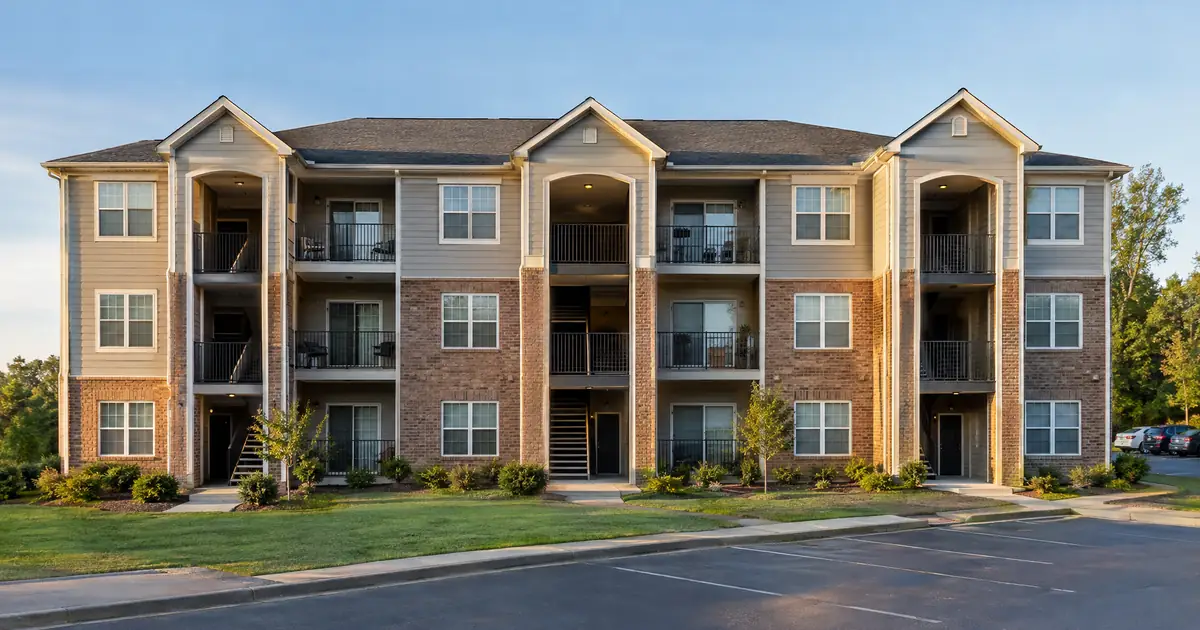
The Quick Read: A duplex, triplex or fourplex is usually underwritten as residential collateral, where the rent from all units is measured against the full housing payment, while a building with five or more units typically shifts to income-based commercial-style review of net operating income, a fuller document package, and a smaller pool of lenders.
- On a 2-4 unit investment-property purchase, most files across the wholesale network land at 75%-80% LTV, subject to lender guidelines.
- On a cash-out refinance of an investment property, the ceiling is around 75% LTV, and about 6 months of seasoning is the common expectation.
- At five units, qualifying income usually stops being gross rent and becomes net operating income, so expenses and vacancy start to drive the answer.
- Some programs stretch residential-style underwriting to 5-8 units, but availability varies by program and by file.
- Clearing 1.00x coverage is not the same as positive cash flow at any unit count.
The honest answer to “which one is for me” starts with your experience and your building. A 2-4 unit DSCR loan suits the investor who wants residential-style underwriting, a simple document package, and a wide lender pool. A larger multifamily loan suits the investor buying a stabilized building with a documented operating history, who is comfortable being judged on the building’s net income. The jump from four units to five changes the review basis, the appraisal, the paperwork, and often the loan structure all at once. Lendmire is a broker that arranges financing through select lenders in its wholesale network, across 41 markets including Washington, D.C. Its complete DSCR loans guide covers the basics this comparison builds on.
DSCR Calculator
Run the numbers in your market
Rate source: Freddie Mac 30-yr average via FRED® — Federal Reserve Bank of St. Louis · effective Oct 15, 2026
Prefilled with starting assumptions — enter your own rent or nightly figures, taxes, insurance, and HOA for a more accurate picture.
Program parameters update from Lendmire’s centralized guideline source. Taxes and insurance are editable estimates.
As of Oct 15, 2026 · General Freddie Mac market benchmark, not a Lendmire loan offer. Rent, nightly rate, occupancy, taxes, and insurance are editable estimates. Short-term rental figures are estimates only and vary significantly by season, property type, management approach, and local short-term-rental rules — confirm local regulations before relying on them. Qualifying income for short-term rentals varies by program — some use appraisal market rent, others use documented STR history or projections — and is confirmed in underwriting. Not a Loan Estimate, approval, or commitment to lend. Program availability and eligibility are subject to lender guidelines, credit approval, property review, and underwriting.
Side-by-Side
The table below sets the 2-4 unit path, as the network’s lenders review it, against published industry norms for 5+ unit buildings. The right-hand column describes how larger buildings are commonly handled in the market. It is not a statement about any one program. Pricing is left out on purpose, since it lives in the calculator.
| Factor | 2-4 Units (network) | 5+ Units (industry norms) |
|---|---|---|
| Review basis | Gross rent vs. PITIA | NOI vs. debt service |
| Appraisal | Residential; comps lead | Income approach; narrative report |
| Documentation | Leases or rent schedule, credit, entity papers | Rent roll, operating statements, leases |
| Entity vesting | LLC common, subject to program | Entities common; guarantees often asked |
| Reserves | Commonly about 6 months PITIA; varies | Often higher; set by lender and deal |
| Added steps | Fewer third-party reports | More reports, review and diligence |
Two rows deserve a closer look. On the qualification row, PITIA is principal, interest, taxes, insurance and any HOA dues. NOI is effective gross income less operating expenses, before debt service. Those are different yardsticks, and the same building can score noticeably differently on each.
The reserves row also varies more than any other. Reserves depend on the lender, the leverage, the loan size, and the type of transaction. On the network side they commonly run about 6 months of PITIA. Conservative rate-and-term files at modest leverage under $1,500,000 can see reserves waived, and loans above that size typically step up to about 9 months.
Same Building, Two Formulas
Run the numbers on one hypothetical fourplex to see why the formula matters. These inputs are modeled assumptions, not market data, and they are shown as ratios only.
Assume all four units are leased and the gross rent covers the full PITIA at roughly 1.25x. That is how a residential-style DSCR file reads. Rent is compared with the housing payment, and the building’s operating costs stay outside the calculation.
Now apply a net-income formula. A lender first haircuts the rent for vacancy. It then subtracts operating expenses such as management, repairs, utilities and reserves for replacement, and compares what remains with debt service. On the same modeled building, coverage could fall into the low-1.1 range or lower. Nothing about the property changed. The yardstick did.
This is also why your own coverage math often differs from a lender’s. A borrower divides rent by the payment, and a lender may be dividing something else.
Vacancy sensitivity works differently by size, too. Losing one tenant in a duplex removes half the income. In a fourplex it removes a quarter. In a 20-unit building it removes a twentieth, but the larger building carries more expense that does not shrink when units sit empty.
The coverage ratio never measures positive cash flow. DSCR compares rent to PITIA only. Repairs, vacancy, management, utilities and capital expenses all sit outside it. A 1.30x file on a tired fourplex can still cost the owner money every month.
On the network side, 1.00x is where select programs start, and stronger ratios open better pricing and leverage. A separate select-lender path takes coverage below 1.00 with leverage and terms adjusted. These are different paths, not one program whose floor moves.
When a 2-4 Unit DSCR Loan Is the Better Fit
Choose the 2-4 unit path if you want the simplest, best-understood file. That fits first-time multifamily buyers, self-employed investors, and LLC-held portfolio builders.
The qualification story is compact. The loan is reviewed primarily on property-level rental income covering the payment, subject to lender guidelines. Credit still matters. A 620 floor exists in parts of the network, most programs want around 660, and 700 or higher unlocks the strongest leverage tiers.
Leverage is where most investors compare options. On an investment-property purchase, most files land at 75%-80% LTV, which means 20%-25% down. Select high-leverage programs reach 85% LTV on a purchase, generally with a score near 700 or better. For a deeper look at how tiers change leverage on small multifamily collateral, see Lendmire’s explainer Standard vs Top-Tier DSCR Cash-Out LTV on a 2-4 Unit Property.
The structure options are broad as well. The 30-year fixed is the spine of the network. Extended terms such as 40-year and interest-only periods are available through select lenders, and ARM structures exist for investors who want them. Standard programs run up to roughly $3,000,000, and above $2,500,000 the network generally holds to 30-year fixed structures.
Appraisal is also more predictable. Appraisal educators at Appraisals Unlimited describe the sales-comparison approach as carrying most of the weight on small residential income properties. That tends to make value easier to estimate before you make an offer.
One practitioner-level pattern is worth knowing. On 2-4 unit files, the delays usually come from rent evidence rather than credit. A unit that is vacant, below market, or leased month to month leaves the lender relying on the appraiser’s rent schedule. Investors who gather leases and a clear rent history for each unit up front tend to have smoother reviews.
The flip point is simple. If the building has five or more units, or if you want to scale into one bigger asset, the 2-4 unit lane runs out. It also runs out if the purchase is really an owner-occupied house hack, where a different loan type usually fits first.
When a Larger Multifamily Loan Is the Better Fit
Choose the larger-building path when the asset itself is the story. That means a stabilized building with real operating history, an owner who can document it, and an investor who wants one asset to carry more weight.
Several features of that path favor it in the right hands:
- Value follows income. Lenders and appraisers price the building on what it earns, so effective management and expense control show up in value. AppraiserPoint notes that buildings of five or more units move to commercial-style appraisal reporting, and that some states require a Certified General appraiser.
- Scale per transaction. One closing, one set of reviews, and one asset replace several separate 2-4 unit deals.
- Operating upside is rewarded. If you can raise rents or trim expenses, net-income underwriting credits the improvement rather than ignoring it.
The costs are real. Multifamily-USA describes typical commercial diligence for larger buildings as an operating history, rent roll, and sometimes environmental or property-condition reports. Loan structures often differ too. Balloon maturities and personal guarantees are common in commercial lending even when an LLC is the borrower, though structures vary widely. A newly acquired or heavily vacant building is harder to qualify, because there is little operating history to underwrite.
There is a middle path. Some non-QM programs stretch residential-style DSCR logic to 5-8 units. Whether a particular building fits depends on the program, the lender, and the file, so the practical step is to ask a broker which lenders in the network review it.
The flip point cuts the other way. If you lack operating documentation, or you are still learning the asset class, the extra complexity can cost more than the scale gains. Four units with a clean file often beats five units with a messy one.
Where the Five-Unit Line Comes From (and Where It Blurs)
The five-unit line is a classification line, not a DSCR rule. Federal mortgage-reporting rules define a multifamily dwelling as one with five or more individual units, per the Regulation C text on eCFR. Lenders tend to mirror that line when they sort loans into residential and commercial treatment.
Several edge cases blur it:
- Owner-occupancy. DSCR loans are designed for non-owner-occupied investment properties. Because they are business-purpose investor loans, they are reviewed differently from a standard owner-occupied mortgage. The Regulation Z provisions at the CFPB deem credit for non-owner-occupied rentals business-purpose, but the presumption weakens if the owner expects to occupy the property for more than 14 days in the coming year. A fourplex you plan to live in is therefore a different conversation.
- Mixed-use buildings. Programs differ on how much commercial space they allow, and the answer is set program by program.
- Scattered portfolios. Five houses under one blanket loan are not the same as one five-unit building. How a lender treats them is its own program decision.
- Condo and short-term rental use. Both can change eligibility and leverage. Short-term rentals, for example, run lower leverage than long-term rentals.
- Entity vesting. Holding title in an LLC is common on both sides of the line, subject to lender program eligibility.
Some property types are outside the network’s DSCR programs entirely. Manufactured homes (single- and double-wide), log homes and barndominiums are not offered, whatever the unit count.
DSCR vs. conventional financing
There are two common ways to finance an investment property, and they qualify you differently — here’s how investors weigh them.
Why investors choose it
- Qualifies on the property’s rental income — no personal tax returns, W-2s, or pay stubs needed to document income.
- No personal debt-to-income ceiling to clear, so existing mortgages and obligations don’t cap your borrowing the same way.
- Can be closed in an LLC, keeping the property inside a business entity.
- Built for scaling — not held to the limit on number of financed properties that conventional financing applies.
- Underwriting centers on the deal: generally qualifies when the rent covers the payment, a 1.00x coverage ratio being a common baseline (confirmed in underwriting).
- Designed specifically for investment property, including long-term and, where the program allows, short-term rentals.
Where it’s strong
- Often the lowest ongoing financing cost for a buyer who fully qualifies on personal income — a fit for a first property or a cost-first purchase.
Trade-offs for investors
- Requires full personal income documentation and must fit within a debt-to-income limit — salary, existing debts, and other mortgages all count.
- Typically held in your personal name rather than a business entity.
- Caps how many financed properties you can carry, which can become a ceiling as a portfolio grows.
- Evaluates you as a borrower as much as the property, which usually means more paperwork.
How investors usually choose: a first or single property often optimizes for the lowest financing cost; portfolio builders often optimize for leverage, vesting in an LLC, and scaling past conventional caps. The right answer depends on your goals, the property, and current guidelines — both paths run through select lenders in Lendmire’s wholesale network, with eligibility and terms confirmed in underwriting.
Key Terms Defined
PITIA: the monthly principal, interest, taxes, insurance and any association dues on the property.
Net operating income (NOI): a building’s effective rental income minus operating expenses, before any debt service.
Rent roll: a unit-by-unit schedule of tenants, lease terms and rents, which larger buildings usually must supply.
Seasoning: the length of time an owner has held a property before a cash-out refinance, commonly about 6 months on the network side.
Reserves: liquid funds a borrower must show after closing, commonly around 6 months of PITIA, though the amount varies.
The Verdict
Neither option is the better loan in the abstract. They are built for different borrowers and different buildings.
For most investors in the first several multifamily purchases, the 2-4 unit lane is the more practical choice. It has a wider lender pool, a lighter file, and an appraisal built on comparable sales. It also leaves room to scale, because each building can be its own loan.
The larger-building lane rewards experience. If you can document operating history, manage expenses, and accept a net-income test, a 5+ unit building can concentrate your capital into a single asset. The 5-8 unit programs sit between the two, and the right answer there depends on the specific file.
A larger down payment can lower the monthly obligation and lift your coverage ratio. It never erases leverage caps, credit floors, reserve rules, or property eligibility. The strongest files clear both tests, enough equity and enough rental coverage. Tax treatment can depend on how the funds are used and how the property is held; investors should keep clear records and speak with a qualified tax professional before relying on any deduction.
Frequently Asked Questions
Is a fourplex treated as residential or commercial for a DSCR loan?
A fourplex is generally treated as residential collateral. It is appraised on a residential income report, and the loan is reviewed primarily on rental income covering the payment, subject to lender guidelines. At five units, lenders commonly move to commercial-style review.
Can I live in one unit and still use a DSCR loan?
Usually not at purchase. DSCR loans are built for non-owner-occupied investment properties, so owner-occupants typically start with a different loan type. Once you move out and the building is fully rented, a DSCR refinance may become an option, subject to guidelines.
What happens if one unit is vacant on a 2-4 unit file?
A vacant unit does not automatically stop a file. Lenders commonly use the appraiser’s market-rent schedule for a unit without a lease, though treatment varies by program. A vacancy hurts most in a duplex, where one unit is half the income.
Does a five-unit building always need a commercial loan?
No, though commercial treatment is common. Some programs review 5-8 unit buildings with residential-style logic. Whether your building fits depends on the program and the file, so a broker can check which lenders in the network consider it.
Does a coverage ratio above 1.00x mean the property cash flows?
No. The ratio compares rent with PITIA only. Repairs, vacancy, management, utilities and capital expenses sit outside it, so a property can clear the coverage test and still run thin on actual cash flow.
Running Your Own Numbers
If you are buying or refinancing a rental property and want to see how the numbers work, Lendmire can help you compare DSCR loan options based on the property income, credit profile, leverage, and investor goals. Reach the team at 828-256-2183 or request a quote. Every file is reviewed individually by the lender and is not a commitment to lend.
For current guidelines and terms, see Lendmire’s DSCR loan programs page.
About Lendmire
Lendmire — NMLS# 2371349 — is a DSCR and non-QM mortgage brokerage with investor loan programs in 41 markets, including Washington, D.C. DSCR eligibility is commonly reviewed by the lender around property-level rent rather than personal income documentation, subject to lender guidelines, and the brokerage helps arrange financing for LLC-owned portfolios beyond conventional financed-property limits. Recognized by Scotsman Guide as a Top Mortgage Workplace in 2025 and 2026.
Get Started
Ready to find the right loan for you?
In about 30 seconds you can review financing options available for your investment property. No commitment required.
Informational only. Not a Loan Estimate, approval, or commitment to lend. Program availability and eligibility are subject to lender guidelines, credit approval, property review, and underwriting.
References
1. Appraisals Unlimited, small investment property appraisals
2. AppraiserPoint, multi-family appraisal guide
3. Multifamily-USA, 5+ unit guide
5. CFPB, Regulation Z § 1026.3
This article is part of Lendmire’s DSCR loan program — full qualification details, guidelines, and scenarios live on the program page.
Related reading: How to Qualify for an Interest-Only DSCR Loan on 2-4 Unit Properties · How to Challenge a Low Appraisal on a DSCR Loan · How to Get Pre-Approved for a DSCR Loan Before You Make Offers
Brandon Miller
Founder & CEO, Mortgage Loan Originator, Lendmire LLC
- Mortgage Loan Originator · NMLS# 1129696 · Verify on NMLS Consumer Access
- North Carolina Real Estate Broker · License# 343312 · Verify on NCREC
- North Carolina Insurance Producer · License# 19053198 · Property, Casualty, Life, Health · Verify on NAIC SBS
- Lendmire LLC · Firm NMLS# 2371349 · Verify firm licensure
Disclosure information. Lendmire is a state-licensed mortgage brokerage under NMLS# 2371349. Lendmire is not a depository institution, direct lender, or financial advisor — all loans referenced are placed through wholesale lender partners and are subject to each lender's underwriting standards. This article is provided for general informational purposes and is not a commitment to lend, nor does it constitute financial, legal, or tax advice. Loan programs, terms, rates, and qualification standards change without notice and depend on borrower profile, property type, and the state in which the subject property is located. Equal Housing Opportunity provider. NMLS Consumer Access: nmlsconsumeraccess.org.