
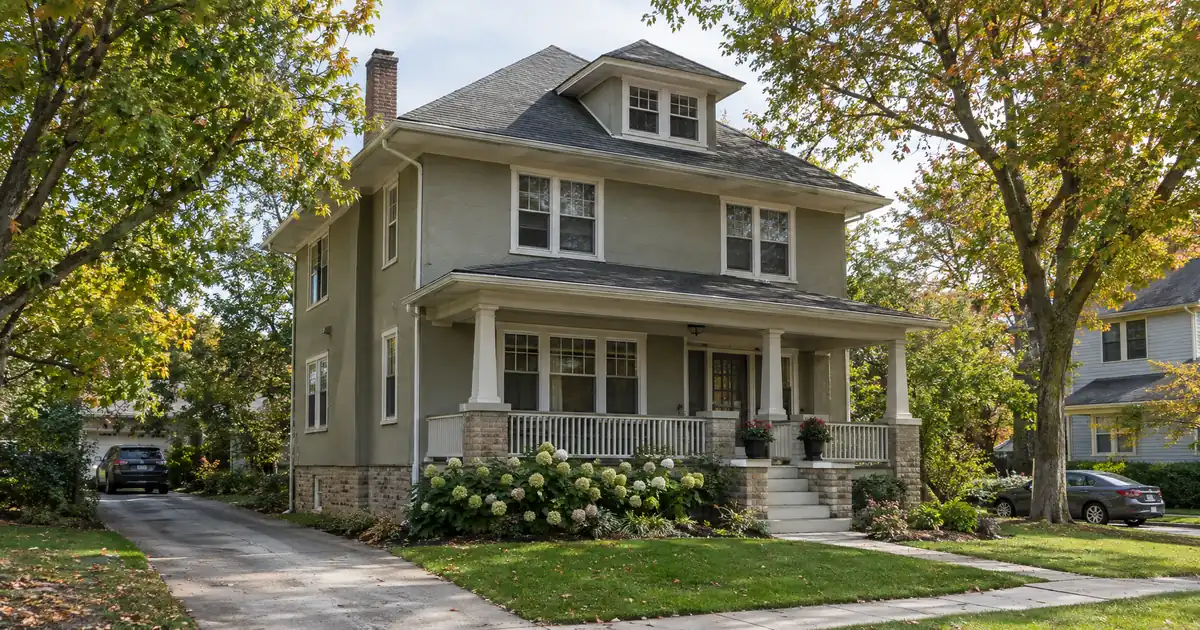
The Quick Read: A multi-LLC portfolio is not one big file. It is a shared guarantor layer plus a separate entity-and-property layer for every LLC, and each layer has to match the others exactly. Build it that way and an underwriter can review every loan without sending you back for missing pieces.
- Each LLC needs its own formation papers, EIN proof, operating agreement, and good-standing certificate.
- One guarantor package (ID, credit authorization, liquidity) usually serves the whole portfolio.
- Each property needs its own rent evidence and insurance naming the exact LLC.
- Names must match across title, note, insurance, lease, and application.
- Exact requirements vary by lender and program, so confirm the checklist early.
Most investors with several LLCs assume the paperwork multiplies out of control. It doesn’t have to. The trick is sorting documents into two buckets before anyone asks for anything. Lendmire arranges DSCR investor loans through select lenders in its wholesale network, and the files that stall almost always stall on organization, not on the deal. The same discipline applies whether the plan is a single purchase or a larger set of loans, and the complete DSCR loans guide covers the program basics this article builds on.
DSCR Calculator
Run the numbers in your market
Rate source: Freddie Mac 30-yr average via FRED® — Federal Reserve Bank of St. Louis · effective Oct 15, 2026
Prefilled with starting assumptions — enter your own rent or nightly figures, taxes, insurance, and HOA for a more accurate picture.
Program parameters update from Lendmire’s centralized guideline source. Taxes and insurance are editable estimates.
As of Oct 15, 2026 · General Freddie Mac market benchmark, not a Lendmire loan offer. Rent, nightly rate, occupancy, taxes, and insurance are editable estimates. Short-term rental figures are estimates only and vary significantly by season, property type, management approach, and local short-term-rental rules — confirm local regulations before relying on them. Qualifying income for short-term rentals varies by program — some use appraisal market rent, others use documented STR history or projections — and is confirmed in underwriting. Not a Loan Estimate, approval, or commitment to lend. Program availability and eligibility are subject to lender guidelines, credit approval, property review, and underwriting.
How Does a Multi-LLC File Actually Work?
Each loan is reviewed on its own property’s rent against its own housing payment. The coverage ratio is monthly rent divided by principal, interest, taxes, insurance, and any HOA dues. A loan is reviewed primarily on property-level rental income covering the payment, subject to lender guidelines. Your traditional personal-income documentation is not the center of the file.
That means a portfolio of five LLCs holding five rentals generally becomes five loans, each with its own entity package and property package. They share one thing: the person guaranteeing them.
Here is the catch. A guarantor is personally liable if a LLC’s assets fall short, so the LLC shield does not wall off debt you personally signed for. A portfolio of single-property LLCs protects you from property-level claims, like a tenant injury. It does not silo the loans themselves.
Separate Loans, Blanket Loan, or Parent Borrower?
Most multi-LLC investors start with separate loans, because each property sits on its own lien and any single sale stays simple. A blanket structure pools several properties under one note and tests a blended coverage ratio. That can let strong properties carry weak ones, at the price of cross-collateralization, where one default can reach every property.
| Structure | How it works | Main tradeoff |
|---|---|---|
| Separate loans | One note per LLC and property | More packets to assemble |
| Blanket loan | Several properties secure one note | Cross-collateralization risk |
| Parent borrower | A holding entity borrows for the group | Needs a program-specific check |
Not every pool works for every portfolio. LLCs with different owners or different lenders can’t simply be combined, and release terms (how a property leaves the pool later) are negotiated lender by lender. Lendmire’s piece Can a Portfolio LLC Investor Cash Out Multiple Rentals at Once? goes deeper on the refinance side.
The File Architecture: Shared Layer, Entity Layer, Property Layer
Think of the file as three folders.
Shared layer (once for the whole portfolio):
- Guarantor government ID and credit authorization.
- Liquidity and reserve evidence.
- A one-page portfolio summary listing every entity, its properties, total debt, and aggregate coverage.
- An ownership-chain schedule showing each LLC, its members, and percentages.
Entity layer (one per LLC):
- Articles of organization.
- Operating agreement.
- EIN confirmation.
- Current certificate of good standing.
Property layer (one per property):
- Executed lease or an appraiser’s market-rent opinion.
- Insurance naming the LLC.
- Tax and any HOA information.
- Existing mortgage statements or payoff information, if refinancing.
Label every packet by LLC and property. Keep a master index so a missing item is visible at a glance.
What Goes in Each LLC’s Entity Package?
Every LLC needs the same four core documents, and the common snags are predictable.
| Document | What it proves | Common snag |
|---|---|---|
| Articles of organization | The entity exists | Name differs from title |
| Operating agreement | Who owns it, who can sign | Silent on borrowing authority |
| EIN confirmation | The entity’s tax identity | Original notice lost |
| Good-standing certificate | The entity is current | Stale by review time |
On EIN proof, the IRS lists three ways to confirm an EIN: a digital CP575 from a Business Tax Account, a phone request for Letter 147C, or the original notice. The IRS says the original mailed CP575 cannot be duplicated, but the digital version is accepted by institutions as written confirmation. A lost letter is fixable, but order the replacement early. With several LLCs, you are gathering one for each.
Check that each operating agreement actually authorizes the LLC to borrow and names who can sign. Files stall on a few common things: mismatched names, stale good-standing certificates, and operating agreements that say nothing about borrowing.
Variations That Change the Package
- Multi-member LLCs add a member list with ownership percentages and guarantor questions. Rules on which members must guarantee differ by program.
- Series LLCs are accepted by fewer lenders than standalone LLCs. Treat one as a check-first item.
- Layered structures, where an LLC is owned by another LLC or a trust, need a program-specific check before you order anything.
- Revocable trusts are generally handled through a certification of trust, though some programs ask for the full agreement.
If your LLCs were formed in different states, ask whether good standing is needed in each one.
The Guarantor and Liquidity Package
Expect each LLC borrower to come with a personal guaranty. Signing one on an LLC mortgage works like co-signing: the lender can pursue personal assets for any deficiency after foreclosure. For a multi-LLC investor, each guaranty is its own personal obligation, and your exposure adds up across entities.
Credit matters here. A 620 floor exists in parts of our network, most programs want around 660, and 700 or higher unlocks the strongest leverage tiers. With several guarantors on one LLC, lenders commonly look at each person’s credit.
Reserves vary by lender, leverage, loan size, and transaction type. Around 6 months of PITIA is common, and loans above $1,500,000 typically step up to about 9 months. Some conservative rate-and-term files at modest leverage can see reserves waived. Keep a separate bank account per LLC. It documents rent deposits and reserves, and paying business costs from personal funds can weaken a LLC’s separateness.
The Per-Property Package
Rent evidence is the heart of each loan. That is either the executed lease or an appraiser’s market-rent opinion. The appraisal rent exhibits come from two forms: Form 1007 for one-unit properties and Form 1025 for two-to-four-unit properties. DSCR loans are not agency products.
Remember what the number measures. Clearing 1.00 means rent covers the housing payment. It is not the same as positive cash flow, because repairs, vacancy, management, utilities, and capex sit outside the calculation.
Documents shift by transaction. Purchases need a contract and proof of funds. Refinances add mortgage statements and payoff details. Cash-out files tend to top out around 75% LTV with about 6 months of seasoning common. Purchases land mostly at 75%–80% LTV, with select high-leverage programs reaching 85% at roughly a 700 score.
The Master Tracker
A simple grid does more than any checklist. Put LLCs down the side and documents across the top. Track status and expiry for each cell.
| LLC | Formation | Op. Agreement | EIN proof | Good standing | Lease/rent | Insurance |
|---|---|---|---|---|---|---|
| LLC 1 | Done | Done | Done | Expires soon | Done | Done |
| LLC 2 | Done | Needs update | Ordered | Done | Done | Pending |
| LLC 3 | Done | Done | Done | Done | Market rent | Done |
Good-standing certificates are the usual item to age out mid-review. Order them last among the entity papers, and order the IRS confirmations first, since those take lead time.
A Worked Example: Three LLCs, One Guarantor
Run the numbers on a modeled portfolio. LLC A holds a single-family rental that clears roughly 1.25x. LLC B holds a duplex at about 1.10x. LLC C holds a single-family rental that sits just below 1.00x on lease rent. All three share one guarantor with a mid-700s score. These are modeled assumptions, not market data.
Each loan is reviewed separately. LLC A and LLC B each clear the 1.00 level where many select programs start, so their packets go in as standard files. LLC C needs another path. Coverage below 1.00 is available through select lenders in the network, with leverage and terms adjusted, and it is a separate path from the 1.00 programs. Whether it fits depends on lender guidelines, credit approval, and property review.
Notice what the strongest files do. They clear two tests at once: enough equity and enough rental coverage. A larger down payment can lower the payment and lift the ratio, but it never erases leverage caps, credit floors, reserve rules, or property eligibility. And if one property is a manufactured home, a log home, or a barndominium, it is not offered in these programs at all.
DSCR vs. conventional financing
There are two common ways to finance an investment property, and they qualify you differently — here’s how investors weigh them.
Why investors choose it
- Qualifies on the property’s rental income — no personal tax returns, W-2s, or pay stubs needed to document income.
- No personal debt-to-income ceiling to clear, so existing mortgages and obligations don’t cap your borrowing the same way.
- Can be closed in an LLC, keeping the property inside a business entity.
- Built for scaling — not held to the limit on number of financed properties that conventional financing applies.
- Underwriting centers on the deal: generally qualifies when the rent covers the payment, a 1.00x coverage ratio being a common baseline (confirmed in underwriting).
- Designed specifically for investment property, including long-term and, where the program allows, short-term rentals.
Where it’s strong
- Often the lowest ongoing financing cost for a buyer who fully qualifies on personal income — a fit for a first property or a cost-first purchase.
Trade-offs for investors
- Requires full personal income documentation and must fit within a debt-to-income limit — salary, existing debts, and other mortgages all count.
- Typically held in your personal name rather than a business entity.
- Caps how many financed properties you can carry, which can become a ceiling as a portfolio grows.
- Evaluates you as a borrower as much as the property, which usually means more paperwork.
How investors usually choose: a first or single property often optimizes for the lowest financing cost; portfolio builders often optimize for leverage, vesting in an LLC, and scaling past conventional caps. The right answer depends on your goals, the property, and current guidelines — both paths run through select lenders in Lendmire’s wholesale network, with eligibility and terms confirmed in underwriting.
The Consistency Pass
Before submitting, reconcile every document against one reference sheet of exact legal names. Title or deed, note and mortgage, insurance policy, application, and lease should all show the same LLC name. This matters most when an investor holds similarly named entities, where a single differing word or suffix, such as “Holdings,” separates one LLC from another. One wrong suffix on an insurance binder can pend a file.
Also confirm signing capacity. Someone signs the note and security instrument for the LLC as authorized member or manager. The same person signs the guaranty separately, in a personal capacity.
On ownership disclosure, U.S.-formed companies are currently exempt from beneficial ownership reporting. A BOI filing receipt is no longer a standard item for U.S.-formed LLCs. A lender may still ask who owns each entity, which is why the ownership-chain schedule belongs in the shared layer.
Where the General Rule Breaks
- Exposure limits. Some lenders limit total exposure per entity or per borrower, and a separate LLC is generally a distinct borrower. The guarantor’s personal liability still aggregates, so a structure built only to dodge a cap may get caught at the guarantor level. Ask each lender how it counts exposure.
- Existing debt. Properties staying outside any pool still show up in the guarantor’s picture. Include their statements in the summary.
- Non-recourse expectations. Do not assume an LLC makes the loan non-recourse. For most DSCR files it does not.
- Large balances. Standard programs run up to $3,000,000, and above $2,500,000 the network generally holds to 30-year fixed structures.
- Cash-out across entities. Lendmire’s article Can Rentals in LLCs Leave a Portfolio Loan Through Cash-Out Refinances? covers that decision.
Tax treatment can depend on how the funds are used and how the property is held; investors should keep clear records and speak with a qualified tax professional before relying on any deduction.
Key Terms Defined
Guarantor: the person who personally promises to repay the loan if the LLC cannot.
Good-standing certificate: a state document showing the LLC is current and in legal existence.
Cross-collateralization: a structure where several properties secure one loan, so default on one can reach all of them.
Operating agreement: the LLC’s governing document, which sets ownership and who may sign.
Release provision: a loan term that sets the price and process for removing one property from a pooled loan.
Frequently Asked Questions
Can multiple LLCs share one DSCR loan?
Sometimes. Blanket and parent-borrower structures exist, but which entities can join one pool is program-specific, and LLCs with different owners or different lenders often can’t be combined. Separate loans remain the simpler default for most multi-LLC investors.
Do I need a separate good-standing certificate for each LLC?
Yes, one per entity, and it should be current when the file is reviewed. If an LLC was formed in one state but operates in another, ask the lender whether good standing is needed in both.
What if I lost an LLC’s EIN letter?
It is fixable. The IRS offers a digital CP575 and a phone request for Letter 147C, and institutions accept the digital version. Request these early, since the original mailed notice cannot be reissued.
Does an LLC keep my personal assets out of the loan?
Not for a loan you personally guaranteed. The guaranty makes you liable if the LLC’s assets fall short, and that exposure adds up across every loan you sign.
Can one property stay outside the pool?
Generally yes. Only the properties on a given loan are tested together. Still, include its mortgage statement in your portfolio summary so the lender sees your full obligations.
If you are buying or refinancing a rental property and want to see how the numbers work, Lendmire can help you compare DSCR loan options based on the property income, credit profile, leverage, and investor goals. Program details change and every file is underwritten individually, subject to lender guidelines and not a commitment to lend. Reach the team at 828-256-2183.
About Lendmire
Lendmire (NMLS# 2371349) is a DSCR-focused mortgage broker that helps arrange investor financing across 41 markets, including Washington, D.C., through wholesale and investor-lending channels. DSCR eligibility is generally reviewed by the lender around the property’s rental income rather than personal income documentation, subject to lender guidelines — which works for self-employed investors, LLC operators, and portfolios above four financed properties. Scotsman Guide named Lendmire a Top Mortgage Workplace in both 2025 and 2026.
Get Started
Ready to find the right loan for you?
In about 30 seconds you can review financing options available for your investment property. No commitment required.
Informational only. Not a Loan Estimate, approval, or commitment to lend. Program availability and eligibility are subject to lender guidelines, credit approval, property review, and underwriting.
References
1. IRS – Employer Identification Number
2. IRS – Understanding Your CP575 Notice
This article is part of Lendmire’s DSCR loan program — full qualification details, guidelines, and scenarios live on the program page.
Related reading: How Much You Can Borrow for a DSCR Loan on Multifamily 5+ Properties? · How to Get a DSCR Loan From Application to Closing · How to Compare DSCR Loan Quotes From Three Lenders
Brandon Miller
Founder & CEO, Mortgage Loan Originator, Lendmire LLC
- Mortgage Loan Originator · NMLS# 1129696 · Verify on NMLS Consumer Access
- North Carolina Real Estate Broker · License# 343312 · Verify on NCREC
- North Carolina Insurance Producer · License# 19053198 · Property, Casualty, Life, Health · Verify on NAIC SBS
- Lendmire LLC · Firm NMLS# 2371349 · Verify firm licensure
Disclosure information. Lendmire is a state-licensed mortgage brokerage under NMLS# 2371349. Lendmire is not a depository institution, direct lender, or financial advisor — all loans referenced are placed through wholesale lender partners and are subject to each lender's underwriting standards. This article is provided for general informational purposes and is not a commitment to lend, nor does it constitute financial, legal, or tax advice. Loan programs, terms, rates, and qualification standards change without notice and depend on borrower profile, property type, and the state in which the subject property is located. Equal Housing Opportunity provider. NMLS Consumer Access: nmlsconsumeraccess.org.