
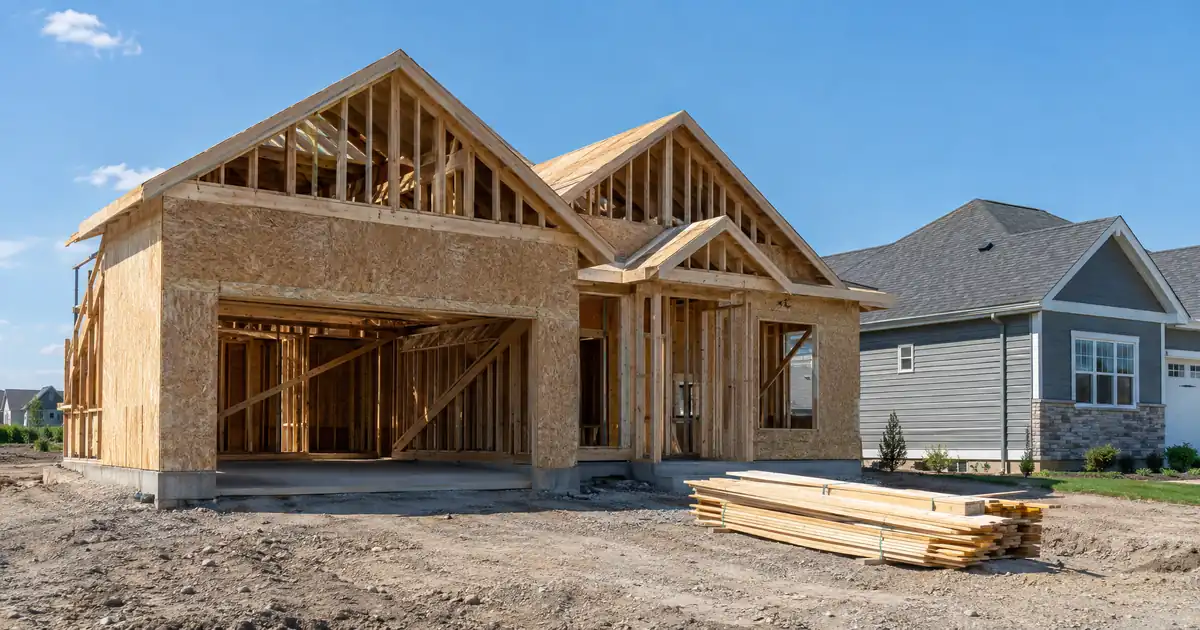
The Quick Read: Selling without an agent got harder this month. As of September 28, 2026, resale supply sits at its highest reading in over ten years, and Freddie Mac’s weekly survey shows mortgage rates back above 7%. Builders are pairing price cuts with financing incentives. You can still sell on your own, but you are now pricing against motivated competition, not a shortage.
A year or two ago, the question was simple: can a homeowner skip the agent and still get a good result? In a thin market, plenty did. Buyers fought over scarce listings, and a sign in the yard did a lot of the work. That market has cooled. I’ve been in lending eighteen years, and I read the supply number before I read the rate number. Supply tells you who holds the pen in a negotiation. Right now, the buyer does.
Key takeaways:
- Existing-home supply rose to 4.9 months in August, the highest level in over ten years, per NAR’s September 10 report.
- Freddie Mac’s 30-year average crossed 7% for the week of September 24, its first reading above that line since January 2025.
- Builders are the real rival for an owner-seller. Most are offering incentives such as rate buydowns, not just lower prices.
- Prices have not cracked. The national median existing-home price is still up year over year.
- The owner-sellers who do well this fall will price off closed sales and put a concession on the table before the buyer asks.
What Changed in September?
Three things moved at once in September 2026. Mortgage rates climbed back above 7%, the Fed raised its target range for the first time since 2023, and resale inventory hit a multi-year high. Each one alone would shift leverage toward buyers. Together, they turn a for-sale-by-owner listing into a harder sell.
Start with rates. Freddie Mac’s Primary Mortgage Market Survey put the 30-year fixed at 7.03% for the week of September 24, 2026, up from 6.95% the week before. That is a jump of 8 basis points in a single week. A basis point is one-hundredth of a percentage point. Year over year, the rate is 73 basis points higher. Freddie Mac’s 15-year average moved even more, rising to 6.42% from 6.26%.
The trend matters as much as the level. This was the fourth straight weekly rise. NPR reported on September 24 that the Freddie figure had climbed back to a level not seen since January 2025, after rates had slid sharply by the end of February. That spring dip did not last. NPR tied the reversal to the war with Iran and bond-market volatility.
The Mortgage Bankers Association sees the same climb. A published survey released September 23 showed its 30-year contract rate at 7.12%, up from 6.97%. For the week ending August 28, that same MBA rate stood at 6.79%. That’s 33 basis points in three readings.
Then came the Fed. The Federal Reserve’s FOMC statement on September 16 raised the target range a quarter point, to 3-3/4 to 4 percent, on a 12–0 vote. CNBC called it the first increase since 2023.
Here’s the catch. The Fed does not set mortgage rates. Mortgage rates track long-term bond yields, and those are the real story. CNBC reported the 10-year Treasury yield at 5.163% on Friday, September 25, a day after it touched its highest level since June 2007. When the 10-year runs like that, mortgage rates follow.
One more wrinkle on timing. Freddie Mac’s weekly number averages the days before its release, so it lags the daily market. Mortgage News Daily’s daily index first broke 7% on September 10. The weekly headline caught up later. If you felt the market shift before the news said so, that’s why.
Now the housing data. NAR’s August existing-home sales release, published September 10, showed sales down 2.0% from July and 1.2% from a year earlier. The annual pace was 3.98 million. The last reading below 4.0 million was June 2025.
Inventory is where the story turns. NAR counted 1.62 million homes for sale in August, up 3.2% from July and 5.9% from a year earlier. It was the first time since November 2019 that inventory topped 1.6 million.
Months of supply rose to 4.9, up from 4.6 in July. Months of supply is simple: how long current listings would last at the current sales pace. NAR’s chief economist called 4.9 months the highest level in over ten years. He said it gives buyers better opportunities to negotiate.
Prices, though, held up. NAR put the August median existing-home price at $429,100, up 1.6% from a year earlier. That was its 38th straight year-over-year gain. July’s median was $434,100, but those two months are not seasonally adjusted, so don’t read the drop as a trend.
Realtor.com’s August report, released September 2, adds the listing side. Its national median list price was $424,500, down 1.0% from July and 1.3% from a year earlier. List price is a different measure from NAR’s sale price, so the two figures won’t match. Per Realtor.com’s August housing report, 20.4% of active listings carried a price reduction. Pending sales fell year over year for the first time since last November.
Builders round it out. The Census Bureau reported new single-family sales at a 684,000 annual pace in August. That was 6.4% above July but 2.0% below August 2025. New homes for sale stood at 483,000, or 8.5 months of supply.
| Measure (August 2026) | New homes | Existing homes (NAR) |
|---|---|---|
| Annual sales pace | 684,000 | 3.98 million |
| Change vs. a year ago | Down 2.0% | Down 1.2% |
| Homes for sale | 483,000 | 1.62 million |
| Months of supply | 8.5 | 4.9 |
Look at that last row. Builders are sitting on far more supply than resale sellers. They have every reason to deal.
Who Is the FSBO Seller Actually Up Against?
The owner-seller’s toughest rival this fall is the builder down the road. New-home supply sits at 8.5 months, and builders are offering financing incentives that reshape what a buyer can afford. A solo seller competes less against the builder’s sticker price and more against the builder’s financing package.
The National Association of Home Builders’ September index tells the story. Per NAHB’s September release, builder confidence fell three points to 32. The average price cut held at 6% for a sixth straight month. The share of builders cutting prices rose to 38% from 35%. And 66% of builders used incentives, up from 63% in August.
Read those numbers carefully. More builders are offering incentives than cutting prices. HousingWire reported this month that builders lean on rate buydowns and closing-cost help.
A rate buydown is money paid up front to lower the buyer’s interest rate, either for the first stretch of the loan or for its full term. For a buyer facing today’s elevated borrowing costs, that is a powerful pitch. It changes the monthly math in a way a small price cut does not.
That is the gap an owner-seller has to close. A builder has a sales office, a marketing budget, and a pile of unsold homes to clear. You have one house and, likely, one mortgage to pay off.
Buyers are also thinner on the ground. A published survey released September 23 showed the unadjusted purchase index 11% below a year earlier. NAHB’s gauge of prospective-buyer traffic sat unchanged at 23. Fewer buyers, more homes, better-armed competition. Not ideal.
The refinance side is quieter still. The same MBA release put the refinance index 62% below a year earlier. That matters to sellers in a roundabout way. Buyers can’t count on refinancing into a lower rate soon, so they are more sensitive to the rate they lock on day one.
What It Means for Homeowners With Equity
Homeowners with equity still hold one real edge: prices are up year over year. The pressure is competition. With one in five listings carrying a price cut and most builders offering incentives, an overpriced owner listing will sit. Equity gives you room to negotiate. Use it before a buyer forces you to..
Here is the good news first. If you bought years ago, you likely have meaningful equity, and NAR’s data shows the national median price still rising. You are not selling into a falling market. You are selling into a slower, more crowded one.
Sellers are not panicking, either. Realtor.com’s August report showed delistings running 12.6% below last year’s pace. Owners are staying on the market rather than pulling their homes. That means your listing has company.
Now the harder part. The FSBO lane was already narrow. NAR’s 2025 Profile of Home Buyers and Sellers, reported by NAR Magazine on November 11, 2025, found FSBO sales at 5% of the total, a record low. Ninety-one percent of sellers used an agent. That is background, not this month’s data, but it frames the choice.
My point is not that you need an agent. Plenty of capable owners sell on their own. My point is that the owner-seller carries every job an agent would handle: pricing, marketing, showings, negotiation, and vetting the buyer’s financing. In a tight market, mistakes got absorbed. In a 4.9-month market, they cost you.
Equity is what gives you room. It lets you offer a concession without going underwater. It lets you accept a lower number and still walk away with a meaningful check. The owners who get hurt this fall will be the ones who priced off last spring’s memory.
My Take: 4.9 Months Is Leverage, Not a Crash
My read: this is a buyer’s negotiating market, not a collapsing one. Prices are still rising nationally, and sellers aren’t fleeing. But elevated mortgage rates and a Fed that may not be done hiking will keep buyers cautious. The owner-sellers who win will sell the financing, not just the house.
People love a clean label. “Buyer’s market.” “Crash coming.” The August data does not support either one cleanly. NAR shows a decade-high supply reading alongside a 38th straight annual price gain. Realtor.com shows falling pending sales and fewer delistings in the same month. Mixed signals. That’s the honest picture.
What I do believe is that leverage has shifted. Buyers can ask for things again: repairs, credits, a closing date that suits them. They can walk away and find another house. A seller who treats every request as an insult will lose the deal to one who doesn’t.
The rate outlook doesn’t help. Advisor Perspectives noted on September 16 that markets were pricing one more Fed hike in December. CNBC reported the same day that Fed projections point to a strong majority seeing another hike as possible this year. Long yields, not the Fed, drive mortgage rates. Still, a hawkish Fed rarely calms a bond market.
So here’s where I land, and it’s a toss-up I keep turning over. Should an owner-seller cut the price or offer a credit toward the buyer’s costs? A price cut shows up in listing searches and pulls in new eyes. A credit or a buydown helps a buyer who is short on cash or scared of the rate. My lean is the credit, because the builders have taught buyers to shop the financing. But if your home is visibly overpriced against closed sales, no credit will save it. Fix the price first.
What I’d Do Now (If I Were Selling Without an Agent)
Price off closed sales, not list prices. Demand a real pre-approval. Build a concession into your number before you list. Watch the October 13 NAR release. And decide your fallback before you need it, including whether holding the house as a rental makes more sense than selling into this market.
None of this is advice to buy or sell any specific property. It’s how I would think it through.
1. Price off what actually closed. List prices are wishes. Closed sales are facts. With 20.4% of listings carrying a price cut in Realtor.com’s August data, many asking prices in your area may already be stale. Build your number from recent closed sales, and be honest about condition.
2. Treat the buyer’s financing as part of the offer. Ask for a full pre-approval, not a quick pre-qualification. Then ask whether the buyer has locked a rate. A rate lock is the lender’s commitment to hold a rate for a set period while the loan is processed. A buyer who is floating is taking market risk, and this month the market has moved against them. If a buyer is floating, understand that their approval can shift if rates rise before they lock.
3. Know that quotes from different days don’t compare. Rates moved sharply in September. A buyer comparing a quote from early in the month with one from late in the month is not comparing like with like. If a buyer tells you their numbers “changed,” this is usually why. If a buyer likes their rate, they should lock it.
4. Build a concession in before you list. A credit toward the buyer’s closing costs or a rate buydown lets you answer the builder’s pitch. The buyer’s loan program limits how much a seller can contribute, and that limit varies by program. Confirm it with the buyer’s lender before you put a figure in the contract.
5. Watch the next data point. NAR’s existing-home sales page lists the next release for October 13, 2026. If supply rises again, your window to hold firm on price gets smaller.
6. Decide your fallback now. This is the step owners skip. If the house doesn’t sell at a number you can live with, what then? For some owners, keeping it and renting it out is the better move. A DSCR loan is reviewed mainly on the property’s rental income rather than the owner’s personal income, subject to lender guidelines. Lendmire’s loan options page carries the current program details, and our complete DSCR loans guide explains how the rent-to-debt math works. Whether it pencils depends on local rents, your costs, and the rate environment (which, as noted, isn’t cooperating). Run it honestly before you choose.
One caution on tapping equity instead of selling. With rates higher than they were in February, any new debt costs more than it did then. That doesn’t rule it out. It just means the numbers need to work on today’s cost of money, not last winter’s.
If You’re Weighing a Move This Fall
If you’re weighing a purchase or a refinance this fall, Lendmire can walk you through how the current programs fit your file. Call 828-256-2183 or request a quote when you’re ready to talk it through.
Frequently Asked Questions
Is it officially a buyer’s market now?
Not cleanly. NAR’s August data shows 4.9 months of supply, which its chief economist called the highest in over ten years and a real negotiating advantage for buyers. But the same report shows the national median price up 1.6% year over year. I’d call it a buyer’s negotiating market, not a falling one.
Should I cut my price or offer the buyer a credit?
Fix the price first if it’s out of line with closed sales. Once it’s right, a credit toward closing costs or a rate buydown often does more work, because builders have taught buyers to shop the financing. NAHB’s September index showed 66% of builders using incentives versus 38% cutting prices. The buyer’s loan program limits seller contributions, so confirm the cap with their lender.
Should I wait for rates to come down before I list?
Waiting is a bet, not a plan. Rates eased in February, then climbed back to noticeably higher levels by late September. As of September 16, markets were pricing one more Fed hike in December. If you need to sell, price for today’s market rather than a rate drop that may or may not come.
Why do buyers quote different mortgage rates than the news?
Different measures, different days. Freddie Mac’s survey put the 30-year fixed at 7.03% for the week of September 24. A published survey showed a 7.12% contract rate for the week ending September 18. Mortgage News Daily’s daily index read 7.43% on September 25. Freddie’s weekly number lags the daily market, so a buyer’s actual quote can run ahead of the headline.
Can I sell by owner and still work with buyers who have agents?
Yes, and in this market it probably helps. Buyers have more choices, and many of them are working with agents. Being open to cooperating with a buyer’s agent widens your pool. With inventory at its highest level since November 2019, the seller who limits the buyer pool this fall is making a bet the August numbers don’t support.
About Lendmire
Lendmire, NMLS# 2371349, is a mortgage broker with two platforms: DSCR investor lending across 41 markets, including Washington, D.C., and consumer mortgage programs in 16 states, all arranged through wholesale lending partners. This column is written by Lendmire’s founder and reflects the market as of its publication date; program terms and availability are set by the lender on each file. Scotsman Guide named Lendmire a Top Mortgage Workplace in both 2025 and 2026.
Get Started
Ready to find the right loan for you?
In about 30 seconds you can review financing options available for your home or investment property. No commitment required.
Informational only. Not a Loan Estimate, approval, or commitment to lend. Program availability and eligibility are subject to lender guidelines, credit approval, property review, and underwriting.
References
1. Freddie Mac Primary Mortgage Market Survey
2. Federal Reserve FOMC Statement, September 16, 2026
3. NAR August Existing-Home Sales Release
4. NAHB/Wells Fargo Housing Market Index, September 2026
This article is part of Lendmire’s Mortgage News series — every loan program’s qualification details, guidelines, and scenarios live on the loan options page.
Related reading: Why A Local Real Estate Broker Matters As Buyers Gain Leverage, September 2026? · September 2026: Buyers Need A Real Estate Agent As Supply Grows, Rates Climb · Listing Your Home For Sale This Fall As Inventory Climbs And Rates Rise
Brandon Miller
Founder & CEO, Mortgage Loan Originator, Lendmire LLC
- Mortgage Loan Originator · NMLS# 1129696 · Verify on NMLS Consumer Access
- North Carolina Real Estate Broker · License# 343312 · Verify on NCREC
- North Carolina Insurance Producer · License# 19053198 · Property, Casualty, Life, Health · Verify on NAIC SBS
- Lendmire LLC · Firm NMLS# 2371349 · Verify firm licensure
Compliance and disclosures. Lendmire (NMLS# 2371349) is a licensed mortgage broker and is not a direct lender, depository institution, financial advisor, or tax professional. Content in this article is general market analysis and educational information — not financial, legal, or tax advice for any specific situation. Lendmire does not guarantee loan approval; every transaction is subject to underwriting by the funding lender. Mortgage pricing and loan program guidelines are subject to change at any time without notice and vary by borrower characteristics, property type, and state regulations. Lendmire complies with Equal Housing Opportunity. Licensure verification: NMLS Consumer Access.