
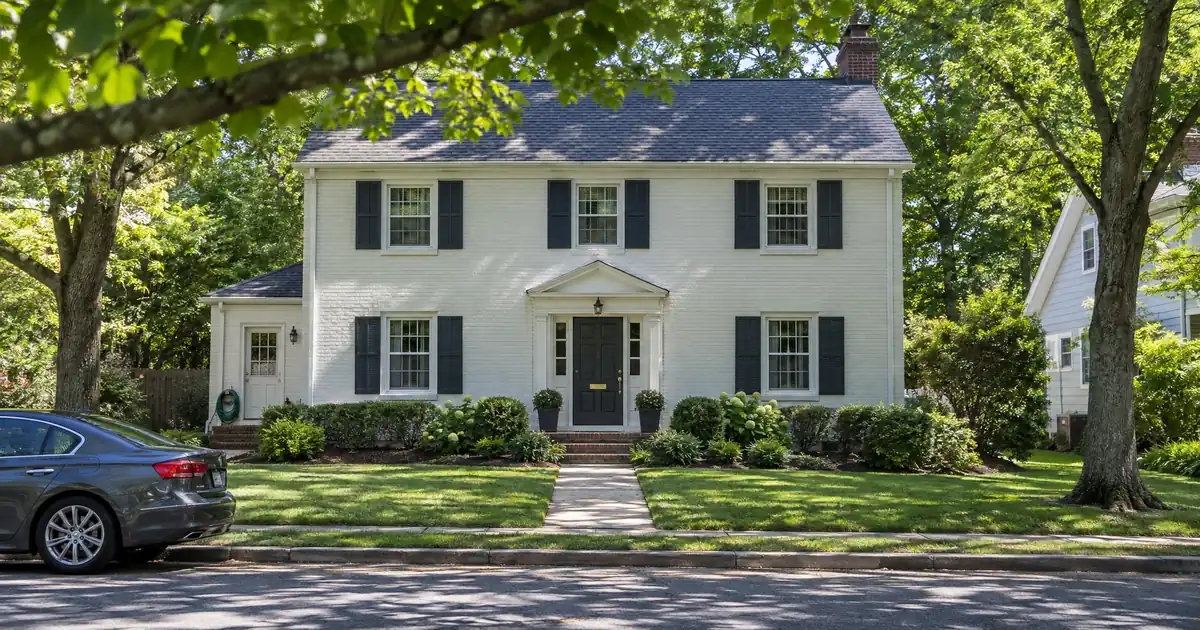
The Quick Read: Usually not. A rental with an active for-sale listing generally cannot get a cash-out refinance, because lenders expect the property off the market before the new loan funds. Once the listing is withdrawn and documented, a cash-out may be possible, subject to lender guidelines.
- An active listing is a stop sign at nearly every DSCR lender. A DSCR loan is an investor loan sized on the property’s rent, not your paycheck.
- A cancelled, documented listing is a different file than a live one.
- A recent listing can mean a letter of explanation, lower leverage, or a waiting period. It depends on the lender.
- Across most of the network, cash-out tops out around 75% LTV on a standard rental, with about six months of ownership expected.
- Listing and applying at the same time will likely fail. Sequence matters.
Why Does a Listing Stop a Rental Cash-Out?
A cash-out refinance assumes you plan to keep the property. A for-sale listing says the opposite. Lenders see those two signals and decide the loan does not fit.
DSCR Cash-Out Calculator
Run the cash-out numbers in your market
Rate source: Freddie Mac 30-yr average via FRED® — Federal Reserve Bank of St. Louis · effective Oct 15, 2026
Prefilled with starting assumptions — enter your property’s value, balance, taxes, and insurance for a more accurate picture.
Program parameters update from Lendmire’s centralized guideline source. Taxes and insurance are editable estimates.
As of Oct 15, 2026 · General Freddie Mac market benchmark, not a Lendmire loan offer. Property value, balance, taxes, and insurance are editable estimates. Maximum loan-to-value varies by lender, program, property type, and seasoning. Not a Loan Estimate, approval, or commitment to lend. Program availability and eligibility are subject to lender guidelines, credit approval, property review, and underwriting.
Think about it from the lender’s side. A cash-out loan is a bet that you will hold the rental and keep paying. If you sell soon after funding, the loan is paid off early and the lender’s investment is gone. Many programs also carry prepayment penalties, which exist for exactly this reason.
So the underwriter checks listing history. That means MLS data and listing-history reports. Expect the question on any file where the property was marketed recently, even if the sign came down long ago.
Here is the practical read. You are not being punished for listing. You are being asked to show the plan changed, and to prove it on paper.
What Happens on the Funding Date?
The test that matters most is the funding date, not the application date. Lenders want the property off the market by the time the new loan disburses. Disbursement is the moment the loan money is released and the old loan is paid off.
DSCR loans are not agency products, so no single rulebook covers them. Each lender in the network sets its own policy. Still, the most standardized corner of the mortgage market points the same way. Fannie Mae’s selling guide section on cash-out refinances says a listed property must come off the market by disbursement. Otherwise the loan cannot be delivered to Fannie Mae. That is the general agency concept, and it is only a contrast here. It does not govern DSCR files.
The difference is what lenders layer on top. Across the wholesale network, most programs we place files with expect the property off the market by funding. Some add their own conditions after delisting. A few want a waiting period, some reduce leverage, and others only want a written explanation.
That is why two lenders can read the same file differently. (It is also why asking one lender is never enough.)
How Do Underwriters Read Each Listing Status?
An underwriter does not treat every listing the same. A live listing, a cancelled one, and an expired one send different signals. This table shows how files are commonly read. Treat it as a pattern, not a promise, because every lender and file differs.
| Listing status | Typical underwriter read | What to do |
|---|---|---|
| Active listing | Blocks cash-out | Withdraw first, then apply |
| Withdrawn or cancelled | Usually workable | Get written proof of cancellation |
| Expired on its own | Weaker than a cancellation | Ask the lender how it views expiry |
| Recently relisted | Extra scrutiny likely | Expect a letter and tighter terms |
| For sale by owner, off-MLS | Often counts as listed | Remove all ads and document it |
| Under contract | Not a refinance candidate | Close the sale or cancel the contract |
One caution on expiry. A listing that simply lapses looks passive. A cancellation looks like a decision. Many underwriters prefer the decision, though policies vary.
How Do You Delist So It Counts?
Delisting counts when you can prove it. Withdraw or cancel the listing with your agent, then collect evidence a lender can file. Do not rely on the sign being gone.
A solid package usually includes:
- A cancellation confirmation from the listing brokerage.
- A dated MLS status report showing the property as withdrawn or cancelled.
- Written confirmation from your agent that the listing agreement ended.
- Proof that any owner-posted ads, yard signs, or online postings were removed.
Then expect a letter of explanation. That is a short written statement from you answering two questions. Why did you list the property, and do you plan to relist it?
Keep the letter plain and true. Say what changed. Maybe offers came in too low, or the rent now justifies holding, or you decided to pull equity instead of selling. Then state your intent to keep the property. Do not write what you think the lender wants to read. A letter that contradicts your own listing history does more harm than no letter.
Do not relist soon after funding. Business-purpose loans are underwritten on the premise that you hold. A quick relist raises fair questions about what you told the lender.
Rental-Specific Wrinkles
A rental carries issues a primary home does not. Four come up again and again.
Business purpose. DSCR loans are designed for non-owner-occupied investment properties. Because they are business-purpose investor loans, they are reviewed differently from a standard owner-occupied mortgage. That is why occupancy is not the issue here. Intent to hold is.
Tenants and leases. A rental listed for rent is not the problem. Lenders want a rented investment property. A rental listed for sale and sitting vacant reads worse, because the lease and the rent evidence usually shrink. Leases in place support the file.
Entity titling. If an LLC holds title, the entity documents must match what is on title and on the listing agreement. Mismatches are a common delay. Loans to entities are available subject to lender program eligibility, and the paperwork has to line up before anyone reviews the numbers.
Portfolio sequencing. If you own several rentals and plan to sell one, refinance another, and keep a third, do the refinances on the keepers and finish the sale separately. Do not let a for-sale property sit in the same file as a cash-out.
Will the Property Still Qualify After Delisting?
Delisting clears one test. The loan still has to pass the others. Think of three gates: the listing gate, the seasoning gate, and the numbers gate.
Seasoning is the waiting period a lender wants between you buying the property and refinancing it. Across most of the network, about six months of ownership, measured from title recording, is the common expectation. Seasoning and delisting are separate clocks. Time off the market does not count as time on title, and the reverse is also true.
Then come the numbers:
- Leverage. Cash-out on a standard rental tops out around 75% LTV across most of the network. LTV is the loan balance divided by the property’s value.
- Coverage. DSCR is monthly rent divided by the full monthly obligation: principal, interest, taxes, insurance, and any HOA dues. A ratio of 1.00 is where select programs start. A separate select-lender path takes coverage below 1.00, with leverage and terms adjusted. Stronger ratios open better pricing and leverage.
- Credit. A 620 floor exists in parts of the network. Most programs want around 660. A score of 700 or higher unlocks the strongest leverage tiers.
- Reserves. These are cash set aside after closing. They commonly run around six months of the full monthly obligation, stepping up to about nine months on loans above $1,500,000. They vary by lender and file.
- Loan size. Up to $3,000,000 on standard programs, with smaller balances routed through select lenders in the network.
One more reminder: clearing 1.00 is not the same as positive cash flow. DSCR compares rent to the monthly payment only. Repairs, vacancy, management, utilities, and big replacements sit outside the calculation. A property can clear the ratio and still lose money month to month.
Manufactured homes (single- and double-wide), log homes, and barndominiums are not offered in these programs, listed or not.
Equity is not a guaranteed cash figure either. What you can pull depends on rent used for lender review, the monthly obligation, reserves, and the 75% ceiling. For the full picture, see Lendmire’s complete DSCR loans guide.
Does Delayed Financing Get Around This?
No. Delayed financing is a cash-buyer exception, and it does not touch the listing rule. It lets someone who bought a property with cash borrow against it soon after, without waiting out the full title-seasoning period.
In Fannie Mae’s version, the delayed financing conditions require an arm’s-length purchase and a settlement statement showing no mortgage financing. The exception waives the title wait. It does not waive the other tests.
Same idea for the investor. A cash buyer who lists the property is still a listed property.
What If You Might Really Sell? Hold Versus Sell
If a sale is truly the plan, a cash-out refinance is usually the wrong tool. Run a break-even before you apply.
Consider a scenario with modeled assumptions, not market data. You own a duplex at 75% LTV on a cash-out, with rent covering the full monthly obligation at roughly 1.25x. The file looks strong. Now ask three questions. Every figure here varies by lender and program — guidelines, property type, leverage, and credit profile all apply.
1. How long will you really hold? Closing costs on a new loan are fixed. Spread over many years of ownership, they shrink. Spread over a short stretch before a sale, they can outweigh any benefit.
2. What does the early payoff cost? Check the prepayment terms on the new loan. A penalty on a quick payoff can erase the gain.
3. What does the cash do? Pulling equity to buy another rental is a holding strategy. Pulling equity to cover a loan you plan to pay off in a few months is just expensive.
A sale releases all your equity. A cash-out reaches only part of it, capped by the 75% ceiling on a standard rental. A sale also has tax consequences. Tax treatment can depend on how the funds are used and how the property is held; investors should keep clear records and speak with a qualified tax professional before relying on any deduction.
Honestly, this one is a toss-up for many owners. If you are 50-50 on selling, hold the decision until you are 80-20, then pick the path.
Alternatives If a Sale Is Still on the Table
If you might sell, other tools fit better than a cash-out:
- Bridge or short-term financing. Built for owners who plan to sell soon. It costs more to carry, but it matches the plan.
- A line of credit. In the network, investment-property HELOC lines cap at $500,000 total. These products can carry their own listing conditions, so ask before you assume.
- Waiting. Pull the listing, let the file season, and apply once your plan is clearly to hold.
- Selling first. If the sale is the real goal, finish it. Then buy the next property with fresh funds.
The Sequence That Works
The order is the whole game. Do these steps in this order.
1. Decide: hold or sell. Settle it before you touch the application.
2. Cancel the listing in writing with your agent. Do not let it lapse by default.
3. Gather proof: cancellation confirmation, status report, agent letter, and removal of owner ads.
4. Write your letter of explanation in your own words.
5. Check seasoning. About six months on title is the common expectation.
6. Run the coverage. Confirm rent against the full monthly obligation, and check reserves and credit.
7. Ask your broker to compare lenders. Policies on recent listings differ, and the file should go to one whose overlay fits.
Questions to ask any lender before you apply:
- Do you treat an expired listing differently from a cancelled one?
- Is there a waiting period after delisting?
- Does a recent listing change my maximum leverage?
- Do you require a letter of explanation, and what should it cover?
Key Terms Defined
Disbursement: the moment the new loan’s money is released and the old loan is paid off.
Seasoning: the waiting period a lender wants between buying a property and refinancing it, usually measured from title recording.
Overlay: an extra rule a lender adds on top of the baseline guidelines for a loan program.
Letter of explanation: a short written statement answering a lender’s question about your file, such as why you listed.
LTV: loan-to-value, the loan balance as a percentage of the property’s value.
DSCR: debt service coverage ratio, the property’s monthly rent divided by its full monthly obligation.
Cash-out refinance: a new loan that pays off the old one and returns the extra equity to you as cash.
Frequently Asked Questions
Does a past listing hurt me forever?
No. A listing from the past does not permanently disqualify a rental. Lenders look at how recent it was, whether it was cancelled and documented, and whether your explanation holds together. Some add a waiting period or ask for a letter. Others do neither. Read Lendmire’s piece on a rental that was recently listed for sale for how that plays out.
Does a for-sale-by-owner sign count as a listing?
Often, yes. Many lenders treat any active marketing as a listing, whether it sits on the MLS or not. Yard signs, online postings, and social media ads can all count. Pull them down and keep a record of when you did.
Can I refinance if I accepted an offer?
Not if the sale is going forward. A signed contract means a sale, and a cash-out loan assumes you will hold. If the contract falls through, cancel the listing, document everything, and start the process fresh.
Can a rate-and-term refinance work while listed?
That is lender-specific. A rate-and-term refinance returns no cash at closing, and some lenders read listing status more loosely on it. Even agency rules expect delisting by disbursement. Do not assume it works. Ask first.
Is a cash-out the same as selling?
No. A sale releases all your equity. A cash-out reaches only part of it, capped around 75% LTV on a standard rental, and you keep the property. Final terms depend on lender guidelines, property type, leverage, and the borrower’s complete credit picture.
Next Step
If you are buying or refinancing a rental property and want to see how the numbers work, Lendmire can help you compare DSCR loan options based on the property income, credit profile, leverage, and investor goals. Lendmire is a broker arranging financing through select lenders in its wholesale network across 41 markets, including Washington, D.C. Qualification is subject to lender guidelines. This is not a commitment to lend.
Delisting first and applying second turns a closed door into an open one, and the investors who sequence it that way tend to keep both the property and the plan.
For how equity extraction works on an investment property, see Lendmire’s guide to cash-out refinance on an investment property.
About Lendmire
As a non-QM mortgage broker (NMLS# 2371349), Lendmire facilitates DSCR investor loans across 41 markets, including Washington, D.C. DSCR eligibility is generally reviewed around property-level rental income instead of personal income documentation, subject to lender guidelines, serving LLC-structured portfolios and self-employed borrowers who don’t fit conventional boxes. A two-time Scotsman Guide Top Mortgage Workplace (2025, 2026).
Get Started
Ready to find the right loan for you?
In about 30 seconds you can review financing options available for your investment property. No commitment required.
Informational only. Not a Loan Estimate, approval, or commitment to lend. Program availability and eligibility are subject to lender guidelines, credit approval, property review, and underwriting.
References
1. Fannie Mae Selling Guide: delayed financing conditions
This article is part of Lendmire’s investment property cash-out refinance program — full qualification details, guidelines, and scenarios live on the program page.
Related reading: DSCR vs Conventional Differences on a Two-to-Four Unit Rental · For a First Rental, 40-Year DSCR Loan vs. 1099-Only Loan · Vacant vs Leased DSCR Purchase for an Out-of-State Investor
Brandon Miller
Founder & CEO, Mortgage Loan Originator, Lendmire LLC
- Mortgage Loan Originator · NMLS# 1129696 · Verify on NMLS Consumer Access
- North Carolina Real Estate Broker · License# 343312 · Verify on NCREC
- North Carolina Insurance Producer · License# 19053198 · Property, Casualty, Life, Health · Verify on NAIC SBS
- Lendmire LLC · Firm NMLS# 2371349 · Verify firm licensure
Disclosure information. Lendmire is a state-licensed mortgage brokerage under NMLS# 2371349. Lendmire is not a depository institution, direct lender, or financial advisor — all loans referenced are placed through wholesale lender partners and are subject to each lender's underwriting standards. This article is provided for general informational purposes and is not a commitment to lend, nor does it constitute financial, legal, or tax advice. Loan programs, terms, rates, and qualification standards change without notice and depend on borrower profile, property type, and the state in which the subject property is located. Equal Housing Opportunity provider. NMLS Consumer Access: nmlsconsumeraccess.org.