
The Quick Read: Usually not into a long-term rental loan, because lenders that offer them want a finished, rentable property appraised on its current condition, so the realistic options for an unfinished rehab are to extend the hard money note, move into a new bridge loan, or finish the work first and then refinance into rental financing.
- A DSCR loan (debt service coverage ratio) qualifies primarily on property-level rental income covering the payment, subject to lender guidelines. That is why a vacant, half-gutted property rarely fits.
- Value comes from the lender’s own appraisal of what exists today, not from your after-repair estimate or your receipts.
- The clock on a cash-out DSCR refinance generally runs from the recorded deed, not from the day the work ends.
- Pick the exit before you close the bridge, and work backward from the maturity date.
Why the Answer Changes Mid-Rehab
Four different refinances get called “refinancing hard money,” and only two are a real problem mid-rehab. The first is a swap into another bridge loan. The second is a payoff-only refinance into long-term rental financing. The third is a cash-out refinance into the same. The fourth is a hard money payoff using a home equity line on another property.
DSCR Cash-Out Calculator
Run the cash-out numbers in your market
Rate source: Freddie Mac 30-yr average via FRED® — Federal Reserve Bank of St. Louis · effective Oct 15, 2026
Prefilled with starting assumptions — enter your property’s value, balance, taxes, and insurance for a more accurate picture.
Program parameters update from Lendmire’s centralized guideline source. Taxes and insurance are editable estimates.
As of Oct 15, 2026 · General Freddie Mac market benchmark, not a Lendmire loan offer. Property value, balance, taxes, and insurance are editable estimates. Maximum loan-to-value varies by lender, program, property type, and seasoning. Not a Loan Estimate, approval, or commitment to lend. Program availability and eligibility are subject to lender guidelines, credit approval, property review, and underwriting.
The bridge swap can work at any stage, because bridge lenders underwrite the project and the plan. The two long-term options need a finished, appraisable, usually leased property. A long-term DSCR loan treats the property like a rental business. If nobody can live in it yet, there is no rent to measure.
Across the wholesale network Lendmire places files with, that is the dividing line on nearly every mid-rehab question. Any lender that wants rent coverage needs a unit that can produce rent. Our complete DSCR loans guide covers the full program basics.
How Lenders Value a Half-Finished Property
A lender values an unfinished property one of two ways: “as-is,” with deductions for incomplete work, or “subject to completion,” where the value rests on a hypothetical finished state. The Birmingham Appraisal Blog explains that the lender tells the appraiser which basis to use, and a subject-to report needs a return visit to confirm the work is done.
The as-is number will not credit work that is not there. Even after the work is finished, value comes from comparable sales, not from what you spent. American Homeland Title calls the appraisal the moment of truth in a rehab-and-refinance plan and warns that a refinance can recover less than planned if the rehab moved value less than projected. Treat your after-repair estimate as a planning number. A rehab may support a higher appraised value, depending on comps and underwriter review.
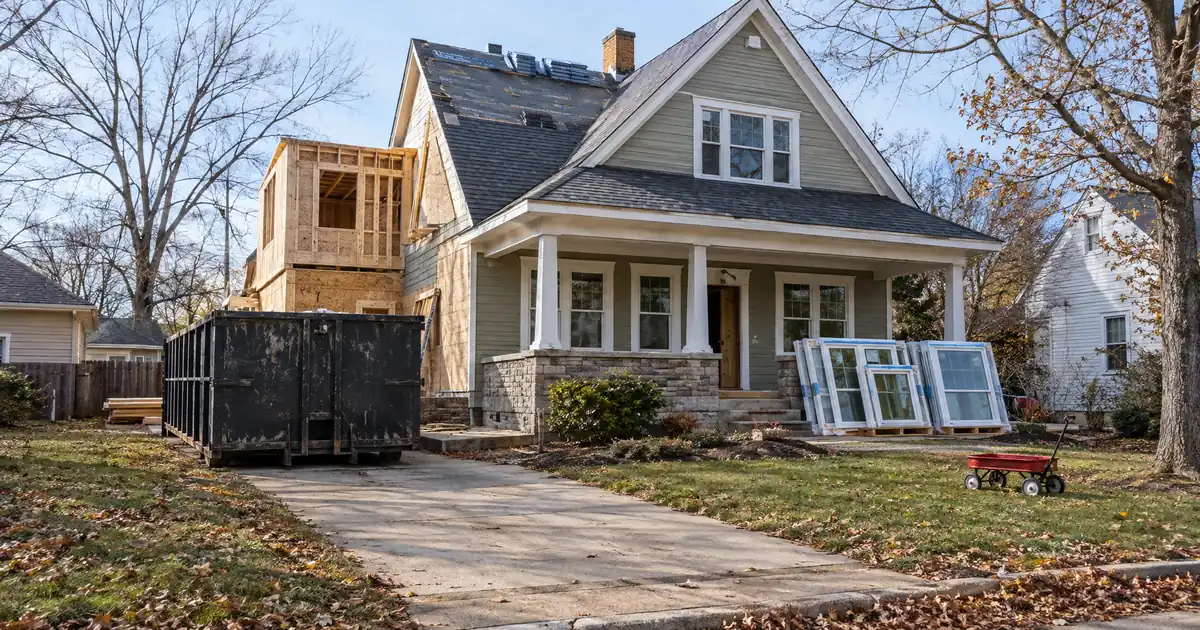
Picture a duplex with the kitchens done and the bathrooms gutted. The as-is appraisal reflects a property that cannot be rented today. The subject-to appraisal reflects a finished duplex that does not exist yet. Neither one gets you into a long-term rental loan.
What Are Your Five Options?
You can refinance into a new bridge, extend the current note, finish and then refinance into rental financing, sell, or bring in outside cash. Each fits a different situation.
| Option | Best for | Main risk |
|---|---|---|
| New bridge loan | Work needs more time or money | Another short-term payoff to plan |
| Extend current note | Close to done, good lender relationship | Extension fees, default terms |
| Finish, then DSCR refinance | Rentable soon, strong rent coverage | Maturity arrives first |
| Sell | Flips, thin margins, weak rent coverage | Costs of sale, a soft market |
| Bring in cash or equity | Short gap, equity elsewhere | Tying up other capital |
On the first row, most hard money programs size to project cost and cap leverage against after-repair value. The program Lendmire arranges, for example, runs up to 93% of project cost for experienced investors, capped at 75% of after-repair value, and refinances up to 65% of value. Those ranges vary by lender, property, and experience, and nothing here is a commitment to lend.
Lendmire’s piece Hard Money Loan Maturing Before Renovations Are Finished: What Are Your Options? goes deeper on extension and bridge mechanics.
Which Option Fits Your Project?
Percent complete and time left on the note decide the path. This matrix is a starting point, not a rule.
| Stage | Plenty of time left | Little time left |
|---|---|---|
| Early (mostly demo) | Finish the work; keep the bridge | Sell, or move to a new bridge |
| Mid (systems, drywall) | Finish, then plan the exit | Extend or bridge; do not wait |
| Near-finished (punch list) | Finish, lease, then refinance | Short extension to reach lease-up |
Early projects rarely qualify for anything long-term. Near-finished projects are where the exit refinance becomes realistic, because the lender can appraise something close to the finished product.
Here is the part investors skip: finishing the work is not the same as being refinance-ready. The unit also needs a lease, final inspections, and a rental insurance policy in place, and each takes time.
What Happens to the Rehab Holdback and Draws
Unspent rehab money generally stays with the hard money lender and is released in draws against completed work. On the program Lendmire arranges, up to 100% of the rehab budget funds that way. When you pay off the note, undrawn funds do not follow you.
A new bridge lender has to re-underwrite the scope and set up its own draw schedule. A long-term DSCR lender usually funds no rehab at all, because it is lending against a property that already works. If you refinance mid-project, plan to cover the remaining work from equity, cash, or a new bridge structure.
Slow draws can also cost you the refinance window, so keep inspections and invoices current as you go.
Why Rental Lenders Say Finish First
A DSCR lender needs a finished, rentable property, and it gets there through four checks: condition, rentability, insurance, and ownership time.
Condition and permits. Open permits, unfinished work that affects livability, and unpaid-subcontractor liens can hold up a refinance that is otherwise ready.
Insurance. A builder’s-risk or vacancy policy is not a rental policy. Switch it before the refinance.
Coverage. The DSCR compares monthly rent to the full monthly payment (principal, interest, taxes, insurance, and any HOA dues, together called PITIA). Clearing 1.00 does not mean the property cash flows. Repairs, vacancy, management, utilities, and capex all sit outside the calculation. In the network Lendmire works with, 1.00 is where many select programs start, and a separate select-lender path takes coverage below 1.00 with leverage and terms adjusted.
Seasoning. Seasoning is the waiting period between buying a property and refinancing it. Market surveys report 6 to 12 months at many lenders, with about 75% of appraised value as a common cash-out cap. On a DSCR cash-out refinance on an investment property, the network generally holds to about 6 months of ownership, measured from title recording, and up to 75% LTV. Those figures vary by lender, property, and borrower.
Finishing the rehab does not restart or shorten that clock. Many investors assume it does.
One brief contrast: agency lenders handle unfinished work by appraising “subject to” completion, and Fannie Mae’s Selling Guide requires that approach where deficiencies are found. DSCR lenders are not bound by it, but it shows the collateral logic behind the as-is versus subject-to question.
Once the property is stabilized, a hard money exit refinance into long-term DSCR financing is the path Lendmire arranges most often; the hard money exit refinance program covers the details.
Documents to Assemble
A mid-project refinance file is mostly a paper trail. Gather these early:
- Your original settlement statement and the hard money note
- Draw history and the lender’s inspection reports
- Rehab invoices, photos, permits, and final inspections
- A revised budget and schedule if scope changed
- The lease and deposit, once you have a tenant
- A payoff statement and proof of landlord insurance
Documented improvement helps with any lender, even where a seasoning rule is soft. The cleanest files show money spent, work finished, and rent in place.
What the Extra Months Cost
Time is the real expense. A hard money note is interest-only and built for a short window, with terms of 6 to 18 months on the program Lendmire arranges and no prepayment penalty there. Other notes vary, so read yours for prepayment and extension language before you plan a payoff.
Run the trade-off in three columns. An extension costs fees and keeps the same collateral and lender. A new bridge adds closing costs and re-underwriting. Finishing and then refinancing into a DSCR loan can cost the least if the note is long enough to cover rehab, lease-up, seasoning, and appraisal. Every month of overrun adds interest-only carry, and none of that carry gets recovered at payoff.
A single extension that buys the missing months usually beats a rushed refinance into a loan you cannot yet support.
Work Backward From Maturity
The maturity date has to outlast every step before the payoff. Work backward in this order:
1. Maturity date on the hard money note.
2. Payoff statement requested and title cleared.
3. Underwriting and appraisal on the new loan.
4. Seasoning satisfied, if cash-out is the goal.
5. Lease signed and rental insurance in force.
6. Final inspections and permits closed.
7. Last draw requested and work complete.
If step 7 sits close to step 1, you are already in extension territory. Ask your current lender about extension terms, payoff letters, and exit fees before the problem arrives, not at maturity.
When Not to Refinance Mid-Rehab
Stay the course, extend, or sell when any of these are true:
- The as-is value is small compared with the remaining work.
- Coverage on the finished property looks marginal.
- Draws are stalled by permits or contractor problems.
- You are counting on appreciation to cover overruns.
Hard money is not the place to be indecisive. If the finished numbers do not work as a rental, selling and recycling the capital is a legitimate outcome, not a failure.
For paying off a hard money loan once the work is complete, see Lendmire’s piece Paying Off a Hard Money Loan With a DSCR Cash-Out Refinance: Getting the Rehab Money Back.
Key Terms Defined
- As-is value: What the property is worth today, with unfinished work deducted.
- Subject to completion: A value based on the repairs being finished as planned.
- Seasoning: The waiting period a lender requires between purchase and a cash-out refinance.
- Draw: A release of rehab funds after a section of work is finished and inspected.
- Rate-and-term refinance: A refinance that pays off the old loan and returns no cash at closing.
- After-repair value (ARV): Your estimate of the property’s value once the work is done.
Frequently Asked Questions
Can a DSCR loan pay off a hard money loan on a property that is not rent-ready?
Generally no. DSCR loans qualify primarily on property-level rental income covering the payment, subject to lender guidelines, and a property that cannot be rented has no income to measure. The path is usually to finish the work, secure a lease, and then refinance.
Does finishing the rehab restart the seasoning clock?
No. Seasoning generally runs from the recorded deed, so finishing the work neither restarts it nor shortens it. On a DSCR cash-out refinance, the network typically looks for about 6 months of ownership from title recording, though lenders vary.
Will my after-repair value set the new loan amount?
No. The new lender orders its own appraisal and lends against that value. On a DSCR cash-out refinance of an investment property, the ceiling is 75% LTV, and a rate-and-term refinance on an investment property can run up to 85% LTV with no cash back, both subject to lender guidelines.
Is there a prepayment penalty if I pay off hard money early?
It depends on your note. The hard money program Lendmire arranges carries none, but lenders write their own terms. Read the note before planning a payoff.
Can I get a hard money loan longer than 18 months?
Not on the current program Lendmire arranges, which runs 6 to 18 months. Investors who need more runway generally refinance into long-term rental financing once the property is stabilized.
Next Step
If you are buying, rehabbing or refinancing an investment property on a short timeline and want to see how the numbers work, Lendmire can help you compare hard money options based on the project, the exit plan, leverage, and your goals. Lendmire is a broker arranging financing through select lenders in its wholesale network across 41 markets, including Washington, D.C. Tax treatment can depend on how the funds are used and how the property is held; investors should keep clear records and speak with a qualified tax professional before relying on any deduction.
About Lendmire
Lendmire, NMLS# 2371349, is a non-QM mortgage broker serving real estate investors in 41 markets, including Washington, D.C., through DSCR investor loan programs. Qualification is generally reviewed around the subject property’s rental income, not the borrower’s W-2 history — a practical fit for LLC-titled portfolios and self-employed investors. All scenarios remain subject to lender review and program guidelines. Two consecutive Scotsman Guide Top Mortgage Workplace recognitions (2025, 2026).
Get Started
Ready to find the right loan for you?
In about 30 seconds you can review financing options available for your investment property. No commitment required.
Informational only. Not a Loan Estimate, approval, or commitment to lend. Program availability and eligibility are subject to lender guidelines, credit approval, property review, and underwriting.
References
1. Birmingham Appraisal Blog: Can My House Be Appraised in the Middle of a Renovation Project?
3. 6 to 12 months at many lenders
4. Fannie Mae Selling Guide B4-1.3-06
This article is part of Lendmire’s hard money loan program — full qualification details, guidelines, and scenarios live on the program page.
Related reading: How to Get a DSCR Loan With No Landlord History on a Fresh Rehab · 40-Year IO vs Amortizing DSCR Qualification and the Catch After IO Ends · How a DSCR Lender Prices Credit Tiers on a Purchase
Brandon Miller
Founder & CEO, Mortgage Loan Originator, Lendmire LLC
- Mortgage Loan Originator · NMLS# 1129696 · Verify on NMLS Consumer Access
- North Carolina Real Estate Broker · License# 343312 · Verify on NCREC
- North Carolina Insurance Producer · License# 19053198 · Property, Casualty, Life, Health · Verify on NAIC SBS
- Lendmire LLC · Firm NMLS# 2371349 · Verify firm licensure
Required disclosures. Lendmire (NMLS# 2371349) operates as a licensed mortgage broker, not a direct lender or depository. The discussion in this article is general in nature and should not be relied upon as financial, legal, or tax advice — every investment scenario is unique and should be reviewed by a qualified professional. Any loan inquiry is subject to lender underwriting, and this article is not a commitment to lend or a guarantee of approval. Mortgage rates, loan terms, and program guidelines vary by borrower, property, and state, and may change without notice. Equal Housing Opportunity. Verify licensure at NMLS Consumer Access.