
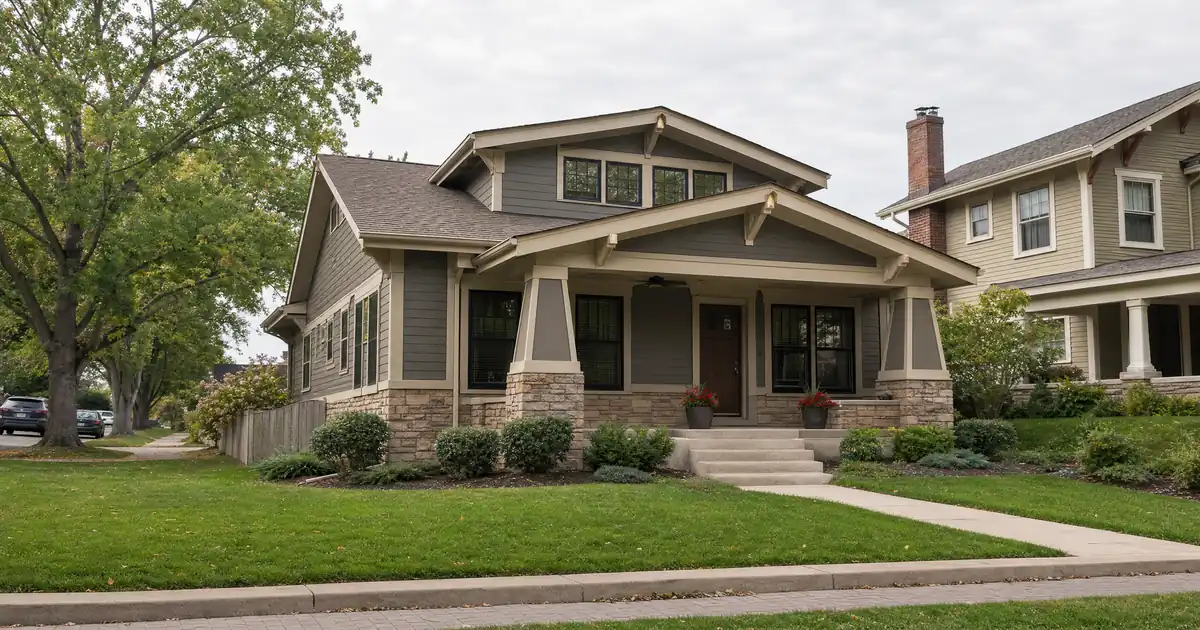
DSCR Loan Denied Because There Were Not Enough Rental Comparables — The Quick Read: This happens when the appraiser can’t find three similar rentals nearby to support a market-rent number, which is the number your entire DSCR loan is reviewed on. It’s most common on rural land, unusual construction, and short-term rental markets — not because the property is a bad investment, but because the standard rent-comparison form was never built for thin data. It’s rarely a dead end. Wider search radius, a second appraisal opinion, an in-place lease, or a different lender’s overlay can often get the file back on track.
Why This Denial Reason Hits Different Than Others
A weak-comp denial attacks the loan’s core coverage figure directly — there’s no borrower income statement to fall back on. DSCR loans qualify on the property’s rent covering its own payment, not your traditional personal-income documentation, so when the rent number itself is unsupported, there’s nothing else to lean on.
DSCR Calculator
Run the numbers in your market
Rate source: Freddie Mac 30-yr average via FRED® — Federal Reserve Bank of St. Louis · effective Aug 27, 2026
Prefilled with local estimates — enter your own rent or nightly figures, taxes, insurance, and HOA for a more accurate picture.
Program parameters update from Lendmire’s centralized guideline source. Taxes and insurance are editable estimates.
As of Aug 27, 2026 · General Freddie Mac market benchmark, not a Lendmire loan offer. Rent, nightly rate, occupancy, taxes, and insurance are editable estimates. Short-term rental figures are estimates only and vary significantly by season, property type, management approach, and local short-term-rental rules — confirm local regulations before relying on them. Qualifying income for short-term rentals varies by program — some use appraisal market rent, others use documented STR history or projections — and is confirmed in underwriting. Not a Loan Estimate, approval, or commitment to lend. Program availability and eligibility are subject to lender guidelines, credit approval, property review, and underwriting.
On a conventional mortgage, rental income is one input among several — your job income, your debt load, your credit history all carry weight too. On a DSCR file, the property’s income is the file. If the appraiser can’t produce a defensible market-rent conclusion because there aren’t enough comparable rentals nearby, the coverage figure underneath the whole loan gets shaky, and underwriting has to react to that.
This is not a DSCR-specific invention, either. The appraisal industry has dealt with comp scarcity for decades on the sales side. The a market source notes that a lack of comparable sales, unique properties, and expansive geography are recognized factors that force appraisers to do more research and justify their conclusions harder. Rental comps run into the same wall — there just isn’t a name-brand agency behind the DSCR side of it.
Key Terms Defined
Rental comparable: A nearby property similar in size, condition, and lease terms that an appraiser uses to estimate what your subject property should rent for.
Market rent: The appraiser’s independent estimate of achievable rent, based on comparable properties — distinct from whatever a lease says the tenant actually pays.
Form 1007 / rent schedule: The standard single-family rent form appraisers use to document market rent by comparing the subject to three similar rental properties. Non-QM lenders didn’t invent this — Fannie Mae built and standardizes it, and appraiser panels across the industry use the same format even on loans that never touch a GSE.
PITIA: Principal, interest, taxes, insurance, and association dues — the full monthly obligation that gets compared against rent to produce your coverage ratio.
Lower-of rule: The underwriting convention that uses whichever number is lower — the actual signed lease or the appraiser’s market-rent conclusion — as the rent used for lender review.
What Actually Happens During the Appraisal
The appraiser is trying to answer two questions with one report: what’s the property worth, and what will it rent for. On a one-unit rental, that second question gets documented through a market-rent schedule; on 2-4 unit properties, a comparable income-property form does the same job.
To fill that out, the appraiser hunts for rental properties similar in size, condition, location, and lease structure, then adjusts each one’s rent for meaningful differences. Fannie Mae’s own instructions for the form state that adjustments should only be made for items of significant difference between the comps and the subject — this isn’t a loose exercise, it’s a documented, line-item comparison.
Once the market-rent conclusion is in hand, DSCR underwriting typically applies the lower-of rule described above. If the property is vacant, there’s no lease to compare against — the entire DSCR numerator rests on the appraiser’s opinion, and that opinion rests entirely on how strong the comp set is. That’s the moment a thin rental market turns into a real underwriting problem instead of a paperwork footnote.
When comps run short, appraisers don’t just throw up their hands. Industry guidance is consistent: widen the geographic search, pull older data with time adjustments, or lean harder on narrative justification. McKissock Learning describes appraisers casting a wider net into neighboring towns or even different regions when local comps are scarce. That widening takes more time and more documentation — and it can still land on a more conservative number than an investor’s own market research suggested.
If the resulting rent conclusion still looks unsupported, there’s a formal escalation path rather than a hard stop. Reconsideration of Value requests are a standardized industry process — Fannie Mae’s guidance formalized elements every lender’s ROV process must include, and non-QM lenders generally mirror the same framework even though the loan itself never gets delivered to an agency.
Where Comp Scarcity Actually Bites
Three property types account for almost all of this problem, and none of them are automatically un-reviewable — they just need a different handling than a standard suburban rental.
Rural and geographically isolated properties. Thin transaction volume is the root cause, and it hits rental comps the same way it hits sales comps. Large lot sizes, undeveloped surroundings, and low turnover mean an appraiser may struggle to find three truly similar rentals close by. Fannie Mae’s Selling Guide — cited here only for contrast, since DSCR isn’t an agency product — notes that rural properties often lack recent, truly comparable sales in the immediate area, and the same logic applies to finding rental comps.
Unique or unconventional construction. Waterfront homes, acreage properties, oversized houses, or unusual architectural styles make comp-matching harder because there simply isn’t another rental just like it nearby. Barndominiums and log homes carry an added wrinkle: those property types aren’t offered through Lendmire’s DSCR programs at all, comp availability aside.
Short-term rental markets. This is the biggest edge case, and it’s a mechanical mismatch, not just a data-scarcity issue. The standard rent form was built around monthly leases and cannot process nightly income — appraisers can’t take a nightly rate, multiply by 30, and call it a market rent. Class Valuation puts it plainly: in STR markets, actual operating income may exceed long-term market rent, and relying on the standard form produces an artificially low DSCR that doesn’t reflect real performance. The form isn’t being conservative — it’s being asked to price something it wasn’t designed to price.
Does Third-Party STR Data Fix the Problem?
Sometimes, but it comes with its own comp requirement. AirDNA and similar tools are commonly accepted as supporting documentation on STR files, and AirDNA reports strong accuracy benchmarks against actual platform data. But these tools have a comp floor of their own — AirDNA’s Market Score methodology requires a market to have at least 15 listings before it can generate a reliable grade.
That means thin-comp problems don’t disappear when you switch data sources — they relocate. An independent review of these tools found projections can run 15 to 30 percent off in either direction for properties that don’t match the typical profile of their surrounding market, and markets with limited STR history produce extrapolations rather than measurements. A luxury property surrounded by budget rentals gets priced like a budget rental. Same problem, different dataset.
The Decision Tree: What to Do When Comps Come Back Thin
Here’s the order Lendmire typically walks through with investors on a comp-scarcity file, roughly in order of effort:
| Step | What It Involves | When It Helps |
|---|---|---|
| Expand the search radius | Appraiser pulls comps from neighboring towns or a wider region | Rural or low-turnover markets |
| Request a second opinion | A different appraiser or a Reconsideration of Value on the existing report | Rent conclusion looks arbitrarily low, not data-poor |
| Use the in-place lease | Signed lease substitutes for a market-rent estimate, subject to the lower-of rule | Property is currently occupied |
| Add STR platform data | AirDNA-style report supplements or substitutes long-term rent comps | Vacation/STR-heavy micro-markets |
| Switch lender or program | A different overlay may weigh comp scarcity differently | Rural or unique-property specialists in the network |
Most files resolve at the first two steps. A widened search radius or a second appraisal opinion catches the majority of comp-scarcity denials, because the underlying rental market usually does exist — it’s just farther away than the appraiser initially looked.
If the property already has a tenant in place, the signed lease becomes the more useful lever, though it’s worth remembering the lower-of rule cuts both directions: a below-market lease can drag the rent used for lender review down just as easily as a strong market-rent conclusion can get capped by a modest lease. An above-market lease never gets credit above what the appraiser independently supports.
For rural and unusual-property files specifically, Lendmire has seen more consistent outcomes routing through lenders in the network whose overlays are built around rural and non-standard properties, rather than pushing a generic urban-market underwriting box to stretch. Some programs simply tolerate a wider comp radius or older comparable data better than others, and knowing which lender leans that way before you order the appraisal saves a redo.
When Sub-1.00 Coverage Is the Real Issue, Not the Comps
Sometimes the comp search actually succeeds, but the resulting market-rent number just doesn’t clear a 1.00 coverage ratio against the property’s payment. That’s a different problem — worth separating from a true comp-scarcity finding — and it has its own set of paths. Sub-1.00 coverage scenarios are available through select lenders in Lendmire’s network, with leverage and terms adjusted to compensate. It’s not a universal fallback and it’s never guaranteed, but it’s a real structure, not a dead end.
Separately, if an appraiser’s rent conclusion won’t support an already-signed lease, that’s its own scenario worth understanding — Lendmire’s breakdown of appraiser-versus-lease denials covers it directly and it’s closely related but not identical to a comp-scarcity finding.
DSCR vs. conventional financing
Two common ways to finance an investment property in this market. They qualify you differently — here’s how investors weigh them.
Why investors choose it
- Qualifies on the property’s rental income — no personal tax returns, W-2s, or pay stubs needed to document income.
- No personal debt-to-income ceiling to clear, so existing mortgages and obligations don’t cap your borrowing the same way.
- Can be closed in an LLC, keeping the property inside a business entity.
- Built for scaling — not held to the limit on number of financed properties that conventional financing applies.
- Underwriting centers on the deal: generally qualifies when the rent covers the payment, a 1.00x coverage ratio being a common baseline (confirmed in underwriting).
- Designed specifically for investment property, including long-term and, where the program allows, short-term rentals.
Where it’s strong
- Often the lowest ongoing financing cost for a buyer who fully qualifies on personal income — a fit for a first property or a cost-first purchase.
Trade-offs for investors
- Requires full personal income documentation and must fit within a debt-to-income limit — salary, existing debts, and other mortgages all count.
- Typically held in your personal name rather than a business entity.
- Caps how many financed properties you can carry, which can become a ceiling as a portfolio grows.
- Evaluates you as a borrower as much as the property, which usually means more paperwork.
How investors usually choose: a first or single property often optimizes for the lowest financing cost; portfolio builders often optimize for leverage, vesting in an LLC, and scaling past conventional caps. The right answer depends on your goals, the property, and current guidelines — both paths run through select lenders in Lendmire’s wholesale network, with eligibility and terms confirmed in underwriting.
What Investors Should Actually Weigh Before Fighting or Walking
A property that’s genuinely attractive on a pro forma basis — rural acreage, a distinctive build, a strong STR micro-market — is often exactly the type most exposed to this underwriting friction. That’s not a coincidence. The properties that trade outside dense, comp-rich urban submarkets are the ones chasing yield precisely because they’re less competed-over, and less competition usually means less comparable data too.
The honest calculation is time versus leverage. Widening the comp search or ordering a second opinion adds time to the file but usually preserves the leverage and terms you modeled. Switching to a sub-1.00 structure or a different lender’s overlay can rescue the deal faster but may mean less leverage or adjusted terms. Neither path is automatic, and which one makes sense depends on how much equity cushion the investor already has and how badly they want this specific property versus a comparable one down the road.
For investors weighing whether their first rental purchase even needs to look like a traditional single-family comp-rich neighborhood, it’s worth remembering your first property doesn’t have to be your home — sometimes the better entry point is a property type that sidesteps this exact problem altogether.
Across most files Lendmire places, purchase leverage on standard properties lands in the 75%-80% LTV range, with select high-leverage programs reaching 85% for borrowers around a 700+ credit score. Credit floors run as low as 620 in parts of the network, though most programs want closer to 660, and reserves typically run around six months of PITIA — stepping up to roughly nine months on loans above $1,500,000. None of that changes because of a comp-scarcity finding, but it’s the backdrop every alternate path gets measured against. For the full framework on how DSCR lender review works end to end, Lendmire’s complete DSCR loans guide is the place to start.
DSCR loans are designed for non-owner-occupied investment properties. Because they’re business-purpose investor loans, they’re reviewed differently from a standard owner-occupied mortgage, and that includes how the rent side of underwriting gets documented.
Tax treatment can depend on how the funds are used and how the property is held; investors should keep clear records and speak with a qualified tax professional before relying on any deduction.
Frequently Asked Questions
Can I still get approved if there are no rental comps nearby?
Often, yes — a thin comp market isn’t an automatic denial. Appraisers are trained to widen their search radius, use older comps with time adjustments, or lean on narrative justification, and lenders in Lendmire’s network vary in how much comp scarcity they’ll tolerate before requiring a workaround.
What property types are most likely to have this problem?
Rural or acreage properties, unusual architectural builds, and short-term rental markets top the list. All three suffer from either genuinely thin transaction data or a mismatch between the standard rent form and the type of income the property actually produces.
Does a signed lease fix a comp-scarcity denial?
It can help, but the lower-of rule still applies — underwriting typically uses whichever is lower between the lease and the appraiser’s market-rent conclusion. A strong in-place lease is most useful when the appraiser simply can’t find enough vacant-market comps to lean on.
Is AirDNA data a reliable substitute for rental comps?
It’s a real option on short-term rental files, but it has its own data floor — AirDNA’s own grading system needs at least 15 comparable listings to produce a confident market score, and independent reviews show wider error margins in thin or atypical markets.
Should I switch lenders if my appraisal comes back with too few comps?
Sometimes, yes. Overlays differ across the wholesale network — some lenders are built around rural or unique-property tolerance, and routing a comp-scarce file to the right one can resolve in one step what a generic urban-market lender might deny outright.
If you’re buying or refinancing a rental property and want to see how the numbers work, Lendmire can help you compare DSCR loan options based on the property’s income, credit profile, leverage, and investor goals. Reach the team at 828-256-2183 or request a quote directly to walk through a specific property.
Comp-scarce properties aren’t rare edge cases in the investor world — they’re often the exact properties producing the strongest yield precisely because fewer buyers compete for them, and the underwriting friction is simply the price of that advantage.
About Lendmire
Lendmire, NMLS# 2371349, is a mortgage brokerage focused on investor financing, arranging DSCR loans in 39 states plus Washington, D.C. — 40 markets total. Qualification is based on the property’s income rather than personal income documentation, subject to lender guidelines, making it a fit for LLC-held rentals and scaling portfolios. Scotsman Guide named Lendmire a Top Mortgage Workplace in both 2025 and 2026.
Get Started
Ready to find the right loan for you?
In about 30 seconds you can review financing options available for your home or investment property. No commitment required.
Informational only. Not a Loan Estimate, approval, or commitment to lend. Program availability and eligibility are subject to lender guidelines, credit approval, property review, and underwriting.
References
1. Fannie Mae – Form 1007 Official Form Display
2. McKissock Learning – Appraising Rural Properties
3. Fannie Mae – Appraiser Update, June 2024
4. Class Valuation – Form 1007 and Short-Term Rentals
6. AirDNA Help Center – Market Score Methodology
Brandon Miller
Founder & CEO, Mortgage Loan Originator, Lendmire LLC
- Mortgage Loan Originator · NMLS# 1129696 · Verify on NMLS Consumer Access
- North Carolina Real Estate Broker · License# 343312 · Verify on NCREC
- North Carolina Insurance Producer · License# 19053198 · Property, Casualty, Life, Health · Verify on NAIC SBS
- Lendmire LLC · Firm NMLS# 2371349 · Verify firm licensure
Disclosure information. Lendmire is a state-licensed mortgage brokerage under NMLS# 2371349. Lendmire is not a depository institution, direct lender, or financial advisor — all loans referenced are placed through wholesale lender partners and are subject to each lender's underwriting standards. This article is provided for general informational purposes and is not a commitment to lend, nor does it constitute financial, legal, or tax advice. Loan programs, terms, rates, and qualification standards change without notice and depend on borrower profile, property type, and the state in which the subject property is located. Equal Housing Opportunity provider. NMLS Consumer Access: nmlsconsumeraccess.org.


