
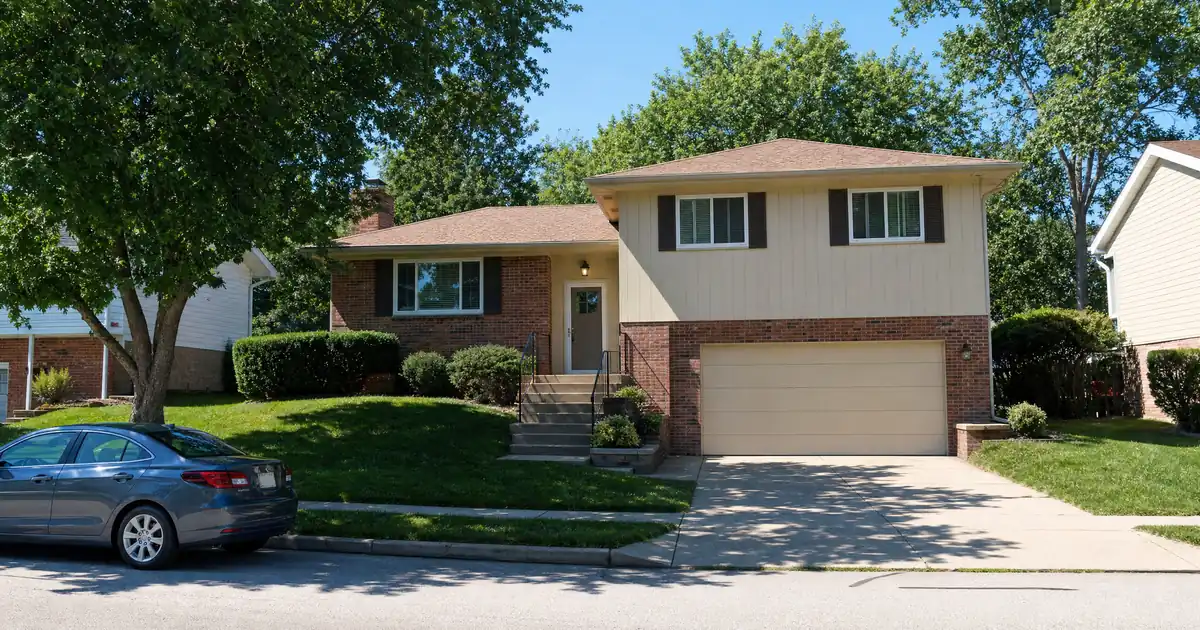
DSCR Loan Denied Because Rental Income Was Not Documented Correctly — The Quick Read: Rental income drives the whole DSCR loan approval. A documentation gap can stop the deal cold. That gap might be an unsigned lease. It might be a rent figure that doesn’t match the appraisal rent schedule. It might be gross rent used where net rent should be. It might be short-term rental income backed by the wrong proof. Any of these leaves underwriting with no solid number to run the ratio against. A conventional loan often has personal income to fall back on. A DSCR loan usually doesn’t. The fix almost always means fixing the paperwork. Then you resubmit to the same lender, or move the file to a program with different rent-verification rules.
Key Terms Defined
DSCR (Debt Service Coverage Ratio): Take the property’s monthly rental income. Divide it by the full monthly housing cost — principal, interest, taxes, insurance, and any HOA dues (PITIA). A ratio of 1.00 means the rent exactly covers that cost.
DSCR Calculator
Run the numbers in your market
Rate source: Freddie Mac 30-yr average via FRED® — Federal Reserve Bank of St. Louis · effective Aug 27, 2026
Prefilled with local estimates — enter your own rent or nightly figures, taxes, insurance, and HOA for a more accurate picture.
Program parameters update from Lendmire’s centralized guideline source. Taxes and insurance are editable estimates.
As of Aug 27, 2026 · General Freddie Mac market benchmark, not a Lendmire loan offer. Rent, nightly rate, occupancy, taxes, and insurance are editable estimates. Short-term rental figures are estimates only and vary significantly by season, property type, management approach, and local short-term-rental rules — confirm local regulations before relying on them. Qualifying income for short-term rentals varies by program — some use appraisal market rent, others use documented STR history or projections — and is confirmed in underwriting. Not a Loan Estimate, approval, or commitment to lend. Program availability and eligibility are subject to lender guidelines, credit approval, property review, and underwriting.
Form 1007 (Single-Family Comparable Rent Schedule): This is the appraisal form used on one-unit rental properties. It documents the appraiser’s opinion of market rent. The appraiser builds this from at least three comparable rentals, with adjustments for meaningful differences. Per Fannie Mae’s selling guide, this form backs up the rental-income figure whenever that income is used to qualify a one-unit investment property.
Form 1025 (Small Residential Income Property Appraisal Report): This is the same idea, but for two- to four-unit properties. It combines a value opinion with an operating income statement.
Lower-of-rule: Underwriting picks whichever number is lower — the appraiser’s market rent, or the actual signed lease amount. That lower figure becomes the qualifying income. Neither number stands alone.
PITIA: This stands for principal, interest, taxes, insurance, and association dues. It’s the full monthly cost that DSCR measures rent against. Repairs, vacancy, management fees, and capital expenses sit outside this number entirely.
What “Rental Income Not Documented Correctly” Actually Means
It means the file has a rent number that underwriting can’t check against an accepted source. That source could be a completed rent schedule, a properly signed lease, or — for short-term rentals — a verifiable income history. On this loan type, the loan qualifies mainly on property-level rental income, subject to lender guidelines. It doesn’t qualify on the borrower’s personal earnings. That makes the rent figure the single most important number in the file. If it’s not backed up the right way, there’s nothing else to lean on.
DSCR loans are business-purpose loans for non-owner-occupied investment properties. Lenders review them differently than a standard owner-occupied mortgage. That means the whole rental-income documentation chain gets more scrutiny, not less. It’s the backbone the entire underwrite stands on.
Key Takeaways
- Rental income on a DSCR file has to trace back to a completed appraisal rent schedule (Form 1007 or 1025), a properly signed lease, or — for short-term rentals — verified platform income history.
- Underwriting usually takes the lower of the appraised market rent or the actual lease amount. So an above-market lease rarely raises your qualifying income.
- Gross rent and net rent are not the same thing. Using the wrong one shifts the ratio, and that problem often shows up late in the file.
- Vacant properties depend entirely on the appraisal. There’s no lease to fall back on. Any gap in the rent schedule wipes out the file’s only income evidence.
- Short-term rental properties need a completely different set of documents than long-term rentals. Submitting the wrong form is one of the most common reasons files get denied.
How Underwriting Actually Treats the Rent Figure, Step by Step
The appraisal does two jobs on a DSCR file. First, it sets the property value for LTV purposes. Second, it produces the rent figure the ratio runs against. Scotsman Guide puts DSCR underwriting simply: the property appraisal and any rental agreements are the main requirements, along with a current credit report on the borrower. Here’s how that plays out in a real file.
1. The appraisal is ordered with the correct form attached. One-unit properties get Form 1007. Two-to-four-unit properties get Form 1025. Ordering the wrong form is a mistake. So is ordering an appraisal without a rent schedule when you need rental income to qualify. This error tends to surface late, and it usually forces a re-order.
2. The appraiser builds the rent number from comparables, not opinion. Freddie Mac’s form instructions require at least three comparable rentals. Adjustments only apply for items with a real difference. This is a documented, third-party number. It’s not a listing-site estimate. It’s not the investor’s own guess.
3. If a lease exists, underwriting checks it against the appraised market rent. The lower-of-rule usually applies: whichever number is more conservative typically becomes the qualifying figure. If a rent claim has no signed lease and no completed rent schedule behind it, it has no way into the calculation at all.
4. For vacant or newly bought properties, the appraisal is the only income document in the file. There’s no lease to check it against. Any weakness in the rent-schedule section — missing comparables, unsupported adjustments, an incomplete form — wipes out the file’s only source of qualifying income. This overlaps closely with cases where a DSCR loan gets denied because the property was vacant at appraisal. The fix usually comes down to the same appraisal-quality issue.
5. Short-term rental income runs through a completely different set of proof. Form 1007 was built for monthly leases. Appraisal-industry training is clear on this: the 1007 is not designed for single-family properties used as short-term rentals. Appraisers can’t just multiply a nightly rate by thirty to invent a monthly figure. STR files instead rely on trailing platform income history, bank deposits that match it, and — where a program allows it — an appraiser’s STR-specific analysis.
6. Underwriting cross-checks the rent figure against everything else in the file. The number needs to match the appraisal’s occupancy notes, the insurance binder, and — if the property sits in an LLC — the entity’s operating documents. A rent figure that clashes with any of these raises a flag, even if the number itself looks reasonable.
Lendmire’s complete DSCR loans guide walks through how the ratio itself gets built. The steps above focus specifically on where the rent input can fail before it ever reaches that calculation.
Where the Documentation Actually Breaks: Error → Consequence → Fix
| Documentation Error | Underwriting Consequence | Fix |
|---|---|---|
| Lease unsigned, expired, or missing pages | No verifiable rent source; file stalls | Execute a current lease covering all pages before submission |
| Rent roll inconsistent across units (multi-unit) | Appraiser and underwriter can’t reconcile total income | Reconcile the rent roll to match actual leases unit by unit |
| Gross rent used instead of net operating figure | Ratio overstated, then corrected downward mid-underwrite | Confirm the program’s exact income definition before submission |
| Appraisal rent schedule incomplete or missing comps | No supported market-rent conclusion | Order a properly completed 1007/1025 with at least three comps |
| STR income shown only via a standard 1007 | Wrong form for the property type; file rejected | Provide 12+ months of platform statements plus matching deposits |
| Above-market related-party lease with no proof of payment | Lease disregarded; ratio recalculated on appraised rent | Provide bank statements or canceled checks proving actual collection |
A Worked Example: How a Documentation Fix Moves the Ratio
Picture a single-family rental where the investor first submits a below-market, month-to-month lease left over from a prior tenant. Using that old lease alone, the file lands a bit below the 1.00 benchmark many select programs use as a starting floor. Then a current appraisal rent schedule comes back. It shows the property’s supported market rent is meaningfully higher. The borrower re-signs the lease at that higher figure. Now the same property clears comfortably above 1.00. Nothing about the property changed. Only the documentation changed — specifically, which rent figure underwriting was allowed to use.
That’s the practical lesson inside the lower-of-rule. An investor who assumes a stale lease locks them into weak coverage may be leaving qualifying income on the table. The market-rent side of the file simply was never documented properly.
The Edge Cases That Break the General Rule
An above-market lease doesn’t raise qualifying income. Underwriting typically caps usable rent at the appraiser’s supported market-rent conclusion, no matter what the lease states. If a program sees an above-market lease — especially with a related-party tenant — it will generally ask for independent proof that rent was actually collected: canceled checks, deposit history, bank statements. Without that proof, the lease gets disregarded and the appraised figure governs.
A below-market or family lease can sink a file that “looks fine” on paper. The opposite failure happens just as often. A long-term tenant, a friend, or a pre-renovation rate becomes the ceiling on qualifying income — even when the appraiser’s market-rent conclusion is higher — unless the file also documents the market-rent side properly, as shown in the example above.
Owner-occupancy and family tenancy aren’t documentation problems — they’re structural disqualifiers. DSCR programs are built for arm’s-length, non-owner-occupied rental income. A lease to a relative, or a borrower living in the property, isn’t something better paperwork can fix. It’s simply outside what these programs finance.
Short-term rentals need a completely different evidence package. Long-term rentals lean on a lease or a completed rent schedule. Short-term rentals typically get proven through trailing income history from the booking platform or property manager, plus a market-projection report or STR-specific appraisal analysis where the program supports one. Submitting an STR property with only a standard 1007 in the file is one of the most common triggers for a documentation denial — the wrong evidence type was used for the property type. Short-term rental rules can also vary by city, county, HOA, and property type, so investors should confirm local rules before relying on projected rental income.
Vacant properties with no operating history rely entirely on the appraisal. There’s no lease to check against it, so a rent-schedule problem — missing comps, unsupported adjustments — removes the file’s only income evidence outright.
Rent-regulated or preferential-rent buildings create their own reconciliation problem. Documentation has to show which figure is actually collectible before it can be used to qualify. Treating a legal-maximum or theoretical rent as collectible income is a common mismatch in these files.
DSCR vs. conventional financing
Two common ways to finance an investment property in this market. They qualify you differently — here’s how investors weigh them.
Why investors choose it
- Qualifies on the property’s rental income — no personal tax returns, W-2s, or pay stubs needed to document income.
- No personal debt-to-income ceiling to clear, so existing mortgages and obligations don’t cap your borrowing the same way.
- Can be closed in an LLC, keeping the property inside a business entity.
- Built for scaling — not held to the limit on number of financed properties that conventional financing applies.
- Underwriting centers on the deal: generally qualifies when the rent covers the payment, a 1.00x coverage ratio being a common baseline (confirmed in underwriting).
- Designed specifically for investment property, including long-term and, where the program allows, short-term rentals.
Where it’s strong
- Often the lowest ongoing financing cost for a buyer who fully qualifies on personal income — a fit for a first property or a cost-first purchase.
Trade-offs for investors
- Requires full personal income documentation and must fit within a debt-to-income limit — salary, existing debts, and other mortgages all count.
- Typically held in your personal name rather than a business entity.
- Caps how many financed properties you can carry, which can become a ceiling as a portfolio grows.
- Evaluates you as a borrower as much as the property, which usually means more paperwork.
How investors usually choose: a first or single property often optimizes for the lowest financing cost; portfolio builders often optimize for leverage, vesting in an LLC, and scaling past conventional caps. The right answer depends on your goals, the property, and current guidelines — both paths run through select lenders in Lendmire’s wholesale network, with eligibility and terms confirmed in underwriting.
What Investors Should Gather Before the Appraisal Is Ordered
The single highest-value move is getting the documentation chain right before the appraisal gets ordered, not after. That means confirming occupancy status up front. It means making sure any existing lease is current, fully signed, and matches the rent roll. For STR properties, it means having platform export history ready and current — not scrambled together after a denial. Across the wholesale network Lendmire works with, files that arrive with the lease, the rent roll, and the appraisal rent schedule already lined up tend to move through underwriting with far fewer re-touches. Files where that reconciliation happens for the first time mid-review don’t move as smoothly.
Most programs across the network want a credit score around 660 to access standard pricing and leverage. A 620 floor is available on parts of the network, and a score of 700 or higher opens the strongest leverage tiers — up to roughly 80% LTV on a purchase, with select high-leverage programs reaching 85% for stronger-credit borrowers. On a cash-out refinance, leverage typically tops out around 75% LTV, with roughly six months of seasoning expected before the refinance is considered. None of that leverage matters, though, if the rent figure feeding the ratio can’t be documented — a strong credit file with an unsupported rent number still stalls. All figures are subject to program guidelines, property qualification, and lender approval.
Common Misconceptions Worth Correcting
“An above-market lease raises my qualifying income.” Not usually. Underwriting caps usable rent at the appraiser’s supported conclusion in most cases. A lease priced above that figure generally doesn’t move the ratio — a fact some investors only learn after the appraisal comes back lower than the lease.
“Qualifying on the property means there’s no paperwork at all.” The loan is reviewed mainly on property-level rental income, subject to lender guidelines. But rental-income evidence still sits at the center of the file. It’s arguably the single most important documentation category in the whole underwrite.
“Any online rent estimate works fine.” It doesn’t. A properly completed rent schedule using verified comparables is the standard. An ad hoc listing-site number isn’t a substitute. For STR properties, the 1007 form can’t be used as a workaround at all.
“A denial on documentation grounds means the deal is dead.” Programs across a wholesale network vary a lot in how they treat vacancy, STR income, related-party leases, and rent-regulated buildings. A documentation gap that sinks a file under one program’s overlays can be a non-issue under a different one. Often the denial reflects a program-fit mismatch, not a flaw in the property itself. This overlaps with situations where a file gets denied for not enough rental comparables — sometimes it’s a market-thinness problem, sometimes it’s simply the wrong form ordered for the property type.
When the Property Doesn’t Cash Flow at All
Sometimes the documentation is perfectly clean, and the ratio still comes in below 1.00 once the correct rent figure gets verified. That’s a different problem than a documentation error — it’s a coverage problem. Coverage below 1.00 is available through select lenders in the network, with leverage and terms adjusted to match. No-ratio structures exist as a separate path through select lenders, generally for borrowers who already own a primary residence. Both are real options, not automatic disqualifiers. But they come with different pricing and leverage trade-offs than a file that clears 1.00 cleanly. For a fuller breakdown of what changes when the ratio itself is the issue rather than the paperwork behind it, see what your options are when the property doesn’t cash flow.
It’s worth being precise here: clearing 1.00 is not the same thing as positive cash flow. DSCR only compares rent to PITIA. Repairs, vacancy, management, utilities, and capital expenses all sit outside that calculation. A file that clears 1.00 can still be a break-even or negative-cash-flow property once real operating costs get added back in.
Refinancing After a Documentation Denial
If the original goal was pulling equity rather than buying, a documentation-driven denial doesn’t necessarily kill the refinance. It usually just means the rent-verification package needs to be rebuilt before you resubmit. Investors working through this exact scenario on an existing rental can review how the process works generally in Lendmire’s guide to refinancing a rental property, where the loan is reviewed mainly on property-level rental income, subject to lender guidelines. That guide covers the same rent-schedule and lease-reconciliation mechanics, just from the refinance side rather than the purchase side.
Tax treatment on any cash-out proceeds can depend on how the funds are used and how the property is held. Investors should keep clear records and speak with a qualified tax professional before relying on any deduction.
Frequently Asked Questions
How do you qualify for a DSCR loan after a rental-income documentation denial? You rebuild the rent evidence before resubmitting. That generally means a properly completed appraisal rent schedule on the correct form, a current and fully signed lease that matches the rent roll, and — for short-term rentals — trailing platform income history with matching deposits. The loan is reviewed mainly on property-level rental income, subject to lender guidelines, so the corrected rent figure drives the outcome.
What are the documentation requirements to support rental income on a DSCR file? For a one-unit long-term rental: Form 1007 plus a properly signed lease, reconciled under the lower-of-rule. For two- to four-unit properties: Form 1025 plus unit-level leases that match the rent roll. For short-term rentals: platform income history and matching deposits, plus STR-specific appraisal analysis where the program supports one. All of it stays subject to program guidelines and lender approval.
Does a month-to-month lease count as documentation? Yes, generally. A fully signed month-to-month lease is still a lease. Underwriting can check it against the appraised market rent using the standard lower-of approach. The real problem is a lease that’s expired, unsigned, or missing pages — not the month-to-month structure itself.
What if rent is paid partially in cash? That’s a weak point in the documentation. Underwriting wants a verifiable paper trail behind any rent claim — bank deposits, canceled checks, or a payment platform record. Cash payments with no deposit trail are hard to prove. They can lead a lender to disregard that portion of the claimed income entirely.
Does a text-message rent agreement work as a lease? No. A properly signed lease is a document with clear terms. Informal arrangements like a text exchange typically don’t meet the documentation standard a DSCR underwriter needs, even if the rent has actually been paid consistently.
How recent do bank statements need to be to support rental income? This depends on the specific program and the property type. For short-term rentals, the general expectation across the network is roughly 12 months of platform income history paired with matching deposits. For long-term rentals with an existing lease, underwriting generally checks the lease itself plus the appraisal rent schedule, rather than an extended bank-statement history.
What happens if the appraisal rent schedule and the lease disagree? Underwriting typically uses whichever figure is lower — the lower-of-rule. If the lease is higher than the appraised market rent, the appraised number usually governs. If the lease is lower, the lease amount usually governs, unless documentation shows the appraisal understated the market.
Can I use a rent roll from my property manager instead of individual leases? For multi-unit properties, a rent roll is standard and expected. But it needs to match the individual unit leases behind it. A rent roll showing figures that don’t match the actual signed leases is a common documentation problem that can stall a file.
If you are buying or refinancing a rental property and want to see how the numbers work, Lendmire can help you compare DSCR loan options based on the property income, credit profile, leverage, and investor goals. Investors can request a quote or call 828-256-2183 to talk through what documentation a specific property will need before the appraisal ever gets ordered.
About Lendmire
Lendmire is a non-QM DSCR mortgage broker (NMLS# 2371349) serving investors across 40 markets. Working through a wholesale lender network, Lendmire compares DSCR programs and their differing rent-verification rules — vacancy treatment, STR income, related-party leases, and rent-regulated properties — to find a program fit for a specific property. All loans are business-purpose and for non-owner-occupied investment properties only. Nothing here is a commitment to lend, and no outcome is guaranteed. Lendmire does not provide tax or legal advice; consult a qualified professional. Scotsman Guide named Lendmire a Top Mortgage Workplace in both 2025 and 2026.
Get Started
Ready to find the right loan for you?
In about 30 seconds you can review financing options available for your home or investment property. No commitment required.
Informational only. Not a Loan Estimate, approval, or commitment to lend. Program availability and eligibility are subject to lender guidelines, credit approval, property review, and underwriting.
References
1. Fannie Mae Selling Guide, B3-3.8-01 Rental Income
2. Scotsman Guide — Reach Real Estate Investors by Becoming an Expert in These Loans
3. Freddie Mac Form 1000 / Fannie Mae Form 1007
4. McKissock Learning — Form 1007 & Its Impact on Short-Term Rental Appraisals
Brandon Miller
Founder & CEO, Mortgage Loan Originator, Lendmire LLC
- Mortgage Loan Originator · NMLS# 1129696 · Verify on NMLS Consumer Access
- North Carolina Real Estate Broker · License# 343312 · Verify on NCREC
- North Carolina Insurance Producer · License# 19053198 · Property, Casualty, Life, Health · Verify on NAIC SBS
- Lendmire LLC · Firm NMLS# 2371349 · Verify firm licensure
Legal disclosures. Lendmire (NMLS# 2371349) is a state-licensed mortgage brokerage that arranges financing through wholesale lender relationships. Lendmire is not a direct lender, depository institution, or registered financial advisor. The discussion above is general informational content about real estate financing — it is not financial, legal, or tax advice, and readers should consult licensed professionals for guidance on their individual circumstances. Loan inquiries are subject to lender underwriting; this article does not represent a commitment to lend. Loan terms, rates, and qualification standards vary by borrower, property, and state, and are subject to change at any time. Equal Housing Opportunity. NMLS Consumer Access: nmlsconsumeraccess.org.


