
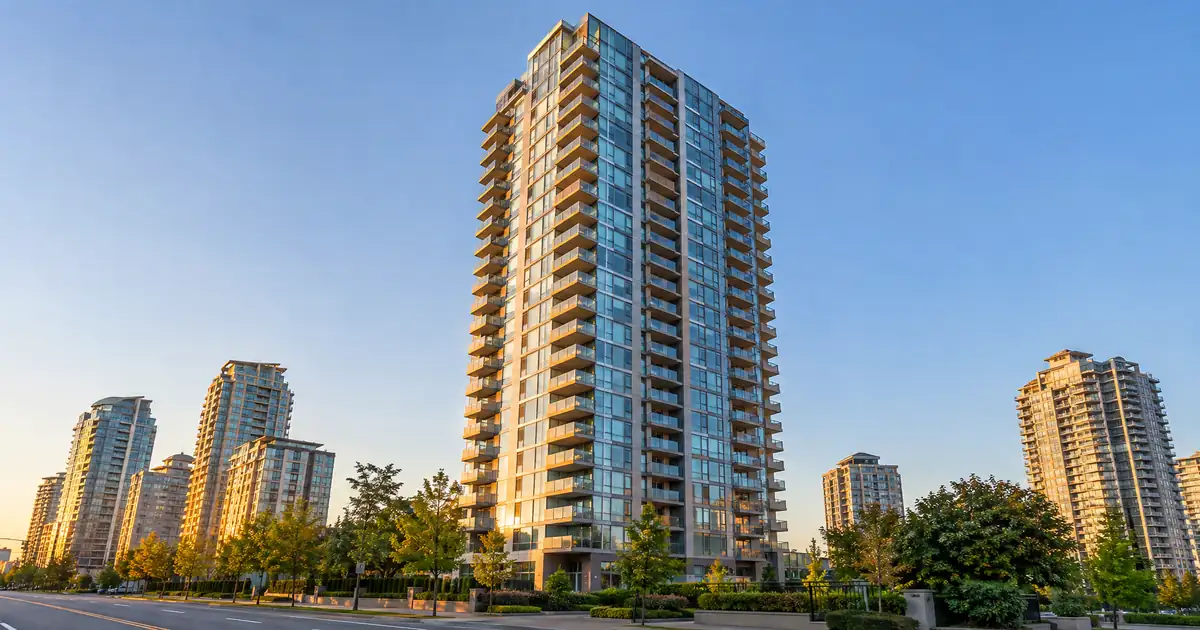
The Quick Read: No rule bars one tower’s four units from being placed with different DSCR lenders, but the split only solves one of three limits. Each lender reviews the building, each lender reviews the guarantor, and every lender sets its own exposure ceiling. Splitting spreads the lender-exposure problem. It does not hide the project or the guarantor.
- Each lender reviews the whole tower through the condo questionnaire, so the LLC’s other units are visible on every file.
- Coverage is tested unit by unit, with HOA dues in the monthly obligation.
- The guarantor’s credit and liquidity are reviewed against every request at once.
- Reserves are tied to each subject property, and the same cash cannot be counted as the cushion on all four files.
- A blanket loan is the alternative: one note, one lender, shared default risk.
Investors who hold several units in one high-rise tend to treat this as an allocation problem. It is really three problems stacked together, and the order you solve them in decides whether the files clear cleanly. The mechanics below follow the order a file reviewer works through them.
DSCR Calculator
Run the numbers in your market
Rate source: Freddie Mac 30-yr average via FRED® — Federal Reserve Bank of St. Louis · effective Oct 15, 2026
Prefilled with starting assumptions — enter your own rent or nightly figures, taxes, insurance, and HOA for a more accurate picture.
Program parameters update from Lendmire’s centralized guideline source. Taxes and insurance are editable estimates.
As of Oct 15, 2026 · General Freddie Mac market benchmark, not a Lendmire loan offer. Rent, nightly rate, occupancy, taxes, and insurance are editable estimates. Short-term rental figures are estimates only and vary significantly by season, property type, management approach, and local short-term-rental rules — confirm local regulations before relying on them. Qualifying income for short-term rentals varies by program — some use appraisal market rent, others use documented STR history or projections — and is confirmed in underwriting. Not a Loan Estimate, approval, or commitment to lend. Program availability and eligibility are subject to lender guidelines, credit approval, property review, and underwriting.
Key Terms Defined
Guarantor. The individual who signs a personal guaranty on a loan the LLC takes out.
Project concentration. How many units in one building a single owner controls, as seen in the condo questionnaire.
Lender exposure. The total balance and loan count one lender carries against one guarantor.
Non-warrantable condo. A building that fails agency project standards, which does not end DSCR eligibility in the non-QM market.
Blanket loan. One note secured by several properties, with a release clause that governs sales.
Condotel. A condo building run with hotel-style rental operations, reviewed on a program-by-program basis.
Can You Split Four Units in One Tower Across Lenders?
Yes, in the sense that nothing prohibits it. There is no federal cap on the number of DSCR loans an investor can hold, and no rule that says a tower’s units must sit with one lender. The limits come from three places: the building, the guarantor, and each lender’s own policy.
Lendmire is a mortgage broker. It arranges these files through a wholesale network of investor lenders in 41 markets, including Washington, D.C. That vantage point shows how differently lenders treat the same building. One program is comfortable with a tower where an owner holds several units. Another wants a tighter profile. A third will lend into a non-warrantable project but at lower leverage and a smaller maximum loan.
The broader program mechanics sit in Lendmire’s complete DSCR loans guide. This article covers the layer on top: what changes when four loans touch one building.
Why the Tower Matters More Than the Unit
The tower is the first thing every lender looks at. Each one reviews the project, not just your unit, and the check is single-entity ownership: how many units one owner controls.
In agency underwriting this is a project-eligibility test. GoverningDocs reports a single-entity cap of 20% of units in projects of 21 or more units. The same write-up notes that the separate 50% investor-concentration test was retired effective March 18, 2026, while the single-entity test still applies. Those are agency rules. They show how the concept works, and the Fannie Mae Selling Guide governs agency project review. DSCR loans are not sold into that channel, so non-QM lenders apply their own project checklists.
That is the trap in the “the 50% rule is gone” argument. Retiring one agency test does not remove concentration as a concern. Single-entity ownership is still reviewed, and non-QM lenders set their own thresholds.
Non-warrantable is also not a dead end. Through select wholesale programs, non-warrantable condos are lendable at reduced leverage and a smaller maximum, up to 75% LTV and $1,500,000 on the network’s non-warrantable condo path, subject to underwriting. The condo questionnaire settles the project’s status, as Lendmire’s page on how to DSCR finance a two-unit condo converting from STR to ltr explains. Each figure is subject to lender guidelines and a complete review of property type, leverage, and credit.
Condotel towers are a separate category. Agency programs exclude units in condo or co-op hotels, per the Fannie Mae Selling Guide. In the non-QM channel it is program-specific. Condotels run to 75% on a purchase and 65% on a refinance, up to $1,500,000, with $250,000 cash-in-hand, subject to underwriting. If the tower runs a rental pool or front desk, confirm that before choosing lenders.
What Lenders Count: The Guarantor, Not the LLC
The LLC signs the note. An individual signs a separate guaranty. Each loan is reviewed on its own property, but the guarantor’s credit and liquid assets are reviewed against every request.
This is why a new LLC for each unit does not reset anything by itself. Lenders can aggregate by guarantor, and whether a given lender does varies. Extra entities should not be treated as a workaround. Treat them as a liability and title decision, and ask the lender how it counts exposure before ordering appraisals.
The same logic covers related entities under common control. Whether they count as one owner for a project’s single-entity test is lender-specific, so ask the lender how it treats them.
Entity vesting is welcome across the network, with no layered entities. A single-tier LLC holding title is the clean version. Layered structures slow the entity-document review on every file, and with four files running, that review repeats four times.
Splitting across lenders also does not make the holdings invisible. Each lender’s project review sees the LLC’s other units, and each guarantor review sees the other liabilities through credit reports, title and the schedule of real estate owned. Disclose the pending loans on every application. They will show anyway, and a mismatch between applications is the kind of preventable gap that stalls a file.
Split or Keep Together?
Splitting helps when one lender’s per-borrower or per-building appetite is the binding limit. Keeping the units together helps when administration and cost are the binding limit. The comparison below shows the tradeoffs.
| Factor | All four, one lender | Two plus two | One each |
|---|---|---|---|
| Project review | Once | Twice | Four times |
| Lender’s building exposure | Highest | Moderate | Lowest |
| Paperwork load | Lightest | Moderate | Heaviest |
| Default isolation | Depends on structure | Partial | Full per unit |
| Guarantor review | One relationship | Two | Four |
A blanket alternative deserves a fair look. A blanket loan puts the units on one note, and the pool’s coverage can be blended, so a weak unit can be offset by stronger ones. The costs are shared default exposure and release-clause terms that vary by lender, which Lendmire’s piece on blanket DSCR refinancing covers. A blanket loan also puts all four units with one lender, which concentrates that lender’s project exposure. It does not solve a lender’s own per-building limit.
Individual loans keep each unit’s default isolated, and a sale is a simple payoff. They cost more in appraisals and closings. A blanket loan is cheaper on closings but pools the risk. Neither is always better.
How to Allocate the Units
Allocation follows coverage first, then project fit. Run the ratio unit by unit, because dues vary by unit size and floor. A strong-rent unit with high dues can still fall short, and a building-average ratio hides that.
Coverage is monthly rent divided by the full monthly obligation, with HOA dues included. Through the network, 1.00 earns full leverage. Coverage from 0.75 to 0.99 is a real select-program path to $2,000,000 at reduced leverage, with LTV and terms adjusting, subject to underwriting.
A workable order of operations:
1. Rank the units by coverage and rent history. The strongest ratios and the cleanest leases go first.
2. Match strong units to the tightest program. A strict lender with the best leverage wants the cleanest files.
3. Match marginal units to a program built for non-warrantable projects. Reduced leverage is the trade for a looser building review.
4. Check each lender’s unit-count test. Ask whether they count the LLC’s units after all four close, and whether units not yet closed are included.
5. Check the size ladder. Leverage steps down with loan size. On the network, purchases run to 80% up to $1,000,000 and 75% from $1,000,000 to $3,000,000, subject to underwriting. A luxury unit above $1,000,000 gives up leverage relative to a smaller one.
The thinking-out-loud part: pairing the two largest units with different lenders often beats pairing them together, because the leverage ladder steps down at each size break. A lender seeing one very large balance is a different review from a lender seeing two.
Count the Units After Closing, Not Before
Project concentration is measured on what the LLC owns once everything closes. That is the number that matters. A buyer who owns one unit today and plans to own four reads as a one-unit owner to the first lender and a four-unit owner to the last.
Investors also run into a second effect. Buying too many units, or converting too many to rentals, can tip a building into non-warrantable status. If the tower is borderline, the fourth unit can change how every lender classifies the project. A questionnaire pulled before the first closing may not describe the building the last lender sees.
Get the condo questionnaire early, and refresh it if a long gap opens between closings. It reports owner and renter mix, reserves, litigation and other project facts. Typical review documents are the budget, reserve study, master insurance certificate, minutes, litigation disclosures and assessment notices, per the GoverningDocs checklist.
DSCR vs. conventional financing
There are two common ways to finance an investment property, and they qualify you differently — here’s how investors weigh them.
Why investors choose it
- Qualifies on the property’s rental income — no personal tax returns, W-2s, or pay stubs needed to document income.
- No personal debt-to-income ceiling to clear, so existing mortgages and obligations don’t cap your borrowing the same way.
- Can be closed in an LLC, keeping the property inside a business entity.
- Built for scaling — not held to the limit on number of financed properties that conventional financing applies.
- Underwriting centers on the deal: generally qualifies when the rent covers the payment, a 1.00x coverage ratio being a common baseline (confirmed in underwriting).
- Designed specifically for investment property, including long-term and, where the program allows, short-term rentals.
Where it’s strong
- Often the lowest ongoing financing cost for a buyer who fully qualifies on personal income — a fit for a first property or a cost-first purchase.
Trade-offs for investors
- Requires full personal income documentation and must fit within a debt-to-income limit — salary, existing debts, and other mortgages all count.
- Typically held in your personal name rather than a business entity.
- Caps how many financed properties you can carry, which can become a ceiling as a portfolio grows.
- Evaluates you as a borrower as much as the property, which usually means more paperwork.
How investors usually choose: a first or single property often optimizes for the lowest financing cost; portfolio builders often optimize for leverage, vesting in an LLC, and scaling past conventional caps. The right answer depends on your goals, the property, and current guidelines — both paths run through select lenders in Lendmire’s wholesale network, with eligibility and terms confirmed in underwriting.
Sequencing the Closings
Later closings will show the earlier loans and the LLC’s increased unit count. No lender-specific sequencing rule is published, so plan around what each file reveals.
1. Start with the cleanest unit at the strictest lender. It sets the pattern and exposes problems with the project early.
2. Hold the marginal unit until the project is confirmed. A lender declining the building should happen before three other files depend on it.
3. Disclose pending loans on every application. Consistency across entity documents, guarantor financials and reserves prevents preventable questions.
4. Keep every payment current. One late payment on an early loan shows on the next credit pull, even at a different lender.
5. Reconcile at the end. Compare settlement statements and the schedule of real estate owned so every lender sees the same picture.
Do not apply for all four at once at lenders that have no way of knowing about each other’s loans. The guarantor’s liabilities will show anyway, and an undisclosed pending loan is a credibility problem.
Reserves and Liquidity: The Practical Cap
Liquidity is usually what actually limits the split. Reserves and down payments are required on every loan at once. Through the network, reserves run six months of the monthly obligation on the subject property, twelve for first-time investors, and cash-out proceeds never satisfy the reserve requirement. The network does not add reserves for other financed properties, but individual programs vary, and the same dollars cannot be shown as the subject-property cushion on four separate files.
Plan reserves per file, then check whether the combined cash position still holds. Two appraisals are required above $2,000,000, so a very large unit adds cost before closing. Credit runs from a 660 floor, rising to 700 above $3,000,000, subject to underwriting.
One more operational point. Four loans mean four tax bills, four insurance policies and four payments. That workload is real, and it should factor into whether splitting is worth it versus keeping fewer loans.
Where the General Rule Breaks
Blanket structures. Covered above. They change the exposure picture without eliminating it.
Condotel and rental-pool towers. The building’s operations can change eligibility, and the lender underwrites the tower on its own checklist.
Short-term rental units. On the network, short-term rentals qualify on documented operating history at a discount to gross rent, with coverage of 1.00 or better and loan amounts to $2,000,000. Municipal permission is documented per property and is never assumed. Short-term rental rules can vary by city, county, HOA, and property type, so investors should confirm local rules before relying on projected rental income.
Extra LLCs. Treated above. No source confirms that a new entity resets a lender’s count.
Agency counts. Agency financed-property caps do not apply to DSCR loans. The network allows up to 20 financed properties, subject to underwriting.
Cash-out on one of the four. Cash-out runs 75% to $1,000,000 and 70% to $1,500,000 on standard rentals, and the 70% ceiling is scoped to short-term-rental collateral where a program applies it. Above $3,000,000 there is no cash-out.
Exit and Resale
A tower where one owner holds several units can be harder to sell into. Buyers of a non-warrantable building face the same financing hurdles, so the buyer pool is often cash buyers or other non-QM borrowers. This affects each unit’s exit differently if units sit with different lenders, because each loan’s payoff is separate. That isolation is an advantage of the split.
Tax treatment can depend on how the funds are used and how the property is held; investors should keep clear records and speak with a qualified tax professional before relying on any deduction.
Documents to Prepare
- LLC articles, operating agreement and certificate of good standing
- Guarantor identification, credit authorization and asset statements
- Condo questionnaire and the HOA document set
- Leases and rent history for each unit
- Insurance quote for each unit, including the master policy certificate
- A schedule of real estate owned that matches across all four files
Questions to Ask Each Lender Before Ordering Appraisals
- How do you count units one owner holds in a single project?
- Do you include units not yet closed?
- Do you aggregate exposure by guarantor or by entity?
- What do you do with a non-warrantable project?
- What is your maximum balance and leverage at this loan size?
- How are HOA dues treated in coverage?
This is general information, not legal or tax advice. Consult a qualified attorney or CPA about the entity structure and your own situation. If you are buying or refinancing high-balance rental property and want to see how the numbers work, Lendmire can help you compare super jumbo DSCR loan options based on the property income, the loan balance, credit profile, leverage, and investor goals. Every file is underwritten individually, and nothing here is a commitment to lend.
Frequently Asked Questions
Can I use a different LLC for each unit?
You can, and entity vesting is welcome across the network with no layered entities. It does not reset anything by itself, since the same individual guarantees each loan and lenders can aggregate by guarantor. Treat extra entities as a liability and title decision, not an exposure fix.
Do separate lenders know about each other?
Not directly, but the information surfaces. Credit reports, the schedule of real estate owned, title and the condo questionnaire all show the LLC’s other units and the guarantor’s liabilities. Disclose pending loans on every application.
Is there a legal limit on how many DSCR loans I can hold?
There is no federal cap. Limits come from each lender’s exposure policy and from your liquidity for down payments, closing costs and reserves. Through the network, up to 20 financed properties are allowed, subject to underwriting.
What if one lender declines the building?
Move that unit to a program built for non-warrantable projects, usually at reduced leverage and a smaller maximum, up to 75% LTV and $1,500,000, subject to underwriting. This is why the questionnaire comes first and the marginal unit closes last.
Does the split affect leverage?
Yes, through loan size more than through the split itself. Leverage steps down as balances grow, and the highest tiers apply to smaller loan amounts, subject to underwriting. A non-warrantable condo carries its own lower ceiling.
Can I consolidate later?
A refinance into a blanket loan is possible, but release-clause terms vary by lender, and a blanket structure pools default risk. Compare it against keeping loans isolated before deciding.
Self-employed borrowers can compare program options on Lendmire’s self-employed mortgages page.
About Lendmire
Lendmire, NMLS# 2371349, is a mortgage brokerage focused on investor financing, arranging DSCR loans in 40 states plus Washington, D.C. — 41 markets total. Qualification is based on the property’s income rather than personal income documentation, subject to lender guidelines, making it a fit for LLC-held rentals and scaling portfolios. Scotsman Guide named Lendmire a Top Mortgage Workplace in both 2025 and 2026.
Get Started
Ready to find the right loan for you?
In about 30 seconds you can review financing options available for your investment property. No commitment required.
Informational only. Not a Loan Estimate, approval, or commitment to lend. Program availability and eligibility are subject to lender guidelines, credit approval, property review, and underwriting.
References
1. GoverningDocs: Non-Warrantable Condo, What It Means
2. Fannie Mae Selling Guide B4-2.1-02
This article is part of Lendmire’s super jumbo DSCR loan program — full qualification details, guidelines, and scenarios live on the program page.
Related reading: What Is A Sub-one DSCR? How Lenders Weigh Negative Cash Flow · How to Structure LLC Ownership for a Super Jumbo DSCR Cash-Out · Super Jumbo DSCR vs Bank Statement Loan on a Cash-Out in an LLC
Brandon Miller
Founder & CEO, Mortgage Loan Originator, Lendmire LLC
- Mortgage Loan Originator · NMLS# 1129696 · Verify on NMLS Consumer Access
- North Carolina Real Estate Broker · License# 343312 · Verify on NCREC
- North Carolina Insurance Producer · License# 19053198 · Property, Casualty, Life, Health · Verify on NAIC SBS
- Lendmire LLC · Firm NMLS# 2371349 · Verify firm licensure
Required disclosures. Lendmire (NMLS# 2371349) operates as a licensed mortgage broker, not a direct lender or depository. The discussion in this article is general in nature and should not be relied upon as financial, legal, or tax advice — every investment scenario is unique and should be reviewed by a qualified professional. Any loan inquiry is subject to lender underwriting, and this article is not a commitment to lend or a guarantee of approval. Mortgage rates, loan terms, and program guidelines vary by borrower, property, and state, and may change without notice. Equal Housing Opportunity. Verify licensure at NMLS Consumer Access.