
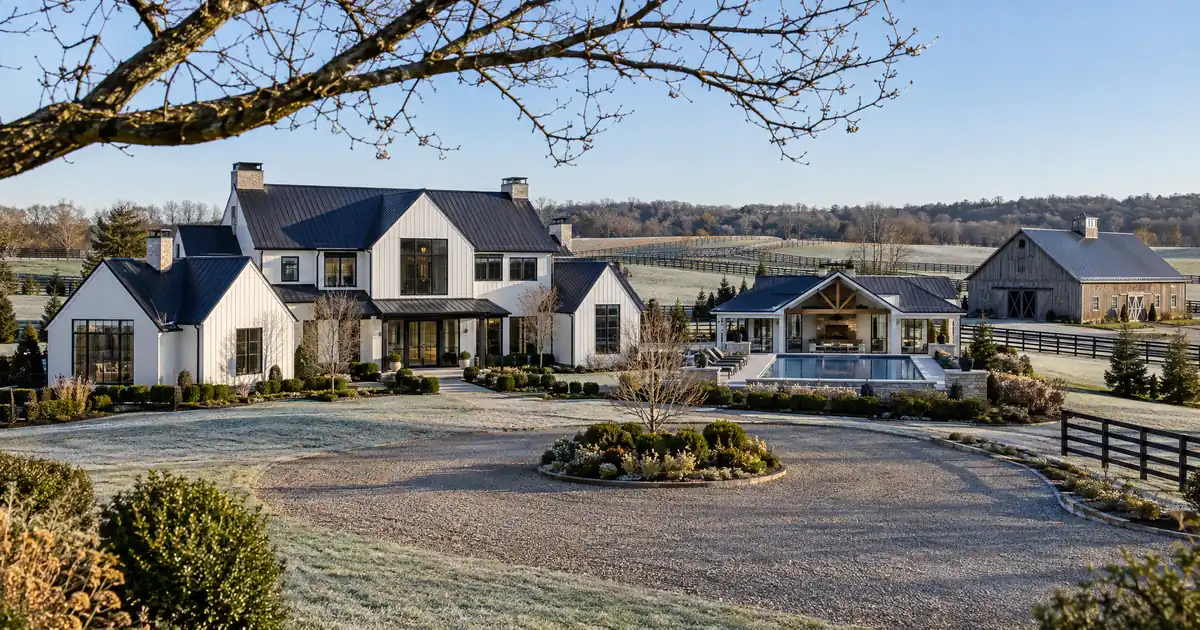
The Quick Read: Build the package around two questions the appraiser must answer: what the house and its usable site are worth, and what the property rents for. Give the lender clean land records, proof of residential use, and rent evidence, and the lender passes them to the appraiser. Every program figure below is a typical ceiling through select wholesale programs, subject to underwriting.
- Acreage is a collateral issue. The value opinion drives leverage, and the rent opinion drives coverage.
- Rural property on five acres or less typically reaches 75% leverage. Up to twenty acres is possible on loans to $3,000,000, and above $3,000,000 the ten-acre maximum applies.
- Two appraisals are typical above $2,000,000, so one weak package gets tested twice.
- You never hand anything to the appraiser. The lender orders the report and relays your documents.
- A purchase price that bundled extra acres can appraise below contract.
Why Does Acreage Change a Super Jumbo Appraisal?
Acreage changes the appraisal because the appraiser has fewer matching sales and must decide how much of the land actually supports value. On a large balance, a miss in either direction moves the loan amount, the cash to close, and the coverage ratio.
DSCR Calculator
Run the numbers in your market
Rate source: Freddie Mac 30-yr average via FRED® — Federal Reserve Bank of St. Louis · effective Oct 15, 2026
Prefilled with starting assumptions — enter your own rent or nightly figures, taxes, insurance, and HOA for a more accurate picture.
Program parameters update from Lendmire’s centralized guideline source. Taxes and insurance are editable estimates.
As of Oct 15, 2026 · General Freddie Mac market benchmark, not a Lendmire loan offer. Rent, nightly rate, occupancy, taxes, and insurance are editable estimates. Short-term rental figures are estimates only and vary significantly by season, property type, management approach, and local short-term-rental rules — confirm local regulations before relying on them. Qualifying income for short-term rentals varies by program — some use appraisal market rent, others use documented STR history or projections — and is confirmed in underwriting. Not a Loan Estimate, approval, or commitment to lend. Program availability and eligibility are subject to lender guidelines, credit approval, property review, and underwriting.
A DSCR loan (debt service coverage ratio loan) qualifies primarily on property-level rental income covering the payment, subject to lender guidelines. The appraisal does two jobs here. It sets the value that drives loan-to-value (LTV), the loan as a percentage of value. It also sets the market rent that drives the coverage number. Our complete DSCR loans guide covers the basics if the ratio is new to you.
Size matters too. Across our wholesale network, the leverage ladder steps down as the balance rises. On a purchase, 80% is the ceiling to $1,000,000, 75% to $3,000,000, and 65% to $4,000,000. Above that, 60% applies on review, case by case before submission. Cash-out on standard rentals tops out at 75% to $1,000,000 and is unavailable above $3,000,000. A land question that costs you five points of value costs far more on a $3,000,000 file than a $500,000 one.
Key Terms Defined
Excess land: acreage beyond what a typical home site needs. Appraisers often give it little value or separate it out.
Contributory value: what a feature, such as a barn or a second dwelling, adds to the property’s value in the eyes of the market.
Market rent schedule (Form 1007): the appraiser’s opinion of what the home would rent for on a standard 12-month lease.
Form 1025: the small residential income property report used for 2-4 unit properties. Agency forms are the industry’s shared language here, not DSCR rules.
Reconsideration of value (ROV): a lender’s request that the appraiser review new information or fix an error.
Highest and best use: the legal, workable use that supports the most value. For this loan it should be residential.
How Does Underwriting Treat an Acreage File?
Underwriting treats an acreage file as two separate opinions, and each one caps the loan in its own way. Value runs through LTV. Rent runs through coverage. Here is the sequence on most programs we place files with.
1. The lender orders the appraisal. This usually goes through an appraisal management company. You do not pick the appraiser, and federal interagency appraisal guidelines treat a borrower recommending the appraiser as a compromise of independence.
2. The form depends on the units. A single-family rental on acreage typically gets a standard value report plus the 1007 rent schedule. A 2-4 unit property typically gets the 1025.
3. The appraiser values the house plus its contributing site. Excess land is often capped, excluded, or counted only partly. A lender may ask for the residential value broken out from the surplus.
4. The appraiser hunts for comps. Scarce rural sales push the search toward older and more distant properties, with adjustments for lot size and outbuildings.
5. The rent opinion sets the numerator. On most programs, the lower of the lease or the market rent is the number that goes over the monthly obligation. On a vacant property, the appraiser’s figure is the only rent number.
6. Above $2,000,000, a second appraisal is typical. Two reports tell the same story or the file stalls.
Coverage of 1.00 earns full leverage. Programs from 0.75 to 0.99 are a real path through select lenders in the network, to $2,000,000, but LTV and terms adjust, subject to underwriting.
What Goes in the Package?
The package should hold land records, proof of residential use, access and utility facts, and rent evidence. Each item answers a question the appraiser would otherwise guess at, and guesses on rural property tend to be conservative.
| Item | Why the appraiser needs it | Common problem |
|---|---|---|
| Survey or plat with parcel map | Fixes gross and usable acres | Acreage differs from tax record |
| Tax record | Shows acreage and assessment class | Agricultural assessment flags farm use |
| Purchase contract | Shows what the price included | Extra acres bundled into price |
| Outbuilding and second-dwelling list | Sets contributory value | Unpermitted or oversized structures |
| Well and septic details | Confirms habitable utilities | No test or permit records |
| Road access proof | Confirms legal access | Private road, no maintenance agreement |
| Lease or rent history | Supports the rent opinion | Lease below market, or none |
| Rental comps and listings | Backs the 1007 | Few rural rentals nearby |
| Prior appraisal or receipts | Documents improvements | Receipts missing |
Add photos and a labeled map. Mark the home site, the usable acres, and any wetlands or easements. A clear map often saves a full round of questions.
How Do You Separate the Home Site From Surplus Acreage?
You separate them by showing, on paper, which acres serve the house and which do not. Draw the home site boundary on the survey, label the remaining acres by use, and keep the acreage consistent across the survey, tax record, and contract.
Here is why it matters. Say you contract for a house on 18 acres, and the market supports only the house and a typical site. The appraiser may credit the home site fully and the rest at a fraction, or not at all. The report then lands below the contract price. The loan sizes off value, so the cash you need to close rises. That gap is a collateral outcome, not a rent problem.
Ask the agent how the seller arrived at the number before you sign, especially if the price bundles in extra acres.
The distance question is the other side of this. The appraiser may reach for far-off sales when nothing local fits. DSCR programs are not agency products, and investor overlays sit on top, but the logic carries over. A report that explains its comp choices is harder to challenge.
How Do You Prove Residential Use?
You prove it by describing every improvement in residential terms and disclosing any animals, crops, or business activity. Farm-type collateral may not be eligible, so the appraisal should show a home with land, not a farm with a house.
Cover these points:
- Outbuildings. List each one with its size, age, and use. A typical garage or small shed is easy. A large barn or a second dwelling may earn no value credit, or may call for a different report.
- Agricultural use. If someone cuts hay or grazes animals, say so and attach the lease. Hiding it invites an eligibility problem later.
- Assessment class. If the county taxes the land as agricultural, explain why in a short note.
- Zoning and use. A one-line statement that the home is a residence on residential-use land helps.
Rural classification adds a program layer. Rural property on five acres or less typically reaches 75% leverage on a purchase through select programs. Past five acres, the deal works to the twenty-acre path, which runs to $3,000,000. Above $3,000,000, rural property is out and the ten-acre limit applies, with 700 credit, 0x30x24 housing history, and citizens or permanent residents only. Confirm the property’s classification before you go to contract, not after the report posts.
How Do You Document Rent When Rural Rental Comps Are Scarce?
You document it with the best evidence you can find: a signed lease, a rental history, active listings, and the closest comparable rentals. The appraiser typically selects three to six rental comps. A thin rural market makes each one count.
The 1007 asks for a 12-month long-term rent. That figure can sit well below nightly-rental potential, which matters if you planned short-term income. Short-term-rental files stop at $2,000,000, qualify at 80% of gross income, and require 1.00 coverage and an experienced investor. On a purchase, income comes from the appraisal’s short-term-rent analysis. On a refinance, it comes from twelve months of operating history. Municipal permission is documented for each property. Short-term rental rules can vary by city, county, HOA, and property type, so confirm local rules before relying on projected rental income.
If the rent opinion lands under your lease, the lower number typically governs. Disputes can be tough. Availability of any challenge or appraisal transfer differs by program, so ask your broker which options exist before you order, not after.
How Should a Worked Example Look?
A worked example shows how the same property fares with a weak package and a strong one. These are modeled assumptions, not market data.
Picture a single-family rental on 14 acres, priced at $2,400,000 under contract, with a detached garage, a well, and a septic system. The investor wants 75% leverage on a purchase and hopes to clear 1.00 coverage. Final terms depend on lender guidelines, property type, leverage, and the borrower’s complete credit picture.
Weak package: survey missing, tax record shows 14 acres, contract silent on land use, no rent evidence beyond a listing. The appraiser reaches far for comps, treats most acres as excess, and values the property below contract. The rent opinion comes in light. Both the leverage math and the coverage ratio suffer, and the file likely drifts toward conditions or a reduced loan amount.
Strong package: survey with a labeled home site, tax record matching the survey, a note on the contract price, garage and well records, a lease, and three nearby rental listings. The appraiser can defend the site adjustment and the rent opinion. Value may still land under contract, because the market decides, but the gap is explainable and the coverage ratio is more likely to hold near 1.00.
At this size, two appraisals apply. Both appraisers work independently, so a package that fits both reports well matters. Reserves are typically six months of PITIA on the subject property, twelve for first-time investors. PITIA means principal, interest, taxes, insurance, and association dues.
DSCR vs. conventional financing
There are two common ways to finance an investment property, and they qualify you differently — here’s how investors weigh them.
Why investors choose it
- Qualifies on the property’s rental income — no personal tax returns, W-2s, or pay stubs needed to document income.
- No personal debt-to-income ceiling to clear, so existing mortgages and obligations don’t cap your borrowing the same way.
- Can be closed in an LLC, keeping the property inside a business entity.
- Built for scaling — not held to the limit on number of financed properties that conventional financing applies.
- Underwriting centers on the deal: generally qualifies when the rent covers the payment, a 1.00x coverage ratio being a common baseline (confirmed in underwriting).
- Designed specifically for investment property, including long-term and, where the program allows, short-term rentals.
Where it’s strong
- Often the lowest ongoing financing cost for a buyer who fully qualifies on personal income — a fit for a first property or a cost-first purchase.
Trade-offs for investors
- Requires full personal income documentation and must fit within a debt-to-income limit — salary, existing debts, and other mortgages all count.
- Typically held in your personal name rather than a business entity.
- Caps how many financed properties you can carry, which can become a ceiling as a portfolio grows.
- Evaluates you as a borrower as much as the property, which usually means more paperwork.
How investors usually choose: a first or single property often optimizes for the lowest financing cost; portfolio builders often optimize for leverage, vesting in an LLC, and scaling past conventional caps. The right answer depends on your goals, the property, and current guidelines — both paths run through select lenders in Lendmire’s wholesale network, with eligibility and terms confirmed in underwriting.
How Do You Assemble and Deliver the Package?
You assemble it as one organized digital folder and send it to your broker, who passes it to the lender. The lender decides what reaches the appraiser. This follows from appraiser independence.
1. Confirm eligibility first. Check acreage, rural classification, and loan size against the program before contract.
2. Gather records in the order of the table above. Start with the survey, since every other item refers back to it.
3. Reconcile the numbers. Survey acreage, tax acreage, and contract acreage should agree. If they do not, add a short written explanation.
4. Name files plainly. Use labels like survey, tax record, outbuilding list, lease, and rent comps. Keep one PDF per item.
5. Add a one-page cover summary. Give the address, acreage, home site boundary, improvements, and use.
6. Send it to your broker with the contract. Do not contact the appraiser.
7. If the value comes in low, use the ROV route. Through the lender, you can ask the appraiser to consider additional comps or correct an error. The Federal Reserve’s interagency ROV guidance says the process allows added property information and error correction. It also bars pressuring the appraiser toward a target number. That guidance is aimed at regulated institutions and does not directly govern business-purpose loans, but many lenders follow it as sound practice. An ROV request is not a promise the number will change.
Across wholesale lenders, a clean package typically means fewer conditions and fewer ROV rounds. Programs change and every file is underwritten individually.
What Red Flags Should You Check Before Submitting?
Check for mismatches and gaps, because those are what trigger conditions. Run this short audit before the package goes out:
- Survey acres, tax acres, and contract acres disagree.
- A structure appears in photos but not on the survey or permit record.
- An easement or right-of-way is unrecorded or unexplained.
- The road is private and no maintenance agreement exists.
- Land is assessed as agricultural and no one has explained why.
- A lease is below market and no rent comps support a higher figure.
- The purchase price includes acreage the market will not credit.
Coverage on paper is not cash flow. The ratio ignores vacancy, repairs, and management costs, so run your own budget separately. Tax treatment can depend on how the funds are used and how the property is held; investors should keep clear records and speak with a qualified tax professional before relying on any deduction.
Frequently Asked Questions
Can I choose the appraiser or give the appraiser my comps?
No. The lender orders the report, usually through an appraisal management company. As the ABA Banking Journal explains, the lender must act as the go-between with the appraiser. Send your comps to your broker, and the lender may forward them as a reconsideration request.
Does an ROV force the appraiser to change the value?
No. It asks the appraiser to review added information or fix an error. The appraiser keeps independent judgment and may hold the original number. The CFPB‘s summary of the guidance describes it as a lender request to reassess.
Is rural property ineligible for a super jumbo DSCR loan?
Not automatically. Rural property on five acres or less typically reaches 75% leverage, and up to twenty acres is possible on loans to $3,000,000. Above $3,000,000, rural property is excluded and a ten-acre maximum applies. All of it is subject to underwriting and the appraiser’s read of the surrounding area.
What if the appraisal rent comes in below my lease?
The lower of the lease or the market rent typically governs on most programs. That can pull coverage down. Programs from 0.75 to 0.99 exist through select lenders to $2,000,000, but LTV and terms adjust, subject to underwriting. Strengthen rent evidence before the report, since options after it are narrower.
What happens if I am missing documents?
The appraiser usually leans conservative. Missing survey data can mean less credit for usable land, and missing records on outbuildings can mean no value credit for them. A lender may also issue conditions that slow the file. Fill the gaps before submission.
Practical Next Step
If you are buying or refinancing a high-balance rental property and want to see how the numbers work, Lendmire can help you compare super jumbo DSCR loan options based on the property income, the loan balance, credit profile, leverage, and investor goals. Lendmire’s piece How to Prepare the Appraisal Package on a Jumbo DSCR Estate Loan covers the same documents for properties without acreage. Lendmire arranges business-purpose financing through select lenders in its wholesale network across 41 markets, including Washington, D.C. Nothing here is a commitment to lend.
For current guidelines and terms, see Lendmire’s super jumbo DSCR loan programs page.
Self-employed borrowers can explore additional financing options on Lendmire’s self-employed mortgages page.
About Lendmire
Lendmire, NMLS# 2371349, is a non-QM mortgage broker serving real estate investors in 41 markets, including Washington, D.C., through DSCR investor loan programs. Qualification is generally reviewed around the subject property’s rental income, not the borrower’s W-2 history — a practical fit for LLC-titled portfolios and self-employed investors. All scenarios remain subject to lender review and program guidelines. Two consecutive Scotsman Guide Top Mortgage Workplace recognitions (2025, 2026).
Get Started
Ready to find the right loan for you?
In about 30 seconds you can review financing options available for your investment property. No commitment required.
Informational only. Not a Loan Estimate, approval, or commitment to lend. Program availability and eligibility are subject to lender guidelines, credit approval, property review, and underwriting.
References
1. Interagency Appraisal and Evaluation Guidelines
2. ABA Banking Journal: Reconsideration of Value
3. CFPB
This article is part of Lendmire’s super jumbo DSCR loan program — full qualification details, guidelines, and scenarios live on the program page.
Related reading: How to Choose Between Purchase and Cash-Out on a Super Jumbo DSCR Loan · Can a Cash-Out Super Jumbo DSCR IO Loan Reset Into a New IO Period? · Super Jumbo DSCR Loan Requirements For New Jersey
Brandon Miller
Founder & CEO, Mortgage Loan Originator, Lendmire LLC
- Mortgage Loan Originator · NMLS# 1129696 · Verify on NMLS Consumer Access
- North Carolina Real Estate Broker · License# 343312 · Verify on NCREC
- North Carolina Insurance Producer · License# 19053198 · Property, Casualty, Life, Health · Verify on NAIC SBS
- Lendmire LLC · Firm NMLS# 2371349 · Verify firm licensure
Important disclosures. Lendmire (NMLS# 2371349) is a licensed mortgage brokerage. Lendmire is not a direct lender, depository institution, or financial advisor. All loan inquiries are subject to lender underwriting; this article does not constitute a commitment to lend. Rates, terms, and program guidelines are subject to change without notice and vary by borrower profile, property type, and state. Information in this article is general in nature and is not financial, legal, or tax advice. Equal Housing Opportunity. NMLS Consumer Access: nmlsconsumeraccess.org.