
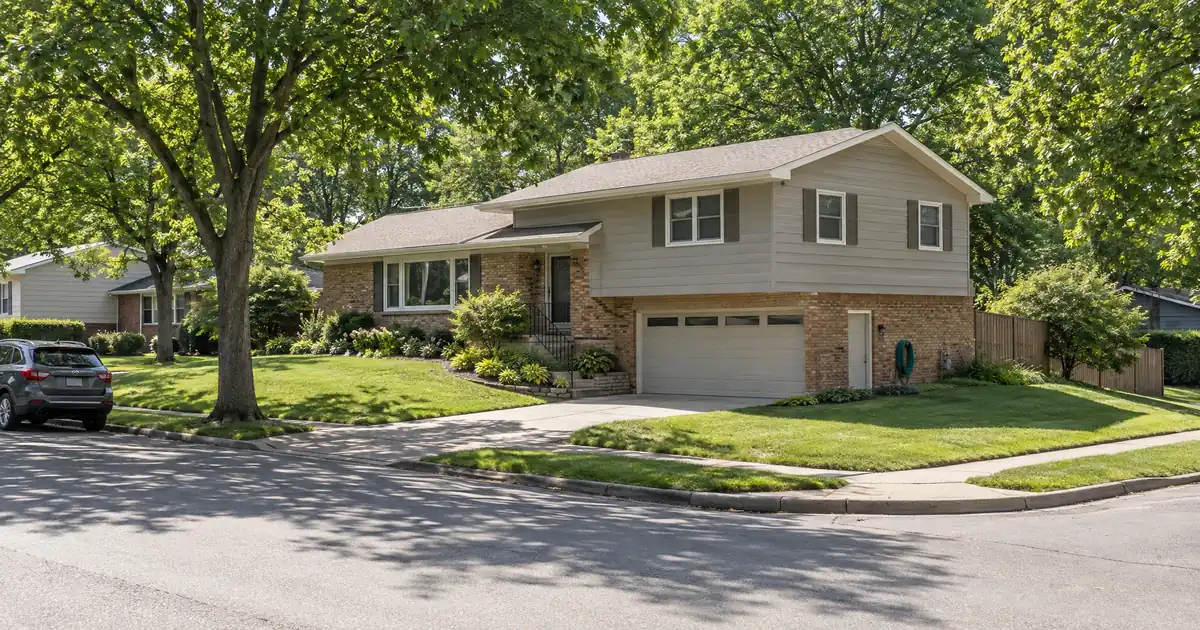
The Quick Read: A pledged-asset mortgage is a standard first-lien home loan with extra collateral added, where the borrower pledges part of a securities portfolio in place of some or all of a cash down payment. The borrower keeps ownership of the stocks, but the lender restricts withdrawal and can sell them if their value falls and a call goes unmet. For a rental purchase, a pledge is not how the loan is reviewed. On the DSCR side, the property’s rent against its payment is the main test.
- The pledge replaces cash down on an owner-occupied or second-home purchase. It is not an asset-depletion loan.
- The lender credits only part of each holding’s market value.
- A drop in the portfolio can trigger a maintenance call, usually with a short cure window.
- On a rental, stock holdings help as verified down-payment funds and reserves, not as the qualifying mechanism.
- Most DSCR purchases land at 75%-80% LTV on an investment property, subject to lender guidelines.
A buyer with a large stock account usually faces one question: sell shares and take a tax hit, or borrow against them and stay invested. A pledged-asset mortgage is one answer. It is a consumer-style product built mostly for primary homes and second homes. Investors who own stock and want rentals need to know where it stops applying. This piece walks through the mechanics, the underwriting logic, the variations, the edge cases, and what the decision looks like on an investment purchase.
Lendmire is a mortgage broker that arranges DSCR investor loans through select lenders in its wholesale network, 41 markets including Washington, D.C. The program notes below come from placing those files. For the full product picture, see the complete DSCR loans guide.
What Is a Pledged-Asset Mortgage?
A pledged-asset mortgage (PAM) is a normal mortgage secured by the property plus a pledged securities account. The pledge fills the gap a cash down payment would otherwise fill. The securities stay in the borrower’s name. A control agreement restricts withdrawals while the pledge is in place, and the lender releases the pledge as the loan pays down, on terms that vary by lender.
It is easy to confuse this with three neighbors:
- Securities-backed line of credit (SBLOC). A revolving or demand-style line secured by a portfolio. FINRA’s investor education page on securities-backed lines of credit explains the collateral mechanics a pledge shares: stocks, bonds, and mutual funds in fully paid cash accounts are the typical eligible collateral.
- Margin loan. Borrowing inside a brokerage account, with the risk of forced liquidation if account equity drops below the minimum.
- Asset depletion. Nothing is pledged. Verified liquid assets are converted into hypothetical qualifying income. That is a qualifying method, not a collateral structure.
A PAM is a mortgage with a collateral add-on. The other three are different tools.
How Does Underwriting Treat the Pledge, Step by Step?
Underwriting treats the pledge as secondary collateral that is valued conservatively, controlled by the lender, and monitored for as long as it stays in place. The first-lien mortgage closes on the property as usual. The pledge secures the gap that would otherwise be the down payment.
1. Pledge in place of cash. A conventional-style purchase needs cash to bring loan-to-value into range. Here, pledged securities sit alongside the property as added collateral.
2. Portfolio assessment. The lender reviews composition, diversification, and total value. A spread of broad holdings is treated better than a few concentrated positions.
3. Collateral control. The securities move to, or stay in, an account the lender controls. The borrower keeps ownership.
4. Closing the mortgage. The first lien records on the property. The control agreement is signed. Typical documents include brokerage statements, the pledge or control agreement, the note and mortgage, and a property valuation. No authoritative published checklist exists, so expect lender-specific variation.
5. Ongoing monitoring. The lender re-tests market value against a maintenance threshold. A shortfall triggers a call. If the call goes unmet, the lender can sell pledged assets, and it may choose which ones.
6. Release. As the loan pays down, the lender releases the pledge. Release terms vary and are written into the agreement.
Income and credit review still apply. A pledge does not replace those tests on a standard mortgage.
How Does a Lender Value Your Stock?
A lender gives credit for only a fraction of market value. That fraction is the lendable value. One broker-dealer education page illustrates the idea with a $100 stock carrying a $65 lendable value, and it says plainly that this is an example, not a standard figure. Market surveys of securities-backed lines report advance rates spread across a wide range, and they depend on the lender and the holding. The illustration shows the concept. It does not describe any program in Lendmire’s network.
What moves the lendable value:
- Type and quality. Broad, liquid holdings are treated better than thinly traded ones.
- Diversification. Concentration raises call risk, because one bad position can pull the whole account under the threshold.
- Restricted or insider stock. Company insiders who pledge shares face separate disclosure and market-impact issues, which Orrick’s insight on insider share pledging covers. Treat that as a side note for a small group of borrowers.
- Account type. Retirement accounts are often ineligible as pledged collateral, though platforms differ.
Some private-bank materials describe two thresholds: an initial lending value that caps what can be borrowed, and a higher maintenance value that governs when a call triggers. The gap between them is why a small dip does not always trigger a call right away.
What Happens in a Margin Call?
A maintenance call arrives when pledged securities fall too far in value. The borrower must add collateral or repay within a short window. FINRA puts that window at typically two or three days. If the borrower cannot meet it, the firm can sell the securities.
Here is the stress path, in plain steps:
1. The market drops and the account value falls below the maintenance level.
2. The lender issues a call. The clock starts.
3. The borrower can post more securities, add cash, or pay down the balance.
4. If none of that happens, the lender sells. The borrower typically does not get to choose which holdings go.
5. The sale can lock in a loss, and any shortfall remains the borrower’s problem.
The SEC and FINRA joint investor alert on securities-backed lines of credit warns that market volatility can magnify potential losses. Investment Executive’s coverage of that alert notes the alert lists ten questions investors should ask, including who the actual lender is and how brokers are paid. Those products are marketed as a way to borrow without selling. The risk side gets less airtime.
Concentration makes this worse. A portfolio of a few large positions can breach its threshold on one bad week.
Structures and Variations That Exist
Variations come down to which asset base and which lender. The common ones:
- Full pledge in place of cash down. The classic form. Securities cover the equity gap and the borrower puts in little or no cash.
- Partial pledge. Some cash down, the rest covered by the pledge.
- Family pledge. A parent pledges assets to help a relative buy, rather than gifting cash. The pledge stays with the parent’s account.
- Separate portfolio borrowing. The buyer takes an SBLOC or margin loan, uses the proceeds as cash, and buys the property with a standard financing structure. This is not a pledged-asset mortgage, but it reaches a similar goal. Some programs restrict using proceeds to buy other securities, so the rules differ by lender.
| Option | What is pledged | Tax event on closing | Call risk | Fits a rental purchase |
|---|---|---|---|---|
| Sell the stock | Nothing | Possible taxable gain | None | Yes, as down payment |
| Pledged-asset mortgage | Securities, as added collateral | None from the pledge itself | Yes | Rarely |
| SBLOC | Securities, for a credit line | None from the borrowing itself | Yes | As a funding source only |
| Margin loan | Securities in the account | None from the borrowing itself | Yes | As a funding source only |
| Asset depletion | Nothing | None | None | Not for investment property |
Where the General Rule Breaks
The general rule is that a pledge replaces cash down on a home loan. Several edge cases bend it.
Occupancy. Pledged-asset mortgages and asset-depletion products are consumer tools, built for owner-occupied homes and second homes. DSCR loans are designed for non-owner-occupied investment properties. Because they are business-purpose investor loans, they are reviewed differently from a standard owner-occupied mortgage. Lendmire’s position is that asset depletion is not built for investment property. A pledge is no exception in practice.
Qualifying versus funding. DSCR qualifies primarily on property-level rental income covering the payment, subject to lender guidelines. Nothing in how the network’s programs work treats a securities pledge as a down-payment substitute on a DSCR purchase. A buyer who assumes a pledge replaces property-rent-based lender review will hit a wall.
Retirement accounts. Standard 401(k)s and IRAs often do not count as pledged collateral. Platform rules differ, so ask the specific lender.
Concentrated or insider stock. Pledging company shares can trigger disclosure and market-impact consequences beyond the loan.
Proceeds use. FINRA treats SBLOC borrowing used to buy other securities as a compliance concern, and some bank programs bar it outright.
Ineligible property types. Manufactured homes (single- and double-wide), log homes, and barndominiums are not offered through the network’s DSCR programs, however strong the borrower’s portfolio is.
What Does the Decision Look Like for a Rental Buyer?
For a rental buyer with stock, the decision is about where the down payment and reserves come from, not about what drives lender review. Stock holdings matter in three ways on a DSCR file:
1. Verified down payment and closing funds. Sell shares, document the proceeds, and use them.
2. Post-close reserves. Many programs want about 6 months of PITIA in reserve, stepping up to about 9 months above $1,500,000. Conservative rate-and-term files at modest leverage under that size can see reserves waived, depending on the lender. Brokerage statements are the standard evidence.
3. Funding from separate portfolio borrowing. Borrowing against the portfolio is a different product with its own call risk.
The tradeoff is real. Selling appreciated stock can create a taxable gain. Borrowing against it may avoid realizing that gain, but the SEC and FINRA alert lists tax consequences among the risks. Tax treatment varies; consult a qualified professional before relying on any outcome.
The bigger issue is correlation. Picture an investor who funds a down payment with an SBLOC against a growth-stock portfolio. If the market falls, the portfolio sags and a call lands. The same downturn can pressure rents and values on the property. The investor now faces a forced paydown or sale at the worst time. In effect, pledging stock turns a property loan into one whose safety depends on both the property and the stock market. The cleaner path for most rental buyers is to sell what they need, document it, and keep the DSCR file simple.
How the DSCR Side Works on a Stock-Funded Purchase
The DSCR file looks at the property. Coverage compares rent to PITIA, and 1.00 is where select programs start. A separate select-lender path takes coverage below 1.00 with leverage and terms adjusted. Stronger ratios open better pricing and leverage.
Typical ranges across the network, subject to lender guidelines:
- Purchase leverage: most files land at 75%-80% LTV on an investment property. Select high-leverage programs reach 85% LTV with roughly a 700+ score.
- Cash-out refinance: around 75% LTV on an investment property, with about 6 months of seasoning as the common expectation.
- Credit: a 620 floor exists in parts of the network, most programs want around 660, and 700+ unlocks the strongest leverage tiers.
- Loan size: up to $3,000,000 on standard programs. Above $2,500,000 the network generally holds to 30-year fixed structures.
- Structures: the spine is the 30-year fixed. Extended terms and interest-only periods are available through select lenders, and ARM structures exist.
A larger down payment, whether from sold stock or other funds, lowers the payment and can lift the coverage ratio. It never erases leverage caps, credit floors, reserve rules, or property eligibility. The strongest files clear both tests: enough equity and enough rental coverage.
One caution. Clearing 1.00 is not positive cash flow. Coverage compares rent to PITIA only. Repairs, vacancy, management, utilities, and capex sit outside the calculation.
Where the buyer also wants to hold property through an LLC, that is common on DSCR files, subject to lender program eligibility. Entity documents are part of the file.
For files that sit next to this topic, Lendmire’s piece Pledged-Asset Mortgage vs. PAL vs. Margin Loan on a Purchase vs. Cash-Out covers the product comparison in more depth.
Who This Fits and Who It Doesn’t
A pledged-asset mortgage fits a buyer with a large, diversified portfolio who wants to buy a home to live in, wants to avoid selling, and can absorb a market drop without panic. It can also suit a family buying a home with a parent’s help.
It is a poor fit when:
- The cushion above the call threshold is thin.
- Holdings are concentrated in one or two names.
- The time horizon is short.
- The property is a rental. A pure rental purchase usually moves to DSCR, where qualification runs on the property’s income and stock shows up as funds and reserves.
Key Terms Defined
Pledged-asset mortgage: A first-lien home loan with a securities account pledged as added collateral in place of cash down.
Lendable value: The portion of a holding’s market value that the lender credits toward the loan.
Maintenance call: A demand to add collateral or repay when pledged assets fall below the lender’s threshold.
Control agreement: The document that restricts withdrawal from the pledged account.
PITIA: Principal, interest, taxes, insurance, and any association dues, the monthly obligation that DSCR coverage is measured against.
DSCR: Debt service coverage ratio, a property’s rent divided by its PITIA.
Frequently Asked Questions
Do I still own my stocks if I pledge them?
Yes, while the loan performs. The borrower keeps ownership, but the lender controls the account, so withdrawals and sales are restricted. If a call goes unmet, the lender can sell.
Can I use a pledged-asset mortgage to buy a rental property?
Rarely. These products are described as owner-occupied and second-home tools. On a rental, the DSCR route qualifies primarily on property-level rental income covering the payment, subject to lender guidelines, and a securities pledge is not treated as a down-payment substitute.
How much time do I get if there is a margin call?
Typically two or three days. That is not weeks. Timelines are set by the broker-dealer or lender under the account agreement, not by mortgage disclosure rules. DSCR loans are business-purpose financing and are exempt from TRID under Reg Z 1026.3, so no consumer three-business-day disclosure period applies. If the call goes unmet, the lender can sell holdings of its choosing.
Do retirement accounts count as pledged collateral?
Often not. Standard 401(k)s and IRAs typically do not qualify, though lender policies differ. Ask the specific lender before building a plan around them.
Does using stock for a DSCR purchase hurt my coverage ratio?
Not directly. Coverage depends on rent against PITIA. Stock matters as verified down-payment funds and reserves. A larger down payment lowers the payment and can lift coverage, but it does not override leverage caps or credit floors.
If you are buying or refinancing a rental property and want to see how the numbers work, Lendmire can help you compare DSCR loan options based on the property income, credit profile, leverage, and investor goals.
About Lendmire
Lendmire (NMLS# 2371349) is a DSCR-focused mortgage broker that helps arrange investor financing across 41 markets, including Washington, D.C., through wholesale and investor-lending channels. DSCR eligibility is generally reviewed by the lender around the property’s rental income rather than personal income documentation, subject to lender guidelines — which works for self-employed investors, LLC operators, and portfolios above four financed properties. Scotsman Guide named Lendmire a Top Mortgage Workplace in both 2025 and 2026.
Get Started
Ready to find the right loan for you?
In about 30 seconds you can review financing options available for your investment property. No commitment required.
Informational only. Not a Loan Estimate, approval, or commitment to lend. Program availability and eligibility are subject to lender guidelines, credit approval, property review, and underwriting.
References
1. FINRA’s investor education page on securities-backed lines of credit
2. Orrick – Considerations for Company Insiders Pledging Shares
3. SEC OIEA / FINRA Investor Alert on SBLOCs
4. Investment Executive – FINRA/SEC alert coverage
This article is part of Lendmire’s DSCR loan program — full qualification details, guidelines, and scenarios live on the program page.
Related reading: How Much a First-Time Buyer Needs to Close an Airbnb DSCR Loan · Does Mid-Term Rental Income Count on a 2-4 Unit DSCR Loan? · How Much Down Payment Does a DSCR Loan in Tennessee Require?
Brandon Miller
Founder & CEO, Mortgage Loan Originator, Lendmire LLC
- Mortgage Loan Originator · NMLS# 1129696 · Verify on NMLS Consumer Access
- North Carolina Real Estate Broker · License# 343312 · Verify on NCREC
- North Carolina Insurance Producer · License# 19053198 · Property, Casualty, Life, Health · Verify on NAIC SBS
- Lendmire LLC · Firm NMLS# 2371349 · Verify firm licensure
Disclosure information. Lendmire is a state-licensed mortgage brokerage under NMLS# 2371349. Lendmire is not a depository institution, direct lender, or financial advisor — all loans referenced are placed through wholesale lender partners and are subject to each lender's underwriting standards. This article is provided for general informational purposes and is not a commitment to lend, nor does it constitute financial, legal, or tax advice. Loan programs, terms, rates, and qualification standards change without notice and depend on borrower profile, property type, and the state in which the subject property is located. Equal Housing Opportunity provider. NMLS Consumer Access: nmlsconsumeraccess.org.