
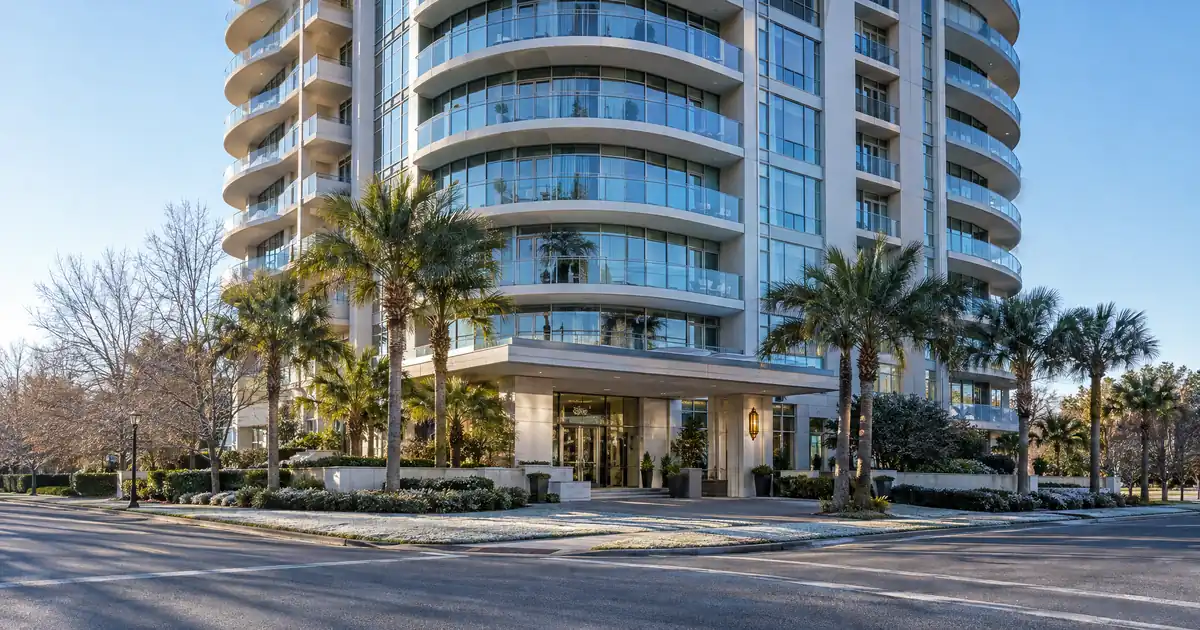
The Quick Read: Yes, but only through non-QM or portfolio programs, and the building decides the outcome more than your income does. A condotel is a condo building run like a hotel, and agency loans exclude it no matter how strong your deposits look. Through select wholesale programs, a bank statement file can qualify on your deposits instead of your traditional personal-income documentation, subject to full underwriting.
- Income and building are separate approvals. Strong deposits do not fix a problem with the project.
- Leverage is capped lower on condotels. Through select wholesale programs, leverage may reach 75% on a purchase and 65% on a cash-out, subject to underwriting.
- Second home or investment use is the usual fit. A primary residence is generally not.
- Deposits are not the only path. Property rental income or liquid assets can carry the file instead.
Key Terms Defined
Non-warrantable describes a condo project that fails the standard rules for agency-backed loans. Hotel-style operations, heavy investor ownership, and pending litigation are common causes.
Bank statement loan is a mortgage that is reviewed around 12 or 24 months of deposits instead of traditional personal-income documentation. The lender still verifies income. It just reads it from a different document.
Expense ratio is the share of business deposits the lender treats as operating costs. What remains counts as your income.
Rental pool is an arrangement where unit owners share rental revenue through a central operator, often the resort manager.
DSCR stands for debt service coverage ratio. It compares a property’s rent to its monthly obligation. A DSCR loan is reviewed primarily on property-level rental income covering the payment, subject to lender guidelines.
Two Approvals, Not One
A condotel file has to clear two separate reviews. One looks at you. The other looks at the building. Most declines come from the second review, and borrowers often don’t see it coming.
| Review | What the lender checks | What proves it |
|---|---|---|
| Borrower | Income, credit, reserves | Bank statements, credit report, asset statements |
| Building | Hotel-style operations, ownership mix, finances | HOA questionnaire, project documents, rental agreement |
| Property cash flow | Rent against the monthly obligation | Resort rental statements or market rent |
Think of it as a gate and a key. Your deposits are the key. The building is the gate. A perfect key does nothing if the gate is locked.
The practical order is simple. Classify the property first. Is it a warrantable condo, a non-warrantable condo, or a condotel? That answer sets the leverage ceiling before anyone opens a bank statement. Then qualify the borrower.
How Bank Statement Income Works on a Condotel File
The income math is the same as on any other property. The condotel changes which lenders look at the file, how much leverage you get, and how hard the building is scrutinized. It does not change how deposits become income.
Here is how it works across the wholesale programs Lendmire places files with:
1. Pick the statement set. Most programs take 12 or 24 consecutive months of personal or business statements. Transaction histories do not substitute.
2. Total the eligible deposits. Business statements require at least 25% ownership of the business.
3. Apply the expense ratio. Fixed ratios vary by business type and staffing level, with lower ratios for a service business with no employees and higher ratios for businesses with more employees or any product business. An accountant-provided ratio is an alternative. A profit-and-loss method is capped at 80%.
4. Divide by the statement months. The result is your monthly qualifying income.
5. Count transfers properly. Transfers from your own business into your personal account count at 100%.
A quick picture: a solo consultant on 12 months of business statements at the 20% ratio keeps 80% of eligible deposits as income. A restaurant owner with a larger payroll starts from a lower share. Same property, very different qualifying income.
Credit and debt limits follow the usual pattern. The portfolio program typically sets a 660 credit floor, rising to 700 on larger super-jumbo loans. Debt-to-income runs up to 50%. Reserves are typically 3 months on loans to $500,000, 6 months to $1,500,000, and 9 months above that. All of this is through select wholesale programs, subject to full underwriting.
Why Agency Loans Shut the Door
Agency financing is off the table for condotels. Fannie Mae’s Selling Guide treats projects that operate as hotels or motels as ineligible. It points to features like primarily transient use, registration services, daily or short-term rentals, and a hotel or resort company that manages the building and facilitates short-term rentals.
The tool lenders use to screen projects also has a label for this. Fannie Mae’s Condo Project Manager reason codes include a “Condotel or Resort Type Project” category. A project showing “Unavailable” status there is ineligible for agency purchase.
This is a project rule, not a borrower rule. That is why great credit and heavy deposits cannot talk a lender out of it. It is also why bank statement and DSCR programs exist for this property type. They are portfolio and non-QM products, built for property agencies will not touch. For the broader picture of how those products fit together, see Lendmire’s complete DSCR loans guide.
Build the Red-Flag List Before You Apply
Screen the building before you spend time on income paperwork. These features usually push a project into condotel territory:
- A front desk or registration services
- Mandatory or optional rental pooling
- Central key systems or daily cleaning
- Hotel or resort branding, or a hotel-brand manager that also handles short-term rentals
- Restrictions on how owners decorate the interior
- Heavy short-term rental activity across the building
Expect the lender to request an HOA questionnaire and project approval documents. Occasionally a label is wrong. A building can get tagged as a condotel when the HOA runs no hotel operations. If you think that happened, ask the HOA for documents that show how the building actually operates, then raise it with your broker early.
Bank Statement, DSCR, or Assets: Which Path Fits?
The right path depends on where your strength sits. A comparison:
| Path | Reviewed on | Best when |
|---|---|---|
| Bank statement | Your deposits after expense ratio | Self-employed, returns understate cash |
| DSCR | The unit’s rental income | Rent clearly covers the monthly obligation |
| Asset allowance | Liquid assets spread over 36, 60, or 84 months | Large liquid balances, modest deposits |
| Assets-only | Liquidity equal to the loan plus costs | Wealth sits in the bank, not in income |
A few details matter. Asset allowance is for primary and second homes only, at 80% maximum. Retirement accounts count at 70%, or 80% at age 59.5 and older. Business funds, gifts, and cryptocurrency never count.
On DSCR, programs below 1.00 coverage are available through select lenders in the network, but leverage and terms adjust. Where the unit’s rent is thin, the bank statement path often works better because your deposits carry the file instead.
What Leverage Looks Like
Condotels carry tighter caps than other condos. Through select wholesale programs, subject to full underwriting, the ceilings run roughly like this:
- A condotel typically tops out at 75% on a purchase and 65% on a cash-out.
- A non-warrantable condo can reach 80%.
- A warrantable condo on a second home or investment purchase at the smaller loan sizes can reach 85%.
Loan size pulls those numbers lower. The portfolio program carries files up to $6,000,000. A separate bank portfolio program handles twelve-month-statement files up to $30,000,000 on its own ladder. Its condotel cash-out ceiling is 50%, and above $4,000,000 every file is reviewed case by case before submission.
Larger loans bring overlays. Above $3,000,000 on a second home or investment property, programs typically want a 700 credit floor and a clean 0x30x24 housing history. They also require 48 months of seasoning after any credit event. These tiers generally limit borrowers to U.S. citizens and permanent residents, and cash-out proceeds cannot count toward reserves.
Here’s the catch on size: the bigger the loan, the less a condotel’s cap matters and the more the size ladder does. Run both.
Occupancy, Cash-Out, and Title
Second home and investment use are the normal fits. Second homes must be one-unit properties. A condotel as an owner-occupied primary residence is generally not workable.
On a cash-out, proceeds are unlimited at or below 60% LTV on the portfolio program. Above 60%, a $1,500,000 cash-in-hand cap applies. A condotel’s 65% cash-out ceiling means you sit in that capped band at the top. Tax treatment can depend on how the funds are used and how the property is held; investors should keep clear records and speak with a qualified tax professional before relying on any deduction. Final terms depend on the lender’s guidelines, the property type, and the borrower’s complete credit picture.
Title in an LLC or trust is reviewed program by program. Lendmire’s piece Can a Trust Finance a Condotel With a Super Jumbo Bank Statement Loan? covers that angle.
Is the Cash Flow Real? (Often Thinner Than It Looks)
Qualifying and profiting are different things. A lender can approve a condotel file that still performs poorly.
The reason is the operator’s cut. One owner on BiggerPockets reported that the resort and fees kept about 66% of room revenue. That is one anecdote, not a market average. It does show how far net income can sit below the headline figure.
Documentation matters here. Collect the resort’s rental statements and the rental-program agreement. Where there is no cash-flow history, lenders may fall back on market rent. Either way, run your own numbers on what you actually keep, not what the brochure shows. Short-term rental rules can vary by city, county, HOA, and property type, so confirm local rules before relying on projected rental income.
Exit risk deserves a thought too (and most buyers skip it). Your future buyer faces the same financing limits you do. A smaller pool of lenders can mean a smaller pool of buyers.
If You Get Declined
A decline is rarely the end. You have four moves:
1. Switch the income path. If rent is thin, qualify on deposits. If deposits are uneven, try assets.
2. Reconsider leverage. Lower loan-to-value can open doors a higher request closed.
3. Challenge the label. Document how the building really operates.
4. Change the unit. A building without pooling or a front desk may avoid the condotel category entirely.
What People Get Wrong
“Condotel means no financing at all.” That is a misconception. Agency financing is unavailable, but portfolio and non-QM options exist.
“Strong income will override the building.” It will not. The rule attaches to the project.
“My pre-approval covers it.” Not necessarily. One BiggerPockets poster was pre-approved and then learned the loan could not finance a condotel. Confirm project eligibility before you rely on any pre-approval.
“Bank statement means light paperwork.” It means different paperwork. Statements, project documents, and credit are all reviewed.
“Any condo that allows short-term rentals is a condotel.” No. The label depends on hotel-type features, though heavy rental activity can trigger a closer look.
Frequently Asked Questions
Can I use bank statements to qualify on a condotel?
Yes, through select wholesale programs that finance non-warrantable property. The income calculation is the same as on any other property: 12 or 24 months of deposits, an expense ratio on business deposits, and division by the statement months. The building review runs alongside it and can decide the file. Everything is subject to full underwriting.
Can I buy a condotel as my primary residence?
Generally no. Second home and investment occupancy are the typical fits, and second homes must be one-unit properties. If you want to live in a hotel-style building full time, expect the file to be harder to place.
Does short-term rental income count toward qualifying?
It can, depending on the path. On a DSCR file the unit’s documented rent or market rent supports the coverage ratio. On a bank statement file, your deposits carry qualification, and the unit’s rent matters less. Resort rental statements and the rental-program agreement are the documents lenders want to see.
What if my building has a mandatory rental pool?
A mandatory pool is one of the clearest hotel-style signals, and it can narrow lender choice and tighten leverage. It does not automatically end the search, since non-QM programs review the project on its own terms. Get the pool agreement and HOA documents in hand before you go under contract.
How much can I borrow against a condotel?
Through select wholesale programs, a condotel typically tops out at 75% on a purchase and 65% on a cash-out, with loan size and credit tier often pulling it lower. Loans above $4,000,000 are reviewed case by case before submission. Programs change, and every file is underwritten individually.
Next Step
If you are financing a high-balance property on business or personal bank statements and want to see how the numbers work, Lendmire can help you compare super jumbo bank statement loan options based on your deposits, the property, credit profile, leverage, and your goals. Lendmire is a broker, not a lender. Its consumer mortgage lending is licensed in 16 states: AL, CA, CO, FL, GA, IN, MI, MT, NM, NC, OH, PA, TN, TX, VA, and WA. Nothing here is a commitment to lend.
Before you fall in love with a unit, read the HOA documents. In a condotel purchase, the building usually answers the financing question before the borrower does.
Lendmire’s self-employed mortgages page presents both super jumbo programs, bank statement and DSCR, side by side.
About Lendmire
Lendmire (NMLS# 2371349), a non-QM mortgage broker serving investors in 41 markets including Washington, D.C., helps structure DSCR scenarios commonly evaluated around a property’s rental income rather than personal income paperwork, subject to lender guidelines. A Scotsman Guide Top Mortgage Workplace in 2025 and 2026, Lendmire places loans through wholesale investor lenders and is not a direct lender.
Get Started
Ready to find the right loan for you?
In about 30 seconds you can review financing options available for your home or investment property. No commitment required.
Informational only. Not a Loan Estimate, approval, or commitment to lend. Program availability and eligibility are subject to lender guidelines, credit approval, property review, and underwriting.
References
1. Fannie Mae Selling Guide B4-2.1-03 Ineligible Projects
2. Fannie Mae Condo Project Manager reason codes
3. BiggerPockets: condotel investing in St. Pete
4. BiggerPockets: condotel pre-approval thread
This article is part of Lendmire’s super jumbo bank statement loan program — full qualification details, guidelines, and scenarios live on the program page.
Related reading: How Big Can a High Net Worth Bank Statement Loan Be? · Bank Statement Loan vs WVOE Loan for Jumbo Borrowers · Bank Statement Loan vs Assets-Only Mortgage
Brandon Miller
Founder & CEO, Mortgage Loan Originator, Lendmire LLC
- Mortgage Loan Originator · NMLS# 1129696 · Verify on NMLS Consumer Access
- North Carolina Real Estate Broker · License# 343312 · Verify on NCREC
- North Carolina Insurance Producer · License# 19053198 · Property, Casualty, Life, Health · Verify on NAIC SBS
- Lendmire LLC · Firm NMLS# 2371349 · Verify firm licensure
Legal disclosures. Lendmire (NMLS# 2371349) is a state-licensed mortgage brokerage that arranges financing through wholesale lender relationships. Lendmire is not a direct lender, depository institution, or registered financial advisor. The discussion above is general informational content about real estate financing — it is not financial, legal, or tax advice, and readers should consult licensed professionals for guidance on their individual circumstances. Loan inquiries are subject to lender underwriting; this article does not represent a commitment to lend. Loan terms, rates, and qualification standards vary by borrower, property, and state, and are subject to change at any time. Equal Housing Opportunity. NMLS Consumer Access: nmlsconsumeraccess.org.