
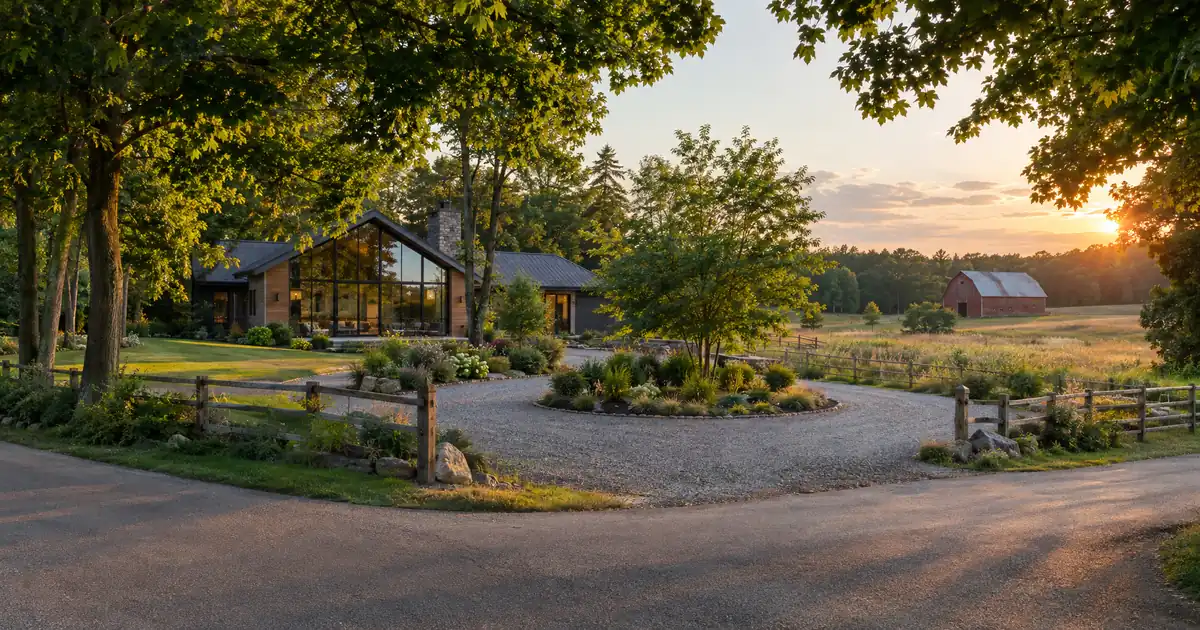
The Quick Read: Usually about 60% of the lower of price or appraised value, which points to roughly $6M on a $10M property, and only on review, and only if the acreage clears first. Four gates set the number: the lower of price or value, the leverage cap for the loan-size band, the acreage and rural rules, and whether rent covers the full payment. Through select wholesale programs, subject to underwriting, the typical shape looks like this:
- Above $4,000,000, every request is reviewed case by case before submission. Purchase and rate-and-term only; no cash-out.
- Indicative leverage on the $4M–$10M band is 60% on review, with a 700+ credit floor.
- Above $3,000,000, the file cannot be rural, and ten acres is the maximum.
- Excess land can come out of appraised value, which shrinks the loan even when rent is strong.
- Two appraisals are required above $2,000,000.
The $6M figure is arithmetic from that percentage, not a quote.
DSCR Calculator
Run the numbers in your market
Rate source: Freddie Mac 30-yr average via FRED® — Federal Reserve Bank of St. Louis · effective Oct 15, 2026
Prefilled with starting assumptions — enter your own rent or nightly figures, taxes, insurance, and HOA for a more accurate picture.
Program parameters update from Lendmire’s centralized guideline source. Taxes and insurance are editable estimates.
As of Oct 15, 2026 · General Freddie Mac market benchmark, not a Lendmire loan offer. Rent, nightly rate, occupancy, taxes, and insurance are editable estimates. Short-term rental figures are estimates only and vary significantly by season, property type, management approach, and local short-term-rental rules — confirm local regulations before relying on them. Qualifying income for short-term rentals varies by program — some use appraisal market rent, others use documented STR history or projections — and is confirmed in underwriting. Not a Loan Estimate, approval, or commitment to lend. Program availability and eligibility are subject to lender guidelines, credit approval, property review, and underwriting.
What Does “Lends On” Actually Mean at This Size?
It means the smallest result of several tests, not a flat percentage of the sticker price. The lender takes the lower of price or appraised value, applies the leverage cap for the loan-size band, screens the land, then checks that rent covers the payment. Whichever gate binds first sets the loan.
Most investors arrive with the sub-$1,000,000 playbook in mind: 80% leverage, a 1.00 coverage ratio, done. Across the wholesale network, that playbook does not scale. On a $10M acreage property, the acreage and size screens usually bind before the coverage ratio does. Coverage still matters, but it rarely decides the outcome alone.
Business-purpose DSCR financing is built for investment property, and the file qualifies primarily on property-level rental income covering the payment, subject to lender guidelines. That is why personal debt ratios do not cap a large balance. Size is limited by the ladder instead. The complete DSCR loans guide covers the basics; this article covers what changes when the balance reaches eight figures.
Key Terms Defined
DSCR (debt service coverage ratio): Monthly rent divided by the full monthly obligation on the loan.
PITIA: Principal, interest, taxes, insurance and any HOA dues; it leaves out utilities, repairs and management fees.
LTV (loan-to-value): The loan amount as a percentage of the lower of price or appraised value.
Super jumbo: A balance above the standard program’s $3,000,000 stopping point, handled on a separate portfolio investor program.
Carve-out: Land the appraiser removes from value because it sits beyond the residential use being financed.
On review: The request is examined individually before submission rather than priced off a fixed grid.
How Does the Leverage Ladder Step Down?
Leverage falls as the balance rises, because a bigger loan leaves the lender a thinner cushion if the property must be sold. Through select wholesale programs, subject to underwriting, the ceilings for a 1.00-or-better coverage ratio look like this.
| Loan size | Purchase | Cash-out | Credit for this leverage |
|---|---|---|---|
| $150K–$1M | 80% | 75% | 660+ |
| $1M–$1.5M | 75% | 70% | 700+ |
| $1.5M–$3M | 75% | 60% | 720+ |
| $3M–$4M | 65% | — | 700+ |
| $4M–$10M | 60% on review | — | 700+ |
Two notes on that table. First, the cash-out column reflects standard rentals; short-term-rental collateral follows its own envelope. Second, none of these figures is a flat “up to.” Above $4,000,000 each request is reviewed before it is submitted, so treat 60% as an indicative ceiling rather than a promise.
The practical effect: on a $10M value, the buyer should plan on roughly 40% equity plus reserves. That is a very different cash requirement from the 20% down many investors assume after reading sub-$1M DSCR marketing. Exact terms depend on the lender’s guidelines, property type, leverage, and a full review of the borrower’s file.
For context only, conforming loan limits are an agency concept. The FHFA baseline for one-unit properties, as summarized by Orrick, is $832,750. A $10M-value loan sits far outside that world, which is why DSCR underwriting runs on property income and a separate size ladder.
How Do Acreage and Rural Rules Change Above $3M?
They tighten sharply. Above $3,000,000 the file cannot be rural, and ten acres is the maximum. Programs reach up to twenty acres only on loans to $3,000,000. Rural property on five acres or less can reach 75% on a purchase or refinance, subject to underwriting.
So a $10M asking price on 12 acres is out of the channel before leverage is even discussed. Working farms, ranches, orchards and raw land are not eligible. Across the network, manufactured homes, log homes and barndominiums are not offered either. If the property’s value comes from agricultural use or a large operating land base, an agricultural lender is the better fit.
A word on the word “rural.” The CFPB publishes a Rural and Underserved Areas tool that lets creditors determine small-creditor exemptions. It is not an investor eligibility test. The lender’s rural label comes from the appraisal and its own overlays: how built-up the surroundings are, road type, outbuildings, farm activity and distance to a town. Ask the lender how a specific parcel will be labeled before spending money on appraisals.
| Appraiser observation | Effect on the file | What the investor can do |
|---|---|---|
| Vacant or farm-use surroundings | May trigger a rural label | Choose parcels in built-up areas |
| Acreage beyond ten | Outside the program above $3M | Split the parcel or change lender class |
| Excess land bundled in the price | May appraise below price | Negotiate price to reflect residential value |
| Barns or agricultural outbuildings | May point to farm use | Document residential use and rentability |
How Does a $10M Acreage Purchase Get Sized?
Run the numbers on two scenarios. Both are illustrative arithmetic, not quotes, and both assume the lender’s indicative 60% purchase leverage on review.
Scenario one. A $10M property on 8 acres in a built-up area appraises at $10M. The acreage is under the ten-acre cap, the area is not rural, and value matches price. The indicative loan is about $6M, subject to the case-by-case review and underwriting.
Scenario two. Same property, but the appraisers carve $1.5M of land out of the valuation. Value falls to $8.5M. The same 60% now supports about $5.1M. The buyer funds the gap between the price paid and what the lender will count. Excess land usually comes out of value, and a price that bundled in extra acres can appraise below what you paid.
The lesson: the loan is a percentage of the lower of price or appraised value, never a percentage of the contract price. A land-heavy property can shrink the loan by hundreds of thousands of dollars with no change in rent at all.
Where Does Coverage Fit In?
Coverage is the last gate, and at this size it is often the one that surprises people. A ratio of 1.00 or higher earns full leverage for the size band. The coverage ratio is monthly rent divided by PITIA, and the appraiser’s market-rent analysis supplies the rent. Appraisal forms in this space borrow agency names as industry labels only. Form 1007 is the Single-Family Comparable Rent Schedule, and the Selling Guide ties it to one-unit investment properties where rental income is used to qualify. Form 1025 is the Small Residential Income Property Appraisal Report, listed with the other Fannie Mae appraisal forms. DSCR loans are not agency products.
High-value acreage often rents poorly relative to price. A $10M property may have few rentable comparables nearby, and a thin comp set can pull the rent estimate down. If rent comes in low, the ratio moves with it.
Coverage below 1.00 has a path, but only to $2,000,000. Select lenders in the network will review 0.75–0.99 at reduced leverage, with LTV and terms adjusting, subject to underwriting. No-ratio files are also limited to $2,000,000, and only through select wholesale programs with a clean housing history, subject to underwriting. Neither path reaches a $10M balance.
Interest-only helps coverage at scale. A 120-month interest-only period is available on 30- and 40-year terms to 75% leverage, qualified on interest, taxes and insurance rather than full amortization. On a $10M acreage file at 60% leverage, interest-only can be the difference between a ratio that clears and one that does not, subject to underwriting.
DSCR vs. conventional financing
There are two common ways to finance an investment property, and they qualify you differently — here’s how investors weigh them.
Why investors choose it
- Qualifies on the property’s rental income — no personal tax returns, W-2s, or pay stubs needed to document income.
- No personal debt-to-income ceiling to clear, so existing mortgages and obligations don’t cap your borrowing the same way.
- Can be closed in an LLC, keeping the property inside a business entity.
- Built for scaling — not held to the limit on number of financed properties that conventional financing applies.
- Underwriting centers on the deal: generally qualifies when the rent covers the payment, a 1.00x coverage ratio being a common baseline (confirmed in underwriting).
- Designed specifically for investment property, including long-term and, where the program allows, short-term rentals.
Where it’s strong
- Often the lowest ongoing financing cost for a buyer who fully qualifies on personal income — a fit for a first property or a cost-first purchase.
Trade-offs for investors
- Requires full personal income documentation and must fit within a debt-to-income limit — salary, existing debts, and other mortgages all count.
- Typically held in your personal name rather than a business entity.
- Caps how many financed properties you can carry, which can become a ceiling as a portfolio grows.
- Evaluates you as a borrower as much as the property, which usually means more paperwork.
How investors usually choose: a first or single property often optimizes for the lowest financing cost; portfolio builders often optimize for leverage, vesting in an LLC, and scaling past conventional caps. The right answer depends on your goals, the property, and current guidelines — both paths run through select lenders in Lendmire’s wholesale network, with eligibility and terms confirmed in underwriting.
What Else Does the File Need?
Beyond leverage, acreage and coverage, large files carry heavier requirements.
- Credit: 700 or higher above $3,000,000, with 0x30x24 housing history and 48-month seasoning after a credit event. Citizens and permanent residents only.
- Reserves: Six months of PITIA on the subject property, or 12 for a first-time investor. On interest-only files, reserves are measured on interest, taxes and insurance. Cash-out proceeds never count toward reserves above $3,000,000.
- Appraisals: Two, above $2,000,000. That adds cost and lead time to the process.
- Entity: Vesting in an LLC is accepted, subject to program terms. Layered entities are not.
- Documents: Down payment and reserve sourcing, entity papers, and the appraisal’s market rent or the lease.
- Recourse: DSCR loans are generally full recourse to the guarantor, so read the guarantee before signing.
Purchase, Refinance or Cash-Out: What Changes at $10M?
At this size, purchase and rate-and-term refinance behave the same: 60% leverage on review above $4,000,000. Cash-out does not exist above $3,000,000. An investor who already owns a $10M acreage property can refinance existing debt, but cannot pull equity out through a cash-out on a balance that large. Every figure here varies by lender and program: guidelines, property type, leverage, and credit profile all apply.
Below $3M the cash-out ladder is 75% to $1,000,000, 70% to $1,500,000 and 60% to $3,000,000 on standard rentals. Investors who want to extract equity from a large holding sometimes restructure into a smaller balance or split the property. That is a different strategy from a single $10M loan, and worth modeling before committing.
Where the Rule Breaks
- Short-term rental income. STR files stop at $2,000,000 and require 1.00+ coverage, with income counted at 80% of gross. A $10M acreage STR cannot be underwritten on STR income in this network. Short-term rental rules can vary by city, county, HOA and property type, so investors should confirm local rules before relying on projected rental income.
- Excess acreage. Some programs value only the residential portion and treat extra land as capped or excluded contributory value. The rule varies by lender, which is why a comparison across the network matters.
- Over ten acres, or agricultural use. Likely out of the DSCR channel entirely.
- Rent thin relative to value. Coverage may fail before leverage binds. Then the choice is lower leverage, interest-only, a different property, or a different loan type.
When Is DSCR the Wrong Tool?
DSCR is the wrong tool when the property’s value rests on land use rather than rent. A working ranch, an orchard or a parcel over ten acres belongs with agricultural lenders. It is also the wrong tool when the investor needs cash-out above $3,000,000, when the borrower is a foreign national seeking a $10M balance, or when rent simply cannot cover the payment at any reasonable leverage.
It is the right tool when the property is a residential-style rental in a built-up area, on ten acres or fewer, with market rent that supports a 1.00-or-better ratio at about 60% leverage. For investors in that situation, the file qualifies primarily on property-level rental income covering the payment, subject to lender guidelines.
Tax treatment can depend on how the funds are used and how the property is held; investors should keep clear records and speak with a qualified tax professional before relying on any deduction.
What Makes This a No?
- More than ten acres, or any rural label, above $3,000,000.
- A working farm, ranch, orchard, raw land, manufactured home, log home or barndominium.
- Cash-out requested on a balance above $3,000,000.
- Rent too thin to cover the full payment, even with interest-only.
- Credit below 700 on a balance above $3,000,000.
- Reserves that rely on cash-out proceeds.
- A layered ownership structure.
Most of these can be fixed before submission by changing the property, the structure or the leverage. A pre-submission review is a more affordable place to find the problem.
Frequently Asked Questions
Can a DSCR lender really go to $10,000,000?
Through a portfolio investor program in the wholesale network, yes, loan sizes run from $150,000 to $10,000,000. The standard program stops at $3,000,000. Above $4,000,000 every request is reviewed case by case before submission, and leverage is indicative at 60% on review, subject to underwriting.
What if my parcel is larger than ten acres?
Above $3,000,000, it is likely out of the program. Twenty acres is reachable only on loans to $3,000,000. A split parcel, a smaller carve-out or an agricultural lender may be the better path, depending on the property and how the land is used.
Can I take cash out of a $10M acreage property?
No. Cash-out is not available above $3,000,000. A property of that value can be refinanced on rate-and-term terms only, at leverage on review.
Does a barn or farm use matter?
Yes. Working farms and ranches are not eligible, and agricultural outbuildings can push the appraiser toward a rural or farm-use label. Above $3,000,000, a rural file is out altogether.
Will the loan be 60% of my purchase price?
Not necessarily. It is 60% of the lower of price or appraised value, on review. If appraisers carve out excess land, value drops and the loan drops with it.
If you are buying or refinancing a high-balance rental property and want to see how the numbers work, Lendmire can help you compare super jumbo DSCR loan options based on the property income, the loan balance, credit profile, leverage, and investor goals through its 41-market footprint, Washington, D.C. included. Every program described here is arranged through select wholesale lenders and is subject to underwriting. This is not a commitment to lend.
Lendmire’s self-employed mortgages page presents both super jumbo programs, bank statement and DSCR, side by side.
About Lendmire
Lendmire (NMLS# 2371349), a non-QM mortgage broker serving investors in 41 markets including Washington, D.C., helps structure DSCR scenarios commonly evaluated around a property’s rental income rather than personal income paperwork, subject to lender guidelines. A Scotsman Guide Top Mortgage Workplace in 2025 and 2026, Lendmire places loans through wholesale investor lenders and is not a direct lender.
Get Started
Ready to find the right loan for you?
In about 30 seconds you can review financing options available for your investment property. No commitment required.
Informational only. Not a Loan Estimate, approval, or commitment to lend. Program availability and eligibility are subject to lender guidelines, credit approval, property review, and underwriting.
References
1. Orrick – FHFA Announces 2026 Increases to Conforming Loan Limits
2. CFPB – Rural and Underserved Areas Tool
3. Fannie Mae Selling Guide B4-1.2-01
This article is part of Lendmire’s super jumbo DSCR loan program — full qualification details, guidelines, and scenarios live on the program page.
Related reading: How Much Can You Borrow With a 40-Year Super Jumbo DSCR Loan? · DSCR vs Asset Depletion for a Retiree Buying a Luxury Rental · IO vs Fully Amortizing DSCR on a Luxury Rental
Brandon Miller
Founder & CEO, Mortgage Loan Originator, Lendmire LLC
- Mortgage Loan Originator · NMLS# 1129696 · Verify on NMLS Consumer Access
- North Carolina Real Estate Broker · License# 343312 · Verify on NCREC
- North Carolina Insurance Producer · License# 19053198 · Property, Casualty, Life, Health · Verify on NAIC SBS
- Lendmire LLC · Firm NMLS# 2371349 · Verify firm licensure
Disclosures. The information presented in this article is general market commentary, not financial, legal, or tax advice. Lendmire is a mortgage brokerage (NMLS# 2371349) — not a direct lender or depository institution — and loan placement is subject to lender underwriting. Nothing in this content represents a commitment to lend. Loan terms, pricing, and program availability vary based on borrower qualifications, property characteristics, and state of subject property, and are subject to change at any time. Lendmire complies with Equal Housing Opportunity requirements. Consumer access: nmlsconsumeraccess.org.