
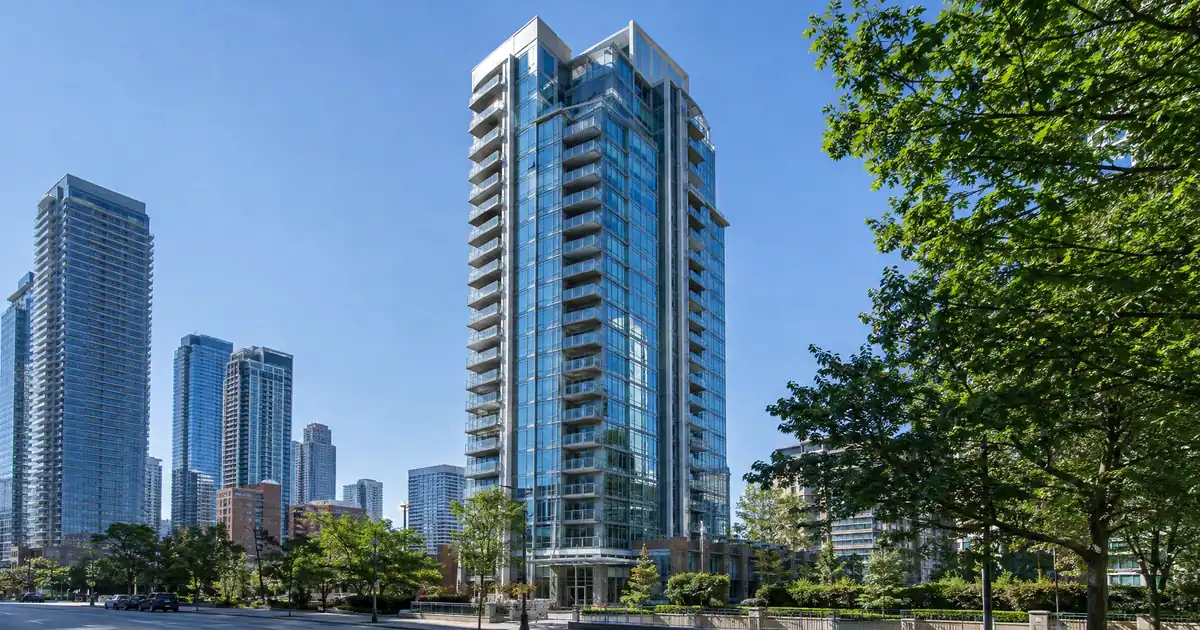
The Quick Read: A luxury tower that fails agency project rules can still be financed with a super jumbo DSCR loan, because the lender reviews two things separately: whether the unit’s rent covers the full monthly obligation, and whether the building is healthy enough to hold as collateral, with loan size and building type each setting a ceiling, subject to underwriting. The loan is reviewed primarily on property-level rental income covering the payment, subject to lender guidelines. The building gets its own review. Strong rent does not rescue a weak building.
- On a non-warrantable condo, leverage tops out at 75% and the loan at $1,500,000 through select wholesale programs, subject to underwriting.
- Coverage of 1.00 or better earns full leverage. Below 1.00 is a real path through select programs, but LTV and terms adjust.
- Reserves typically run six months on the subject property (twelve for first-time investors), and the program credit floor is 660 on loans to $3,000,000.
- Hotel-style units are a stricter subcase with their own ceiling and a cash-in-hand requirement.
- Short-term rental income needs documented history and documented local permission for the specific property.
Luxury towers trip warrantability more often than people expect. Amenity-heavy operations, unsold developer inventory, and heavy investor ownership all do it. Picture an investor under contract on a high-floor unit who learns in week one that the building will not pass a conventional project review. That is the moment this article is for.
DSCR Calculator
Run the numbers in your market
Rate source: Freddie Mac 30-yr average via FRED® — Federal Reserve Bank of St. Louis · effective Oct 15, 2026
Prefilled with starting assumptions — enter your own rent or nightly figures, taxes, insurance, and HOA for a more accurate picture.
Program parameters update from Lendmire’s centralized guideline source. Taxes and insurance are editable estimates.
As of Oct 15, 2026 · General Freddie Mac market benchmark, not a Lendmire loan offer. Rent, nightly rate, occupancy, taxes, and insurance are editable estimates. Short-term rental figures are estimates only and vary significantly by season, property type, management approach, and local short-term-rental rules — confirm local regulations before relying on them. Qualifying income for short-term rentals varies by program — some use appraisal market rent, others use documented STR history or projections — and is confirmed in underwriting. Not a Loan Estimate, approval, or commitment to lend. Program availability and eligibility are subject to lender guidelines, credit approval, property review, and underwriting.
Key Terms Defined
Warrantable condo. A building whose project-level profile meets the standards used for conventional agency-backed mortgages.
Non-warrantable condo. A building that fails those standards. The label attaches to the building, not the borrower, and applies to every unit in it. No mortgage guideline formally defines it. Buildings land there by exclusion, as Homebuyer.com notes.
DSCR (debt service coverage ratio). Monthly rent divided by the full monthly obligation: principal, interest, taxes, insurance and association dues. A result of 1.00 means rent just covers the obligation.
Super jumbo. A trade label for very large loan balances. No regulator defines it.
Condotel. A condo unit in a building run like a hotel, often with a rental pool or front desk booking. It is always non-warrantable, but not every non-warrantable condo is a condotel.
LTV (loan-to-value). The loan balance as a share of the property’s value.
Reserves. Liquid funds the borrower must hold after closing, counted in months of the property’s obligation.
Why Does a Luxury Tower Fail Warrantability?
Luxury towers fail because they run like small resorts and sell like development projects. Amenities, retail podiums, hotel floors, unsold inventory and big dues all show up on the lender questionnaire. One bad item can freeze financing for every unit in the building.
The review starts with documents. Lenders ask the association for a questionnaire, the budget, the reserve study, the master insurance policy and delinquency statistics. TheHOAGuide lists common triggers: high delinquency, investor or single-entity concentration, developer control, litigation, excess commercial space, hotel or rental-pool operations, insurance gaps, deferred maintenance and thin reserves. The same source adds that no federal rule forces an association to complete a lender questionnaire. A refusal simply blocks the review.
| Trigger | Why it matters | What to ask the HOA |
|---|---|---|
| Developer still selling | Control and unit sales unsettled | Units sold vs. total, turnover date |
| Investor concentration | Weaker owner commitment | Share of units rented or investor-held |
| Retail, spa, restaurant income | Business-style operations | Share of budget from commercial uses |
| Hotel or rental pool | Condotel treatment | Any desk, pooling or minimum-stay program |
| Litigation | Safety or structural claims | Open suits and their subject |
| Thin reserves, deferred repairs | Assessments likely | Reserve study and funded percentage |
A fixable label is worth knowing about. Per GoverningDocs, a building can regain warrantable status once litigation resolves, repairs finish, insurance is corrected or reserves improve. Status is also reassessed at each new application. A building rejected last year may pass now. The reverse happens too.
Why DSCR Sidesteps the Agency Label
A DSCR loan is not an agency product, so the agency project label does not decide whether the deal can exist. The lender still judges the building. It simply does so on its own terms, one file at a time.
For contrast, the Fannie Mae Selling Guide marks a project ineligible if the association draws more than 10% of its budgeted income from non-incidental business such as restaurants, health clubs or spas. It also flags mandatory third-party recreational memberships and pending litigation over safety, structure or habitability. A tower with a spa, a restaurant and a members’ club can trip several of these at once. Those are agency purchase rules. They do not govern a DSCR file.
Size adds a second reason. Orrick’s summary of the annual conforming-limit announcement puts the baseline one-unit limit at $832,750 and the high-cost ceiling at $1,249,125. A luxury unit often clears both bars: too large to conform and too unusual to warrant. That pushes it into non-QM and portfolio territory.
DSCR loans are designed for non-owner-occupied investment properties. Because they are business-purpose investor loans, they are reviewed differently from a standard owner-occupied mortgage. So no, this is not a way to buy a pied-à-terre. More on that below.
Two Ceilings: Building Type and Loan Size
Two limits apply at once, and the stricter one controls. The loan-size ladder sets leverage by balance. The property type then sets its own cap. For a non-warrantable condo, that cap is 75% and $1,500,000 through select wholesale programs, subject to underwriting.
Here is the size ladder for a one-to-four unit investment property at coverage of 1.00 or higher. Every figure is a ceiling through select programs, subject to underwriting.
| Loan size | Purchase / rate-and-term max LTV | Credit for this leverage |
|---|---|---|
| $150K–$1M | 80% | 660+ |
| $1M–$1.5M | 75% | 700+ |
| $1.5M–$2M | 75% | 720+ |
| $2M–$3M | 75% | 720+ |
| $3M–$4M | 65% | 700+ |
| $4M–$10M | 60%, on review | 700+ |
Read the credit column carefully. It shows the score that band’s top leverage needs, not the program floor. The program floor is 660 on loans to $3,000,000. Above $3,000,000 the super-jumbo overlay requires 700, along with 0x30x24 housing history, 48-month event seasoning, and citizens or permanent residents only. A lower score drops you to a lower-leverage cell inside the same band. Above $4,000,000 every request is reviewed case by case before submission, purchase or rate-and-term only.
Now the part that matters for towers. A non-warrantable unit never reaches the upper rows of that ladder, because the property cap of $1,500,000 gets there first. The upper rows serve warrantable buildings.
Other file features on this program:
- Reserves: six months of PITIA on the subject property (ITIA on interest-only), twelve for first-time investors.
- Appraisals: two are required above $2,000,000.
- Interest-only: a 120-month period on 30- and 40-year terms, up to 75% LTV, qualified on the interest-only obligation.
- Cash-out: 75% on a standard rental up to $1,000,000, stepping down above that, with none above $3,000,000. Lendmire’s piece on cash-out rules for non-warrantable luxury condos covers the details. The exact numbers vary by lender and program and follow a full review of property, leverage, and credit.
The broader program logic sits in the complete DSCR loans guide.
The Process, Step by Step
The sequence matters because the building review can end the deal before the rent math ever begins. Run it in this order.
1. Classify the building first. Request the questionnaire, budget, reserve study, master insurance policy and delinquency report. Do this before you pay for anything else.
2. Sort it into a bucket. Warrantable, non-warrantable or condotel. Condotels carry their own requirements and a stricter ceiling.
3. Pick the path by loan size. Past the standard program’s $3,000,000 stop, files move to the wholesale network’s high-balance programs. Most towers land under the non-warrantable cap instead.
4. Document the rent. The appraiser’s rent schedule (form 1007 style) supports market rent on a purchase. For a condo unit, the base report is form 1073. A signed lease can support it too.
5. Run the coverage ratio. Rent over the full obligation, with dues inside the denominator.
6. Check reserves and source of funds. Cash-out proceeds never satisfy reserves on this program.
7. Confirm vesting and the appraisal. Entity titles are welcome, with no layered entities, subject to program terms. In a tower with few comparable sales, the appraisal still has to support the value. Expect that to be the slow-moving risk.
Notice what is missing: traditional personal-income documentation. The file qualifies primarily on the property’s income, subject to lender guidelines. Credit, reserves and investor experience still count.
A Worked Example: What Dues Do to Coverage
Dues are the quiet killer in luxury towers. They sit inside the payment, so every increase lowers the ratio.
Run the numbers on a modeled unit, using assumed inputs rather than market data. Say rent covers the full obligation at about 1.15x. Now the association approves a reserve catch-up, and dues rise enough to pull coverage to roughly 1.05x. A second increase takes it just under 1.00x. The rent never changed. The denominator did.
Hotel-style fees work the same way. They shrink the net rent figure, so gross rent flatters the picture. Many investors find real coverage is thinner than the lease suggests.
When the number slips under 1.00x, a few options exist:
- A lower balance, meaning a larger down payment.
- An interest-only period, which changes the payment being measured, not the property.
- A select program that reviews coverage below 1.00 on loans to $2,000,000, where LTV and terms adjust, subject to underwriting.
Interest-only helps the math. It does not make a weak building acceptable. Neither does a longer term.
DSCR vs. conventional financing
There are two common ways to finance an investment property, and they qualify you differently — here’s how investors weigh them.
Why investors choose it
- Qualifies on the property’s rental income — no personal tax returns, W-2s, or pay stubs needed to document income.
- No personal debt-to-income ceiling to clear, so existing mortgages and obligations don’t cap your borrowing the same way.
- Can be closed in an LLC, keeping the property inside a business entity.
- Built for scaling — not held to the limit on number of financed properties that conventional financing applies.
- Underwriting centers on the deal: generally qualifies when the rent covers the payment, a 1.00x coverage ratio being a common baseline (confirmed in underwriting).
- Designed specifically for investment property, including long-term and, where the program allows, short-term rentals.
Where it’s strong
- Often the lowest ongoing financing cost for a buyer who fully qualifies on personal income — a fit for a first property or a cost-first purchase.
Trade-offs for investors
- Requires full personal income documentation and must fit within a debt-to-income limit — salary, existing debts, and other mortgages all count.
- Typically held in your personal name rather than a business entity.
- Caps how many financed properties you can carry, which can become a ceiling as a portfolio grows.
- Evaluates you as a borrower as much as the property, which usually means more paperwork.
How investors usually choose: a first or single property often optimizes for the lowest financing cost; portfolio builders often optimize for leverage, vesting in an LLC, and scaling past conventional caps. The right answer depends on your goals, the property, and current guidelines — both paths run through select lenders in Lendmire’s wholesale network, with eligibility and terms confirmed in underwriting.
What If the Price Is Above the Cap?
A non-warrantable tower priced above the $1,500,000 loan cap does not fit as a single loan. The cap controls, not credit or equity. You have four real choices.
| Option | What changes | Trade-off |
|---|---|---|
| Larger down payment | Loan fits under the cap | More cash tied up |
| Warrantable building | Property cap no longer binds | Fewer luxury options |
| Restructure collateral | Smaller loan on this unit | Needs other equity or assets |
| Different product | Another program path | Documentation and terms differ |
The first is the most common route. Price the unit, apply the 75% ceiling, and see whether the loan lands under the cap. If it does not, put more down until it does. Do that arithmetic with the calculator or your broker before you write an offer.
Here is a genuine toss-up. A warrantable tower unit may carry a higher ceiling and a wider resale pool. A non-warrantable one may sit in a better location at a lower price per square foot. Neither choice is wrong. The right pick depends on how long you plan to hold.
DSCR, Bank Statement or Personal-Income Jumbo?
DSCR fits when the unit is a rental and you want qualification on the property. A bank statement loan fits when the investor’s cash flow is strong but the unit’s rent is weak. Lendmire’s piece Non-Warrantable Condos and the Super Jumbo Bank Statement Loan covers that route.
A personal-income jumbo is generally restricted on non-warrantable condos and on entity vesting. That is why many tower buyers end up here. One more filter: DSCR is for investment property. If you plan to live in the unit, this is the wrong product. Skip any broker who says otherwise.
Condotels, Rental Pools and Short-Term Rentals
In a condotel, the building type sets the ceiling, not the loan size. Through select wholesale programs, a condotel typically tops out at 75% LTV on a purchase and 65% on a refinance, with a $1,500,000 maximum and $250,000 cash-in-hand, subject to underwriting.
Short-term rentals work differently. Income counts at 80% of gross, based on twelve months of operating history on a refinance or the appraisal’s short-term-rent analysis on a purchase. Coverage must be 1.00 or higher, loans stop at $2,000,000, and the investor needs experience (twelve months owning income property in the last thirty-six).
Short-term rental rules can vary by city, county, HOA, and property type, so investors should confirm local rules before relying on projected rental income. Permission is documented per property. A warrantable building can still ban short-term rentals, and a non-warrantable one can allow them. The declaration controls, not the financing label. Read it before you offer.
When State Safety Laws Add Paperwork
Some states add documents to the building review. One example: Florida’s SB 4-D created milestone structural inspections and Structural Integrity Reserve Studies for condo buildings of three or more stories. A lender reviewing a tower there will want to see those reports. This is a state example, not a national rule. Other states differ, so ask whether your building’s state requires similar reports.
Exit and Resale Planning
Plan the exit before you buy. The buyer pool for a non-warrantable unit narrows to cash buyers and portfolio or non-QM borrowers, so resale discounts are possible, per GoverningDocs. Two layers of risk exist: the loan is underwritten on rent, while the collateral is judged on the building. Model both.
A longer hold gives a building time to fix its problems and regain warrantable status. Agency rules also keep moving, so a label today may not match the label at sale. Tax treatment varies; consult a qualified professional.
When This Is the Wrong Tool
DSCR is the wrong tool when the unit will not rent for enough to cover its obligation, even with reduced-leverage structuring. It is wrong when you plan to occupy the unit. It is wrong when the loan must exceed the property cap and you cannot add cash. And it is wrong when the building refuses to complete the questionnaire. Any of these is better to learn before going under contract than after.
Pre-Offer Checklist
Request from the association or management:
- Lender questionnaire and current budget.
- Reserve study and funded percentage.
- Master insurance policy and deductibles.
- Delinquency report and litigation list.
- Declaration with rental and minimum-stay rules.
- Share of units that are investor-held, and any hotel or rental-pool program.
Ask your broker before you offer:
- Which ceiling binds first, the property type or the loan size?
- What coverage does the unit produce with dues included?
- What reserves, appraisals and credit does the target leverage need?
- Does a lower-leverage cell fit if my score falls short?
Frequently Asked Questions
Does non-warrantable mean I can’t get financing?
No. It means the agency path is closed, so the building gets reviewed on a lender’s own terms. A DSCR loan arranged through select wholesale programs is one route, subject to underwriting. The building’s health and the rent coverage still have to work.
Can I buy the unit in an LLC?
Often yes. Entity vesting is welcome on this program, with no layered entities, subject to program terms. Personal-income jumbo loans are generally more restricted on entity vesting, which is one reason investors choose DSCR for tower units.
What if the coverage ratio is below 1.00?
Select programs reach coverage below 1.00 on loans to $2,000,000, with LTV and terms adjusting, subject to underwriting. You can also lower the balance with more cash down or use an interest-only period. Dues increases hit this ratio hardest in luxury towers.
Does the height or luxury label matter?
Not by itself. What matters is the building’s operations, reserves, litigation, concentration and any hotel features. A tall tower with clean finances can be easier than a small building with a pooled rental program.
Can I live in the unit?
No. DSCR financing is for non-owner-occupied investment property. If you want to occupy the unit, a different product applies.
Next Step
If you are buying or refinancing a high-balance rental property and want to see how the numbers work, Lendmire can help you compare super jumbo DSCR loan options based on the property income, the loan balance, credit profile, leverage, and investor goals, with financing arranged in 41 markets, including Washington, D.C. For a tower with a thin comparable-sales set, the building file is usually the first thing to get right.
Lendmire’s self-employed mortgages page presents both super jumbo programs, bank statement and DSCR, side by side.
About Lendmire
Lendmire — NMLS# 2371349 — is a mortgage brokerage specializing in DSCR investor loans, helping arrange financing across 41 markets, including Washington, D.C., through wholesale and investor-lending channels. The model centers on property-level rental income reviewed by the lender rather than W-2 documentation, subject to lender guidelines, suiting entity-owned and multi-property investors. Lendmire holds Scotsman Guide Top Mortgage Workplace recognition for 2025 and 2026.
Get Started
Ready to find the right loan for you?
In about 30 seconds you can review financing options available for your investment property. No commitment required.
Informational only. Not a Loan Estimate, approval, or commitment to lend. Program availability and eligibility are subject to lender guidelines, credit approval, property review, and underwriting.
References
1. Homebuyer.com, non-warrantable condominium
2. TheHOAGuide, lender condo questionnaire
This article is part of Lendmire’s super jumbo DSCR loan program — full qualification details, guidelines, and scenarios live on the program page.
Related reading: Can a Private-Bank Luxury Rental Cash Out Into a Super Jumbo DSCR Loan? · How Big Can an Interest-Only Super Jumbo DSCR Loan Be? · Can You Buy a Luxury Duplex on a Super Jumbo DSCR Loan?
Brandon Miller
Founder & CEO, Mortgage Loan Originator, Lendmire LLC
- Mortgage Loan Originator · NMLS# 1129696 · Verify on NMLS Consumer Access
- North Carolina Real Estate Broker · License# 343312 · Verify on NCREC
- North Carolina Insurance Producer · License# 19053198 · Property, Casualty, Life, Health · Verify on NAIC SBS
- Lendmire LLC · Firm NMLS# 2371349 · Verify firm licensure
Disclosures. The information presented in this article is general market commentary, not financial, legal, or tax advice. Lendmire is a mortgage brokerage (NMLS# 2371349) — not a direct lender or depository institution — and loan placement is subject to lender underwriting. Nothing in this content represents a commitment to lend. Loan terms, pricing, and program availability vary based on borrower qualifications, property characteristics, and state of subject property, and are subject to change at any time. Lendmire complies with Equal Housing Opportunity requirements. Consumer access: nmlsconsumeraccess.org.