
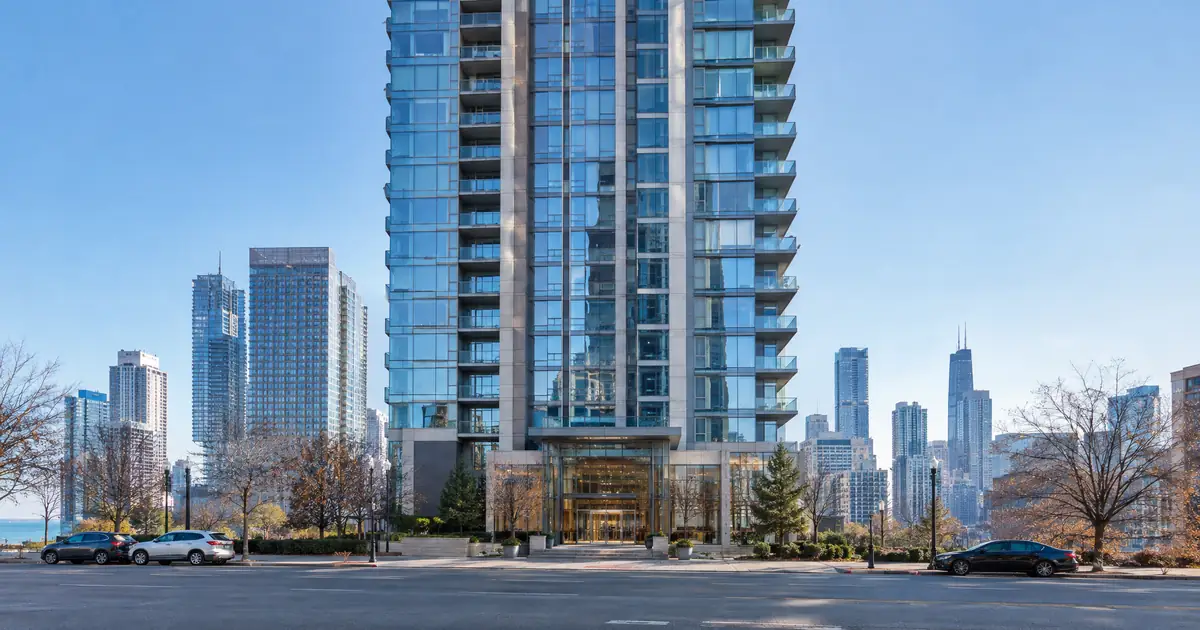
The Quick Read: Yes, but only when two gates both open: the building must be acceptable to a non-agency lender, and the loan must fit the lower leverage and size limits that apply to non-warrantable condos, typically 75% and $1,500,000 through select wholesale programs, subject to underwriting. The loan program can be super jumbo. The collateral sits on a lower rung of the ladder. A luxury unit priced well above that rung is the hard case.
- Non-warrantable is a label for the building, not a verdict on you or the unit.
- A DSCR loan is reviewed primarily on property-level rental income covering the payment, subject to lender guidelines, so the label alone does not end the file.
- The full super jumbo ladder runs to $10,000,000, but non-warrantable collateral typically stops at 75% leverage and a $1,500,000 loan.
- High association dues are where luxury tower files most often break the coverage test.
- If the price needs a bigger loan than that lane allows, you resize the deal or pick another tool.
What Do Non-Warrantable and Super Jumbo Actually Mean?
Both terms are trade labels. Neither is a regulated category, and neither comes with a fixed legal definition.
DSCR Calculator
Run the numbers in your market
Rate source: Freddie Mac 30-yr average via FRED® — Federal Reserve Bank of St. Louis · effective Oct 15, 2026
Prefilled with starting assumptions — enter your own rent or nightly figures, taxes, insurance, and HOA for a more accurate picture.
Program parameters update from Lendmire’s centralized guideline source. Taxes and insurance are editable estimates.
As of Oct 15, 2026 · General Freddie Mac market benchmark, not a Lendmire loan offer. Rent, nightly rate, occupancy, taxes, and insurance are editable estimates. Short-term rental figures are estimates only and vary significantly by season, property type, management approach, and local short-term-rental rules — confirm local regulations before relying on them. Qualifying income for short-term rentals varies by program — some use appraisal market rent, others use documented STR history or projections — and is confirmed in underwriting. Not a Loan Estimate, approval, or commitment to lend. Program availability and eligibility are subject to lender guidelines, credit approval, property review, and underwriting.
A condo project is non-warrantable when it falls outside the project standards the big mortgage agencies use to buy loans. HomeBuyer.com notes the term is not formally defined in guidelines. A building is non-warrantable by exclusion, because it failed the review. Reviewers look at association finances, insurance, ownership concentration, litigation, and commercial space.
Notice what the label does not measure. It does not measure your credit, your income, or the quality of your unit. It measures the project. These condos are typically financed with portfolio loans, where the lender keeps the loan instead of selling it.
Super jumbo is just as loose. It means a loan balance well above ordinary jumbo size. In the wholesale network Lendmire works through, the investor ladder runs from $150,000 to $10,000,000, while the standard DSCR program stops at $3,000,000. The ladder is how qualified investors get past that point.
Why Can a DSCR Lender Look Past the Label?
A DSCR lender can look past the label because the loan is not built for the agencies. DSCR stands for debt service coverage ratio. You calculate it by dividing the property’s monthly rent by the full monthly obligation: principal, interest, taxes, insurance, and association dues.
DSCR loans are designed for non-owner-occupied investment properties. Because they are business-purpose investor loans, they are reviewed differently from a standard owner-occupied mortgage.
That does not mean the building gets ignored. Across the wholesale network, lenders still read the association budget, reserves, insurance, litigation, and rental rules. The difference is what they do with a flag. Some flags only matter to agency loans. Others matter to every lender.
| Building trigger | Agency loans | DSCR lenders |
|---|---|---|
| High investor concentration | Often blocks | Usually reviewed on its terms |
| Commercial space | Can block | Usually reviewed on its terms |
| Thin reserves | Can block | Can add overlays or decline |
| Active litigation | Often blocks | Can still block |
| Rental ban or unmet cap | Not the test | Ends the plan |
| Hotel-style rental pool | Blocks | Moves to condotel path |
The pattern is simple. Concentration and commercial-space problems are mostly agency problems. Money problems, legal problems, and rental-permission problems follow you to any lender.
The Two Gates, in Order
Building review comes first because it decides which rules apply to the unit. Only then does the rent matter. Think of the file as two gates.
1. Gate one is the project screen. The lender sorts the collateral into warrantable condo, non-warrantable condo, or condotel. The HOA questionnaire and the association budget drive this step. Associations often do not know their own status, which is why the lender-issued questionnaire matters.
2. Gate two is unit economics and size. The loan has to clear the coverage test, fit the leverage limit, and fit the loan-size limit for that collateral class. The tighter limit governs.
Coverage of 1.00 or higher earns full leverage on most files in the network. Coverage below 1.00 is a real path through select programs, but LTV and terms adjust, subject to underwriting. Dues sit inside the obligation, so they pull the ratio down on every luxury file.
Other terms for this collateral are firm. Condos that are non-warrantable are typically held to 75% leverage and a $1,500,000 loan. Condotels run tighter: 75% on a purchase, 65% on a refinance, a $1,500,000 loan, and $250,000 of cash in hand. Condotel units are a separate class, and a mislabeled building can move from one path to the other.
Most programs also want credit of 660 or better on loans to $3,000,000. They want six months of reserves on the subject property, and twelve for first-time investors. The 75% cell on loans between $1,000,000 and $1,500,000 typically needs a score of 700 or higher.
What Changes in a Luxury Tower?
Tall, amenity-heavy buildings add risks that a garden condo does not have. A broker sees the same handful of issues again and again.
- Developer or sponsor holdings. If the builder still owns many unsold units, the association may not be fully investor-controlled. Lenders ask who holds what.
- Hotel-style services. Front desks, valet, in-house rental programs, and mandatory pooling can push a building toward the condotel path or end the file.
- Master insurance on a tall building. The master policy has to be in force and adequate. Expect the lender to want the evidence in the file.
- Reserve studies and special assessments. A large planned or pending assessment changes the building’s financial picture. Thin reserves can add overlays.
- Litigation history. Construction-defect suits and association disputes are common in newer towers. A pending suit can stop a file at gate one.
- Many units under one owner. Buying several units in one tower creates a concentration problem for the building and for the lender.
Here is the practitioner pattern. On luxury condo files, the dues number surprises buyers more than anything else. The unit may carry strong rent for its neighborhood, but rent is thin relative to price, and the dues are large. Ask the association for the dues schedule before you spend money on an appraisal.
What Happens When a Luxury Tower Price Outruns the Non-Warrantable Lane?
This is the collision no one explains. The super jumbo ladder looks generous: 75% leverage on loans to $3,000,000 on a purchase, then 65% to $4,000,000, then 60% on review above that. But the ladder describes the loan, not the building. Non-warrantable collateral typically stops at 75% and $1,500,000.
Say a tower unit is listed at $4,000,000. Any workable leverage on that price puts the loan far past the non-warrantable size limit. The ladder does not rescue it. Your realistic options look like this:
- Bring more equity. Shrink the loan until it fits the cap. This is the cleanest fix, and it may change the coverage ratio in your favor.
- Find a different unit or building. A warrantable tower can use the full ladder. The same buyer, the same budget, and a different building can produce a very different loan.
- Check whether the label is correct. Sometimes the building is mislabeled, and a corrected status opens a different path.
- Change the product. Bank statement, asset-based, or portfolio financing may fit better. More on that below.
- Walk away. If the numbers need the full ladder on non-warrantable collateral, the deal may not fit any program in the network.
Above $4,000,000, every request is reviewed case by case before submission, and it is purchase or rate-and-term only, with no cash-out. Above $3,000,000 the program also wants credit of 700 or better, citizens or permanent residents, and no rural property.
For high balances, expect two appraisals on loans above $2,000,000. Luxury rent comps are thin, so the appraiser’s rent analysis carries real weight.
Worked Example: One Unit Passes, One Fails on Dues
These are modeled assumptions, not market data. Both scenarios use the same price of $1,900,000 and the same leverage of 75% on a purchase, which fits the non-warrantable lane on a loan size basis, subject to underwriting. Only the association dues differ. Terms vary by lender guidelines, property type, leverage, credit profile, and full file review.
Unit A. Dues are modest for a luxury building. Rent divided by the full obligation, including taxes, insurance, and dues, lands at roughly 1.2x. This clears the 1.00 benchmark and keeps full leverage on the table.
Unit B. Dues are about twice as heavy. Rent is the same, but the full obligation climbs, and coverage falls to roughly 0.9x.
Unit B is not dead. Coverage below 1.00 is a real path through select programs in the network, but LTV and terms adjust, subject to underwriting. Buyers also have two other levers. They can add equity to shrink the payment, or they can use the 120-month interest-only option, which is available to 75% leverage, qualified on interest, taxes, and insurance. Interest-only lowers the obligation the ratio is tested against, but it does not shrink the dues. Exact terms depend on the lender’s guidelines, property type, leverage, and a full review of the borrower’s file.
Short-term rental income is a third lever on some files. It runs at 80% of gross, on documented operating history on a refinance or the appraisal’s short-term-rent analysis on a purchase, and it requires coverage of 1.00 or higher. Short-term rental loans stop at $2,000,000, and this path is for experienced investors. Short-term rental rules can vary by city, county, HOA, and property type, so investors should confirm local rules before relying on projected rental income.
When Is Super Jumbo DSCR the Wrong Tool?
Super jumbo DSCR is the wrong tool when the price needs a loan the non-warrantable lane cannot carry. It can also be wrong when rent is too low relative to dues. In those cases another structure may fit better. The right answer depends on what you can document and how you plan to hold the unit.
| Option | What gets tested | Fit for a non-warrantable tower |
|---|---|---|
| Super jumbo DSCR | Property rent vs. payment | Works inside the 75% / $1.5M lane |
| Bank statement loan | Deposit history | Alternative when rent is thin |
| Asset-based loan | Liquid assets | Can suit cash-rich buyers |
| Full-doc jumbo | Personal income | Often restricts non-warrantable condos and entity vesting |
| Bank portfolio loan | Bank’s own review | Bank keeps the loan; terms vary |
Bank programs for luxury buyers often come as adjustable-rate loans.
If you are a high-net-worth buyer with strong personal income and a primary-residence plan, a big bank may be the right call. That is a different loan type. For a pure rental purchase held in an entity, DSCR is usually the more natural fit, because entity vesting is welcome on the program (no layered entities) and the loan is reviewed on the property.
Your Pre-Application Checklist
Pre-screen the tower before you pay for an appraisal. Most failures are knowable from documents the association can hand you.
| Document | Why it matters | If it is missing |
|---|---|---|
| HOA questionnaire | Sets the collateral class | File cannot start |
| Budget and reserve study | Shows financial health | Overlays or a decline |
| Master insurance evidence | Proves coverage in force | File stalls |
| Governing documents | Show rental rules | You cannot confirm you can rent |
| Litigation disclosure | Flags legal risk | Lender cannot assess risk |
| Lease or rent appraisal | Supports the ratio | Coverage cannot be tested |
| Entity documents | Support vesting | Entity cannot be used |
An HOA rental ban or an unmet rental cap ends the plan, because warrantability is a financing test and rental permission comes from the association documents. Some associations amend rental rules after you buy, so read the amendment history too.
DSCR vs. conventional financing
There are two common ways to finance an investment property, and they qualify you differently — here’s how investors weigh them.
Why investors choose it
- Qualifies on the property’s rental income — no personal tax returns, W-2s, or pay stubs needed to document income.
- No personal debt-to-income ceiling to clear, so existing mortgages and obligations don’t cap your borrowing the same way.
- Can be closed in an LLC, keeping the property inside a business entity.
- Built for scaling — not held to the limit on number of financed properties that conventional financing applies.
- Underwriting centers on the deal: generally qualifies when the rent covers the payment, a 1.00x coverage ratio being a common baseline (confirmed in underwriting).
- Designed specifically for investment property, including long-term and, where the program allows, short-term rentals.
Where it’s strong
- Often the lowest ongoing financing cost for a buyer who fully qualifies on personal income — a fit for a first property or a cost-first purchase.
Trade-offs for investors
- Requires full personal income documentation and must fit within a debt-to-income limit — salary, existing debts, and other mortgages all count.
- Typically held in your personal name rather than a business entity.
- Caps how many financed properties you can carry, which can become a ceiling as a portfolio grows.
- Evaluates you as a borrower as much as the property, which usually means more paperwork.
How investors usually choose: a first or single property often optimizes for the lowest financing cost; portfolio builders often optimize for leverage, vesting in an LLC, and scaling past conventional caps. The right answer depends on your goals, the property, and current guidelines — both paths run through select lenders in Lendmire’s wholesale network, with eligibility and terms confirmed in underwriting.
Can the Label Change Under You?
Yes, and it has been changing. A building that was non-warrantable last year may not be today, and the reverse can happen.
HousingWire reports that Fannie Mae retired the 50% investor-concentration cap for established projects under full review. The same report says the reserve minimum for full-review applications is scheduled to rise from 10% to 15% of budgeted assessment income. The Community Associations Institute confirms both changes on its advocacy page.
The net effect cuts both ways. A building that failed on investor concentration may now pass agency review. A building with thin reserves may fail after the reserve change takes effect. Industry groups have also asked for delays, so the schedule could shift.
Two cautions follow. Older explainers still cite old agency thresholds, so treat them as outdated. And a prior no from a lender may not hold today, because the building’s status can be different.
These changes govern agency loans. Your DSCR lender sets its own standards. But when the agency label shifts, the building’s resale buyer pool shifts with it.
Resale and Exit
Non-warrantable units can be harder to sell, because buyers who need conventional financing may not be able to use it. That narrows your exit even when your own loan works. Secondary explainers describe resale discounts, but treat that as a qualitative risk and not a number.
A building that becomes warrantable later helps. A building that slips into non-warrantable status mid-hold does the opposite. Plan your exit before you buy, and ask about prepayment terms before you compare offers, because prepayment penalties are common on investor loans.
Tax treatment varies; consult a qualified professional.
Key Terms Defined
Non-warrantable condo: a condo project that falls outside the mortgage agencies’ project standards, so agency loans generally cannot be used.
Super jumbo: a trade label for loan balances far above ordinary jumbo size; on this program the ladder runs to $10,000,000.
DSCR: debt service coverage ratio, meaning monthly rent divided by the full monthly obligation.
PITIA: principal, interest, taxes, insurance, and association dues, the full monthly obligation a coverage test uses.
HOA questionnaire: a form the lender sends to the association to learn the building’s finances, litigation, and ownership mix.
Condotel: a condo with hotel-style operation or rental pooling, treated as a tighter and separate collateral class.
What to Do Next
If you are buying or refinancing a high-balance rental property and want to see how the numbers work, Lendmire can help you compare super jumbo DSCR loan options based on the property income, the loan balance, credit profile, leverage, and investor goals. Lendmire is a broker that arranges these loans through select lenders in its wholesale network across 41 markets, including Washington, D.C. Nothing here is a commitment to lend, and every file is underwritten individually. For the broader picture, start with the complete DSCR loans guide.
Frequently Asked Questions
Can I buy more than one unit in the same tower?
Possibly, but it complicates the building review. A single owner holding many units is a classic concentration trigger. Lenders look at how much of the building you would control, and the loan-size and leverage limits apply to each file. Talk through the plan before you contract on a second unit.
Is an HOA rental ban fatal?
Yes, for a rental plan. DSCR drives lender review on rent, so if the association documents bar or cap rentals and you cannot rent, the plan fails. Warrantability is a financing test, and rental permission is a separate question answered by the governing documents.
Can I hold the unit in an LLC?
Entity vesting is welcome on the program, with no layered entities, subject to lender program eligibility. Condo and project review still apply, and the personal side of the file, including credit and reserves, is still reviewed.
Can I use this loan for a vacation home or a primary residence?
No. These are business-purpose loans for investment property. If you plan to live in the unit, you need a different loan type.
What if the building turns out to be mislabeled?
A corrected status can move the file to another path. A building listed as a condotel may turn out to be an ordinary non-warrantable condo, which changes the terms. The HOA questionnaire is how the lender confirms the real classification.
For current guidelines and terms, see Lendmire’s super jumbo DSCR loan programs page.
Lendmire’s self-employed mortgages page presents both super jumbo programs, bank statement and DSCR, side by side.
About Lendmire
As a DSCR and non-QM mortgage broker, Lendmire — NMLS# 2371349 — connects investors with wholesale lending channels across 41 markets, including Washington, D.C. The property’s rental income, not the borrower’s tax returns, is central to lender review, which works for self-employed operators and portfolios beyond four financed properties. Scotsman Guide named Lendmire a Top Mortgage Workplace in both 2025 and 2026.
Investors who want the broader program framework can review how DSCR loans work.
Get Started
Ready to find the right loan for you?
In about 30 seconds you can review financing options available for your investment property. No commitment required.
Informational only. Not a Loan Estimate, approval, or commitment to lend. Program availability and eligibility are subject to lender guidelines, credit approval, property review, and underwriting.
References
1. HomeBuyer.com – Non-warrantable condominium
2. HousingWire – NY condo financing overhaul
3. Community Associations Institute advocacy
This article is part of Lendmire’s super jumbo DSCR loan program — full qualification details, guidelines, and scenarios live on the program page.
Related reading: Super Jumbo DSCR vs Commercial Loan on a Luxury Duplex · How Big Can a 40-Year Super Jumbo DSCR Loan Be? · Can a Business Owner Get a 40-Year Super Jumbo DSCR Loan?
Brandon Miller
Founder & CEO, Mortgage Loan Originator, Lendmire LLC
- Mortgage Loan Originator · NMLS# 1129696 · Verify on NMLS Consumer Access
- North Carolina Real Estate Broker · License# 343312 · Verify on NCREC
- North Carolina Insurance Producer · License# 19053198 · Property, Casualty, Life, Health · Verify on NAIC SBS
- Lendmire LLC · Firm NMLS# 2371349 · Verify firm licensure
Required disclosures. Lendmire (NMLS# 2371349) operates as a licensed mortgage broker, not a direct lender or depository. The discussion in this article is general in nature and should not be relied upon as financial, legal, or tax advice — every investment scenario is unique and should be reviewed by a qualified professional. Any loan inquiry is subject to lender underwriting, and this article is not a commitment to lend or a guarantee of approval. Mortgage rates, loan terms, and program guidelines vary by borrower, property, and state, and may change without notice. Equal Housing Opportunity. Verify licensure at NMLS Consumer Access.