
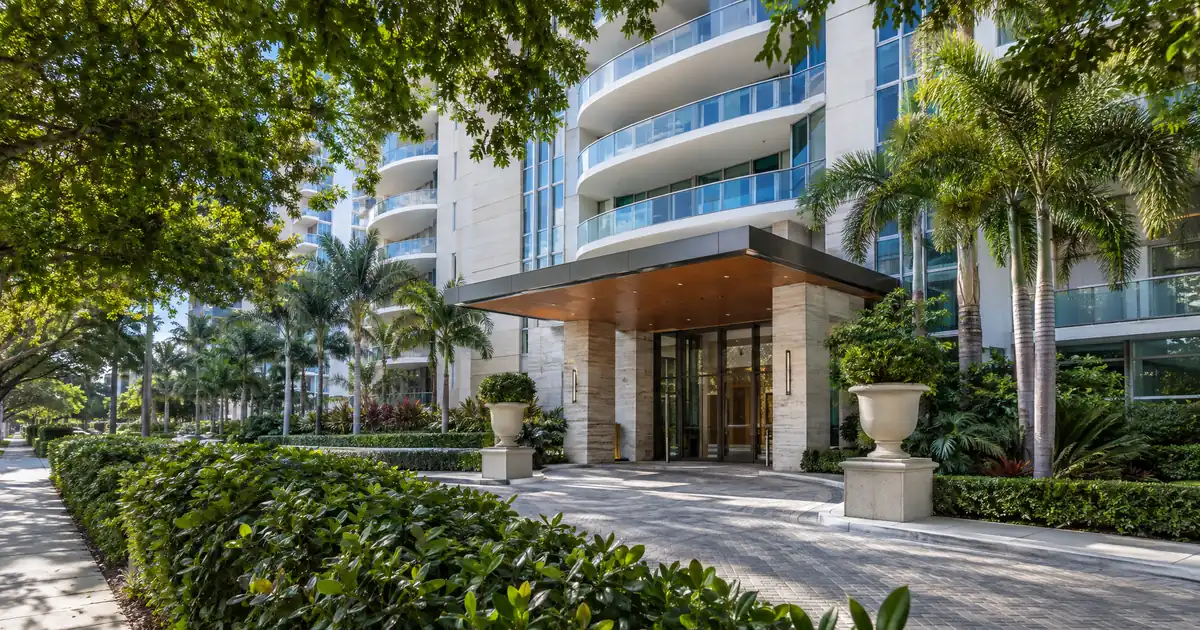
The Quick Read: Rarely, and only when a bank or portfolio lender will accept the specific building problem and your full personal income, which is why most investors in this spot move to a rental-income (DSCR) loan instead. A traditional jumbo is a loan above conforming limits, underwritten on your traditional personal-income documentation and debt-to-income ratio. Add a building that fails agency condo rules and a rental occupancy, and most of those lenders pass.
- A traditional jumbo is underwritten on you; a DSCR loan is underwritten on the property’s rent.
- Non-warrantable condos are eligible on our network’s investor program up to 75% leverage and $1,500,000, subject to underwriting.
- Condotels and hotel-style buildings are a separate, tighter category.
- HOA dues and rental rules in the building can decide the file.
- Every figure here is a ceiling through select wholesale programs, not a promise. These specifics are subject to lender guidelines and a full review of property, leverage, and credit.
Key Terms Defined
Non-warrantable condo: a project that fails the condo eligibility rules set by the agencies that buy mortgages, so the loan cannot be sold to them. It says nothing about whether the building is well built or insurable.
Traditional jumbo: a loan above conforming limits, approved on personal income, assets, credit, and debt-to-income ratio (DTI).
DSCR: debt service coverage ratio, meaning the property’s monthly rent divided by its monthly payment, including taxes, insurance, and HOA dues.
Portfolio lender: a lender that keeps the loan on its own books and sets its own condo rules.
Condotel: a condo building run partly like a hotel, with rental programs and front-desk services.
DSCR Calculator
Run the numbers in your market
Rate source: Freddie Mac 30-yr average via FRED® — Federal Reserve Bank of St. Louis · effective Oct 15, 2026
Prefilled with starting assumptions — enter your own rent or nightly figures, taxes, insurance, and HOA for a more accurate picture.
Program parameters update from Lendmire’s centralized guideline source. Taxes and insurance are editable estimates.
As of Oct 15, 2026 · General Freddie Mac market benchmark, not a Lendmire loan offer. Rent, nightly rate, occupancy, taxes, and insurance are editable estimates. Short-term rental figures are estimates only and vary significantly by season, property type, management approach, and local short-term-rental rules — confirm local regulations before relying on them. Qualifying income for short-term rentals varies by program — some use appraisal market rent, others use documented STR history or projections — and is confirmed in underwriting. Not a Loan Estimate, approval, or commitment to lend. Program availability and eligibility are subject to lender guidelines, credit approval, property review, and underwriting.
Why Does a Traditional Jumbo Struggle Here?
A traditional jumbo struggles because three risks stack: the loan is large, the building fails agency tests, and the unit is a rental. Lenders can price any one of those. Together, many bank jumbo programs simply decline.
Start with the word “jumbo.” It describes loan size, not condo flexibility. A jumbo loan is one above the federal conforming limit, so the agencies cannot buy it and the lender carries more risk. Some jumbo lenders copy the agency condo review. Others write their own, and a few tolerate certain non-warrantable features. You cannot assume a jumbo means relaxed building rules.
Then add occupancy. A bank jumbo on a rental usually wants full income documentation, a global DTI review, and sometimes a larger down payment. Every financed property you own adds to that debt picture. A luxury condo investor with several properties can look stretched on paper even when every unit is cash-flowing.
So the honest answer is that it can happen, but the lender has to be a bank or portfolio shop that accepts your particular building problem. For a rental, that is the narrow lane.
What Makes a Building Non-Warrantable?
The usual triggers are litigation, one owner holding too many units, too much commercial space, a high share of investor-owned units, delinquent HOA dues, thin reserves, weak master insurance, an unsold new-construction project, and hotel-style operations. Some are fixable. Some are not.
| Trigger | What it means | Fixable? |
|---|---|---|
| Litigation | HOA is party to a lawsuit | Often, once resolved |
| Investor concentration | Too many non-owner-occupied units | Slowly, as owners change |
| Single-entity ownership | One owner holds many units | Sometimes |
| Commercial space | Large share of the building | Rarely |
| Delinquent dues | Many owners behind on HOA fees | Yes, if collected |
| Weak reserves or insurance | Underfunded budget or master policy | Yes, if corrected |
| Condotel operations | Hotel-style rental program | Rarely |
Status can change. If the lawsuit settles, reserves are rebuilt, or insurance is corrected, a project may become warrantable. In a small building, the math can flip fast: one owner holding two units can trip the single-entity test.
Severity matters as much as the label. Investor concentration is a common feature that select DSCR programs can work around. Structural or safety litigation and hotel operations are far harder and may be disqualifying even for non-QM lenders.
Four Ways to Finance It
You have four realistic lanes: a traditional jumbo, a DSCR loan, a bank-statement loan, and an asset-based loan. For a rental in a non-warrantable building, DSCR is usually the cleanest fit because it removes personal DTI from the equation.
| Path | Reviewed on | Non-warrantable treatment | Best fit |
|---|---|---|---|
| Traditional jumbo | Traditional personal-income documentation, DTI | Lender-specific, often declined | W-2 borrower, few properties |
| DSCR | Property rent vs. payment | Accepted on select programs | Investors scaling a portfolio |
| Bank statement | Documented deposits | Varies by lender | Self-employed, cash-flow heavy |
| Asset-based | Liquid assets | Varies by lender | Wealth-rich, income-light |
Across our wholesale network, the DSCR lane is the one that treats the building as collateral to be reviewed rather than a disqualifier. A few lenders in the network will take a non-warrantable condo, subject to underwriting. Others won’t touch it. That is why a broker who sees many guidelines at once can save you from applying to the wrong ones.
DSCR does not ignore the building. The lender still reviews the HOA financials, insurance, litigation, and rental permissions. It just drops the agency pass-fail tests and your personal DTI.
What Does the DSCR Route Actually Look Like?
On our network, DSCR loans run from $150,000 to $10,000,000, and leverage steps down as the loan grows. A coverage ratio of 1.00 earns full leverage. Non-warrantable condos are eligible to 75% leverage and $1,500,000 through select programs, subject to underwriting. Condotels reach 75% on a purchase and 65% on a refinance, also to $1,500,000, with $250,000 cash-in-hand. Terms depend on the lender’s guidelines, the property type, the leverage, and a full review of the credit profile.
The standard ladder for the loan amount, at 1.00 coverage or better, runs like this. Treat each as a ceiling.
| Loan amount | Purchase | Rate-term | Cash-out |
|---|---|---|---|
| $150K–$1M | 80% | 80% | 75% |
| $1M–$1.5M | 75% | 75% | 70% |
| $1.5M–$2M | 75% | 75% | 60% |
| $2M–$3M | 75% | 75% | 60% |
| $3M–$4M | 65% | 65% | — |
| $4M–$6M | 60% on review | 60% on review | — |
| $6M–$10M | 60% on review | 60% on review | — |
The top cell in the first band needs 660 credit or better, and the top cell at $1M–$1.5M needs 700. The $1.5M–$3M bands need 720 for their best cell. Above $3,000,000 the program asks 700 or better, with 0x30x24 housing history, citizens and permanent residents only, and no rural property. Because a non-warrantable condo caps at 75% and $1,500,000, the condo overlay applies before you read this ladder.
Above $4,000,000, every request is reviewed case by case before submission, purchase or rate-and-term only. Two appraisals are required above $2,000,000. Reserves are typically six months on the subject property, twelve for first-time investors, subject to underwriting.
Coverage below 1.00 is a real path too. Select programs go from 0.75 to 0.99 up to $2,000,000, but LTV and terms adjust, subject to underwriting. Interest-only for 120 months is available to 75% with coverage of 0.75 or better, qualified on interest, taxes, and insurance.
A Worked Scenario
Run the numbers on a luxury condo in a building where investor-owned units exceed agency limits. You want to buy it at 75% leverage as an investment property. A bank jumbo would review your returns and every other loan you carry. Say you already hold several financed properties. Your DTI looks heavy even though each unit pays its own way. The exact numbers vary by lender and program and follow a full review of property, leverage, and credit.
Under DSCR, the lender compares the appraiser’s market rent to the full monthly obligation, with HOA dues on the expense side. If rent clears roughly 1.1x, you sit above the 1.00 benchmark and the file can stay at full leverage for the condo overlay, subject to underwriting. If high dues push you to something like 0.9x, a select program may still review it, but LTV and terms adjust.
That HOA line is where luxury buildings bite. Dues in a full-service tower can eat much of the rent. Check coverage with dues in before you sign anything.
Luxury-Specific Complications
Luxury units add three problems. Appraisals on penthouses and one-of-a-kind units can have thin comps, which is part of why two appraisals are required above $2,000,000. The appraisal includes a market rent schedule (Form 1007), and underwriters often use the lower of market rent and the actual lease.
Second, short-term rentals and condotels are a tighter category. On our network, short-term-rental files need 1.00 coverage or better, loans to $2,000,000, and experienced investors, with income counted at 80% of gross from documented operating history. Short-term rental rules can vary by city, county, HOA, and property type, so investors should confirm local rules before relying on projected rental income.
Third, HOA rules can undercut the rent assumption. Rental caps, minimum lease terms, and first-year leasing bans all hit a DSCR file. Ask for the HOA’s rental rules before you write an offer.
Entity vesting is welcome on our network, with no layered entities, per lender program requirements. Many luxury investors hold title in an LLC, and that works on the DSCR lane in a way it often does not on a personal-income jumbo.
A Brief Look at Business-Purpose Rules
DSCR loans are designed for non-owner-occupied investment properties. Because they are business-purpose investor loans, they are reviewed differently from a standard owner-occupied mortgage. The CFPB’s ability-to-repay final rule treats investment-purpose loans as business purpose, and Regulation X exempts business-purpose loans from RESPA. That is part of why DSCR lenders can underwrite the property rather than the borrower.
“Business purpose” is not “rule-free,” though. As a law-firm analysis on business-purpose lending notes, the label does not exempt a lender from compliance, and the purpose has to be documented. In practice, three things still apply to you. The lender will ask you to state the business purpose in writing and may weigh factors such as your occupation, how hands-on you are with the purchase, and the size of the deal. The lender still reviews the property, the appraisal, the building, and your credit and reserves. And the building’s own rules still bind you: the HOA’s rental caps, lease minimums, and local rental rules apply whatever loan type you choose.
Pre-Offer Building Checklist
Ask the HOA or management company for these before you commit:
- Budget and financial statements, plus the reserve balance
- Delinquency report on dues
- Master insurance certificate
- Litigation disclosure
- Ownership data: investor share and any single owner holding multiple units
- Commercial-space calculation
- Rental rules: caps, minimum terms, short-term restrictions
- Condo questionnaire, where investor concentration usually shows up
Send the answers to your broker before you go under contract. The building often decides the lane before your credit does.
Exit and Resale Risk
A non-warrantable status can narrow your future buyer pool to cash buyers and borrowers using non-QM financing. That affects resale and refinance. Plan for it. The stronger play is often a building you believe will cure its issue, say a settled lawsuit, because a later buyer can then use agency financing.
What If You’re Declined?
Ask which specific feature caused the decline. If it is curable, such as unpaid dues or an insurance gap, you may wait or negotiate. If it is structural, move to a lender that reviews that feature, or reconsider the building. A decline from one jumbo lender is not a verdict on the property, since each lender sets its own condo review.
For a broader view of how this loan type works, see Lendmire’s complete DSCR loans guide. For the comparison between standard and larger loan sizes on this collateral, Lendmire’s piece on traditional jumbo versus super jumbo DSCR on a non-warrantable condo goes deeper.
Frequently Asked Questions
Does a non-warrantable condo mean the building is unsafe?
No. It is a secondary-market eligibility label, not a quality judgment. A building can be well maintained and still fail an agency test because of investor concentration or commercial space.
Is a jumbo loan automatically more flexible on condos?
No. Jumbo describes the loan size. Some jumbo lenders mirror agency condo review, while others run their own and accept particular features.
Does DSCR ignore the building’s problems?
No. It drops the agency pass-fail tests and your personal DTI, but the lender still reviews HOA financials, insurance, litigation, and rental permissions, subject to underwriting.
Can I buy through an LLC?
Often yes, subject to lender program eligibility. Entity vesting is welcome on our network with no layered entities.
How do HOA dues affect the loan?
Dues sit in the monthly obligation, so they lower coverage directly. High dues in luxury buildings can turn a comfortable ratio into a thin one.
If you are buying or refinancing a high-balance rental property and want to see how the numbers work, Lendmire can help you compare super jumbo DSCR loan options based on the property income, the loan balance, credit profile, leverage, and investor goals. Tax treatment varies; consult a qualified professional.
Lendmire’s self-employed mortgages page presents both super jumbo programs, bank statement and DSCR, side by side.
About Lendmire
Lendmire — NMLS# 2371349 — is a mortgage brokerage specializing in DSCR investor loans, helping arrange financing across 41 markets, including Washington, D.C., through wholesale and investor-lending channels. The model centers on property-level rental income reviewed by the lender rather than W-2 documentation, subject to lender guidelines, suiting entity-owned and multi-property investors. Lendmire holds Scotsman Guide Top Mortgage Workplace recognition for 2025 and 2026.
Get Started
Ready to find the right loan for you?
In about 30 seconds you can review financing options available for your investment property. No commitment required.
Informational only. Not a Loan Estimate, approval, or commitment to lend. Program availability and eligibility are subject to lender guidelines, credit approval, property review, and underwriting.
References
1. Federal Register – CFPB Ability-to-Repay/QM final rule
2. Lexology – Beware of Business Purpose
This article is part of Lendmire’s super jumbo DSCR loan program — full qualification details, guidelines, and scenarios live on the program page.
Related reading: How Much Down Payment Does a Super Jumbo DSCR Loan Require on a Non-Warrantable Condo? · How a Luxury Rental DSCR Loan Works in Wisconsin · Can You Get a DSCR Loan on a Non-Warrantable Luxury Condo?
Brandon Miller
Founder & CEO, Mortgage Loan Originator, Lendmire LLC
- Mortgage Loan Originator · NMLS# 1129696 · Verify on NMLS Consumer Access
- North Carolina Real Estate Broker · License# 343312 · Verify on NCREC
- North Carolina Insurance Producer · License# 19053198 · Property, Casualty, Life, Health · Verify on NAIC SBS
- Lendmire LLC · Firm NMLS# 2371349 · Verify firm licensure
Compliance and disclosures. Lendmire (NMLS# 2371349) is a licensed mortgage broker and is not a direct lender, depository institution, financial advisor, or tax professional. Content in this article is general market analysis and educational information — not financial, legal, or tax advice for any specific situation. Lendmire does not guarantee loan approval; every transaction is subject to underwriting by the funding lender. Mortgage pricing and loan program guidelines are subject to change at any time without notice and vary by borrower characteristics, property type, and state regulations. Lendmire complies with Equal Housing Opportunity. Licensure verification: NMLS Consumer Access.