
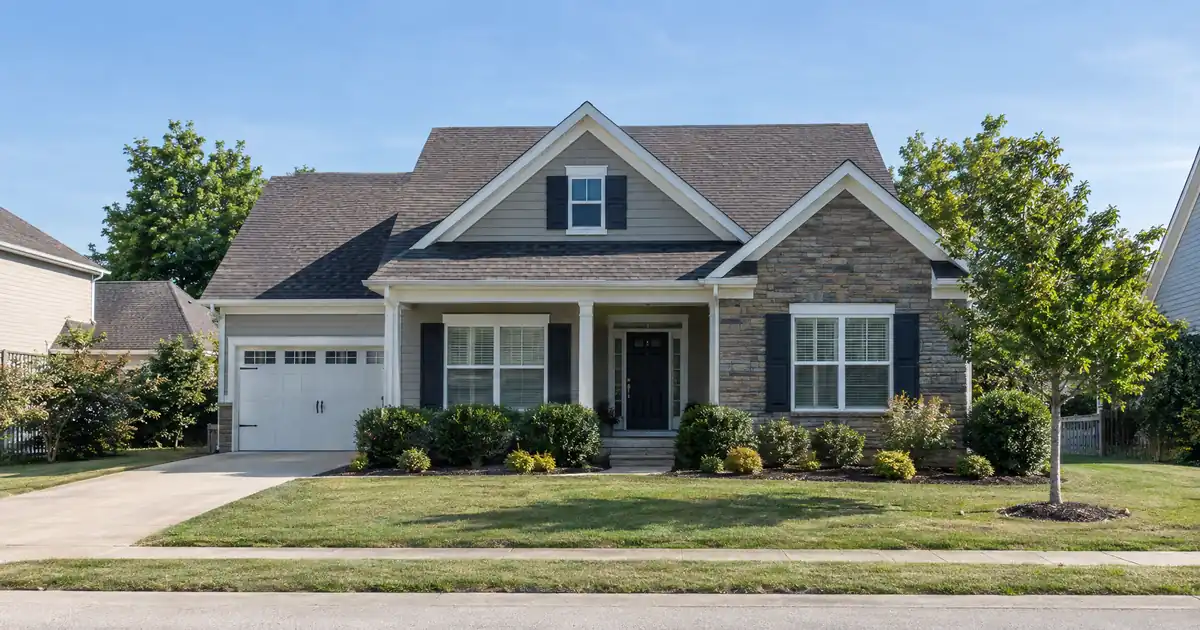
The Quick Read: A portfolio loan is a mortgage a bank or credit union keeps on its own books, so it underwrites the whole borrower and sets its own rules. A DSCR loan is reviewed primarily on property-level rental income covering the payment, subject to lender guidelines. The two terms sit on different axes, so they can overlap, but at ten-plus doors the practical choice is usually a relationship-driven bank note versus a repeatable, property-based structure.
- DSCR is a method of underwriting. Portfolio describes where the loan lives after closing.
- A portfolio loan weighs your full financial picture. A DSCR loan weighs the property’s rent against its full monthly obligation.
- Either one can be a single-property note or a blanket over several properties.
- Clearing 1.00 on a DSCR file does not mean the property cash flows.
- Program details change, and every file is underwritten individually.
The Honest Answer First
If you have a strong banking relationship, a local footprint, and a portfolio you want to negotiate as a package, a portfolio loan can be the better tool. If you are self-employed with heavy write-offs, buying across several markets, or adding doors steadily, DSCR is usually the more repeatable lane.
DSCR Calculator
Run the numbers in your market
Rate source: Freddie Mac 30-yr average via FRED® — Federal Reserve Bank of St. Louis · effective Oct 15, 2026
Prefilled with starting assumptions — enter your own rent or nightly figures, taxes, insurance, and HOA for a more accurate picture.
Program parameters update from Lendmire’s centralized guideline source. Taxes and insurance are editable estimates.
As of Oct 15, 2026 · General Freddie Mac market benchmark, not a Lendmire loan offer. Rent, nightly rate, occupancy, taxes, and insurance are editable estimates. Short-term rental figures are estimates only and vary significantly by season, property type, management approach, and local short-term-rental rules — confirm local regulations before relying on them. Qualifying income for short-term rentals varies by program — some use appraisal market rent, others use documented STR history or projections — and is confirmed in underwriting. Not a Loan Estimate, approval, or commitment to lend. Program availability and eligibility are subject to lender guidelines, credit approval, property review, and underwriting.
Neither option is the better one on its face. The right choice depends on how you earn, where you buy, how you plan to exit, and how much flexibility you value over predictability. Lendmire is a broker whose wholesale network places DSCR loans, so the DSCR column below reflects network guidelines, while the portfolio column reflects published industry norms with the usual qualifiers.
Side-by-Side
| Factor | Portfolio Loan | DSCR Loan |
|---|---|---|
| Review basis | Whole borrower and relationship | Rent vs. full monthly obligation |
| Documentation | Heavier: returns, statements, schedules | Lighter personal documentation |
| Who sets the rules | The holding lender’s own policy | Each lender’s published guidelines |
| Property types | Flexible case by case | Standard rentals; some types not offered |
| Entity vesting | Common, often with guarantees | Common, subject to program terms |
| Reserve expectations | Negotiated, often tied to deposits | Commonly around 6 months of PITIA |
| Structure | Highly customizable | Standardized, with select options |
| Geography | Often local | Often multi-state |
| Timeline | Varies with bank process | Varies with file and lender |
The portfolio column describes industry norms, not a rule that every bank follows. Banks differ widely, and that variability is the point of the product.
Definitions That Stop the Confusion
A portfolio loan is a mortgage the originating lender holds instead of selling. Because no secondary-market buyer sets the rules, the lender writes its own guidelines. Community banks and credit unions are the usual holders, which is why footprints tend to be local.
A DSCR loan compares a property’s rent to its PITIA: principal, interest, taxes, insurance, and any HOA dues. It is built for non-owner-occupied investment property. Qualification rests primarily on that property income, though credit and reserves still matter. The loan is not purely property-based.
A blanket loan is a third idea: one note secured by several properties. A portfolio loan can be a blanket. A DSCR loan can be a blanket. Either can also be a single-property note. If a lender says portfolio loan, ask which structure it means.
Why Ten Doors Changes the Question
Agency conventional financing limits an investor to ten financed properties, per a summary of the Fannie Mae Selling Guide rule. The cap counts properties where you are personally obligated, not the number of mortgages. Individual banks often set a lower internal cap, so some investors feel the wall well before ten.
That wall is why investors with ten-plus doors look elsewhere. But the agency cap is only the beginning. Under a portfolio loan, each added mortgage weighs on your global cash flow in the bank’s eyes. Under DSCR, qualification centers on each property’s rent, so adding doors does not consume personal debt capacity in the same way.
When a Portfolio Loan Is the Better Fit
A portfolio loan tends to win in a few specific profiles.
You have a deep local banking relationship. If one bank holds your deposits, knows your operating history, and wants more of your business, you may negotiate terms a standardized program cannot match. Amortization, interest-only periods, balloons, and blanket structures are all on the table.
Your assets don’t fit a standard box. Mixed-use buildings, properties in unusual condition, or larger multifamily assets sometimes get a hearing from a bank that a DSCR program won’t offer. Unit-count boundaries matter here. DSCR programs generally cover one to four units, with limited exceptions, and larger multifamily usually moves into commercial-style underwriting.
You are buying a performing portfolio in one transaction. A bank willing to look at the whole package, including your other holdings, can sometimes structure it as one note.
Your personal financials are strong and clean. If your traditional personal-income documentation shows the income you actually have, the heavier documentation costs you little.
The tradeoff is predictability. A bank’s appetite changes. Terms that were available last year may not be this year, and exceptions cut both ways.
When a DSCR Loan Is the Better Fit
DSCR tends to win when the borrower, not the bank, is the variable.
Your traditional personal-income documentation understates your cash. Self-employed investors with heavy write-offs often find that returns undercut conventional-style underwriting. DSCR looks at the property’s income instead, subject to lender guidelines.
You are scaling steadily. Across the wholesale network, DSCR is repeatable. The rule set is known before you shop a deal, which helps when you are underwriting your fifteenth door the same way you did your eighth.
You buy in more than one market. Local banks lend where they live. DSCR programs are typically multi-state, so a portfolio spread across counties or states is easier to finance as separate files.
You hold in an LLC. Entity vesting is routine for business-purpose credit, subject to lender program eligibility. Business-purpose loans are exempt from Regulation Z’s consumer provisions, which is one reason entity borrowers are common on both sides of this comparison. The exemption turns on the primary purpose of the credit, and other law and lender policy still apply.
On the network side, purchase leverage most often lands at 75%–80% LTV on an investment property purchase, with select high-leverage programs reaching 85% LTV at roughly a 700+ score. Cash-out refinances top out around 75% LTV on standard rentals. Credit floors begin at 620 in parts of the network, with most programs wanting around 660. Standard loan sizes run up to $3,000,000, and reserves commonly run about 6 months of PITIA, stepping up to about 9 months above $1,500,000. Reserves vary by lender, leverage, loan size, and transaction type. All of this is subject to lender guidelines, and none of it is a commitment to lend.
Coverage works as a floor for specific programs. 1.00 is where select programs start, and stronger ratios open better leverage and terms. A separate path below 1.00 is available through select lenders in the network, with leverage and terms adjusted.
Where Each Option Loses
A portfolio loan loses on scale and repeatability. Heavier documentation, a relationship dependency, and local footprints can slow a growing investor. Balloon or adjustable features, where a bank uses them, add refinance risk down the road.
A DSCR loan loses on flexibility and on whole-borrower nuance. If a bank would value your cash reserves, deposits, and track record, a standardized property test does not reward that. Some property types are not offered at all: manufactured homes, log homes, and barndominiums fall outside these programs.
One more point cuts across both. DSCR compares rent to PITIA only. Clearing 1.00 is not positive cash flow, because repairs, vacancy, management, utilities, and capex sit outside the calculation. Treat the ratio as a qualification test, not a profit forecast.
DSCR vs. conventional financing
There are two common ways to finance an investment property, and they qualify you differently — here’s how investors weigh them.
Why investors choose it
- Qualifies on the property’s rental income — no personal tax returns, W-2s, or pay stubs needed to document income.
- No personal debt-to-income ceiling to clear, so existing mortgages and obligations don’t cap your borrowing the same way.
- Can be closed in an LLC, keeping the property inside a business entity.
- Built for scaling — not held to the limit on number of financed properties that conventional financing applies.
- Underwriting centers on the deal: generally qualifies when the rent covers the payment, a 1.00x coverage ratio being a common baseline (confirmed in underwriting).
- Designed specifically for investment property, including long-term and, where the program allows, short-term rentals.
Where it’s strong
- Often the lowest ongoing financing cost for a buyer who fully qualifies on personal income — a fit for a first property or a cost-first purchase.
Trade-offs for investors
- Requires full personal income documentation and must fit within a debt-to-income limit — salary, existing debts, and other mortgages all count.
- Typically held in your personal name rather than a business entity.
- Caps how many financed properties you can carry, which can become a ceiling as a portfolio grows.
- Evaluates you as a borrower as much as the property, which usually means more paperwork.
How investors usually choose: a first or single property often optimizes for the lowest financing cost; portfolio builders often optimize for leverage, vesting in an LLC, and scaling past conventional caps. The right answer depends on your goals, the property, and current guidelines — both paths run through select lenders in Lendmire’s wholesale network, with eligibility and terms confirmed in underwriting.
Blanket or Separate Notes? The Question Under the Question
At ten-plus doors, the more consequential decision is often structure, not label. A blanket gives you one closing and one payment. A set of separate notes isolates each lien.
With a blanket, trouble on one asset can reach the others through cross-collateralization and cross-default. Selling one door depends on a release clause, and some lenders do not allow partial releases. On a blanket DSCR file, coverage is usually computed on the pool: total rent over total PITIA. That helps a strong property carry a weak one, but it can also hide the weak one.
With separate notes, you can sell, refinance, or restructure a single door without touching the rest. You pay for that with more closings and more servicing relationships.
Lendmire has covered these mechanics in more depth, including how portfolio exposure limits work for LLC investors with ten-plus doors and whether a single blanket loan or several DSCR loans fits an LLC portfolio better.
A Ten-Door Scenario in Ratios
Picture an investor with ten rentals where nine clear coverage comfortably and one sits just under 1.00 on rent alone. On a blanket, the pool ratio may look healthy because the nine carry the one. On separate notes, that weak door is judged by itself. It may need a sub-1.00 path through a select lender, with leverage and terms adjusted, or it may be better left out of the package.
Now say the weak door goes vacant for a stretch. On separate notes, that is one property’s problem. On a blanket, the pool ratio drops and the lender’s view of the whole collateral group shifts. Neither outcome is automatic, and a lender’s guidelines control. The point is that blanket coverage trades isolation for convenience.
Using Both
Some investors split the portfolio. Stable, well-covered doors go under a single note to simplify servicing. Doors you may sell or refinance soon stay on their own notes. Others keep a bank relationship for a few local assets while placing newer, out-of-area purchases through DSCR files.
Many serious investors end up with a mix. The question is not which product is right in the abstract, but which fits each door’s role and exit.
Questions to Ask Before You Choose
- Is the loan one note or several, and what does a release clause allow?
- Does coverage get measured per property or on the pool?
- What are the guarantee and recourse terms, and does the entity matter?
- What reserves does the lender expect, and how do they scale with loan size?
- Which of my property types are eligible, and which are not offered?
- How will a vacancy or an insurance renewal change how the lender views the file?
Tax treatment varies; consult a qualified professional.
Balanced Verdict
Choose a portfolio loan if your relationships, your local concentration, and your documented financials give a bank reasons to say yes on better-negotiated terms, or if your assets don’t fit a standard box. Choose DSCR if your personal income is hard to document, your portfolio spans markets, or you want a repeatable rule set as you add doors. If you are unsure, the mixed approach often fits.
The Lendmire team works with investors comparing these paths. Anyone buying or refinancing a rental who wants to see how the numbers work can compare DSCR loan options based on property income, credit profile, leverage, and investor goals, starting with the complete DSCR loans guide or by calling 828-256-2183.
Frequently Asked Questions
Is a portfolio loan the same thing as a blanket loan?
No. A portfolio loan describes a loan the lender keeps, and it can cover a single property. A blanket covers several properties under one note. The two overlap often, but one does not imply the other.
Does a DSCR loan ignore my personal finances?
No. Qualification is primarily property-based, but credit and reserves still matter. Across the network, most programs want around 660, with a 620 floor in parts of the network and 700+ for the strongest leverage tiers. Everything is subject to lender guidelines.
Can one vacant property sink a blanket loan?
It can strain one. Cross-collateralization means the lender looks at the pool, and a weak or empty property lowers blended coverage. Whether that causes a problem depends on the lender’s terms, your reserves, and the strength of the other doors.
Do I need ten properties before I can get a DSCR loan?
No. DSCR loans are available to investors with one rental or many, subject to lender guidelines. Ten-plus doors is simply where the agency cap pushes many investors to look at alternatives.
Can I use a portfolio loan and DSCR loans together?
Yes, and many investors do. A common split puts local, relationship-driven doors with a bank and newer or out-of-area doors on separate DSCR files. Each lender will want to see the whole picture of your obligations.
About Lendmire
Lendmire (NMLS# 2371349) is a mortgage brokerage focused on DSCR investor financing, helping arrange programs through wholesale and investor-lending channels in 41 markets, including Washington, D.C. DSCR loans are evaluated by the lender on property cash flow rather than personal income, subject to lender guidelines, supporting LLC closings and accommodating investors with four or more financed properties. Scotsman Guide Top Mortgage Workplace in both 2025 and 2026.
Get Started
Ready to find the right loan for you?
In about 30 seconds you can review financing options available for your investment property. No commitment required.
Informational only. Not a Loan Estimate, approval, or commitment to lend. Program availability and eligibility are subject to lender guidelines, credit approval, property review, and underwriting.
References
1. Fannie Mae B2-2-03 summary (homebuyer.com)
2. CFPB, Regulation Z § 1026.3
This article is part of Lendmire’s DSCR loan program — full qualification details, guidelines, and scenarios live on the program page.
Related reading: How a Luxury Rental DSCR Loan Works in Whitefish · Blanket DSCR Loan vs Separate Loans for a Family Office Portfolio · How to Qualify for a Super Jumbo DSCR Loan in Washington
Brandon Miller
Founder & CEO, Mortgage Loan Originator, Lendmire LLC
- Mortgage Loan Originator · NMLS# 1129696 · Verify on NMLS Consumer Access
- North Carolina Real Estate Broker · License# 343312 · Verify on NCREC
- North Carolina Insurance Producer · License# 19053198 · Property, Casualty, Life, Health · Verify on NAIC SBS
- Lendmire LLC · Firm NMLS# 2371349 · Verify firm licensure
Compliance and disclosures. Lendmire (NMLS# 2371349) is a licensed mortgage broker and is not a direct lender, depository institution, financial advisor, or tax professional. Content in this article is general market analysis and educational information — not financial, legal, or tax advice for any specific situation. Lendmire does not guarantee loan approval; every transaction is subject to underwriting by the funding lender. Mortgage pricing and loan program guidelines are subject to change at any time without notice and vary by borrower characteristics, property type, and state regulations. Lendmire complies with Equal Housing Opportunity. Licensure verification: NMLS Consumer Access.