
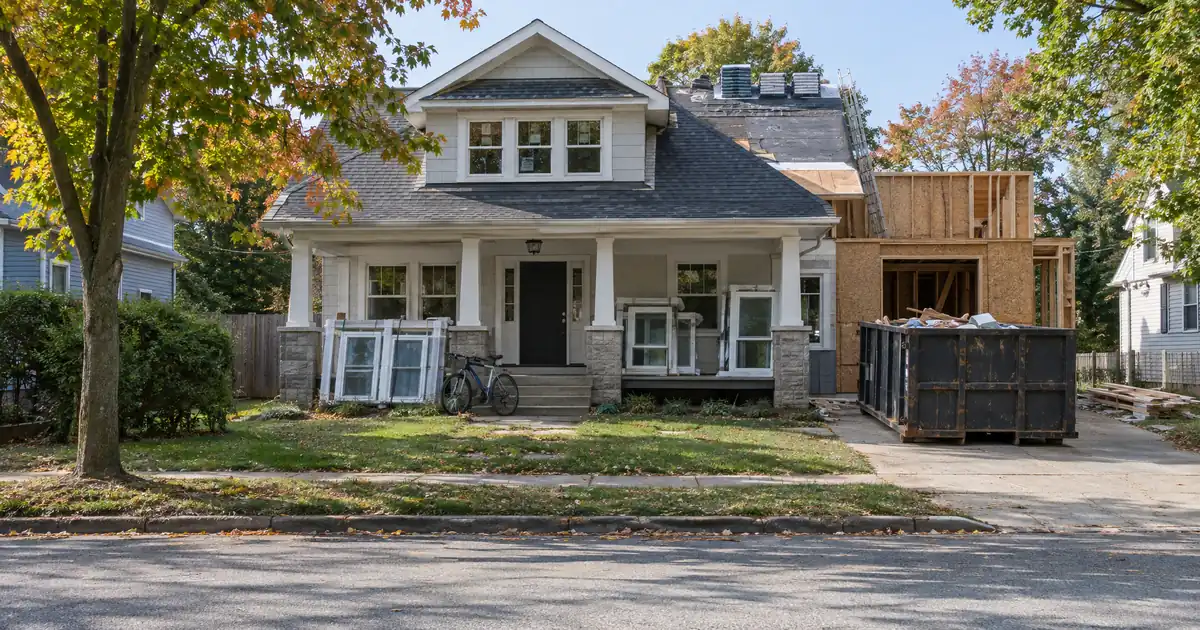
The Quick Read: Moving rehabbed rentals off short-term bridge debt means refinancing each bridge note with a single long-term DSCR loan. That works once the properties are leased, the lender’s seasoning rule has run, and rent covers the full monthly payment. The new lender’s appraisal, not your own after-repair estimate, sets the loan size.
- A DSCR loan is reviewed primarily on property-level rental income covering the payment, subject to lender guidelines.
- Seasoning is the waiting period after you buy. It runs from the recorded deed, not from rehab completion or lease signing.
- Four gates decide the outcome: seasoning, appraisal, rent coverage, and leverage or credit limits.
- Several rentals can sit under one note, with coverage measured on the whole pool.
- Pick the exit before you close the bridge, and size the bridge backward from it.
Most rehabbers think of the bridge loan and the long-term loan as two separate deals. They are one plan in two parts. The bridge buys and fixes the property. The DSCR loan pays off the bridge and holds the property for the long run.
This guide covers one rental first, then several rentals under one note, then the cases where the plan breaks. Program figures here come from select lenders in Lendmire’s wholesale network. Every file is underwritten individually, and nothing here is a commitment to lend. For the bigger picture, see Lendmire’s complete DSCR loans guide.
Key Terms Defined
Bridge loan: a short-term, interest-only loan used to buy and renovate a property. Terms on hard money bridge programs typically run 6 to 18 months, and details vary by lender, property, and experience.
DSCR loan: a long-term investor loan that qualifies primarily on property-level rental income covering the payment, subject to lender guidelines. It is designed for non-owner-occupied investment property.
DSCR (coverage ratio): monthly rent divided by the full monthly payment. A ratio of 1.00 means rent equals the payment.
PITIA: principal, interest, taxes, insurance, and association dues. It is the full payment the coverage test uses.
Seasoning: how long you must own the property before the lender sizes the loan on appraised value instead of what you paid and spent.
Cost basis: the purchase price plus your documented rehab spending.
Payoff-only refinance: a rate-and-term refinance that retires the bridge and returns no cash.
Cash-out refinance: a refinance that pays off the bridge and releases leftover equity as cash.
Blanket (portfolio) loan: one note secured by several properties.
How Does the Handoff Work for One Rental?
The handoff is a refinance. A new DSCR loan pays off the bridge note, and the property moves from interest-only construction-style debt to long-term rental financing. Eight steps get you there.
1. Pick the exit before the bridge. Confirm the DSCR program’s seasoning rule, what starts the clock, and whether the exit is payoff-only or cash-out. Then size the bridge backward from that exit.
2. Buy and rehab. Keep the settlement statement, the draw history, and every invoice. Together they prove your cost basis.
3. Lease the property. Underwriting wants rent evidence. A finished rehab with a tenant but no written lease, no deposit record, and no proof of first month’s rent stalls files more often than you would expect.
4. Wait out seasoning. The clock runs from the recorded deed. Across the network, about 6 months of seasoning is the common expectation for a cash-out refinance. Inside that window, many programs size on the lower of appraisal or cost basis.
5. Order the new lender’s appraisal. It sets the value for the leverage cap. It also produces the market-rent opinion behind the coverage test. Your own after-repair value is only a planning number.
6. Run the coverage test. Divide monthly rent by PITIA. On a single rental, 1.00 is where many select programs start. A separate select-lender path takes coverage below 1.00, with leverage and terms adjusted.
7. Request a payoff letter early. The bridge balance grows through interest, extension fees, and any exit fee. Closing costs come out of proceeds too.
8. Close and pay off the bridge. Cash released is the new loan minus the bridge payoff and closing costs.
The Four Gates
The lower of the value limit and the rent limit governs the loan size. Seasoning, appraisal, coverage, and leverage or credit rules each get a vote.
On a single rental, cash-out tops out around 75% of value on most programs in the network. A purchase typically lands at 75% to 80%. Credit expectations usually start near 660, with a 620 floor in parts of the network. A score of 700 or more opens the strongest leverage tiers.
A bigger down payment or lower leverage can lift the coverage ratio. It never erases leverage caps, credit floors, reserve rules, or property eligibility. Strong files clear both tests: enough equity and enough rent coverage.
Payoff-Only or Cash-Out?
Choose payoff-only when the numbers are tight or the clock has not run. Choose cash-out when seasoning has passed and the appraisal leaves equity to release.
| Factor | Payoff-only | Cash-out |
|---|---|---|
| Cash returned | None | Leftover equity |
| Value basis | Often cost or appraisal, per program | Appraised value after seasoning |
| Typical leverage ceiling | Up to 80% on the portfolio structure | 75% of value |
| Best for | Bridge nearing maturity | Recycling capital |
Here is a modeled example, not market data. Suppose the bridge payoff plus closing costs equal about 65% of the new appraised value. That sits under the 75% cash-out cap, so the loan pays off the bridge and releases a modest amount of cash. Suppose the appraisal comes in low enough that payoff plus costs exceed the cap’s share of value. Then the investor brings cash to closing, or switches to a payoff-only structure. Every figure here varies by lender and program — guidelines, property type, leverage, and credit profile all apply.
The break-even check is simple: add the payoff and exit costs, then divide by the leverage cap. If the appraisal lands below that number, you bring cash.
A short-term rental changes the cap. Cash-out on short-term-rental collateral tops out at 70%, versus 75% on a standard rental. That path also wants roughly 12 months of hosting history. Short-term rental rules can vary by city, county, HOA, and property type, so investors should confirm local rules before relying on projected rental income.
Moving Several Rehabs Into One Loan
One note can hold several rentals. Two structures exist in the network, and they suit different portfolio sizes. Both are program ceilings and floors, not quotes, and both are subject to lender guidelines.
| Factor | 30-year portfolio DSCR loan | Rental portfolio term loan |
|---|---|---|
| Properties | 2 to 20 | 5 or more properties or units |
| Loan size | $300,000 to $5,000,000, larger on review | $500,000 to $50,000,000, larger on review |
| Leverage | Up to 80% of value | Up to 75% of value |
| Term | 30 years | Fixed 3, 5, 7, or 10 years with a balloon |
| Coverage | 1.00 on the pool | Underwritten on the portfolio |
| Recourse | Per loan documents | Recourse or non-recourse |
The 30-year portfolio DSCR loan is the natural fit for a handful of rehabbed rentals. It comes with a 30-year schedule, fixed or adjustable rate types, and an interest-only period available. Property types include single-family, 2-4 unit, condo, and townhome.
The rental portfolio term loan suits bigger holdings, including small multifamily. It carries a balloon at maturity and prepayment through yield maintenance. A non-recourse loan looks to the real estate, with recourse limited to carve-outs such as fraud and bankruptcy. A recourse loan carries a personal guarantee. Properties in several markets can sit under one note.
How Pooled Coverage Works
The 1.00 floor on the 30-year portfolio loan is measured on the pool. Pooled rent is compared with pooled debt service, so stronger properties can offset weaker ones. A rental that falls below 1.00 on its own can still sit in the pool, and underwriting tests the pooled coverage, the leverage and the terms.
Every property still needs a lease or an appraiser-supported market rent. Each one also needs a lender appraisal.
Cash-out on a portfolio loan never exceeds 75% of pooled value, and never exceeds the structure’s own ceiling. Inside the first six months of ownership, the loan is also capped at 90% of total cost (purchase price plus documented improvements). From six to twelve months the cost-basis cap rises to the full total cost. The leverage ceiling still applies, so the loan is the lower of the two. After twelve months the appraised value alone is the basis. A rate-and-term refinance is not subject to the cost-basis cap.
Credit expectations start at a 640 floor, and some portfolio structures want 680 or 720. Some structures also require a special-purpose entity, typically an LLC, subject to lender program eligibility. Owner-occupied property, co-ops, mixed-use property, and commercial property are not eligible in the pool. These programs are available across Lendmire’s DSCR markets, though a few places sit outside their footprint.
Manufactured and mobile homes are not reviewable on any of these programs.
When Properties Finish at Different Times
This is where multi-property plans usually get messy. You have four practical choices:
- Wait for the last property. This keeps one closing, but every earlier bridge keeps charging interest and fees.
- Extend the early bridges. This adds fees and keeps the timeline flexible.
- Refinance finished properties individually, then pool later. This means more closings, and prepayment terms on each new loan matter.
- Sell the straggler. A property that cannot yet cover its payment may be better sold than pooled.
The right pick depends on carrying cost per month against refinance costs. Bridge terms of 6 to 18 months give room to plan, and many investors choose the longer end when seasoning is expected.
Many stalled exits trace back to maturity dates that were never lined up with seasoning, not to weak rent. Lining up the dates before the first bridge closes prevents much of the pain. When rehabbed properties are stabilized, many investors refinance out of hard money into long-term DSCR financing, and Lendmire brokers that path.
Readiness Check Before You Apply
Run this check for every property before you commit to one loan. Go means move forward, and wait means fix the item first.
| Item | How to verify | Go or wait |
|---|---|---|
| Seasoning | Count from recorded deed | Wait if inside window |
| Lease | Signed lease, deposit, first rent | Wait if any is missing |
| Coverage | Rent ÷ PITIA | Wait if below program floor |
| Expense reset | Re-check taxes and insurance post-rehab | Wait if coverage drops |
| Entity | Vesting matches loan program | Fix first if mismatched |
| Reserves | Varies by lender, leverage, loan size | Wait if short |
Reserves commonly run around 6 months of PITIA, with some conservative files waived and larger loans stepping up. Post-rehab tax and insurance changes quietly sink coverage, so run the numbers again after the rehab, not before.
Passing the coverage test does not mean the property cash flows. The calculation compares rent to PITIA only. Repairs, vacancy, management, utilities, and capital expenses sit outside it.
What if the Plan Doesn’t Land?
Most failed exits trace to one of four problems. Each has a fix, and each fix has a cost.
| Symptom | Options | Trade-off |
|---|---|---|
| Low appraisal | Bring cash, switch to payoff-only, or wait | Cash tied up |
| Rent too low | Re-lease, adjust leverage, or look at a select-lender sub-1.00 path | Terms adjust |
| No lease yet | Wait for lease-up | Extra carry |
| Bridge maturing | Extend, payoff-only now, or sell | Fees or second closing |
A sub-1.00 path is available through select lenders in the network, with leverage and terms adjusted. It is a different path from the 1.00 programs, not a lower floor on the same one.
A two-step path works for early exits. Do a payoff-only DSCR loan now and a cash-out later. That means two closings, so check the prepayment terms on the first loan before choosing it.
Why Delayed Financing Rarely Rescues a Hard-Money Rehab
Investors sometimes hope an agency exception will skip the wait and release their forced equity. The agency guide’s cash-out refinance topic includes a delayed financing exception for all-cash buyers. The archived text of that exception requires an arm’s-length original purchase. It also lets the buyer be an individual, an eligible trust, or an LLC or partnership the borrower owns 100%.
A property bought with a bridge loan secured by the property fails the cash-purchase test. The exception also returns documented acquisition cost, not appreciation or rehab spending. DSCR files follow network program rules instead, so use this as contrast only.
One Lender or Two?
Using one lender for the bridge and the DSCR loan keeps the paper trail simple. Using two lets you shop the exit once the property is stabilized. Neither is automatically better.
The benefit of a broker is seeing many lenders’ guidelines at once. Seasoning, leverage, and entity rules differ across the network, so a file that misses one program can fit another. Lendmire’s piece How to Move Five or More Rentals From a Portfolio Loan to DSCR Cash-Out shows how that comparison works going the other direction.
When Not to Consolidate
One loan is not always the right move. Keep separate loans when one property is much weaker than the rest and drags the pooled coverage down. Sell when a rental cannot reach lease-up before the bridge matures. Stay separate when you plan to sell one property soon, since partial releases, substitutions, and sales out of a pool follow the loan documents. The remaining portfolio must still cover its debt service after a release.
Pooling also ties your properties together. A problem on one asset can affect the whole note.
Frequently Asked Questions
Can I refinance as soon as the rehab is done?
Not always. Finished work is only one gate. You also need a lease, rent evidence, and a passed seasoning period. Some programs size on the lower of appraisal or cost during that window, so your forced equity stays locked up.
How long do I wait before a cash-out?
About 6 months of seasoning is the common expectation on cash-out across the network, counted from the recorded deed. Rules vary by lender and program, and this is lender policy rather than law.
Does the lender use my after-repair value?
No. The new lender orders its own appraisal. Your estimate is a planning number, so stress-test the plan against an appraisal below it.
What if my bridge matures before seasoning ends?
You have options. They include a payoff-only refinance, a cost-basis refinance, a bridge extension, or a sale. Each trades off fees, returned cash, or a second closing.
Can several rehabbed rentals go in one DSCR loan?
Yes, on pooled structures. The 30-year portfolio DSCR loan covers 2 to 20 properties with a 1.00 floor measured on the pool. Each property still needs a lease or appraiser-supported market rent.
Next Step
If you are buying, rehabbing or refinancing an investment property on a short timeline and want to see how the numbers work, Lendmire can help you compare hard money options based on the project, the exit plan, leverage, and your goals. Lendmire brokers DSCR and hard money financing through select lenders in its wholesale network across 41 markets, including Washington, D.C. Whether bridge financing is the right start, or one long-term loan is the right finish, depends on the rent, the appraisal, and the calendar for each property.
About Lendmire
Lendmire is a non-QM mortgage brokerage (NMLS# 2371349) arranging DSCR investor loans in 41 markets, including Washington, D.C. DSCR eligibility is generally reviewed around property-level rental income rather than personal income, subject to lender and program guidelines, a fit for self-employed investors and LLC-owned portfolios. Lendmire was recognized as a Scotsman Guide Top Mortgage Workplace in 2025 and 2026.
Get Started
Ready to find the right loan for you?
In about 30 seconds you can review financing options available for your investment property. No commitment required.
Informational only. Not a Loan Estimate, approval, or commitment to lend. Program availability and eligibility are subject to lender guidelines, credit approval, property review, and underwriting.
References
1. Fannie Mae Selling Guide, B2-1.3-03: Cash-Out Refinance Transactions
2. Fannie Mae Selling Guide archive, B2-1.3-03 (delayed financing text)
This article is part of Lendmire’s hard money loan program — full qualification details, guidelines, and scenarios live on the program page.
Related reading: How to Pool Rentals Bought One a Year Into a DSCR Loan · Can You Roll Rentals Financed One Loan at a Time Into One DSCR Loan? · Can Furnished Mid-Term Rentals Go in a Portfolio DSCR Loan?
Brandon Miller
Founder & CEO, Mortgage Loan Originator, Lendmire LLC
- Mortgage Loan Originator · NMLS# 1129696 · Verify on NMLS Consumer Access
- North Carolina Real Estate Broker · License# 343312 · Verify on NCREC
- North Carolina Insurance Producer · License# 19053198 · Property, Casualty, Life, Health · Verify on NAIC SBS
- Lendmire LLC · Firm NMLS# 2371349 · Verify firm licensure
Important disclosures. Lendmire (NMLS# 2371349) is a licensed mortgage brokerage. Lendmire is not a direct lender, depository institution, or financial advisor. All loan inquiries are subject to lender underwriting; this article does not constitute a commitment to lend. Rates, terms, and program guidelines are subject to change without notice and vary by borrower profile, property type, and state. Information in this article is general in nature and is not financial, legal, or tax advice. Equal Housing Opportunity. NMLS Consumer Access: nmlsconsumeraccess.org.