
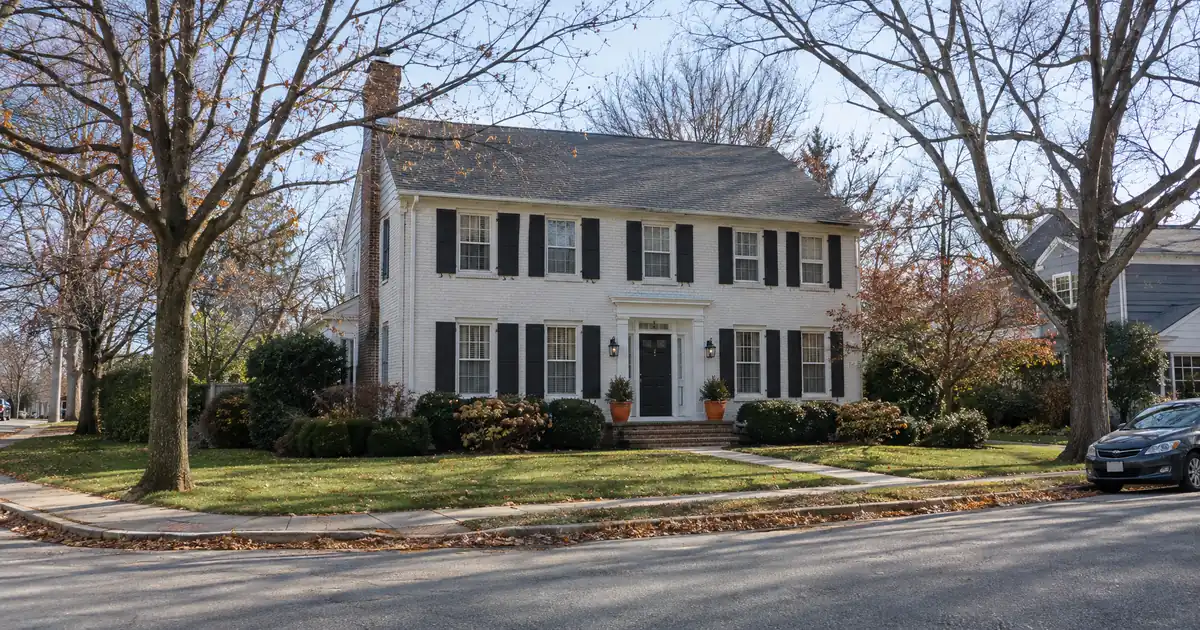
The Quick Read: A portfolio DSCR lender looks at each rental one at a time, then tests the whole group together. Rent counts only as far as a lease or an appraiser’s market-rent opinion supports it. One note covers every property, so a weak tenant situation on one door can affect the entire loan.
- Most programs count the lower of the signed lease or the appraiser’s market rent.
- Pooled coverage of 1.00 is where select portfolio programs start, measured on the whole pool, subject to lender guidelines.
- A vacant door is reviewed on the appraiser’s rent alone.
- An above-market lease does not raise your ratio.
- Clearing the coverage test is not the same as positive cash flow.
“Tenant-occupied package” is a lender’s phrase here. It means several rentals with tenants in place, financed under one note. It does not mean the seller-side bundle of leases and deposits you hand a buyer. This article covers the lender’s view. For the basics, start with the complete DSCR loans guide.
Key Terms Defined
- Package (or pool): several rentals financed together under one loan.
- Cross-collateralization: every property in the pool secures the whole balance, not just its own share.
- Allocated balance: each property’s share of the total debt.
- Release clause: the loan term that lets one property leave the pool, usually at a price above its allocated balance.
- Market rent: what the appraiser says the unit would rent for today.
- Rent roll: a schedule of every unit, tenant, rent and lease end date.
- PITIA: principal, interest, taxes, insurance and any association dues, the full monthly obligation.
How Does the Lender Look at an Occupied Package?
The lender reviews property first and pool second. Each asset gets checked for condition, occupancy and value. Then the rents and debt service are added up and compared as one number.
Across our wholesale network, two structures cover most portfolio requests. The first is a 30-year portfolio loan for 2 to 20 properties under one note. Loan sizes run from $300,000 to $5,000,000, with larger balances on review. Leverage goes up to 80% of value on a purchase or rate-and-term refinance. Interest-only periods are available.
The second is a rental portfolio term loan for five or more properties or units. It runs from $500,000 to $50,000,000, with leverage up to 75% of value. Terms are fixed at 3, 5, 7 or 10 years with a balloon at maturity. Non-recourse structures exist here, with carve-outs such as fraud and bankruptcy. Everything is subject to lender guidelines and underwriting.
Eligible property types include single-family, 2-4 unit, condo and townhome. The term loan also takes small multifamily. Owner-occupied property, mobile homes, co-ops, mixed-use and commercial property are not offered in the pool.
The pooled test is the key feature. Add all the rent, add all the PITIA, and divide. A strong property can carry a weaker one. That is a real advantage over testing each door alone.
Which Rent Counts on Each Property?
On most programs, the rent used is the lower of the signed lease or the appraiser’s market-rent opinion. The lender, not the appraiser, decides how the two are weighed. A vacant or newly bought property is reviewed on the appraisal figure alone.
This is where occupancy matters most. Here is how the common situations usually play out:
| Situation | Rent basis | What to send |
|---|---|---|
| Fixed-term lease | Lower of lease or market | Signed lease, payment proof |
| Month-to-month | Usually market rent | Lease as support |
| Expired lease | Renewal or market rent | New lease if available |
| Newly signed lease | Lease only if appraisal supports it | Lease plus appraisal |
| Vacant | Appraiser’s market rent | Appraisal rent schedule |
| Related-party tenant | Market rent, closer review | Lease and payment proof |
Two details trip up new investors. First, a lease above market means market rent counts and the extra rent does not. Second, a below-market lease can drag coverage down. Renewing that tenant at market before the appraisal can lift the counted rent. A discounted lease signed just to fill a unit can lower it.
Which Appraisal Gets Ordered?
The property type drives the report. A leased single-family home gets an appraisal plus a rent schedule, Form 1007, compared against the lease. Any 2-4 unit gets Form 1025, which reports value and per-unit rent together.
Both forms are agency documents that DSCR files borrow. The Fannie Mae forms index lists both, and the Selling Guide describes Form 1025 as the report for two- to four-unit properties. That is where the agency’s role ends. DSCR loans are non-QM, so the rules come from the lender, not the agency. Across the network, two appraisals are commonly required above $2,000,000.
One more note. The appraisal forms are expected to change as the industry moves toward a unified report that folds market-rent estimation into the main appraisal. Ask what your lender will order.
What Documents Does a Package Need?
Expect a checklist in roughly this order:
- Entity and operating documents, with the guarantor shown. A special-purpose entity, typically an LLC, is required on some structures, per lender program requirements.
- A list of every property.
- Lease copies and a rent roll that reconcile to each other.
- Insurance evidence for every property, including any blanket policy.
- Reserves documentation.
The rent roll and the leases must match. If the roll says one rent and the lease says another, the file stalls while someone sorts it out. Fix mismatches before you submit, not after.
Reserves act as the cushion against vacancy. They vary by lender, leverage, loan size and transaction type. About 6 months of PITIA is common, and loans above $1,500,000 typically step up to about 9 months. Cash-out proceeds generally do not count toward them. Credit needs vary too. The portfolio floor is typically 640, and some structures want 680 or 720.
A Worked Example: Three Ways
Run the numbers on a hypothetical four-property pool. These are modeled assumptions, not sourced market data or program terms.
Case one: everyone is leased. Two properties clear 1.25x on their own. One sits at 1.05x. One sits just under 1.00x because its lease was signed below market. Pooled together, coverage comes out near 1.15x. On a pooled test, that clears the 1.00 floor with room to spare, subject to underwriting.
Case two: one tenant leaves. The vacant door now counts at the appraiser’s market rent. If market rent is close to the old lease, the pool barely moves. If the old tenant was paying well above market, the pooled number drops further than you expect. The whole ratio rides on one comp grid. Some lenders discount vacancy or reduce leverage, and that varies by program.
Case three: drop the weakest property. Pull the sub-1.00 door out of the pool. Pooled coverage rises, but you now carry that property on separate financing. A rental below 1.00 inside the pool is a pooled-coverage fact. Underwriting tests the pooled coverage, the leverage and the terms together, so the weak door is not automatically a problem and not automatically fine.
On a per-property test, case one looks very different. The sub-1.00 door becomes a problem by itself. Ask which test your program uses before you build the package.
What Happens When One Property Goes Wrong?
Because every property secures the whole balance, a default gives the lender a claim over all of them. That is the trade you accept for pooled coverage. A problem tenant or a long vacancy on one door is a pool problem, not a single-asset problem.
Release terms are your exit. Partial releases, substitutions and the sale of one property out of the pool follow the loan documents. The release price runs above the property’s allocated balance, and the remaining pool must still cover its debt service. Negotiate those terms before signing. After closing, you have far less leverage to change them.
Two structural choices follow. A property can carry only one first lien, so it sits either in the pool or on a standalone loan. Many investors put high-value assets on their own loans and group smaller rentals together. Loan size also matters: the 30-year structure starts at $300,000, so a very small pool may not fit.
The term loan also allows multi-market cross-collateralization, meaning properties in several markets may sit under one note. It carries yield maintenance on prepayment, so the exit cost is real. Confirm it before you sign.
Owner Occupancy and Related-Party Tenants
Owner-occupied property is ineligible in the pool. These are business-purpose investor loans, reviewed differently from a standard owner-occupied mortgage. The borrower does not live in any property in the package.
A related-party tenant is a different question. The rent is typically set at market, with closer review of the lease and payment history. Lenders care because a family arrangement can be priced below market or paid inconsistently.
Why Lenders Care About Lease Quality
There is a legal reason a tenant-occupied pool is harder to sell off. Under the Protecting Tenants at Foreclosure Act, reinstated in 2018, a buyer after foreclosure generally must give 90 days’ notice and honor a bona fide lease through its term. A bona fide lease is generally understood to be arm’s-length, not with the borrower’s family, and not substantially below market rent.
The lender’s inference follows naturally. Occupied collateral is harder to liquidate vacant. So lease quality matters, and family leases draw extra attention. The exceptions are a buyer who will live in the home and a tenant with no lease or an at-will lease.
What Is Worth Doing Before the Appraisal?
Renew below-market leases at market where local rules and the tenant allow it. Get payment records together. Reconcile the rent roll to every lease. Do not sign a discounted lease just to show a unit as filled.
Short-term rentals are a separate path. Form 1007 documents monthly market rent and is not built to estimate a nightly fee, and a nightly rate times 30 is not valid support. Our network runs short-term rental purchases up to 75% LTV, with a 640+ score and about 12 months of hosting history typical. Short-term rental rules can vary by city, county, HOA, and property type, so investors should confirm local rules before relying on projected rental income. Each figure is subject to lender guidelines and a complete review of property type, leverage, and credit.
What the Ratio Does Not Tell You
DSCR compares rent to PITIA and nothing else. Repairs, vacancy, management, utilities and capex sit outside it. Clearing 1.00 is not positive cash flow.
A larger down payment lowers the monthly obligation and can lift coverage. It never erases leverage caps, credit floors, reserve rules or property eligibility. The strongest files clear both tests: enough equity and enough rental coverage.
On cash-out, the ceiling is 75% of pooled value on a portfolio loan. Inside the first six months of ownership, cost-based limits apply, and proceeds are available on seasoned properties. Tax treatment can depend on how the funds are used and how the property is held; investors should keep clear records and speak with a qualified tax professional before relying on any deduction.
Frequently Asked Questions
Can a vacant property sit in a tenant-occupied package?
Yes, on many programs. It is reviewed on the appraiser’s market rent alone. Vacancy is not automatically a weaker file, though some lenders discount vacancy or reduce leverage. Pooled coverage, leverage and terms are what underwriting tests.
What if my tenant is month-to-month?
Most programs fall back to market rent, with the lease as support. Some lenders apply a stress factor for the lack of a fixed term. Signing a fixed-term renewal at market can simplify the file.
Does a high lease raise my DSCR?
No. Market rent caps what counts. The extra rent above market does not help the ratio.
What if my rent roll does not match my leases?
Expect the file to stall. Reconcile them first. The roll and the leases need to tell the same story for every unit.
Can I buy or refinance a package with a family member as a tenant?
Possibly, with closer review. Market rent applies instead of the lease rent, and payment history matters. Eligibility is subject to lender guidelines.
If you are buying or refinancing several rentals and want to see how the numbers work, Lendmire, a DSCR-focused mortgage broker with investor loan programs across 41 markets, Washington, D.C. included, can help you compare DSCR loan options based on the property income, credit profile, leverage and investor goals. Lendmire’s piece How to Buy a Tenant-Occupied Rental With a DSCR Portfolio Loan covers the single-property side of this question. Review details are subject to lender overlays and program terms. This is not a commitment to lend.
For current guidelines and terms, see Lendmire’s DSCR loan programs page.
About Lendmire
Lendmire, NMLS# 2371349, is a mortgage brokerage focused on investor financing, arranging DSCR loans in 40 states plus Washington, D.C. — 41 markets total. Qualification is based on the property’s income rather than personal income documentation, subject to lender guidelines, making it a fit for LLC-held rentals and scaling portfolios. Scotsman Guide named Lendmire a Top Mortgage Workplace in both 2025 and 2026.
Get Started
Ready to find the right loan for you?
In about 30 seconds you can review financing options available for your investment property. No commitment required.
Informational only. Not a Loan Estimate, approval, or commitment to lend. Program availability and eligibility are subject to lender guidelines, credit approval, property review, and underwriting.
References
1. Fannie Mae Selling & Servicing Guide Forms
2. Fannie Mae Selling Guide B4-1.2-01
This article is part of Lendmire’s DSCR loan program — full qualification details, guidelines, and scenarios live on the program page.
Related reading: Single-Purpose LLC vs Operating LLC for a DSCR Portfolio Loan · Does a DSCR Lender Require an STR Permit Before Closing on a Cabin? · Will a DSCR Lender Count Mid-Term Income for an STR Portfolio Operator?
Brandon Miller
Founder & CEO, Mortgage Loan Originator, Lendmire LLC
- Mortgage Loan Originator · NMLS# 1129696 · Verify on NMLS Consumer Access
- North Carolina Real Estate Broker · License# 343312 · Verify on NCREC
- North Carolina Insurance Producer · License# 19053198 · Property, Casualty, Life, Health · Verify on NAIC SBS
- Lendmire LLC · Firm NMLS# 2371349 · Verify firm licensure
Compliance and disclosures. Lendmire (NMLS# 2371349) is a licensed mortgage broker and is not a direct lender, depository institution, financial advisor, or tax professional. Content in this article is general market analysis and educational information — not financial, legal, or tax advice for any specific situation. Lendmire does not guarantee loan approval; every transaction is subject to underwriting by the funding lender. Mortgage pricing and loan program guidelines are subject to change at any time without notice and vary by borrower characteristics, property type, and state regulations. Lendmire complies with Equal Housing Opportunity. Licensure verification: NMLS Consumer Access.