
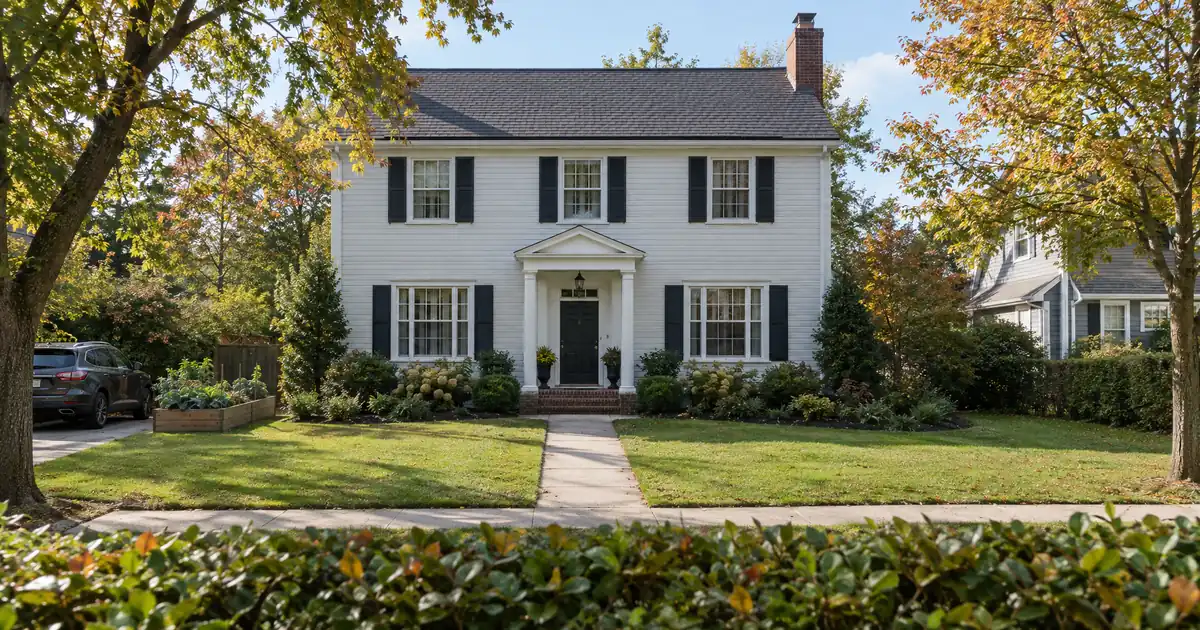
The Quick Read: Vacant houses can usually sit inside a purchased rental package, because on a purchase the appraiser’s market-rent opinion stands in for a lease. The real gate is condition, not occupancy. A turnkey vacant house is a normal file. A house that needs construction is a different problem.
- Vacancy alone does not disqualify a purchase. Condition and utilities matter more.
- The appraiser’s rent figure, not your pro forma, sets the coverage number.
- A portfolio loan tests coverage on the whole pool. Separate notes test each house alone.
- Clearing 1.00 coverage is not the same as positive cash flow.
- Houses needing real work usually go to a bridge loan first, or get carved out of the package.
You found a seller with eight rental houses. Five have tenants and three sit empty. The question is what to do with those three before a lender sees the file.
This piece walks through how underwriting treats a vacant house, which loan structure fits, where the rule breaks, and how to decide house by house. The complete DSCR loans guide covers the basics if the term is new to you.
Key Terms Defined
DSCR (debt service coverage ratio): monthly rent divided by the full monthly housing payment, which is principal, interest, taxes, insurance, and any HOA dues (together, PITIA).
Market rent: what an appraiser concludes a house would rent for, based on comparable local rentals.
Blanket (portfolio) loan: one loan that covers several properties, with coverage measured across the whole pool.
Cross-collateralization: several properties securing the same note, so a problem at one house touches the others.
Turnkey (rent-ready): a house with working systems and finishes that could be leased without construction work.
Seasoning: the waiting period a lender wants between buying a property and refinancing it.
How Does a Lender Underwrite a Vacant House?
On a purchase, the lender swaps the lease for an appraiser’s market-rent opinion. Each house gets a full appraisal. That appraisal sets value, which drives leverage, and market rent, which drives coverage. You do not supply the rent figure. The appraiser does.
For a single-family house or condo, the appraiser attaches a rent schedule. Fannie Mae’s Selling Guide names that form, the Single-Family Comparable Rent Schedule (Form 1007), for one-unit investment properties. For two to four units, the appraiser uses a form that builds the rent analysis in. Fannie Mae’s Form 1025 covers those small buildings and has the appraiser reconcile market rent unit by unit. Realvals’ guide to appraisal forms describes the same split. DSCR lenders borrowed these forms. They are not agency products, and the guidelines come from the DSCR lender, not the form.
Here is how the two cases differ:
| Factor | Leased house | Vacant house |
|---|---|---|
| Rent used | Lower of lease and market rent | Appraiser’s market rent |
| You document | Lease, plus the appraisal | Appraisal and rent opinion |
| Main gate | Lease terms | Condition and utilities |
The lower-of rule is why a lease above market adds nothing. A below-market lease pulls coverage down. Many lenders in our network follow it, though the exact treatment varies by program.
Utilities matter too. The appraiser needs power and water on to confirm the systems work. Book those before the appraisal visit.
Credit, leverage, and reserve checks run the same on vacant and leased houses. Across most programs we place files with, purchase leverage lands at 75%-80% LTV (loan-to-value, the loan as a share of the property’s value). Credit floors start at 620 in parts of the network, with most programs wanting around 660. Reserves commonly run about 6 months of PITIA, all subject to lender guidelines. Vacancy does not change any of that.
Blanket Loan or Separate Notes?
This is the first structural decision, and it changes how a vacant house hurts you. In one loan the vacant house is averaged in. In separate loans it is judged alone.
One portfolio note. Several houses secure a single loan, and coverage is measured on pooled rent against pooled debt service. Stronger houses can offset weaker ones. Across the network, a 30-year portfolio structure typically takes 2 to 20 properties under one note, with loan sizes from $300,000 to $5,000,000 and leverage up to 80% of value on a purchase. Pooled coverage generally needs to reach 1.00. A separate term-loan structure for five or more rentals runs up to 75% of value, with fixed terms of 3, 5, 7, or 10 years and a balloon at maturity. Both are subject to lender guidelines.
A vacant house can sit in the pool, but underwriting tests the pooled coverage, the leverage, and the terms. Every property still needs a lease or an appraiser-supported market rent.
Separate notes. Each house stands on its own coverage. A weak house cannot lean on a strong one. You lose the averaging benefit, and you gain isolation.
The tradeoff is blunt. A blanket gives you averaging but ties the collateral together. A problem house can stall the whole file, and it can complicate a later sale or refinance of any single house.
How One Vacancy Moves the Pooled Number
Think in ratios, not dollars. Say four houses each cover their payment at about 1.25x on their own. Pooled coverage is about 1.25x. Now one house is counted at market rent that covers only about 0.90x on its own. Pooled coverage slips to roughly 1.17x. It still clears 1.00 comfortably.
Now run it the other way. Say the pool starts near 1.05x with no cushion. One more weak house pushes it under 1.00. That is the pool that needs a carve-out, a larger down payment, or a separate note for the problem house. These ratios are modeled illustrations, not market data.
A larger down payment lowers the monthly payment and can lift the coverage number. It never erases leverage caps, credit floors, reserve rules, or property eligibility. The strongest files clear both tests: enough equity and enough rental coverage.
Where the Rule Breaks
The general rule is that vacant is fine if the house is turnkey. These cases break it.
Houses that are not rent-ready. Deferred maintenance, missing systems, or structural work can delay or block the loan. The usual path is a short-term bridge loan to buy and fix the house, then a DSCR refinance once it is leased and stable. Plan on that path before you sign the package contract, not after.
Refinances. A refinance generally wants the house leased or carrying some operating history. Cash-out tops out around 75% LTV across most of the network, and about 6 months of seasoning is the common expectation. A portfolio cash-out never goes above 75% of the pooled value. Inside the first six months of ownership, the cash-out amount is capped by the seasoning rule. The title seasoning question is its own topic, covered in Lendmire’s piece How to Document Title Seasoning on a Cash-Purchased Rental.
Lease conditions. Some lenders will finance a vacant house but add a condition that a lease be signed before or after closing. Read the conditions list on every house, not just the first one.
Small multifamily. For two to four units, vacancy treatment varies by program. A building with heavy vacancy may be treated as unleased by some programs. Unit-level rents show up on the appraisal, so you can see the exposure early.
Short-term rental houses. Some are underwritten on short-term rent estimates rather than long-term comps. Treatment varies widely. Where programs allow it, STR purchase leverage tops out at 75%, with a 640+ score and about 12 months of hosting history typical. Short-term rental rules can vary by city, county, HOA, and property type, so investors should confirm local rules before relying on projected rental income.
Ineligible property types. Manufactured homes (single- and double-wide), log homes, and barndominiums are not offered through the network’s DSCR programs. If the package includes one, it cannot ride along. Mixed-use and commercial property are also ineligible in the pool.
Occupancy. Vacancy does not make a house owner-occupied. DSCR loans are designed for non-owner-occupied investment properties, so you cannot move in during lease-up. You sign a business-purpose and non-occupancy affidavit either way. Because these are business-purpose investor loans, they are reviewed differently from a standard owner-occupied mortgage.
Decision Framework: Keep, Carve Out, or Bridge
Run each vacant house through three options.
| Option | Fits when | Tradeoff |
|---|---|---|
| Keep in package | House is turnkey and pool clears 1.00 | Averaging, but entangled collateral |
| Carve out | House drags pooled coverage or condition is shaky | Smaller deal, cleaner file |
| Bridge first | House needs real work | Extra loan, then a DSCR refinance |
Here is how a broker thinks about it. Turnkey and the pool clears? Keep it. Turnkey but it pulls the pool close to the floor? Price it as a separate note or negotiate it out. Needs construction? Do not put it in a DSCR purchase file at all. Bridge it, fix it, lease it, then refinance.
Honestly, the third call is the one investors resist. They want one clean closing. But a half-finished house inside a pooled file can hold up every other house in it.
Purchase-Stage Playbook
Most of the work happens before the appraisal.
1. Negotiate the package. A seller who wants one sale often accepts excluding a problem house or repricing it. Ask early.
2. Inspect every vacant house. Look at roof, systems, water, and anything an appraiser would flag as not rent-ready.
3. Turn the utilities on. The appraiser needs working systems to confirm condition.
4. Check the insurance. Unoccupied houses can be priced or restricted differently, so get a quote that names the vacancy.
5. Compare your pro forma to comps. The appraiser’s number controls. A pro forma above local comps will not hold.
6. Confirm entity and reserves. Many structures want an LLC, subject to lender program eligibility, and reserves that fit the loan size.
Stress-Test Before You Sign
Run these three on paper before the contract goes firm:
- Two or three vacancies at once. What happens to pooled coverage if the next tenants leave in the same season?
- Lower rents. If appraised rents come in below your pro forma, does the pool still clear 1.00?
- One big repair. Can your reserves absorb a roof or a heating system on a single house?
If the pool only works on the pro forma, it does not work.
After Closing
Vacant after closing is a cash-flow risk, not a qualification risk. The loan already closed. But rent does not start until a tenant signs, and the payment starts anyway.
Reserves carry you through lease-up. Plan for the leasing period to run longer than hoped. And remember what coverage measures. DSCR compares rent to PITIA only. Clearing 1.00 is not positive cash flow. Repairs, vacancy, management, utilities, and capital expenses sit outside the calculation, so a package can clear the ratio and still lose money in a slow lease-up.
Tax treatment varies; consult a qualified professional.
Where the houses are already leased and stable, the next question may be what happens to the loan if a financed house goes vacant later.
Frequently Asked Questions
Can a vacant house be in a DSCR package?
Yes, on a purchase, if it is turnkey. The appraiser’s market-rent opinion replaces the lease. Condition is what lenders look at hardest.
Does one vacancy trigger a default?
Not by itself. A vacancy changes the pooled coverage number, and the loan documents set what happens if coverage drops. Read the covenants before you sign, and keep reserves for lease-up.
Will strong properties cover for a weak one?
On a portfolio note, yes, because coverage is measured on pooled rent against pooled debt service. The pool still has to clear its floor, and leverage and terms are tested too, subject to underwriting.
Do I need a lease on a vacant house?
Usually not on a purchase. Some lenders add a lease condition before or after closing, so check each house’s conditions.
Should I drop the vacant house from the package?
Drop it, or split it into its own note, when it pulls pooled coverage near the floor or needs real work. Keep it when it is turnkey and the pool clears comfortably.
What about houses that need work?
They generally need a bridge loan first, then a DSCR refinance after the house is leased. Do not expect a purchase file to carry a construction project.
If you are buying or refinancing a rental property and want to see how the numbers work, Lendmire can help you compare DSCR loan options based on the property income, credit profile, leverage, and investor goals. Lendmire arranges these loans through select lenders in its wholesale network, across 41 markets including Washington, D.C. Eligibility is subject to lender guidelines and is not a commitment to lend.
Buy the package at the price the appraiser’s rents support, not the price your best-case lease-up needs.
About Lendmire
Lendmire, NMLS# 2371349, is a mortgage brokerage focused on investor financing, arranging DSCR loans in 40 states plus Washington, D.C. — 41 markets total. Qualification is based on the property’s income rather than personal income documentation, subject to lender guidelines, making it a fit for LLC-held rentals and scaling portfolios. Scotsman Guide named Lendmire a Top Mortgage Workplace in both 2025 and 2026.
Get Started
Ready to find the right loan for you?
In about 30 seconds you can review financing options available for your investment property. No commitment required.
Informational only. Not a Loan Estimate, approval, or commitment to lend. Program availability and eligibility are subject to lender guidelines, credit approval, property review, and underwriting.
References
1. Fannie Mae Selling Guide B4-1.2-01
This article is part of Lendmire’s DSCR loan program — full qualification details, guidelines, and scenarios live on the program page.
Related reading: How to Handle Vacancies Before a DSCR Portfolio Loan · How to Refinance a Rental That Doesn’t Qualify for a DSCR Loan · Recourse vs Non-Recourse DSCR Portfolio Loan for a Rental Owner
Brandon Miller
Founder & CEO, Mortgage Loan Originator, Lendmire LLC
- Mortgage Loan Originator · NMLS# 1129696 · Verify on NMLS Consumer Access
- North Carolina Real Estate Broker · License# 343312 · Verify on NCREC
- North Carolina Insurance Producer · License# 19053198 · Property, Casualty, Life, Health · Verify on NAIC SBS
- Lendmire LLC · Firm NMLS# 2371349 · Verify firm licensure
Disclosures. The information presented in this article is general market commentary, not financial, legal, or tax advice. Lendmire is a mortgage brokerage (NMLS# 2371349) — not a direct lender or depository institution — and loan placement is subject to lender underwriting. Nothing in this content represents a commitment to lend. Loan terms, pricing, and program availability vary based on borrower qualifications, property characteristics, and state of subject property, and are subject to change at any time. Lendmire complies with Equal Housing Opportunity requirements. Consumer access: nmlsconsumeraccess.org.