
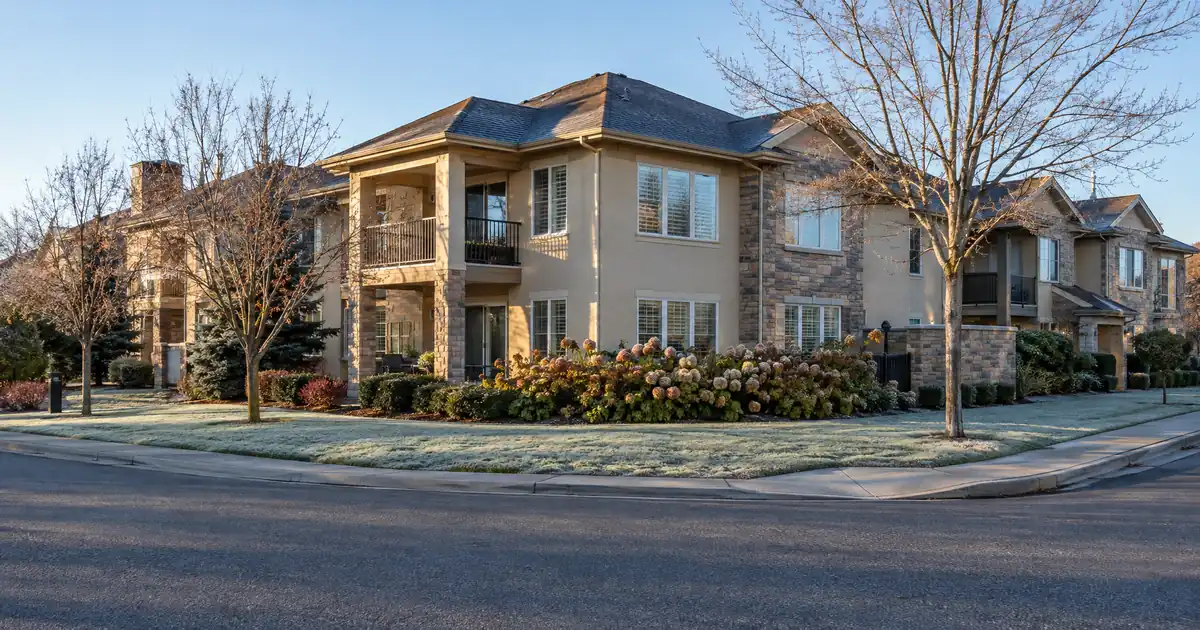
The Quick Read: Usually, yes: through a portfolio DSCR loan, several condo units and several houses can sit under one note when the pooled rent covers the pooled debt service, though availability depends on the program, the collateral mix, and each building’s condo review, and separate loans remain the fallback. Condo units are judged building by building, so several units in one project draw more scrutiny than one unit each in different projects. Houses add no building-level risk, which is why mixed pools can work.
- A portfolio structure through select lenders in Lendmire’s wholesale network accepts single-family homes, 2-4 unit properties, condos, and townhomes in the same pool.
- Coverage is measured on the whole pool, so stronger properties can offset weaker ones, subject to underwriting.
- Condo dues sit in the debt-service denominator, so a high-dues building can drag down the pooled number.
- Owner-occupied property cannot join the pool, and one default can reach every property securing the note.
Blanket Loan or Separate Loans: What Is Actually Being Chosen?
DSCR describes how a loan is reviewed, and a blanket describes how the collateral is arranged. A DSCR loan qualifies primarily on property-level rental income covering the payment, subject to lender guidelines. A blanket, also called a portfolio loan, is one note secured by a lien on each property. You can have a DSCR loan on one rental, or a DSCR loan on twenty. The two ideas are separate.
That distinction matters because investors often ask whether condos “can” go in a blanket as if it were a legal question. It is not. It is a program question. Each lender in the network sets its own property types, minimum pool size, and loan sizes. Some programs want uniform collateral. Others accept a mix when the blended coverage holds.
Vocabulary helps here too. Properties owned, properties financed, and loans are three different counts. Ten properties under one blanket is ten financed properties but only one loan. Putting them under one note does not change the fact that each is financed. If you plan to buy more later, know which count a lender is using.
The pillar resource on this is Lendmire’s complete DSCR loans guide, which covers the single-property basics this article assumes.
What the Network’s Portfolio Programs Allow
Two portfolio structures matter here, and they fit different investors. Figures below are ceilings or floors, not quotes, and all are subject to lender guidelines.
The 30-year portfolio DSCR loan. This structure holds 2 to 20 properties under one note. Loan sizes run from $300,000 to $5,000,000, with larger balances reviewed case by case. Leverage goes up to 80% of value on a purchase or rate-and-term refinance of investment property. The coverage floor of 1.00 is tested on the pool: pooled rent against pooled debt service. It carries a 30-year term and schedule, with fixed or adjustable rate types and an interest-only period available. Eligible property types include single-family, 2-4 unit, condo, and townhome.
The rental portfolio term loan. This one is built for five or more rental properties or units. Loan sizes run from $500,000 to $50,000,000, again with larger balances on review. Leverage goes up to 75% of value. Terms are fixed at 3, 5, 7, or 10 years with a balloon at maturity. Recourse and non-recourse versions exist. A non-recourse loan looks to the real estate, with recourse limited to carve-outs such as fraud and bankruptcy. A recourse loan carries a personal guarantee. Properties in several markets can sit under one loan, and small multifamily joins the eligible types. Prepayment follows a yield-maintenance schedule, so exit costs deserve a close read before you sign.
Either way, condos and houses are both on the eligible list. That answers the core question. The harder questions are how the pool qualifies and what the condo piece does to it.
On a loan against one rental, the picture is different. Purchase leverage on most files lands at 75%-80%, and cash-out tops out around 75% across most of the network. A portfolio cash-out never exceeds 75% of the pooled value. Keep those two sets of numbers apart when comparing structures.
How Blended Coverage Works With Condos and Houses
Pooled coverage is the sum of all qualifying rents divided by the sum of all monthly obligations. Those obligations include principal, interest, taxes, insurance, and any HOA dues. Every property still needs a lease or an appraiser-supported market rent. The result is one number for the whole pool.
Run the numbers on a modeled pool, using ratios only. Picture an investor with several houses that each cover their obligation at about 1.3x. The same investor also owns several condos in one building where high dues leave coverage near 0.9x. The pool lands between those two figures, weighted by how large each obligation is. If the houses carry more of the debt, the blend sits closer to 1.3x. If the condos carry more, it falls toward 1.0x.
Here is the catch. A condo that sits below 1.00 on its own can still be part of a pool that clears the floor, because the pool is tested as a whole. In that situation, underwriting tests the pooled coverage, the leverage, and the terms, under lender guidelines. A weak unit is not automatically disqualifying. It also is not free, because it uses up cushion that the stronger properties built.
Clearing 1.00 also does not mean positive cash flow. Coverage compares rent to the full monthly obligation and nothing else. Repairs, vacancy, management, utilities, and capital expenses sit outside the calculation. A pool that barely clears the floor can still lose money in a bad year.
So test the blend before choosing a structure. If one building’s dues pull the number toward the floor, a separate loan on the condos might leave the houses with better terms on their own.
What Changes When the Condos Share One Building
Condo eligibility is judged at the building level, so the same HOA and the same project risk apply to every unit you own there. Owning one unit in each of five buildings spreads that risk across five projects. Owning five units in one building concentrates it in one.
Most files in this situation require an HOA questionnaire completed by the association or its manager. It covers litigation, delinquent dues, the share of units held by investors, reserves, and insurance. The lender usually also asks for the HOA budget and reserve study. Lenders look at how many units one owner controls, and that review is program-specific. No single cap applies across the network, so ask each program rather than assuming one.
Order the questionnaire before the appraisal. A failed questionnaire can sink an otherwise clean file, and the appraisal fee is already spent by then.
The agency world has its own project rules, called warrantability. Those rules do not govern DSCR loans. A non-warrantable building fails agency project standards, which blocks conventional financing but does not automatically block a DSCR loan. DSCR lenders write their own guidelines. Some problems still matter regardless of agency status, including active litigation, heavy dues delinquency, and weak HOA finances. A building with those problems can hurt every unit you hold in it.
Condotels are a separate case. Check the HOA’s rental policy before folding such a unit into any pool. Lendmire’s piece How to Get a DSCR Loan on One Unit in a Condotel Building covers that product type in detail.
What Changes When You Mix Condos and Houses
Houses and condos carry different risk, and lenders review them differently. A house has no shared roof, no association, and no special assessment risk. A condo does. In a mixed pool, the houses give the lender collateral that does not depend on any association’s finances.
The appraisal work also differs. Condos are valued on a condo-specific report. Fannie Mae’s Form 1073, the Individual Condominium Unit Appraisal Report, is the standard form for that. A law-firm glossary entry describes it the same way. Houses are valued on a different single-family form. Beyond the warrantability contrast above, agency paperwork matters here only as terminology for the appraisal form. Each property in a mixed package gets its own value and its own rent estimate.
Release mechanics differ in practice too. Each property carries an allocated loan amount. To sell one out of the pool, you pay down against that allocation under the lender’s release terms. The release price runs above the property’s allocated balance. After a sale, the remaining pool must still cover its debt service. Selling a house out of a mixed pool changes the blend differently than selling a condo, so model both before committing.
Blanket vs. Separate Loans: A Side-by-Side
| Factor | Portfolio (one note) | Separate loans |
|---|---|---|
| Qualification | Pooled rent vs pooled debt | Each property on its own |
| Weak unit | Offset by stronger ones | Stands or falls alone |
| Default exposure | Can reach every property | Contained to one property |
| Selling one property | Release terms and paydown | Pay off that one loan |
| Closing and fees | One closing, one file | Several closings |
| Condo review | Per building, inside one file | Per building, per loan |
Neither column wins outright. The portfolio structure favors investors who want one payment and one closing and who have strong houses to carry weaker condos. Separate loans favor investors who expect to sell individual units or who want to keep each asset refinanceable on its own rent.
When Each Structure Makes Sense
Separate loans tend to fit if these apply:
- You plan to sell one or two condos within a few years.
- One building has dues or HOA problems you do not want attached to the rest.
- Your houses cover comfortably on their own and would get better terms standing alone.
- You hold fewer than the minimum number of properties a portfolio program requires.
A portfolio loan tends to fit if these apply:
- You hold or are buying several small-balance properties and want them packaged into one larger loan.
- Your coverage is uneven, and strong properties can lift weak ones.
- You want to hold long and rarely sell individual units.
- You are comfortable with cross-collateralization and, on the term loan, with a multi-year balloon.
Here is one case worth thinking through. An investor owns several condos in one building and is buying a few houses. The condos run thin because of dues. Putting the whole group in one pool may clear the floor, but it ties the houses to the building’s fate. If the association hits a special assessment or a litigation problem, every property in the pool feels it. The investor who plans to keep the condos for a decade may accept that. The investor who might sell in three years should price it carefully.
Across the network, the files that struggle in this area share a pattern. The investor focuses on whether the pool clears 1.00 and forgets the exit. The stronger files model coverage with and without the weakest condo, and they ask about release terms before the application, not after.
Qualifying the Pool
Credit floors on portfolio structures start at 640, and some structures want 680 or 720. Some structures require a special-purpose entity, typically an LLC, subject to lender program eligibility. Recourse loans carry a personal guarantee. Reserves vary by structure and loan size. On the term loan, reserves are held for taxes, insurance, and capital expenditures. On other structures they are commonly sized in months of the full monthly obligation. Expect the lender to say which applies.
Several things are not eligible in a pool: owner-occupied property, co-ops, mixed-use property, and commercial property. Manufactured and mobile homes are not reviewable on these programs.
Log homes and barndominiums are not offered through the network’s DSCR programs either. If you live in one of your units, that unit cannot share a DSCR blanket with your rentals. It needs a separate residential loan.
A larger down payment lowers the monthly obligation and can lift coverage. It never erases leverage caps, credit floors, reserve rules, or property eligibility. The strongest files clear both tests: enough equity and enough rental coverage.
Documents to Gather Before You Ask
A clean package shortens the back-and-forth. Gather these:
- A schedule of every property, with type, estimated value, and any current loan.
- Leases or rent support for each property.
- HOA contact details, budget, and reserve study for each condo building.
- Insurance details for each property.
- Entity documents if the properties are held in an LLC.
Tell your broker which properties you might sell. That single piece of information often decides which structure makes sense.
Next Step
If you are buying or refinancing a group of rental properties and want to see how the numbers work, Lendmire can help you compare DSCR loan options based on the property income, credit profile, leverage, and investor goals. As a mortgage broker, Lendmire arranges these loans through select lenders in its wholesale network, with DSCR programs across 41 markets, including Washington, D.C. Programs change, and every file is underwritten individually. Nothing here is a commitment to lend. A quote request at Lendmire’s quote page or a call to 828-256-2183 starts the comparison.
Key Terms Defined
DSCR (debt service coverage ratio): Monthly rent divided by the full monthly obligation, including principal, interest, taxes, insurance, and HOA dues.
Blanket (portfolio) loan: One note secured by liens on two or more properties.
Cross-collateralization: A setup where every property in the pool secures the whole loan, so trouble with one can reach the rest.
Release clause: The loan term that sets what you must pay down to free one property from the lien.
Warrantable condo: A building that meets agency project rules; a non-warrantable building can still be reviewed by DSCR lenders under their own guidelines.
Investor concentration: The share of units in a building held by investors, or by one owner, which lenders review on condo projects.
Frequently Asked Questions
Can condos and houses go on one DSCR loan?
Yes, through a portfolio structure that lists both as eligible property types. The network’s portfolio programs accept single-family, 2-4 unit, condo, and townhome collateral in the same pool.
Is a blanket loan the same thing as a DSCR loan?
No. DSCR is the qualification method, and a blanket is the collateral structure. A DSCR loan can be written on one property or on a pool. A blanket can also be written on other qualification methods. When you ask a lender about a portfolio loan, confirm which test it uses.
Can I sell one condo out of the pool?
Yes, under the loan’s release terms. You pay down against that property’s allocated balance, and the release price runs above that balance. The remaining pool must still cover its debt service. Read the release terms before signing, because they differ from one program to the next.
Does owning several units in one building hurt financing?
It can. Lenders review how many units one owner controls in a single project, and that review is program-specific. A strong HOA with healthy reserves and low delinquency eases the review. A building with litigation or weak finances makes every unit you hold there harder to place. Spreading condos across buildings reduces that concentration.
Can I live in one of the units?
Not inside a DSCR pool. DSCR loans are designed for non-owner-occupied investment properties, and owner-occupied property is ineligible in the pool. An owner-occupied unit needs separate residential financing, which is a different product with different documentation.
About Lendmire
Lendmire is a non-QM mortgage brokerage (NMLS# 2371349) arranging DSCR investor loans in 41 markets, including Washington, D.C. DSCR eligibility is generally reviewed around property-level rental income rather than personal income, subject to lender and program guidelines, a fit for self-employed investors and LLC-owned portfolios. Lendmire was recognized as a Scotsman Guide Top Mortgage Workplace in 2025 and 2026.
Get Started
Ready to find the right loan for you?
In about 30 seconds you can review financing options available for your investment property. No commitment required.
Informational only. Not a Loan Estimate, approval, or commitment to lend. Program availability and eligibility are subject to lender guidelines, credit approval, property review, and underwriting.
References
2. Barnes Walker, Legal Glossary: Form 1073
This article is part of Lendmire’s DSCR loan program — full qualification details, guidelines, and scenarios live on the program page.
Related reading: Can an Investor With 10+ Doors in LLCs Get a DSCR Portfolio Loan? · How to Prepare Guarantor Credit for a Portfolio DSCR Loan · How to Underwrite a Pool of Condos for a Portfolio DSCR Loan
Brandon Miller
Founder & CEO, Mortgage Loan Originator, Lendmire LLC
- Mortgage Loan Originator · NMLS# 1129696 · Verify on NMLS Consumer Access
- North Carolina Real Estate Broker · License# 343312 · Verify on NCREC
- North Carolina Insurance Producer · License# 19053198 · Property, Casualty, Life, Health · Verify on NAIC SBS
- Lendmire LLC · Firm NMLS# 2371349 · Verify firm licensure
Important disclosures. Lendmire (NMLS# 2371349) is a licensed mortgage brokerage. Lendmire is not a direct lender, depository institution, or financial advisor. All loan inquiries are subject to lender underwriting; this article does not constitute a commitment to lend. Rates, terms, and program guidelines are subject to change without notice and vary by borrower profile, property type, and state. Information in this article is general in nature and is not financial, legal, or tax advice. Equal Housing Opportunity. NMLS Consumer Access: nmlsconsumeraccess.org.