
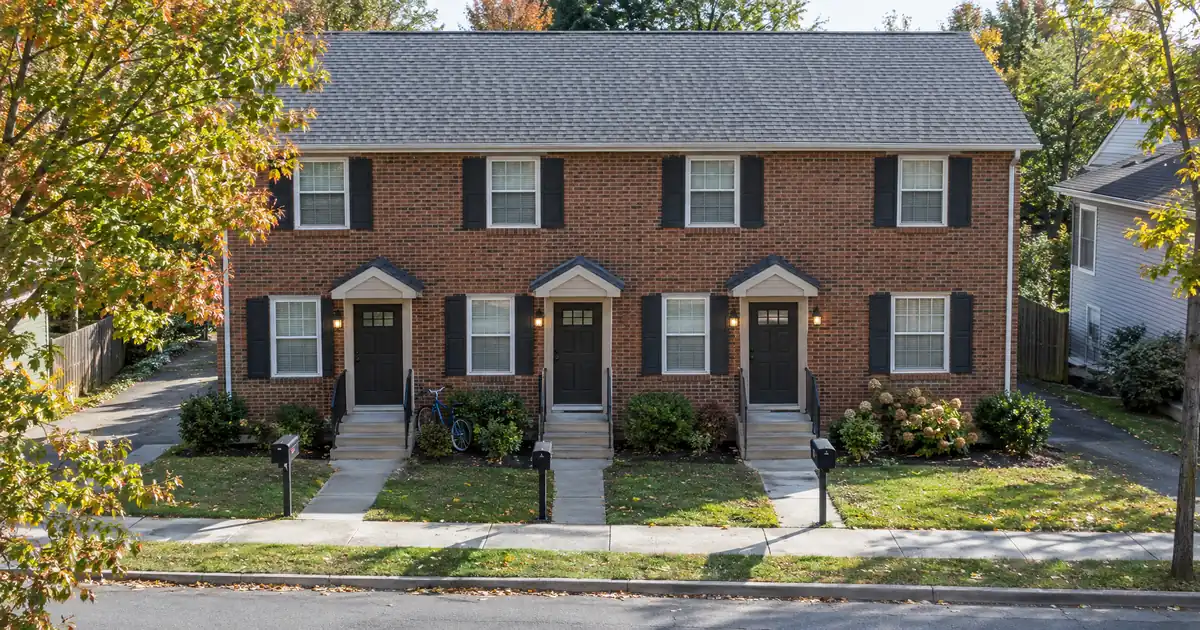
The Quick Read: A house-only pool suits investors who want uniform collateral and the simplest rent evidence, while adding a fourplex suits investors who want several rent lines in one building and can live with a more involved file. Both are the same structure: one note secured by several properties, tested on combined rental coverage.
- A pooled loan is one note secured by multiple properties, so a problem at one property can reach all of them.
- A house-only pool documents one lease and one rent schedule per property.
- A fourplex adds unit-by-unit rent evidence and typically a rent roll for the building.
- A fourplex can lift or drag the pool’s blended coverage, depending on how stable its rents are.
- Release terms decide whether you can sell one property without disturbing the rest.
The honest answer is that neither option is better in the abstract. The house-only pool is for the investor who values simplicity and a uniform asset base. The mixed pool is for the investor who wants more rent streams per lien and has a stable, well-documented building to contribute. Each investor’s file is underwritten individually, subject to lender guidelines.
Side-by-Side
The table below uses published industry norms for pooled structures. Lendmire’s wholesale network places both, and exact terms vary by lender and file.
| Factor | House-Only Pool | Houses Plus a Fourplex |
|---|---|---|
| Review basis | Combined rent vs. combined PITIA | Same, with unit rents rolled in |
| Rent evidence | One lease and rent schedule per house | Per-house plus per-unit leases |
| Appraisal form family | One-unit forms | One-unit forms plus the 2–4 unit form |
| Property types | One-unit homes | One-unit homes plus one 2–4 unit building |
| Entity vesting | LLC or personal, subject to lender program eligibility | Same, confirmed for the mixed pool |
| Reserves | Commonly around 6 months of PITIA | Same range, scaled to the whole pool |
| Concentration | Spread across several roofs | More value in one building |
| File complexity | Lower | Higher |
Two notes on the table. The appraisal forms are Fannie Mae names that DSCR lenders borrow. Per Fannie Mae’s appraisal forms page, Form 1004 covers one-unit properties and Form 1025 covers two- to four-unit properties. DSCR is not an agency product, and agency rules do not govern these loans. Only the form names carry over.
Second, the table avoids pricing on purpose. Pricing lives in the calculator, and it depends on the whole file.
What Does “Pool” Actually Mean?
A pool, or blanket loan, is one loan secured by two or more properties.
“Portfolio” is a looser word. It can mean a lender keeps the loan, a true blanket note, or several separate loans closed together. Define the term before comparing offers.
Structurally, a house-only pool and a mixed pool are the same product. Every property is collateral for the whole debt. What differs is how each property’s rent is established and how uniform the collateral is.
How the Pooled Math Works
DSCR compares rent to PITIA: principal, interest, taxes, insurance, and any HOA dues. Across most programs in the network, the pool’s coverage is the sum of qualifying rents against the sum of the payments. A strong property can offset a thin one.
Coverage of 1.00 is where select programs start, not a universal standard. A separate select-lender path takes coverage below 1.00, with leverage and terms adjusted. Stronger ratios generally open better leverage.
Clearing 1.00 is not the same as positive cash flow. Repairs, vacancy, management, utilities, and capex sit outside the calculation.
Picture a pool of four houses that each cover at roughly 1.15x. The pool covers at about 1.15x. Now add a fourplex whose four units together cover at about 1.35x. The blend rises. Flip it: if the fourplex covers at only 0.95x because two units are vacant or under-rented, it pulls the blend down, and the houses carry a weak building. These ratios are modeled assumptions, not market data.
When a House-Only Pool Is the Better Fit
A house-only pool is the better fit when you want simple evidence, spread-out risk, and clean exits.
Uniform collateral. Some lenders prefer all collateral to be one type. A house-only pool avoids any mixed-collateral policy question entirely.
Simpler documentation. Each house needs a lease and a single-family rent schedule. There is no building-level rent roll to assemble.
Spread risk. Four houses are four roofs, four liens’ worth of collateral, and four separate tenants’ behavior. One vacancy is one rent line, which can be a large share of the pool, but a roof or a casualty event hits only one house.
Easier partial exits. Selling one house removes a modest share of collateral and rent. That is less likely to disturb the remaining pool than selling the largest asset.
Newer landlords. A house-only pool can be a gentler starting point for newer landlords.
The flip point: if your houses cover thinly, a house-only pool has no strong asset to prop up the blend. Then a stronger building may help.
When Houses Plus a Fourplex Is the Better Fit
Adding a fourplex is the better fit when you want more income streams per asset and have a building that documents cleanly.
Several rent lines in one building. A fourplex spreads vacancy across four units. One empty unit leaves three paying, where an empty house leaves nothing. Per-unit rents can also be stronger than a single house’s rent against the same carry.
Blended lift. A stable, well-leased fourplex can raise the pool’s coverage and help a thinner house carry its weight.
Fewer liens to manage. One building brings four units without four separate pool slots.
Residential treatment. A two- to four-unit building stays in the residential world. The Form 1025 instructions describe the form as designed for a two- to four-unit property. A five-unit building falls outside that form and generally moves into commercial territory, so a five-plus building cannot sit in a fourplex pool.
The flip point: the fourplex adds concentration. One building is one roof, one lien, and one appraisal carrying several rents. If it is the weak spot, it hurts the whole pool.
What Changes in the File?
The documents differ, and this is where a mixed pool takes more preparation.
Expect a lease for each house. For the fourplex, expect a lease for each unit and a rent roll for the building. Per Fannie Mae’s forms index, Form 1025 is the Small Residential Income Property Appraisal Report, which reports rent unit by unit. A house gets a one-unit appraisal with a single-family rent schedule.
Rent per property is generally the lower of the lease or the appraiser’s market rent. A vacant unit becomes a rent-evidence question, because the appraisal reports market rent per unit. Treatment of vacancy varies by program. A vacant house in a house-only pool raises the same question at the single-property level.
Most files in the network list the appraisal for each property separately, so expect the appraisal stage to take more coordination on a mixed pool. Each property is also valued and leverage-tiered individually before the pool blends, which means the weakest tier can drag the blend.
What Can Go Wrong?
Cross-collateralization. A default can reach every property in either pool.
Release terms. A release clause is a contract term. Some clauses require paying back more than the property’s share, so read the formula before you sign.
Mixed-collateral policy. Some lenders want uniform collateral. Others allow mixed pools. Confirm this before you build the pool around a fourplex.
Legal unit count. A fourplex that isn’t legally four units, or four houses on one lot, is a different property. Eligibility turns on legal status.
Exits. In a mixed pool, selling the fourplex removes a large share of collateral and rent. That may prompt a retest of what remains.
Ineligible property types. Manufactured homes, log homes, and barndominiums are not offered in the network’s DSCR programs, in either pool.
Honestly, this one is a close call for many investors. The fourplex improves the blend when it is stable and hurts it when it is not, so the building’s own rent evidence matters more than the “mixed” label.
Program Ranges That Apply to Either Pool
These are typical ranges from select lenders in Lendmire’s wholesale network. They are not guarantees, and every file is underwritten individually. Lendmire is a broker arranging financing through lenders; it does not lend or approve.
- Purchase leverage: most files land at 75%–80% LTV on an investment purchase.
- Cash-out refinance: tops out around 75% LTV, and about 6 months of seasoning is the common expectation.
- Credit: a 620 floor exists in parts of the network, most programs want around 660, and 700+ unlocks the strongest leverage tiers.
- Loan size: up to $3,000,000 on standard programs.
- Reserves: commonly around 6 months of PITIA, stepping up to about 9 months above $1,500,000.
- Structures: the spine is the 30-year fixed. Extended terms and interest-only periods are available through select lenders.
A larger down payment lowers the carry and can lift coverage, but it never erases leverage caps, credit floors, reserve rules, or property eligibility. The strongest files clear both tests: enough equity and enough rental coverage.
Across files like these, the pattern is consistent: a pool lives or dies on its weakest well-documented asset, not its average one. Investors who gather leases, rent rolls, and entity documents before submitting tend to avoid the mid-file surprises. Pooled structures can also be compared against separate loans, which keep each property on its own lien. For investors weighing leverage tools more broadly, Lendmire’s piece Interest-Only vs 40-Year Super Jumbo Bank Statement Loans covers a related decision. For the program basics, see the complete DSCR loans guide.
Key Terms Defined
Blanket (pooled) loan: one note secured by two or more properties.
Blended DSCR: the pool’s combined rent used for lender review divided by its combined PITIA.
Cross-collateralization: every property backs the whole debt, so one problem can reach all of them.
Release clause: a contract term letting you sell a covered property after paying down a set amount.
Form 1025: the appraisal form for two- to four-unit properties, which reports rent unit by unit.
A Balanced Verdict
Choose the house-only pool if you want simpler documentation, spread-out risk, and easy partial exits, or if your lender prefers uniform collateral. Choose houses plus a fourplex if you have a stable building with clean unit-level rent evidence and want several income streams to lift the blend. Consider splitting the loans if the fourplex is a large share of value and you want to preserve your ability to sell it, refinance it, or let it fail without touching the houses.
For many investors, the deciding variable is not the property count. It is how much of the pool’s rent and value rides on one building.
Frequently Asked Questions
Can I add a fourplex to an existing house pool later?
Often it depends on the note and the lender. Some structures allow substitution or additional collateral, while others require a new loan. Ask about it before closing the first pool, because retrofitting a building into an existing note is not a given.
Does a fourplex weaken the pool?
A stable, well-leased fourplex can raise the blend. A thinly covered one pulls it down, and because it is one building, its problems are concentrated.
What happens if one fourplex unit is vacant?
It becomes a rent-evidence question, since the appraisal reports market rent per unit. Programs treat vacancy differently, so a vacant unit may count at market rent in one program and at less in another. Check before you pool it.
Is a fourplex commercial?
No. A two- to four-unit building stays in the residential category. A five-unit building is a different category, so it cannot ride along in a fourplex pool.
What if the lender wants uniform collateral?
Then the fourplex may need its own loan, and the houses can pool separately. Mixed-collateral policy varies by lender, and Lendmire’s wholesale network includes lenders with different approaches.
If you are buying or refinancing a rental property and want to see how the numbers work, Lendmire can help you compare DSCR loan options based on the property income, credit profile, leverage, and investor goals. Tax treatment varies; consult a qualified professional.
About Lendmire
Lendmire — NMLS# 2371349 — is a DSCR and non-QM mortgage brokerage with investor loan programs in 41 markets, including Washington, D.C. DSCR eligibility is commonly reviewed by the lender around property-level rent rather than personal income documentation, subject to lender guidelines, and the brokerage helps arrange financing for LLC-owned portfolios beyond conventional financed-property limits. Recognized by Scotsman Guide as a Top Mortgage Workplace in 2025 and 2026.
Get Started
Ready to find the right loan for you?
In about 30 seconds you can review financing options available for your investment property. No commitment required.
Informational only. Not a Loan Estimate, approval, or commitment to lend. Program availability and eligibility are subject to lender guidelines, credit approval, property review, and underwriting.
References
1. Fannie Mae’s appraisal forms page
2. Fannie Mae Form 1025 instructions
This article is part of Lendmire’s DSCR loan program — full qualification details, guidelines, and scenarios live on the program page.
Related reading: How Much Low-Value Houses Change the Allocated Loan on a DSCR Portfolio · Can You Get a DSCR Loan for an Airbnb in Iowa? · Can a DSCR Lender Seize Every Rental After One House Defaults?
Brandon Miller
Founder & CEO, Mortgage Loan Originator, Lendmire LLC
- Mortgage Loan Originator · NMLS# 1129696 · Verify on NMLS Consumer Access
- North Carolina Real Estate Broker · License# 343312 · Verify on NCREC
- North Carolina Insurance Producer · License# 19053198 · Property, Casualty, Life, Health · Verify on NAIC SBS
- Lendmire LLC · Firm NMLS# 2371349 · Verify firm licensure
Disclosures. The information presented in this article is general market commentary, not financial, legal, or tax advice. Lendmire is a mortgage brokerage (NMLS# 2371349) — not a direct lender or depository institution — and loan placement is subject to lender underwriting. Nothing in this content represents a commitment to lend. Loan terms, pricing, and program availability vary based on borrower qualifications, property characteristics, and state of subject property, and are subject to change at any time. Lendmire complies with Equal Housing Opportunity requirements. Consumer access: nmlsconsumeraccess.org.