
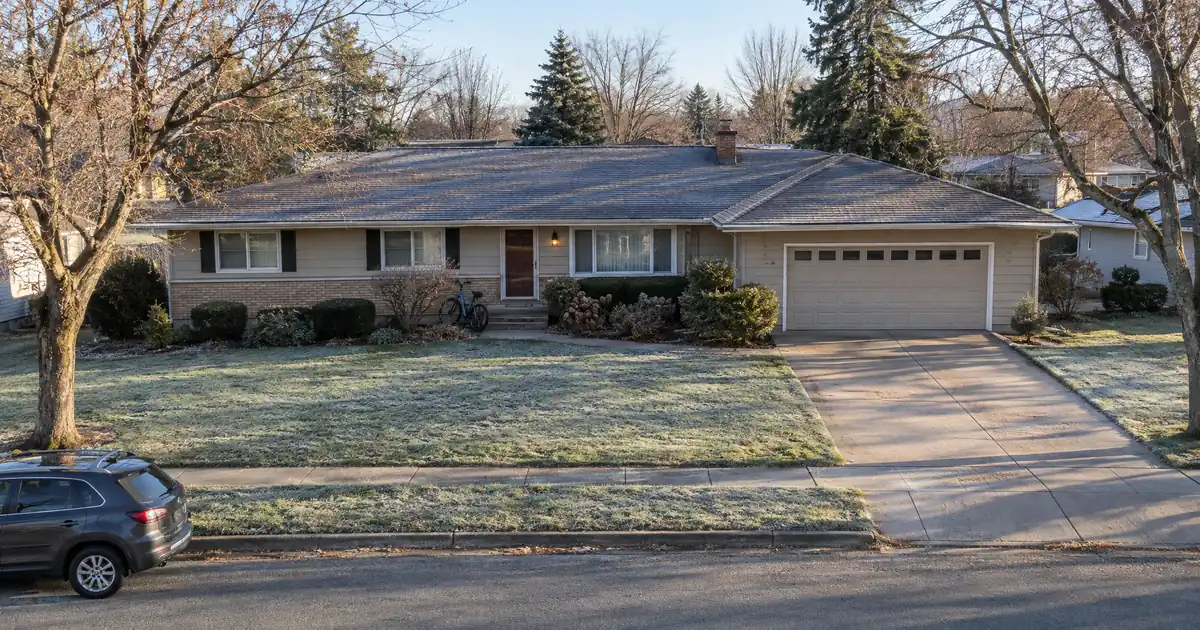
The Quick Read: Scaling works as a loop. Short-term money buys and rehabs each property, an individual DSCR loan takes it out once it is rented, and a portfolio loan can later pull several stabilized rentals under one note, subject to lender guidelines and file review. DSCR, short for debt service coverage ratio, compares a rental’s rent to its monthly payment rather than your personal income.
- Each refinance has to pass four tests: value, rent coverage, reserves, and credit.
- Individual DSCR loans suit the early and middle deals. A portfolio loan suits the consolidation stage.
- Clearing 1.00 coverage is not the same as positive cash flow.
- Seasoning, a low appraisal, and release terms are where scaling plans most often break.
BRRRR stands for buy, rehab, rent, refinance, repeat. MasterClass describes it as buying a fixer-upper with cash or short-term financing, improving it, renting it, and refinancing. The goal is to recycle the same capital into the next rental instead of saving a new down payment each time.
Why Does BRRRR Scaling Stall?
Scaling stalls at the refinance. Conventional underwriting leans on your personal income and debt-to-income ratio. Each new mortgage adds debt to that ratio, so the approvals thin out after a handful of properties. The strategy is not the problem. The qualification method is.
Inman points to the other source of stalling: speed is also the risk. Buying, improving, renting, and refinancing all have to land. If one step slips, money stays locked in the building and the next deal waits.
That is why scaling investors move to financing built around the property. Across our wholesale network, individual DSCR loans are the usual refinance tool. Portfolio structures are what many investors move to once the property count grows. Lendmire’s complete DSCR loans guide covers the basics if you are new to the product.
How Does the Scaling Loop Work?
The loop has six steps. Each one feeds the next.
1. Buy and rehab with short-term money. Cash or a short-term loan carries the project.
2. Rent and stabilize. A signed lease creates the rent evidence the refinance lender needs.
3. Clear the seasoning gate. Seasoning is the minimum time a lender wants you to have owned the property before it lends on the new appraised value. On most programs in our network, about six months is the common expectation for a cash-out refinance.
4. Pass the refinance tests. The lender looks at value, rent coverage, reserves, and credit.
5. Pull the proceeds. The new loan pays off the short-term debt and may return some capital.
6. Repeat. The returned capital funds the next purchase.
Here is Galleon’s illustration of the math. Galleon uses a property with an after-repair value (ARV) of $200,000, an all-in cost of $170,000, and a 75% cash-out loan. That leaves $20,000 still in the deal. It is an illustration, not a program quote. It also shows that BRRRR rarely returns every dollar. Final terms depend on lender guidelines, property type, leverage, and the borrower’s complete credit picture.
Galleon also frames the payoff as recycling capital every 6 to 12 months, compared with saving a new down payment over 2 to 3 years. Treat that as a rough picture of speed, not a promise.
On the buy side, Inman cites a common guardrail called the 70% rule. It says never pay more than 70% of the after-repair value minus estimated repairs. That is a purchase-price discipline. It is not a loan-to-value limit.
How Do DSCR Loans Fit the Refinance Step?
A DSCR loan qualifies primarily on property-level rental income covering the payment, subject to lender guidelines. The ratio is monthly rent divided by PITIA. PITIA is principal, interest, taxes, insurance, and any association dues. At 1.00, the rent equals the full payment. Above 1.00, there is cushion.
Here is how the programs we place files with typically look on a single rental:
- Coverage: 1.00 is where many select programs start. Stronger ratios can open better pricing and leverage. A separate path through select lenders in the network takes coverage below 1.00, with leverage and terms adjusted.
- Leverage: Cash-out refinances on a standard rental top out around 75% LTV. Purchases typically run 75% to 80% LTV on an investment property.
- Credit: A 620 floor exists in parts of the network. Most programs want around 660, and 700 or higher unlocks the strongest leverage tiers.
- Reserves: Commonly about six months of PITIA. Loans above $1,500,000 typically step up to about nine months. Conservative rate-and-term files at modest leverage can see reserves waived.
- Loan size: Standard programs run up to $3,000,000 on a single property.
These are typical ranges, not quotes. Every file is underwritten individually.
One warning matters for scaling. DSCR counts rent against PITIA only. Repairs, vacancy, management, utilities, and capital expenses sit outside the ratio. A property can clear 1.00 and still lose money. Inman makes the same point from the investor side: the new loan has to be covered by rent after the real costs of running the property. Run your own cash-flow numbers next to the lender’s ratio.
Rent can also cap the loan before equity does. A bigger loan raises PITIA and lowers the ratio. A property with plenty of equity may still support a smaller loan than its value allows. The strongest files clear both tests: enough equity and enough rental coverage.
What Is a Portfolio Loan, and How Does It Differ From a DSCR Loan?
A portfolio loan is a loan a lender keeps on its own books. It can cover one property or several. A blanket loan is one note secured by several properties. In practice, the portfolio loans scaling investors want are the multi-property kind. Individual DSCR loans are one note per property.
Our network carries two multi-property structures.
Structure A: a 30-year portfolio DSCR loan.
- It covers 2 to 20 properties under one note.
- Loan size typically runs from $300,000 to $5,000,000, with larger balances on review.
- Leverage runs up to 80% of value on a purchase or a rate-and-term refinance.
- The coverage floor of 1.00 is measured on the pool. Pooled rent is tested against pooled debt service.
- It is fixed or adjustable, on a 30-year term, and an interest-only period is available.
- Property types are single-family, 2-4 unit, condo, and townhome.
Structure B: a rental portfolio term loan.
- It suits five or more rental properties or units under one loan.
- Loan size typically runs from $500,000 to $50,000,000, with larger balances on review.
- Leverage runs up to 75% of value.
- Terms are fixed at 3, 5, 7, or 10 years with a balloon at maturity. That means a large balance comes due at the end of the term.
- Recourse and non-recourse versions exist. A recourse loan carries a personal guarantee. A non-recourse loan looks to the real estate, with recourse limited to carve-outs such as fraud and bankruptcy.
- Prepayment is by yield maintenance. That is a charge meant to make the lender whole for lost interest. It typically runs for 54 months on the 5-year note and 114 months on the 10-year note.
- Properties in several markets can sit under one loan.
- Small multifamily is also an eligible property type.
- Reserves are held for taxes, insurance, and capital expenditures.
Structure B can also be assumed by a buyer, subject to underwriting and an assumption fee. A one-time purchaser assumption is available on loans above $5,000,000. Below that, it is on an exception basis.
Both structures have common ground. The credit floor is typically 640, and 680 or 720 on some structures. A special-purpose entity, usually an LLC, is required on some structures, subject to program terms. Every property still needs a lease or an appraiser-supported market rent.
Some property types are not eligible in the pool: owner-occupied property, mobile homes, co-ops, mixed-use property, and commercial property. Manufactured homes, log homes, and barndominiums fall outside our DSCR programs altogether.
A pooled loan can absorb a weaker rental. If one property in the pool covers less than 1.00 on its own, the pooled coverage, the leverage, and the terms are what underwriting tests. That is subject to underwriting. It is a pooled-coverage fact, not a special program.
Individual DSCR Loans vs. a Portfolio Loan
| Factor | Individual DSCR loan | Portfolio loan |
|---|---|---|
| Structure | One note per rental | One note, several rentals |
| Coverage test | Each property alone | Pooled rent vs pooled debt |
| Cash-out ceiling | 75% LTV, standard rental | 75% of pooled value, never above |
| Purchase leverage | 75%-80% LTV typical | Up to 80% (A), 75% (B) |
| Selling one property | Pay off that loan | Follows release terms |
| Fit | Early and middle deals | Consolidation stage |
The tradeoff is flexibility versus simplicity. Individual loans keep each property independent. You can sell one without touching the others. A portfolio loan gives you one payment and one set of terms, and a weak property can ride on the strong ones.
That convenience has a price. Properties pledged together are cross-collateralized, meaning one property’s problem can touch the whole pool. Selling one property out of the pool follows the loan documents and the lender’s release terms. The release price runs above the property’s allocated balance, and the remaining portfolio must still cover its debt service. Read those provisions before you sign, not when you want to sell.
A Staged Capital Stack for Scaling
Think of scaling in three stages. Each stage uses a different tool.
| Stage | Acquisition money | Takeout |
|---|---|---|
| First deals | Cash or short-term loan | Individual DSCR loan |
| Scaling phase | Short-term loans, staggered | Individual DSCR loans, several lenders |
| Consolidation | Cash or short-term loan | Portfolio loan on stabilized rentals |
The usual pattern is individual DSCR loans on each BRRRR exit. Later, an investor may consolidate stabilized properties into a portfolio loan. That is how we see many files progress, not a published rule. Plenty of investors never consolidate. Others do it once the count makes managing many notes a chore.
When you consolidate with cash-out, a few figures apply across the pool:
- Cash-out never exceeds 75% of the pooled value.
- In the first six months of ownership, leverage is limited to 90% of total cost.
- From six to twelve months, it is limited to 100% of total cost.
- A rate-and-term refinance carries no cost restriction.
Early refinancing also has a prepayment angle. Paying off a loan early can eat into the proceeds of the next pull. Check the prepayment terms on each note before you plan a second cash-out.
Where the Scaling Rules Break
Seasoning varies by program. The six-month expectation is common, not universal. Inside the seasoning window, a lender may size the loan on cost basis rather than appraised value. That can strand equity on the first takeout. A new appraisal after seasoning may reach it on a second pull. Two clocks can run: how long you have owned the title and how long the existing loan has been in place. Lendmire’s piece Can a BRRRR Rehab Get a Second DSCR Cash-Out Within a Year? covers the second pull in more detail, and your broker can explain how each clock is counted.
A low appraisal. If value comes in short, you have four fallbacks. You can take a smaller refinance that only pays off the short-term debt. You can bring cash to closing. You can extend the bridge loan. Or you can wait out seasoning and reappraise.
Reserves multiply. Reserves are counted per loan on many files. Ten rentals can mean a large cash cushion held somewhere. Plan reserves before you plan the tenth purchase.
Lender concentration. Lenders can limit how much they will hold with one borrower. That is why many scaling investors keep more than one lender relationship. Lendmire’s piece How to Run DSCR Lender Due Diligence as a Portfolio Investor With LLCs covers how to check them.
Entity structure. Holding properties in an LLC is common among scaling investors, subject to program terms. Recourse loans still carry a personal guarantee. Title and insurance should match the borrowing entity.
Rent evidence. Every property in a pool still needs a lease or appraiser-supported market rent. An unrented property does not count as stabilized.
Larger balances. Above $2,500,000, the network generally holds to 30-year fixed structures. Extended terms, interest-only periods, and adjustable structures are available through select lenders in the network.
On the human side, the University of San Diego’s continuing education program notes that BRRRR carries significant financial risk and demands substantial time at every stage. Scaling multiplies both.
Metrics That Tell You to Slow Down
Scaling is something you can measure. A handful of numbers matter.
- Capital left in each deal. If it creeps up, your acquisition or rehab discipline is slipping.
- Coverage cushion. Track each rental’s coverage and the portfolio’s pooled coverage. A pool that barely clears 1.00 has no room for a vacancy.
- Reserve depth. Count months of reserves across all notes, not per property.
- Refinance queue. Count how many projects are waiting on a takeout. A long queue means your capital is tied up.
Slow down when any of these happens:
- Two projects in a row finish with more capital stuck than planned.
- Your reserves fall below what the next lender will want.
- A low appraisal leaves you holding a bridge loan with no exit.
- Your pooled coverage drops toward 1.00.
You are also not ready to scale if your first deals needed a rescue. Prove the loop on a few properties first.
A Worked Case, Stage by Stage
Say an investor completes a first BRRRR on a single-family rental and refinances into an individual DSCR loan. The rent covers the payment at roughly 1.2x, and the investor’s credit sits above 700. The returned capital funds deal two.
Deals two through five follow the same pattern. The investor uses a second lender for the third deal, so one relationship does not hold the whole book. Each refinance is a cash-out at 75% LTV on a standard rental, after about six months of seasoning. These specifics are subject to lender guidelines and a full review of property, leverage, and credit.
By the sixth property, five stabilized rentals sit under separate notes. The investor weighs a portfolio loan. Pooled coverage looks healthy because the strong rentals offset one that runs thinner. The investor reads the release terms, confirms the entity requirements, and checks reserves. Then the investor decides whether one note is worth the cross-collateralization.
No part of that is guaranteed. Every step is subject to lender guidelines, appraisal, and credit review. The point is the sequence: individual loans first, consolidation later, and a metric check before each step.
Key Terms Defined
BRRRR: Buy, rehab, rent, refinance, repeat. A strategy for recycling capital into the next rental.
DSCR: Debt service coverage ratio. Rent divided by PITIA.
PITIA: Principal, interest, taxes, insurance, and any association dues. The monthly obligation on a rental.
Seasoning: The minimum time a lender wants you to have owned a property before it lends on its appraised value.
Portfolio loan: A loan a lender keeps on its own books rather than selling it.
Blanket loan: One loan secured by several properties.
Cross-collateralization: Pledging several properties against one debt, so a problem with one can affect the rest.
Yield maintenance: A prepayment charge that compensates the lender for lost interest.
Recourse and non-recourse: A recourse loan carries a personal guarantee. A non-recourse loan looks to the real estate, with carve-outs.
Tax treatment can depend on how the funds are used and how the property is held; investors should keep clear records and speak with a qualified tax professional before relying on any deduction.
Frequently Asked Questions
Can I use a DSCR loan on every BRRRR exit?
Often, yes, if the property is an eligible rental and the file clears the tests. DSCR loans qualify primarily on property-level rental income covering the payment, subject to lender guidelines. Credit, reserves, and leverage still apply. Manufactured homes, log homes, and barndominiums are not offered in our DSCR programs.
When should I consider a portfolio loan instead?
Consider one when you hold several stabilized rentals and want one note, or when you want pooled coverage. A 30-year portfolio DSCR loan covers 2 to 20 properties. A rental portfolio term loan suits five or more. Read the release terms and the prepayment charges first.
What happens if the appraisal comes in low?
The new loan shrinks, and you may be left holding bridge debt. Your fallbacks are a smaller payoff-only refinance, bringing cash to closing, extending the bridge, or waiting out seasoning and reappraising.
Can I mix individual DSCR loans and a portfolio loan?
Yes, many investors do. Individual loans cover the early deals, and a portfolio loan can later pull some stabilized rentals together. Properties you plan to sell soon are often better left on individual notes.
Does clearing 1.00 mean a property makes money?
No. DSCR compares rent to PITIA only. Run your own cash-flow numbers beside it.
Your Next Step
If you are buying or refinancing a rental property and want to see how the numbers work, Lendmire can help you compare DSCR loan options based on the property income, credit profile, leverage, and investor goals. Short-term rental rules can vary by city, county, HOA, and property type, so investors should confirm local rules before relying on projected rental income.
Scaling rewards the investor who plans the next refinance before buying the next property.
About Lendmire
Lendmire (NMLS# 2371349) is a mortgage broker that arranges DSCR investor financing through select lenders in its wholesale network, covering 41 markets, including Washington, D.C. It does not lend or approve loans. Lenders review eligibility, and program terms are subject to change. Scotsman Guide named Lendmire a Top Mortgage Workplace in both 2025 and 2026.
Get Started
Ready to find the right loan for you?
In about 30 seconds you can review financing options available for your investment property. No commitment required.
Informational only. Not a Loan Estimate, approval, or commitment to lend. Program availability and eligibility are subject to lender guidelines, credit approval, property review, and underwriting.
References
2. Inman
3. Galleon – What Is the BRRRR Method
4. University of San Diego PCE – BRRRR Method
This article is part of Lendmire’s DSCR loan program — full qualification details, guidelines, and scenarios live on the program page.
Related reading: One Blanket Loan vs Two Smaller DSCR Portfolio Loans for 10 Houses · Can You Swap One Rental for Another in a Portfolio DSCR Loan? · How to Document a Portfolio DSCR Loan Without Personal Income
Brandon Miller
Founder & CEO, Mortgage Loan Originator, Lendmire LLC
- Mortgage Loan Originator · NMLS# 1129696 · Verify on NMLS Consumer Access
- North Carolina Real Estate Broker · License# 343312 · Verify on NCREC
- North Carolina Insurance Producer · License# 19053198 · Property, Casualty, Life, Health · Verify on NAIC SBS
- Lendmire LLC · Firm NMLS# 2371349 · Verify firm licensure
Important disclosures. Lendmire (NMLS# 2371349) is a licensed mortgage brokerage. Lendmire is not a direct lender, depository institution, or financial advisor. All loan inquiries are subject to lender underwriting; this article does not constitute a commitment to lend. Rates, terms, and program guidelines are subject to change without notice and vary by borrower profile, property type, and state. Information in this article is general in nature and is not financial, legal, or tax advice. Equal Housing Opportunity. NMLS Consumer Access: nmlsconsumeraccess.org.