
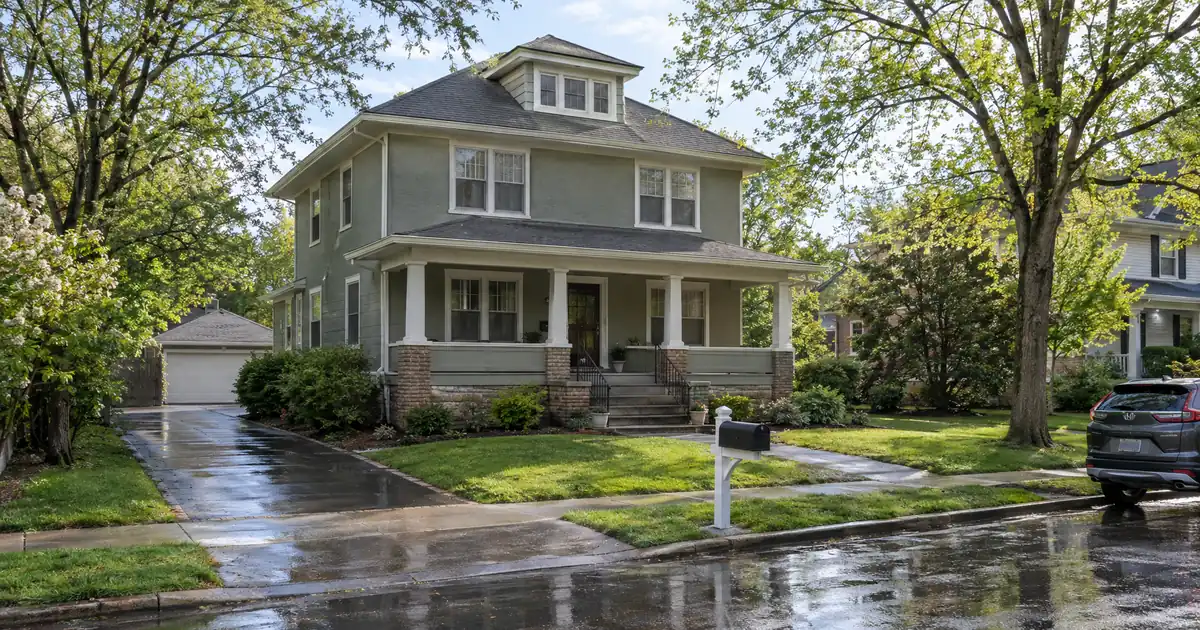
The Quick Read: Insurance on a group of rentals works best when every property has its own bindable evidence of coverage in place before the file goes to the lender. One policy can cover several rentals, but the lender still reviews each address, each insured name, and each flood determination.
- Insurance premiums sit inside PITIA, so a late quote increase lowers the coverage ratio directly.
- A shared-limit blanket policy, separate policies, and endorsements on one policy are all common structures. Whether a lender accepts each one is a program question.
- Flood coverage is a separate policy. Most homeowners and landlord forms exclude flood.
- The insured name, the address, and the mortgagee clause must match the loan file exactly.
- On a portfolio DSCR loan, coverage is tested on the pool. A gap on one property can still hold up the whole file.
Insurance is the line item that most often changes a DSCR number after the investor thinks the file is done. This article walks through how the premium feeds the ratio, the three ways to insure a group, where flood fits, and what to have in hand per property before closing. Program figures below come from select lenders in Lendmire’s wholesale network and are subject to lender guidelines. They are not a commitment to lend.
What Does the Lender Actually Need From the Insurance?
The lender needs proof that each property is insured, in the right name, with the lender listed correctly, and in force at closing. Flood coverage is added where a flood determination calls for it. The premium also feeds the coverage ratio, so the number matters as much as the paperwork.
Across the network, the evidence package per property usually looks the same:
- The borrowing entity as the named insured, not the individual, when the loan is made to an LLC (subject to lender program eligibility).
- The full property address, matching the appraisal and title.
- The lender’s mortgagee clause, usually with an ISAOA tag for successors and assigns.
- Effective dates that cover the closing date.
- A paid receipt, or a documented plan to pay at closing.
The mortgagee clause is where files get sent back. The clause names the lender as first-lien holder and loss payee, and the wording must match the lender’s required format. A near-match gets returned for correction.
Lenders also differ on extras, such as rental-loss coverage and liability minimums. Those vary by lender and by loan size. Get the specific insurance checklist for the program before the quotes are ordered, not after.
How Does the Premium Change the DSCR Number?
The premium is one piece of PITIA, the full monthly obligation the rent is divided into. A higher premium, or a flood policy added late, lowers the ratio. Insurance is also one of the inputs most likely to change after the investor has already run the numbers.
DSCR compares rent to PITIA: principal, interest, taxes, insurance, and association dues. It does not measure cash flow. Clearing 1.00 does not mean positive cash flow, because repairs, vacancy, management, utilities, and capex sit outside the calculation.
On a single-property loan, one bad quote hurts one ratio. On a portfolio loan, coverage is measured on the pool. Pooled rent is divided by pooled debt service, so stronger properties can offset weaker ones. That helps, but it also hides a problem. A coastal property with a high wind or flood premium can pull the whole pool down.
Run it this way. Say a pool of rentals clears around 1.15x on the first set of quotes. A renewal on one older property comes in much higher and the pool drops toward 1.05x. Nothing about the rents changed. The file still works if the pool stays above the program floor, but the cushion is gone. Many portfolio programs start at 1.00 on the pool. Stronger coverage opens better pricing and leverage.
Sub-1.00 coverage is a separate path. It is available through select lenders in the network, with leverage and terms adjusted. A rental below 1.00 inside a pool is a pooled-coverage fact, and underwriting tests the pooled coverage, the leverage, and the terms together.
Which Structure Fits: Separate Policies, Endorsements, or a Blanket?
Three structures exist for insuring several rentals. The right one depends on property count, geography, condition, and how the lender wants to see the evidence. The Azibo landlord guide lays out the same three: separate policies, endorsements added to one policy, and a blanket policy covering multiple properties under one limit. It also notes that how many properties one policy can cover varies by company.
| Structure | How limits work | Main risk | What a lender may want |
|---|---|---|---|
| Separate policies | One limit per property | More renewals | One declarations page each |
| Endorsements on one policy | Per-property limits, one policy | Carrier property cap | Schedule of locations |
| Blanket policy | One shared limit | Coinsurance, margin clauses | Per-property evidence |
A Hettler Insurance explainer says the full limit on a blanket policy is available for any single loss. It also lists the tradeoffs: higher premiums, stricter coinsurance, and margin clauses that can cap what is paid at a single site.
That shared limit is the lender’s concern. A lender with a separate collateral position on each property wants to see that each address is insured for something close to its replacement cost. A pooled limit can look generous on paper and still be thin for one expensive property.
Whether a given program accepts a blanket policy, and whether it wants a per-property schedule of values, is a lender question. Across the network, the safe habit is the same. Get the lender’s insurance requirements first. Then ask the agent whether the structure can produce a per-address declaration or schedule.
Mixed geography adds a wrinkle. A multi-state landlord insurance blog notes that not every carrier offers multi-state blanket coverage. A portfolio spread across markets can end up with a hybrid: one blanket for a cluster of similar properties, separate policies for outliers.
Where Does Flood Coverage Fit?
Flood is its own policy, and it is the one insurance requirement with a federal source. FEMA’s FloodSmart eligibility page says flood insurance is required for a property in a Special Flood Hazard Area when the mortgage comes from a federally regulated or insured source. It adds that some lenders require it outside high-risk areas, and that most homeowners policies exclude flood and do not meet the requirement.
DSCR loans are not government-backed, so the federal mandate is not the whole story. Lender program terms are. Many files in the network treat a flood-zone property as needing a flood policy regardless. Confirm that with the program before assuming either way.
Moderate-risk zones are a separate case. NAR’s flood zone guide describes zones X, B, and C as carrying a 0.2% annual flood chance, where insurance is recommended but not federally required. A lender can still ask for it.
Two mechanics matter for files. First, lenders run a flood determination on each property. A property that looks safe by its neighborhood can still come back in a mapped zone. Second, the federal flood notice text states that required coverage must be maintained for the life of the loan, and that a lender can buy force-placed coverage at the borrower’s expense if the borrower lets it lapse. That text applies to regulated lenders, so it is context for how flood requirements generally work, not a statement of every program’s terms.
The practical point: check every property’s flood zone before the portfolio is priced. Flood premiums vary widely by location. One mapped property can change the pooled ratio.
Where Do Group Insurance Files Break?
The break points are predictable. Most are documentation problems, not coverage problems.
| Problem | Why it happens | Fix |
|---|---|---|
| Wrong insured name | Quote run in the individual’s name | Reissue in the borrowing entity |
| Mortgagee clause rejected | Wording does not match lender format | Get the exact clause first |
| One address missing | Property not added to the blanket | Add it before the file is submitted |
| Premium jumps late | Quote expired or re-rated | Refresh quotes near submission |
| Flood surprise | Determination returns a mapped zone | Quote flood early for every address |
| Wrong occupancy | Quote assumed owner-occupied | Rerun as a non-owner-occupied rental |
| Short-term rental use | Landlord form excludes paying guests | Confirm the policy covers STR use |
Short-term rentals need their own check. Standard landlord forms commonly exclude paying-guest activity. For STR collateral, purchase leverage tops out at 75% LTV, cash-out at 70%, and the network generally wants a 640+ score and about 12 months of hosting history. Lendmire’s piece Does a DSCR Lender Require an STR Permit Before Closing on a Cabin? covers that side. Short-term rental rules can vary by city, county, HOA, and property type, so investors should confirm local rules before relying on projected rental income.
The slowest property sets the pace. With ten addresses, nine clean binders do not help if the tenth has a quote written on the wrong form. Treat the weakest address as the critical path.
What Does the Pre-Closing Sequence Look Like?
Start insurance work at the same time as the loan structure, not after the appraisals come back. Premiums are inputs to the ratio, so they belong in the first pass of the numbers.
1. Get the lender’s insurance checklist first. Ask the broker for the program’s requirements on liability, dwelling coverage, rental-loss coverage, deductibles, and flood. These vary by lender, leverage, and loan size.
2. Run flood determinations on every address. Do this before quotes, so flood coverage is priced into the first ratio.
3. Brief the insurance agent in writing. Give the agent the borrowing entity name, every address, occupancy type (non-owner-occupied rental, or short-term rental), and the lender’s mortgagee clause.
4. Choose the structure. Compare separate policies, endorsements, and a blanket against the lender’s evidence requirements. Ask whether the structure can produce a per-address declaration.
5. Rerun the DSCR with real premiums. Replace estimates with quotes. If the pool or a single loan falls short, adjust leverage or scope before submission.
6. Collect per-property evidence. One declarations page or schedule line per address, with the correct insured, dates, and clause.
7. Refresh stale quotes before submission. A quote that was fine when ordered can expire or re-rate during review.
8. Fix returned items the same day. Clause corrections and name changes are routine. Leaving them open holds the whole file.
Documents to gather for the broker: the entity documents, a list of addresses with property type, current policies and renewal dates, any claims history, and the flood determination results.
What Changes on a Portfolio Loan Versus a Loan on One Rental?
On a loan for one rental, the insurance tests one property against one note. On a portfolio loan, several properties sit under one note and coverage is tested on the pool.
The network’s 30-year portfolio DSCR structure covers 2 to 20 properties under one note, with loan sizes typically from $300,000 to $5,000,000 and leverage up to 80% of value on a purchase or rate-and-term refinance. Property types include SFR, 2-4 unit, condo, and townhome. Coverage is measured on pooled rents against pooled debt service, with a 1.00 floor on the pool. Interest-only periods are available. A separate rental portfolio term loan covers five or more properties or units, with loans typically from $500,000 up to $50,000,000, leverage up to 75% of value, fixed terms with a balloon at maturity, and reserves held for taxes, insurance, and capital expenditures. All of this is subject to lender guidelines.
The credit floor on a pool is typically 640, and higher on some structures. A special-purpose entity, usually an LLC, is required on some structures. Recourse loans carry a personal guarantee. Cash-out on a portfolio never exceeds 75% of pooled value. Every property needs a lease or an appraiser-supported market rent. Owner-occupied property, mobile homes, co-ops, mixed-use, and commercial property are not eligible in the pool.
Insurance adds two portfolio-specific points. The pool’s insurance total drives the pooled ratio, so one repriced address moves the whole number. And partial releases or the sale of one property out of the pool follow the loan documents. The remaining properties still have to cover the debt service, and they must stay insured through the transition.
For comparison, a loan on a single rental typically runs 75%-80% LTV on a purchase, with the standard programs reaching up to $3,000,000. Reserves are commonly about 6 months of PITIA and step up to about 9 months above $1,500,000. Those figures belong to single-property loans, not to the pool. Investors thinking about the refinance route can also read Lendmire’s piece Can a BRRRR Rehabber Line Up the DSCR Refinance Before Hard Money?.
A larger down payment lowers the payment and can lift the ratio. It does not erase leverage caps, credit floors, reserve rules, or property eligibility. The strongest files clear both tests: enough equity and enough rental coverage. The complete DSCR loans guide covers the full qualification picture.
Key Terms Defined
Blanket policy: One insurance policy that covers several properties under a single shared limit.
Named insured: The person or entity the policy protects, which should match the borrowing entity on the loan.
Mortgagee clause: The policy wording that names the lender as first-lien holder and loss payee.
ISAOA: A tag meaning “its successors and assigns,” added so the clause still works if the loan is sold.
Special Flood Hazard Area: A mapped high-risk flood zone where flood insurance is federally required for certain mortgages.
Coinsurance: A policy condition that reduces a claim payout if the insured value falls short of a required share of replacement cost.
PITIA: Principal, interest, taxes, insurance, and association dues, the full monthly obligation used in the DSCR ratio.
Frequently Asked Questions
Can one policy cover all the rentals in a DSCR loan?
Often yes, but the lender decides whether the structure works. A blanket policy or one policy with endorsements can cover several addresses. Lenders still usually want evidence for each property, so ask for a schedule or per-address declarations. Get the lender’s checklist before choosing.
Does the insurance premium affect whether the loan is reviewed?
Yes. The premium sits inside PITIA, so a higher premium lowers the coverage ratio. On a portfolio loan, the effect shows up in the pooled ratio. Refresh quotes before submission so the ratio is tested on real numbers.
Does a landlord or homeowners policy satisfy flood requirements?
No. FEMA states that most homeowners policies exclude flood damage and do not meet the mortgage flood requirement. A separate flood policy is needed where a flood determination or the lender calls for one.
Who should be the named insured when the loan is to an LLC?
The borrowing entity, subject to lender program eligibility. Quotes run in an individual’s name are a common reason for returned items. Give the agent the exact entity name and all addresses up front.
What happens if one property in the group cannot be insured?
It holds up the file. On a portfolio loan, the property may have to be removed from the pool or the closing delayed until it is insured. A hybrid structure, with a separate policy for the problem address, often solves it.
Does insurance matter after closing?
Yes. Required flood coverage must be maintained for the life of the loan, and a lapse can lead to force-placed coverage at the borrower’s expense. Keep renewals aligned and evidence current.
Tax treatment varies; consult a qualified professional.
If you are buying or refinancing a group of rental properties and want to see how the numbers work, Lendmire can help you compare DSCR loan options based on the property income, credit profile, leverage, and investor goals.
About Lendmire
Lendmire, NMLS# 2371349, is a non-QM mortgage broker serving real estate investors in 41 markets, including Washington, D.C., through DSCR investor loan programs. Qualification is generally reviewed around the subject property’s rental income, not the borrower’s W-2 history — a practical fit for LLC-titled portfolios and self-employed investors. All scenarios remain subject to lender review and program guidelines. Two consecutive Scotsman Guide Top Mortgage Workplace recognitions (2025, 2026).
Get Started
Ready to find the right loan for you?
In about 30 seconds you can review financing options available for your investment property. No commitment required.
Informational only. Not a Loan Estimate, approval, or commitment to lend. Program availability and eligibility are subject to lender guidelines, credit approval, property review, and underwriting.
References
1. Azibo – Insurance for multiple rentals
2. Hettler Insurance – Blanket insurance
3. Fadaie Insurance – Multi-state rentals
4. FEMA FloodSmart – Eligibility
6. Cornell LII – 12 CFR Part 339 App. A (flood notice)
This article is part of Lendmire’s DSCR loan program — full qualification details, guidelines, and scenarios live on the program page.
Related reading: How to Free a DSCR Pool Dragged Down by One or Two Weak Rentals · Does a Blanket DSCR Loan Make Sense for 10 or More LLC Rentals? · How to Read a DSCR Allocation Schedule With One or Two Weak Rentals
Brandon Miller
Founder & CEO, Mortgage Loan Originator, Lendmire LLC
- Mortgage Loan Originator · NMLS# 1129696 · Verify on NMLS Consumer Access
- North Carolina Real Estate Broker · License# 343312 · Verify on NCREC
- North Carolina Insurance Producer · License# 19053198 · Property, Casualty, Life, Health · Verify on NAIC SBS
- Lendmire LLC · Firm NMLS# 2371349 · Verify firm licensure
Important disclosures. Lendmire (NMLS# 2371349) is a licensed mortgage brokerage. Lendmire is not a direct lender, depository institution, or financial advisor. All loan inquiries are subject to lender underwriting; this article does not constitute a commitment to lend. Rates, terms, and program guidelines are subject to change without notice and vary by borrower profile, property type, and state. Information in this article is general in nature and is not financial, legal, or tax advice. Equal Housing Opportunity. NMLS Consumer Access: nmlsconsumeraccess.org.