
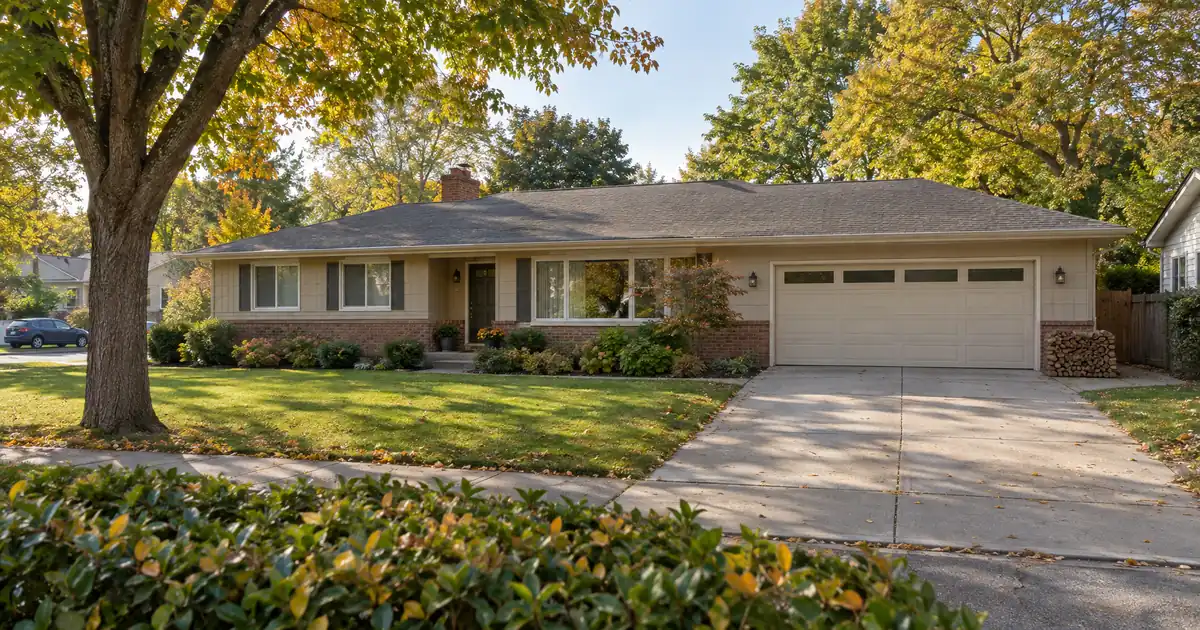
The Quick Read: A tenant-occupied package closes on one pooled DSCR loan once every property has a lease or an appraiser-supported market rent, the appraisal’s rent opinions are in, the paperwork matches across lease, title, insurance, and entity, and the occupancy and business-purpose affidavit is signed before funding. The tenants stay put. The lender tests the pool’s combined rent against its combined payment, and every property still has to pass on its own paperwork.
- Counted rent is usually the lower of the signed lease and the appraiser’s market rent, so a high lease earns no extra credit.
- Coverage on a pooled loan is one blended ratio, so a strong rental can offset a weak one.
- Every property backs the whole note, so a single bad file can hold up the pool.
- Month-to-month or expired leases usually change the rent basis and the paperwork. They do not usually block the loan.
- Clearing 1.00 coverage is not the same as positive cash flow.
What Does It Take to Close a Tenant-Occupied Rental Package?
It takes one note secured by several rentals, plus clean tenancy paperwork on every door. A “package” is a group of rental properties bought together, often from one seller, with tenants already living in them. Lenders call the financing a portfolio DSCR loan, a blanket loan, or a cross-collateralized loan. All three names describe the same thing: one loan secured by several properties.
Across our wholesale network, two structures cover most packages.
The first is the 30-year portfolio DSCR loan. It takes two to 20 properties under one note, with loan sizes from $300,000 to $5,000,000 (larger balances on review). Leverage runs up to 80% of value on a purchase or rate-and-term refinance of investment property. Coverage is measured on the pool, with a 1.00 floor on pooled rent against pooled debt service. Interest-only periods are available. Eligible property types are single-family, 2-4 unit, condo, and townhome. Each figure is subject to lender guidelines and a complete review of property type, leverage, and credit.
The second is the rental portfolio term loan. It is built for five or more rental properties or units under one loan, with sizes from $500,000 to $50,000,000 (larger balances on review). Leverage runs up to 75% of value. Terms are fixed at 3, 5, 7, or 10 years with a balloon at maturity. Recourse and non-recourse versions exist, with carve-outs on the non-recourse side. Reserves are held for taxes, insurance, and capital expenditures. Properties in several markets can sit under one loan. Small multifamily of five or more units is eligible only on this structure.
On both, the credit floor is typically 640, with 680 or 720 on some structures. All figures are program ceilings and floors, not quotes, and they sit subject to lender guidelines.
Manufactured and mobile homes are not reviewable on any of these programs. Owner-occupied, mixed-use, commercial, and co-op properties are also out of the pool.
How Does Underwriting Count the Rent?
Underwriting adds up the rent each property is credited with, adds up the full monthly obligation on each, and divides one by the other. The obligation is PITIA: principal, interest, taxes, insurance, and association dues. The result is one blended coverage ratio for the pool. Here is the sequence a file follows.
1. Inventory every property. Build one rent roll for the pool, with a row per property or unit. A rent roll is a unit-by-unit list of tenants, rents, and lease dates.
2. Collect an executed lease per occupied unit. Add proof the rent is actually paid, such as deposit records or a payment ledger.
3. Order the appraisal with a rent opinion on each property. Single-family and condo files typically get the single-family comparable rent schedule, form 1007. A 2-4 unit gets the small residential income property report, form 1025, with per-unit rents inside it. Both are Fannie Mae appraisal forms that DSCR files borrow by name only. Agency selling-guide rules do not govern DSCR loans.
4. Pick the counted rent. Most programs we place files with count the lower of the signed lease and the appraiser’s market rent. A lease above market earns no credit for the excess. A lease below market pulls the ratio down. A vacant unit is credited at market rent alone.
5. Divide by PITIA. Total counted rent over total PITIA gives the pooled ratio.
6. Reconcile the paper. Names must match across lease, title, insurance, and the buying entity.
7. Sign the affidavit. The borrower signs the occupancy and business-purpose affidavit before funding.
A modeled example shows the pooled math. Picture three rentals with equal payments and coverage of 1.30x, 1.10x, and 0.90x. The pool blends to 1.10x. The third rental sits below 1.00, yet the pool clears the floor. Underwriting still tests the pooled coverage, the leverage, and the terms, so a weak door is a pooled-coverage fact and not a free pass.
Pooling also has a cost. A weak property cannot hide when the rent opinion comes back low, because that opinion lowers the whole ratio.
The Closing Sequence, Phase by Phase
Most packages move through the same phases, and each phase has an owner. The table below lays them out.
| Phase | What happens | Owner |
|---|---|---|
| Contract | Tenancy deliverables and cure rights written in | Buyer, seller |
| Tenancy documents | Leases, rent roll, payment proof delivered | Seller |
| Appraisal | Value and rent opinion on every property | Appraiser |
| Underwriting | Pooled coverage, leverage, credit, reserves reviewed | Lender |
| Title and insurance | Names and coverage tied to the entity | Title company, buyer |
| Closing | Affidavit signed, deposits and rent allocated | All parties |
Appraisal access is the phase that surprises first-time package buyers. Appraisers need to see occupied units, and tenants have rights to notice. The seller or property manager should schedule entries across every door and keep tenants informed. Build that cooperation into the contract, because a unit the appraiser cannot enter stalls the pool.
The contract is where you protect yourself. Write in the seller’s duty to deliver leases, the rent roll, and payment records. Add a cure period and a right to remove or replace a property that fails. Without those terms, one problem unit can force a renegotiation of the entire package.
Leases, Rent Rolls, and Estoppels
Every occupied unit needs an executed lease. The rent roll must tie to those leases and to the deposits actually received. A rent roll alone does not satisfy the file.
An estoppel certificate is a statement from the tenant confirming the lease terms, the rent, the deposit, and whether any defaults exist. Commercial leases often require tenants to provide estoppels. Lender conditions on one-to-four unit DSCR files vary, and an estoppel is not a standard requirement. A buyer can still ask for them in the contract, because they expose mismatches before closing. If a tenant refuses to sign, the leases and payment proof carry the file instead.
The most common failures are mismatches. Use the table below as a batch-check method across the whole package.
| Mismatch | Evidence | Fix |
|---|---|---|
| Rent differs from lease | Bank deposits, ledger | Correct the roll |
| Deposit figure differs | Seller ledger, lease | Reconcile before closing |
| Landlord name differs | Title, lease | Assignment or amendment |
| Concession not on roll | Lease addenda | Disclose and re-run coverage |
| Month-to-month not flagged | Lease dates | Mark and use market rent |
One mismatch on one property can stall the whole file. Check all of them in one pass before the appraisal is ordered.
Where the Rule Breaks
The general rule is the lower of lease and market rent, tested across the pool. Several situations bend it. The table shows the usual treatment of a problem unit.
| Situation | Usual treatment | Next step |
|---|---|---|
| Expired or month-to-month lease | Market rent, lease as support | Document payment history |
| Newly signed lease | Counts if appraisal supports it | Confirm against rent opinion |
| Vacant unit | Market rent alone | Make it lease-ready |
| Related-party tenant | Market rent, closer review | Expect extra scrutiny |
| Rent above appraised market | Market rent counts | Re-model the ratio |
| Non-responsive tenant | Leases and payment proof | Rely on the lease file |
A weaker file is not a blocked file. Month-to-month changes the rent basis and the paperwork. It does not usually change eligibility.
Short-term rentals follow a separate path. The rent opinion documents monthly market rent, and a nightly rate times 30 is not valid support. STR purchases run to 75% leverage and typically want a 640+ score and about 12 months of hosting history. Short-term rental rules can vary by city, county, HOA, and property type, so investors should confirm local rules before relying on projected rental income.
Five or more units in one building usually shifts underwriting to net operating income over debt service. Expect an income-approach appraisal and a trailing-12 operating statement. That structure belongs on the rental portfolio term loan.
Cross-collateralization means every property backs the whole note. Selling one property later follows the loan documents and the lender’s release terms. The release price runs above the property’s allocated balance, and the remaining portfolio must still cover its debt service.
What Happens With Deposits and Prepaid Rent at Closing?
Security deposits and prepaid rent usually move to the buyer through a credit on the closing statement or a transfer of the funds. Which one applies depends on the contract and on state tenancy law.
On a package, allocate these items by property, not as one lump. A per-property schedule keeps liens, prorations, and deposits traceable on a single note. The lease assignment goes to the buying entity at closing. If a property manager holds the deposits, schedule the hand-off so the money and the records arrive together.
Tenants do not move out. If a seller wants a unit vacated before closing, that is a separate negotiation governed by state law and the contract.
Who Owes What
| Party | Owes |
|---|---|
| Seller | Leases, rent roll, deposit records, access |
| Buyer | Entity documents, reserves, affidavit |
| Title company | Vesting, per-property allocations |
| Property manager | Ledgers, deposit hand-off |
| Lender | Pooled coverage, leverage, credit review |
| Appraiser | Value and rent opinion per property |
Pool or Separate Loans?
Pooling suits investors who want one closing, one note, and one payment. Separate loans suit investors who want a vacancy at one property to stay isolated from the others. The tradeoff is real: pooling ties every property together, while separate loans bring more closings and more payments.
The pool also demands a decision on exit. If you plan to sell a property within a few years, read the release terms before you sign. A pool is easy to enter and harder to unwind.
Here is what we see across package files. The failure is rarely the coverage ratio. More often it is one unit with an expired lease and no payment proof, or a landlord name on the lease that does not match the title. Investors who run the reconciliation table before ordering the appraisal save themselves the expensive re-orders.
Legacy below-market leases are the most common way an in-place tenant hurts coverage. Renew at market before the appraisal where local rules and the tenant allow it. Do not sign a discounted lease just to show a unit as filled.
DSCR compares rent to PITIA only. Clearing 1.00 does not mean positive cash flow, because repairs, vacancy, management, utilities, and capex sit outside the calculation. Reserves vary by lender, leverage, and loan size, and often run around 6 months of PITIA, stepping up near 9 months on balances above $1,500,000. The rental portfolio term loan holds reserves differently, as noted earlier.
A bigger down payment can lift coverage by shrinking the payment. It never erases leverage caps, credit floors, reserve rules, or property eligibility. The strongest files clear both tests: enough equity and enough rental coverage.
Where the Business-Purpose Rules Sit
DSCR loans are designed for non-owner-occupied investment properties. Because they are business-purpose investor loans, they are reviewed differently from a standard owner-occupied mortgage, and the consumer disclosure regime known as TRID does not apply. The Federal Reserve’s Regulation Z compliance handbook notes that business-purpose credit is exempt, and that a checked box alone may not prove business purpose. The practical consequence for you is simple: expect to sign a real occupancy and business-purpose affidavit, and expect the file to support it. Tax treatment varies; consult a qualified professional.
Pre-Offer Self-Screen
Before you sign a purchase contract, check these items:
- Every property is non-owner-occupied and of an eligible type.
- Every occupied unit has a lease, or you have a plan to document month-to-month rent.
- The contract lets you remove or replace a failing property.
- Appraiser access to every occupied unit is written into the contract.
- Your credit, reserves, and entity paperwork fit the structure you are targeting.
- You have decided on pooled or separate loans, and you have read the release terms.
For the full picture of how these loans work, see Lendmire’s complete DSCR loans guide.
Key Terms Defined
Rent roll: A unit-by-unit list of tenants, rents, and lease dates for a property or pool.
Pooled coverage: Combined counted rent divided by combined PITIA across every property in the loan.
Cross-collateralization: A setup where every property in the pool secures the entire note.
Estoppel certificate: A tenant statement that confirms lease terms, rent, deposit, and any defaults.
Counted rent: The rent the lender credits to a property, usually the lower of the lease and the appraiser’s market rent.
Release terms: The loan-document rules for removing one property from the pool and paying down the note.
Frequently Asked Questions
What if a tenant won’t sign an estoppel?
The leases and payment proof carry that unit instead, since an estoppel is not a standard requirement on these files. If your contract made the estoppel a seller deliverable, the seller’s cure period and your removal rights apply.
Can one failing unit sink the whole package?
It can hold up the pool, because every property backs the one note and each needs its own paperwork. The usual fixes are to cure the problem, replace the property, or drop it from the pool under your contract terms.
Do I need a lease for every unit?
Every occupied unit should have an executed lease or documented rent payments. A vacant unit is credited at the appraiser’s market rent. Month-to-month tenants usually change the rent basis, not eligibility.
Does a long-term tenant help me qualify?
Tenancy length shows stability, but it does not qualify the file by itself. The loan is reviewed primarily on property-level rental income covering the payment, subject to lender guidelines.
Can a 2-4 unit where I live in one unit go into the pool?
No. An owner-occupied property is ineligible. A property where you live in a unit makes it an owner-occupied file.
Next Step
If you are buying or refinancing a rental property and want to see how the numbers work, Lendmire can help you compare DSCR loan options based on the property income, credit profile, leverage, and investor goals. Lendmire is a broker arranging financing through select lenders in its wholesale network, across 41 markets including Washington, D.C. Program terms are subject to lender guidelines and this is not a commitment to lend.
About Lendmire
A non-QM mortgage broker (NMLS# 2371349), Lendmire arranges DSCR financing for real estate investors in 41 markets — 40 states plus Washington, D.C. Because deals are underwritten primarily on property cash flow rather than personal income documentation, the structure suits self-employed buyers and entity-owned portfolios. Lendmire places loans through wholesale investor lenders; it is not a direct lender. Scotsman Guide named Lendmire a Top Mortgage Workplace in both 2025 and 2026.
Get Started
Ready to find the right loan for you?
In about 30 seconds you can review financing options available for your investment property. No commitment required.
Informational only. Not a Loan Estimate, approval, or commitment to lend. Program availability and eligibility are subject to lender guidelines, credit approval, property review, and underwriting.
References
1. Fannie Mae Selling & Servicing Guide Forms
2. Wikipedia: Estoppel certificate
3. Federal Reserve Regulation Z Consumer Compliance Handbook
This article is part of Lendmire’s DSCR loan program — full qualification details, guidelines, and scenarios live on the program page.
Related reading: How Lease Problems Sink a Portfolio DSCR Loan Package · Can a Rental Portfolio in One Small Market Get a DSCR Portfolio Loan? · How to Close a Portfolio DSCR Loan on Time Across Ten Properties
Brandon Miller
Founder & CEO, Mortgage Loan Originator, Lendmire LLC
- Mortgage Loan Originator · NMLS# 1129696 · Verify on NMLS Consumer Access
- North Carolina Real Estate Broker · License# 343312 · Verify on NCREC
- North Carolina Insurance Producer · License# 19053198 · Property, Casualty, Life, Health · Verify on NAIC SBS
- Lendmire LLC · Firm NMLS# 2371349 · Verify firm licensure
Legal disclosures. Lendmire (NMLS# 2371349) is a state-licensed mortgage brokerage that arranges financing through wholesale lender relationships. Lendmire is not a direct lender, depository institution, or registered financial advisor. The discussion above is general informational content about real estate financing — it is not financial, legal, or tax advice, and readers should consult licensed professionals for guidance on their individual circumstances. Loan inquiries are subject to lender underwriting; this article does not represent a commitment to lend. Loan terms, rates, and qualification standards vary by borrower, property, and state, and are subject to change at any time. Equal Housing Opportunity. NMLS Consumer Access: nmlsconsumeraccess.org.