
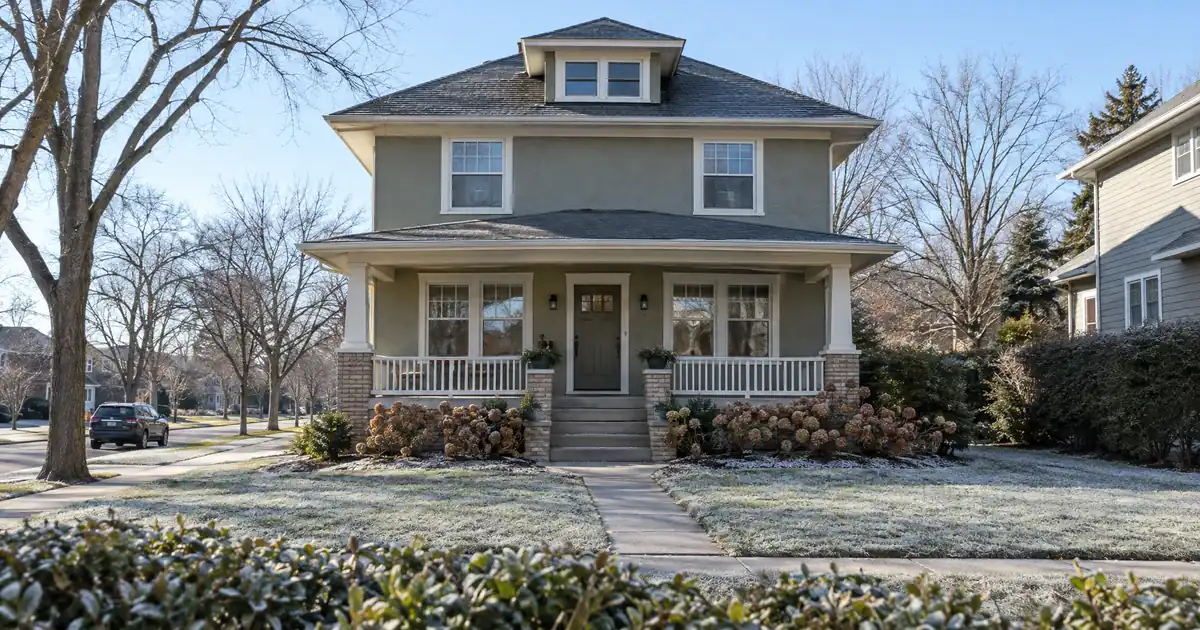
The Quick Read: Usually, yes. A new landlord can get a DSCR loan on rentals that already have tenants, because the loan is reviewed primarily on property-level rental income covering the payment, subject to lender guidelines, and not on how long you have been a landlord. DSCR, short for debt service coverage ratio, is the property’s monthly rent divided by its monthly payment. A tenant in place is the normal case, not a red flag.
- Landlord history is rarely the gate. Credit, reserves, leverage, and rent coverage are.
- For a leased property, most programs use the lower of the lease rent and the appraiser’s market rent.
- On a package under one loan, the coverage test is usually run on the pool, so strong doors can carry a weak one.
- A new landlord’s cost tends to show up in reserves and credit depth, not in a flat rejection.
- Passing the coverage test is not the same as making money. Repairs, vacancy, and management sit outside the math.
Why Landlord Experience Isn’t the Gate
Most programs across the wholesale network Lendmire works with do not ask for prior landlord history on a long-term rental. A minority want proof you have owned a home of some kind. That is a program quirk, not a wall.
Think about what the lender is actually buying. It is looking at a building and a stream of rent. Your résumé as a landlord matters far less than whether that rent covers the bill.
The bill has a name: PITIA. It stands for principal, interest, taxes, insurance, and any association dues. DSCR is rent divided by PITIA. A result of 1.00 means rent equals the full payment. Select programs start there, and stronger ratios tend to open better pricing and more leverage. Lenders in the network differ, so treat 1.00 as a starting line for certain programs, not a universal rule.
A conventional bank asks a different question: can you carry this payment from your paycheck or traditional personal-income documentation? That is why a new landlord with a thin income history or several existing mortgages often gets declined there. A DSCR loan asks whether the property carries itself. Lendmire’s complete DSCR loans guide walks through that difference in full.
Where does a first-timer pay a price? Mostly in cash. Reserves are the savings you hold after closing, and many programs commonly want around six months of PITIA. Some lenders ask first-time investors for more. Credit depth matters too.
One real exception: short-term rental income. Programs typically expect about 12 months of hosting history before they will count nightly-rental income. Long-term leases carry no such expectation.
Key Terms Defined
You will see these words in a term sheet. Here is what they mean.
Market rent: What an appraiser concludes the unit would rent for today, based on comparable rentals nearby.
Rent roll: The seller’s list of every unit, tenant, rent amount, lease term, and deposit.
Estoppel certificate: A statement the tenant signs confirming their rent, deposit, lease term, and any side agreements.
Blanket loan: One note secured by several rentals. Lenders also call it a portfolio DSCR loan or a cross-collateralized loan. All three names mean the same thing here.
Pooled coverage: Total rent from every property divided by total payments across the pool.
Occupancy attestation: A signed statement that you will not live in the property and that the loan is for business purposes.
What a “Tenant-Occupied Package” Actually Means
A package is several rentals bought or refinanced together, usually under one loan. Each door has a tenant already paying rent. You are not buying empty buildings and hunting for renters afterward.
Two structures cover this in the network. Both are program ceilings and floors, never quotes, and all of it is subject to lender guidelines.
The 30-year portfolio DSCR loan covers two to 20 properties under one note. Loan sizes run roughly $300,000 to $5,000,000, with larger balances on review. Leverage goes up to 80% of value on a purchase or a rate-and-term refinance. The coverage floor of 1.00 is measured on the pool. Eligible property types are single-family, two-to-four-unit, condo, and townhome. Interest-only periods are available.
The rental portfolio term loan is built for five or more rental properties or units. Loan sizes run roughly $500,000 to $50,000,000, with larger balances on review. Leverage goes up to 75% of value. Terms are fixed for 3, 5, 7, or 10 years with a balloon at maturity. Non-recourse structures exist, with carve-outs for things like fraud and bankruptcy. Small multifamily of five or more units is eligible only on this term loan.
Credit expectations on these portfolio programs start around a 640 score, with some structures asking for 680 or 720. Some structures also require a special-purpose entity, typically an LLC, subject to lender program eligibility.
Compare that with a loan on one rental. A single-property DSCR loan on an investment-property purchase typically lands at 75%–80% LTV, meaning loan-to-value, the loan as a share of the property’s value. If you only want one or two doors, separate loans may fit better. Lendmire’s piece Can a Vacant Property Qualify for a DSCR Purchase Loan? covers the mixed occupied-and-vacant case.
Some properties are out no matter how good the rent is. Owner-occupied property, co-ops, mixed-use, and commercial property do not belong in the pool. Manufactured and mobile homes are not reviewable on any of these programs.
Which Rent Counts?
The lender does not take the rent roll on faith. For each door, most programs use the lower of two numbers: what the signed lease says and what the appraiser says the unit should rent for. A lease above market does not raise your ratio. A lease below market pulls it down.
This is how a tenant in place actually hurts a new landlord. The seller’s long-time tenant may be paying well under today’s market. You inherit that lease, and the lower figure sets your coverage.
| Tenancy status | What sets the rent | Your next step |
|---|---|---|
| Lease at market | Lease or market rent | Gather the signed lease |
| Lease below market | Lower of the two | Renew at market or drop the door |
| Lease above market | Market rent only | Price the deal on market rent |
| Month-to-month | Weaker file, not blocked | Get a new written lease |
| Expired lease | Weaker file, proof helps | Add proof of payments |
| No written lease | Appraiser’s market rent | Sign a lease before closing |
| Related-party tenant | Closer look at payments | Document every payment |
| Vacant door | Market rent alone | Expect a possible leasing condition |
Treatment of month-to-month and expired leases varies by lender. Written documentation and proof the rent is really being paid help every one of these.
How the appraiser documents it
The appraiser usually completes a rent schedule alongside the value opinion. Form 1007 is the single-family comparable rent schedule. Form 1025 covers two-to-four-unit properties. Form 216 is an operating income statement that may accompany a leased small multifamily.
Fannie Mae’s appraiser update describes Form 1007 as the way an appraiser documents estimated monthly market rent on a one-unit investment property. It also tells appraisers the form is not designed for nightly rates. So multiplying a nightly rate by 30 does not give you market rent. McKissock’s appraisal education blog notes the form can be used alone or alongside leases on a purchase, and that how income is used falls to the lender. That agency material is a contrast point only. DSCR guidelines belong to the lender and the program.
One consequence: the appraisal’s rent can replace the rent you assumed when you went under contract. Your quote is a starting point, not a final ratio.
Run the Numbers on a Three-Door Package
These are modeled assumptions, not market data or a quote. Say you are buying three tenant-occupied rentals under one blanket loan. Assume the three payments are roughly equal, so the ratios average cleanly.
- Door one covers its payment at about 1.25x.
- Door two covers at about 1.10x.
- Door three has a long-time tenant on a legacy lease. Its lower-of rent covers only about 0.85x.
Pooled coverage lands near 1.07x, so the pool clears a 1.00 floor even with door three below 1.00, while underwriting tests the pooled coverage, the leverage, and the terms. That is the forgiving part of a blanket loan.
Now suppose door three’s tenant renews at documented market rent and that door moves to about 1.05x. Pooled coverage rises to around 1.13x. A cleaner ratio can open stronger terms, subject to lender guidelines.
Now the catch. Some programs also look at each property on its own. If so, door three is a problem even though the pool is fine. Ask which test applies before you sign a purchase contract.
What to Gather Before You Offer
Request these from the seller up front. It is far cheaper to find a problem before contract than after.
Property and tenant items
- A signed lease for every door, plus amendments and any rent concessions.
- The rent roll, reconciled against bank deposits.
- Security deposit amounts and how they will transfer to you at closing.
- Proof of rent payments for any tenant on an informal or related-party arrangement.
Entity and borrower items
- Entity documents if you are buying through an LLC, subject to lender program eligibility.
- Your credit profile and proof of reserves.
- Signed occupancy and business-purpose attestations for each property.
Name matching
- Names on the lease, title, insurance, and entity should line up.
- A rent roll that says leased when a lease has lapsed can hold up the whole pool.
That last item trips up more new landlords than any ratio does. A single mismatch can stall the pool because every door secures the same note.
What Changes When You Inherit the Seller’s Tenants
Buying an occupied property means you step into someone else’s landlord relationship. Walk through it in this order.
1. Review the lease before contract. Check rent, term, renewal terms, and any purchase option.
2. Ask for an estoppel certificate. The tenant confirms in writing what they pay, what deposit they gave, and whether any side deals exist. It surfaces deposit disputes before you own them. Whether a lender requires one is a program question.
3. Confirm the deposit transfer. The seller’s deposit should move to you or appear as a credit at closing.
4. Collect payment proof. Bank deposits that match the rent roll beat a seller’s word.
5. Line up the lease assignment. The lease needs to transfer cleanly to your entity.
If a tenant holds an option to buy the property, read the prepayment terms on your loan carefully. A tenant who exercises that option could trigger a payoff.
Where First-Timers Get Tripped Up
Calling it an investment is not enough. DSCR loans are designed for non-owner-occupied investment properties. Because they are business-purpose investor loans, they are reviewed differently from a standard owner-occupied mortgage. The federal business-purpose rule text exempts credit extended primarily for a business, commercial, or agricultural purpose, and the lender judges that primary purpose on each loan. Putting a house in an LLC does not decide it. If you plan to move into one of the doors later, tell the lender now.
The appraisal comes in low on rent. The lower figure governs. Price the package on likely market rent, not the seller’s rent roll.
Reserves surprise you. Reserves vary by lender, leverage, loan size, and transaction type. Many files sit around six months of PITIA, and loans above $1,500,000 typically step up to about nine months. Rental portfolio term loans hold reserves for taxes, insurance, and capital expenditures. First-timers should plan on the high end.
Blanket means every door secures the whole note. If one property goes bad, the lender can reach the others. Partial releases, substitutions, and selling one property out of the pool follow the loan documents, and the remaining portfolio must still cover its debt service. Read the release terms before you sign.
You want to add a door later. A portfolio note covers a fixed set of collateral. Adding a property typically means a modification, a refinance of the pool, or a separate loan.
Passing the Ratio Isn’t the Same as Cash Flow
Here is a mistake that costs new landlords money. A 1.20x coverage ratio does not mean you pocket 20% of the rent each month.
DSCR compares rent to PITIA only. It leaves out repairs, vacancy, property management, utilities, and capital expenditures. A package can clear every coverage test and still run thin once a roof, a turnover, and a vacant month hit in the same year. Build your own budget on top of the lender’s math. Tax treatment varies; consult a qualified professional.
The honest read: a ratio around 1.10x gets you the loan, but it may not get you a comfortable ownership experience. Many investors aim for more cushion than the minimum their lender accepts.
When DSCR Isn’t the Right Fit
Skip it if you plan to live in the property. Skip it if the collateral is a manufactured home, a log home, or a barndominium, since these fall outside the network’s programs. Skip it if rent barely covers the payment and you have no reserve cushion.
A conventional or other income-based loan may fit if you have strong traditional employment income and want to buy a property to live in. A DSCR loan makes sense when the property’s income is the strongest part of your file.
Frequently Asked Questions
Do I need landlord experience to get a DSCR loan on tenant-occupied rentals?
Usually not. Most programs across the network focus on rent coverage, credit, and reserves. A minority want to see that you have owned a home. Short-term rentals are the exception, with about 12 months of hosting history typically expected.
Does my tenant have to move out or have a long lease?
No. Tenants stay in place, and the remaining lease term is not what gets underwritten. What matters is the rent, the documentation, and proof it is being paid. A month-to-month tenant makes a weaker file, not a blocked one.
What happens if the lease is above market rent?
The lease does not help you. Most programs use the lower of the lease and the appraiser’s market rent, so a lease above market is capped at market. Price the deal on market rent and treat any lease premium as a bonus.
Can a blanket loan cover homes in different markets?
Yes. The rental portfolio term loan allows properties in several markets under one loan. Cross-collateralization still applies, so each property secures the whole note. Eligibility depends on the program and the lender.
Can a weak property sit in the pool with strong ones?
Yes, in many cases. Pooled coverage lets stronger doors offset a weaker one, while underwriting tests the pooled coverage, the leverage, and the terms. Some lenders also check each property separately, so ask which test applies before you commit.
Next Step
If you are buying or refinancing a rental property and want to see how the numbers work, Lendmire can help you compare DSCR loan options based on the property income, credit profile, leverage, and investor goals. Lendmire is a mortgage broker that arranges financing through select lenders in its wholesale network, with DSCR programs across 41 markets, including Washington, D.C. Program terms are subject to lender guidelines, and nothing here is a commitment to lend.
The smartest first-time buyers read the seller’s leases before the seller’s listing price.
About Lendmire
Lendmire is a non-QM mortgage brokerage (NMLS# 2371349) arranging DSCR investor loans in 41 markets, including Washington, D.C., through wholesale and investor-lending channels. DSCR loans are evaluated by the lender on rental income rather than personal income, subject to lender guidelines — a fit for LLC-owned portfolios, self-employed investors, and operators scaling beyond conventional loan caps. Recognized as a Scotsman Guide Top Mortgage Workplace in 2025 and 2026.
Get Started
Ready to find the right loan for you?
In about 30 seconds you can review financing options available for your investment property. No commitment required.
Informational only. Not a Loan Estimate, approval, or commitment to lend. Program availability and eligibility are subject to lender guidelines, credit approval, property review, and underwriting.
References
1. Fannie Mae Appraiser Update (Form 1007 purpose)
2. McKissock Appraisal Blog (Form 1007 and short-term rentals)
3. CFPB, Regulation Z §1026.3 (business-purpose exemption)
This article is part of Lendmire’s DSCR loan program — full qualification details, guidelines, and scenarios live on the program page.
Related reading: How a Five-Door Landlord Recycles Capital With a DSCR Loan · Straight Refinance vs Cash-Out on a Portfolio DSCR Loan for a Landlord · Can an Investor With 10+ Doors in LLCs Get a DSCR Portfolio Loan?
Brandon Miller
Founder & CEO, Mortgage Loan Originator, Lendmire LLC
- Mortgage Loan Originator · NMLS# 1129696 · Verify on NMLS Consumer Access
- North Carolina Real Estate Broker · License# 343312 · Verify on NCREC
- North Carolina Insurance Producer · License# 19053198 · Property, Casualty, Life, Health · Verify on NAIC SBS
- Lendmire LLC · Firm NMLS# 2371349 · Verify firm licensure
Required disclosures. Lendmire (NMLS# 2371349) operates as a licensed mortgage broker, not a direct lender or depository. The discussion in this article is general in nature and should not be relied upon as financial, legal, or tax advice — every investment scenario is unique and should be reviewed by a qualified professional. Any loan inquiry is subject to lender underwriting, and this article is not a commitment to lend or a guarantee of approval. Mortgage rates, loan terms, and program guidelines vary by borrower, property, and state, and may change without notice. Equal Housing Opportunity. Verify licensure at NMLS Consumer Access.